
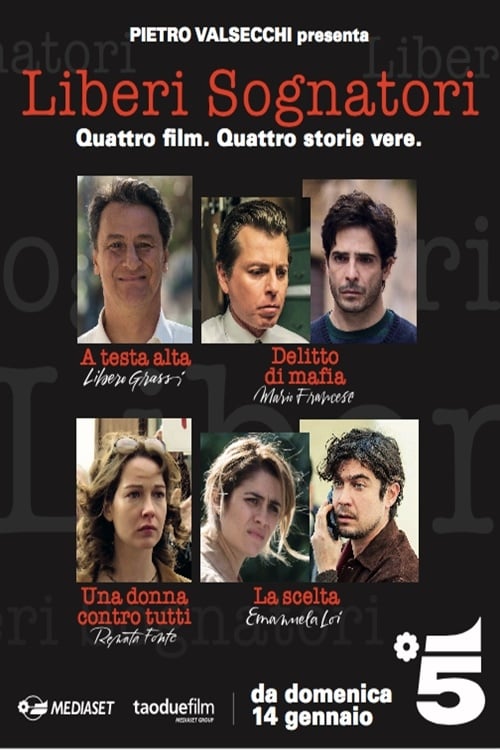

















Popular
What motivates Libero Grassi to stand up against the mafia?
How does Libero's family react to his decision to confront the mafia?
What specific actions does Libero take to resist the mafia's demands?
How does the community respond to Libero's actions against the mafia?
What are the consequences Libero faces for his defiance against the mafia?
Should I watch it?
Ask Your Own Question

What is the plot?
Sorry, we aren't able to watch and write up a full detailed plot yet. Check back in a few days.



What is the ending?
In the ending of "A testa alta - Libero Grassi," Libero Grassi, a courageous businessman, faces the consequences of his defiance against the Mafia. Despite his efforts to stand up against extortion, he ultimately becomes a target. The film concludes with his tragic assassination, highlighting the dangers of resistance in a corrupt society.
As the final scenes unfold, we see Libero Grassi continuing his daily life, steadfast in his refusal to pay protection money to the Mafia. He is portrayed as a man of principle, deeply committed to his beliefs and the welfare of his family. His wife, Pina, is increasingly worried about the threats they have received, but Libero reassures her, insisting that he will not be intimidated. The tension in their home is palpable, as Pina's anxiety contrasts with Libero's determination.
In a pivotal scene, Libero is seen at his bakery, surrounded by loyal employees who admire his bravery. He speaks passionately about the importance of standing up against injustice, inspiring those around him. However, the atmosphere is heavy with an underlying sense of dread, as the audience is acutely aware of the looming danger.
As the day progresses, Libero leaves the bakery, and the camera follows him through the streets of Palermo. The vibrant city life contrasts sharply with the dark reality of the threats he faces. He walks with purpose, but there is a growing sense of foreboding. The sound of distant sirens and the hustle of the crowd create an unsettling backdrop.
In a heart-wrenching moment, Libero is ambushed by assassins as he approaches his car. The scene is tense and chaotic, with the sudden violence shocking both Libero and the audience. He is shot, and the camera captures the horror in his eyes as he realizes the gravity of his situation. The world around him blurs, and the sounds of the city fade into silence.
Pina, who has been anxiously waiting for Libero at home, receives the devastating news of his death. The emotional weight of this moment is profound, as she collapses in grief, surrounded by their children. The camera lingers on her face, capturing the raw pain of loss and the impact of Libero's choices on their family.
In the aftermath of Libero's assassination, the film shifts to a broader perspective, showing the community's reaction. There are scenes of mourning, as friends and supporters gather to pay their respects. The bakery, once a symbol of hope and resistance, now stands as a somber reminder of the cost of standing up against the Mafia.
The final moments of the film reflect on Libero's legacy. His bravery inspires others to continue the fight against corruption, even in the face of overwhelming odds. The screen fades to black, leaving the audience with a lingering sense of both tragedy and hope, as the struggle against the Mafia continues in the hearts of those he left behind.
Is there a post-credit scene?
The movie "A testa alta - Libero Grassi" does not feature a post-credit scene. The film concludes its narrative without any additional scenes or content after the credits roll. The focus remains on the powerful story of Libero Grassi, a businessman who bravely stands against the Mafia's extortion in 1990s Sicily, highlighting his struggles and the impact of his actions on his family and community. The film ends on a poignant note, emphasizing the themes of courage and resistance rather than providing a continuation or additional commentary in a post-credit sequence.
What motivates Libero Grassi to stand up against the mafia?
Libero Grassi is driven by a deep sense of justice and a desire to protect his family and business from the oppressive grip of the mafia. His internal conflict is palpable as he grapples with fear and the moral imperative to resist the extortion that threatens his livelihood.
How does Libero's family react to his decision to confront the mafia?
Libero's family, particularly his wife, expresses deep concern and fear for his safety. They are torn between supporting his courageous stance and the instinct to protect him from the violent repercussions that could follow his defiance.
What specific actions does Libero take to resist the mafia's demands?
Libero takes a bold stand by publicly refusing to pay the extortion money demanded by the mafia. He uses media outlets to voice his opposition, which not only puts him at risk but also inspires others in the community to consider standing up against the mafia.
How does the community respond to Libero's actions against the mafia?
Initially, the community is hesitant and fearful, as many are under the thumb of the mafia. However, as Libero's story gains media attention, it begins to galvanize support among other business owners, leading to a gradual shift in public sentiment towards resisting mafia influence.
What are the consequences Libero faces for his defiance against the mafia?
Libero faces severe consequences for his defiance, including threats to his life and the safety of his family. His courageous stance ultimately leads to tragic outcomes, highlighting the brutal reality of standing up against organized crime.
Is this family friendly?
"A testa alta - Libero Grassi" is a biographical drama that deals with serious themes, including organized crime, extortion, and the struggles of a businessman standing up against the Mafia. While the film aims to portray the courage and resilience of its protagonist, it does contain several elements that may be considered objectionable or upsetting for children or sensitive viewers.
-
Violence and Threats: There are scenes depicting intimidation and threats from Mafia members, which may be distressing.
-
Emotional Distress: The protagonist and his family experience significant emotional turmoil, including fear and anxiety related to extortion and violence.
-
Death and Loss: The film addresses the consequences of standing up against the Mafia, including the potential for violence and loss of life, which can be heavy themes for younger audiences.
-
Mature Themes: The overarching themes of corruption, moral dilemmas, and the impact of crime on society may be complex and difficult for children to fully understand.
Overall, while the film carries an important message about courage and integrity, its serious subject matter may not be suitable for younger viewers or those sensitive to themes of violence and crime.







