
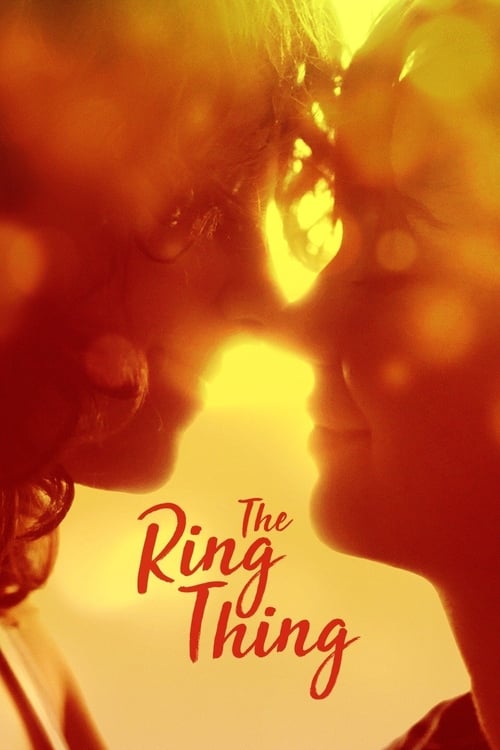







Popular
What role do the supporting characters play in the protagonist's journey?
What are the key moments that lead to the protagonist's self-discovery?
What is the significance of the ring in the story?
How does the protagonist's relationship with her partner evolve throughout the film?
How does the protagonist's view of marriage change throughout the film?
Should I watch it?
Ask Your Own Question

What is the plot?
Sorry, we aren't able to watch and write up a full detailed plot yet. Check back in a few days.
More Movies Like This
Browse All Movies →





What is the ending?
In the ending of "The Ring Thing," the main character, a woman named Sarah, confronts her fears about commitment and the implications of marriage. After a series of emotional struggles and misunderstandings with her partner, she ultimately decides to embrace her feelings and the idea of a future together. The film concludes with a sense of resolution as Sarah and her partner find common ground, symbolized by a shared understanding of their relationship.
As the film approaches its conclusion, we find Sarah in a state of turmoil. The weight of her decision looms heavily over her, and she grapples with the concept of marriage, which has become a source of anxiety rather than joy. The scene opens with Sarah sitting alone in her dimly lit apartment, the remnants of a recent argument with her partner, Jack, still echoing in her mind. She reflects on their relationship, the love they share, and the fear that has kept her from fully committing.
In the next scene, Jack is seen at a coffee shop, visibly distressed. He stares at his phone, contemplating whether to reach out to Sarah. His internal conflict is palpable; he loves her deeply but feels the strain of her hesitance. The camera captures his furrowed brow and the way he absentmindedly stirs his coffee, lost in thought.
The narrative shifts back to Sarah, who is now at a park, watching couples interact. She observes their laughter and intimacy, which stirs a mix of longing and fear within her. The cinematography emphasizes her isolation, with wide shots of her sitting alone on a bench, surrounded by happy couples. This moment serves as a catalyst for her to confront her feelings.
In a pivotal scene, Sarah decides to meet Jack. They choose a quiet, intimate restaurant for their conversation. As they sit across from each other, the tension is thick. Jack expresses his frustration and confusion, while Sarah struggles to articulate her fears. The dialogue is raw and emotional, revealing their vulnerabilities. Sarah finally admits that her fear of commitment stems from her past experiences and the pressure she feels about marriage. Jack listens intently, his expression softening as he realizes the depth of her struggle.
The turning point comes when Sarah, with tears in her eyes, acknowledges that she does love Jack and wants to build a future with him, but she needs time to process her feelings. Jack, in turn, reassures her that he is willing to wait and that their love is worth the effort. This moment of mutual understanding is beautifully captured, with close-ups of their hands reaching across the table, symbolizing their connection.
As the film nears its conclusion, we see Sarah and Jack walking hand in hand through the park, the sun setting behind them. The warm light bathes them in a golden hue, signifying hope and new beginnings. They share a quiet moment, and Sarah slips a simple ring onto her finger, a gesture that signifies her commitment to the relationship, albeit on her own terms.
The final scene shows them at home, laughing and cooking together, a stark contrast to the earlier tension. The camera pans out, leaving the audience with a sense of peace and the understanding that while the journey of love can be fraught with challenges, it is also filled with moments of joy and connection. Sarah and Jack's relationship is now grounded in honesty and mutual respect, suggesting that love can flourish when both partners are willing to communicate and grow together.
Is there a post-credit scene?
In "The Ring Thing," there is no post-credit scene. The film concludes its narrative without any additional scenes after the credits roll. The story wraps up with a focus on the emotional journey of the main character, who grapples with the complexities of love, commitment, and the symbolism of the engagement ring throughout the film. The absence of a post-credit scene allows the audience to reflect on the themes presented without any further distractions or revelations.
What role do the supporting characters play in the protagonist's journey?
Supporting characters, including friends and family, provide contrasting perspectives on love and commitment. They influence the protagonist's decisions and reflect her internal conflicts, often pushing her to confront her fears and desires regarding her relationship.
What are the key moments that lead to the protagonist's self-discovery?
Key moments include confrontations with her partner about their future, candid discussions with friends that challenge her views, and introspective scenes where she reflects on her past and aspirations. These moments culminate in her realization of what she truly wants from life and love.
What is the significance of the ring in the story?
The ring serves as a central symbol in the film, representing commitment and the complexities of relationships. It is a physical manifestation of the protagonist's internal struggle with her identity and the expectations placed upon her by society and her partner.
How does the protagonist's relationship with her partner evolve throughout the film?
The protagonist, a woman grappling with her commitment to her partner, experiences a tumultuous journey as she navigates her feelings of love, fear of losing her independence, and societal pressures. Their relationship is tested through various challenges, leading to moments of tension and vulnerability.
How does the protagonist's view of marriage change throughout the film?
Initially, the protagonist views marriage as a traditional expectation that she feels pressured to fulfill. However, as the story unfolds, her experiences and interactions lead her to reassess what marriage means to her personally, ultimately seeking a definition that aligns with her own values.
Is this family friendly?
"The Ring Thing," produced in 2017, is a romantic comedy that explores themes of love, commitment, and the complexities of relationships. While the film is generally light-hearted, there are a few elements that may be considered objectionable or upsetting for children or sensitive viewers.
-
Mature Themes: The film delves into adult relationships, including discussions about marriage, commitment, and the pressures that come with them. These themes may be complex for younger audiences to fully grasp.
-
Emotional Conflict: Characters experience emotional turmoil, including anxiety and uncertainty about their relationships. This may resonate with sensitive viewers who are affected by themes of insecurity and doubt.
-
Mild Language: There are instances of mild profanity and suggestive language that may not be suitable for younger viewers.
-
Romantic Situations: The film includes scenes that depict romantic interactions, which may include kissing and intimate conversations. While not explicit, these moments may be uncomfortable for some children or sensitive viewers.
-
Family Dynamics: The film touches on family expectations and pressures, which can lead to emotional distress for characters. This may evoke feelings of discomfort for viewers who relate to familial pressures.
Overall, while "The Ring Thing" is primarily a comedy, its exploration of adult themes and emotional complexities may not be entirely family-friendly for younger audiences or those sensitive to such topics.









