






































Popular
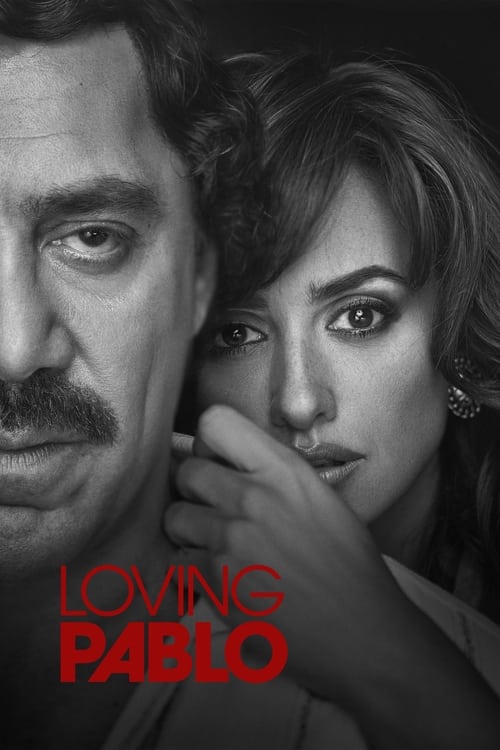
What is the relationship between Pablo Escobar and Virginia Vallejo in the film?
How does Pablo Escobar's character evolve throughout the film?
What role does the media play in the story of 'Loving Pablo'?
What are some key moments that showcase the violence associated with Pablo Escobar's drug empire?
How does Virginia Vallejo's perspective on Pablo Escobar change throughout the film?
Should I watch it?
Ask Your Own Question

What is the plot?
Sorry, we aren't able to watch and write up a full detailed plot yet. Check back in a few days.







What is the ending?
In the ending of "Loving Pablo," Pablo Escobar's reign comes to a violent conclusion as he is hunted down by the Colombian authorities. His life ends in a shootout, leaving behind a legacy of chaos and destruction. Virginia Vallejo, the journalist and his lover, is left to grapple with the aftermath of their tumultuous relationship and the impact of Escobar's actions on her life.
As the film approaches its climax, the tension escalates. The scene opens with a sense of foreboding as Pablo Escobar, portrayed by Javier Bardem, is increasingly isolated. The Colombian government, with the help of the United States, intensifies its efforts to capture him. The once-mighty drug lord is now on the run, his empire crumbling around him.
In a pivotal scene, Escobar is forced to abandon his luxurious lifestyle and go into hiding. He moves from one safe house to another, always looking over his shoulder, haunted by the betrayal of those he once considered allies. Virginia Vallejo, played by Penélope Cruz, is shown in a state of emotional turmoil. She is torn between her love for Pablo and the realization of the destruction he has caused. Her internal conflict is palpable as she reflects on their relationship, filled with passion but overshadowed by violence and fear.
As the authorities close in, the film depicts a series of intense confrontations. The Colombian National Police, led by Colonel Hugo Martinez, is determined to bring Escobar to justice. The tension builds as they receive intelligence about his whereabouts. In a gripping sequence, the police engage in a fierce gun battle with Escobar's men, showcasing the brutality of the drug war. The cinematography captures the chaos of the streets, filled with gunfire and explosions, as the city becomes a battleground.
In the final moments, Escobar is cornered in a neighborhood in Medellín. The scene is charged with emotion as he realizes that his time is running out. He makes a desperate attempt to escape, but the police are relentless. In a heart-stopping climax, Escobar is shot and killed on a rooftop, his body falling lifelessly to the ground. The camera lingers on his face, capturing the mixture of defiance and despair that defined his life.
Virginia, watching from a distance, is left to confront the reality of her choices. The film closes with her reflecting on the love they shared, now tainted by the violence and loss that surrounded them. She walks away, a symbol of survival amidst the wreckage of Escobar's empire, forever changed by her experiences.
In summary, Pablo Escobar meets a violent end, while Virginia Vallejo is left to navigate the emotional fallout of their relationship, highlighting the personal costs of a life intertwined with crime and power.
Is there a post-credit scene?
"Loving Pablo," produced in 2017, does not have a post-credit scene. The film concludes its narrative without any additional scenes or content after the credits roll. The story wraps up with a focus on the tumultuous relationship between Pablo Escobar and Virginia Vallejo, highlighting the emotional and psychological toll of their lives intertwined with the drug trade and Escobar's eventual downfall. The film leaves viewers with a sense of closure regarding their story, emphasizing the impact of Escobar's actions on both his life and the lives of those around him.
What is the relationship between Pablo Escobar and Virginia Vallejo in the film?
In 'Loving Pablo', the relationship between Pablo Escobar and Virginia Vallejo is central to the narrative. Virginia, a Colombian journalist and television presenter, becomes romantically involved with Escobar. Their relationship is marked by passion and complexity, as Virginia is drawn to Pablo's charisma and power, while also being aware of the dangers that come with his criminal empire. Throughout the film, Virginia's internal conflict grows as she grapples with her love for Pablo and the violent reality of his actions.
How does Pablo Escobar's character evolve throughout the film?
Pablo Escobar's character in 'Loving Pablo' evolves from a charming and ambitious drug lord to a more paranoid and ruthless figure as the story progresses. Initially, he is portrayed as a man who is deeply in love with Virginia and is willing to show a softer side. However, as the pressure from law enforcement increases and his empire begins to crumble, his demeanor shifts. He becomes increasingly erratic, showcasing his desperation and willingness to resort to extreme violence to maintain his power, which ultimately alienates those around him.
What role does the media play in the story of 'Loving Pablo'?
In 'Loving Pablo', the media plays a significant role in shaping public perception of Pablo Escobar and his drug empire. Virginia Vallejo, as a journalist, provides a lens through which the audience sees the impact of Escobar's actions on Colombian society. The film highlights how Virginia's reporting both glorifies and critiques Escobar, reflecting the duality of his public persona as a Robin Hood figure versus a ruthless criminal. The media's portrayal of Escobar influences his image and the way he interacts with both the public and law enforcement.
What are some key moments that showcase the violence associated with Pablo Escobar's drug empire?
Key moments in 'Loving Pablo' that showcase the violence associated with Pablo Escobar's drug empire include several brutal assassinations and bombings orchestrated by his cartel. One particularly harrowing scene involves the bombing of a government building, which results in numerous civilian casualties, illustrating the extent of Escobar's ruthlessness. Additionally, the film depicts the violent retaliation against rival cartels and law enforcement, emphasizing the pervasive fear and chaos that Escobar's reign instills in Colombia.
How does Virginia Vallejo's perspective on Pablo Escobar change throughout the film?
Virginia Vallejo's perspective on Pablo Escobar undergoes a significant transformation throughout 'Loving Pablo'. Initially enamored by his charm and the excitement of their relationship, she becomes increasingly disillusioned as she witnesses the brutal realities of his world. As the violence escalates and the consequences of his actions become more apparent, Virginia's love is overshadowed by fear and moral conflict. This shift is poignantly captured in her internal struggles, as she grapples with her feelings for Pablo while recognizing the destruction he causes.
Is this family friendly?
"Loving Pablo," produced in 2017, is not considered family-friendly due to its mature themes and content. Here are some potentially objectionable or upsetting aspects that may affect children or sensitive viewers:
-
Violence: The film depicts graphic violence, including scenes of shootings and brutal confrontations related to drug trafficking.
-
Drug Use: There are portrayals of drug use and the drug trade, which may be disturbing for younger audiences.
-
Sexual Content: The film includes scenes of sexual nature and adult relationships that may not be suitable for children.
-
Emotional Turmoil: Characters experience intense emotional struggles, including fear, betrayal, and loss, which could be distressing for sensitive viewers.
-
Crime and Corruption: The narrative explores themes of crime, corruption, and moral ambiguity, which may be complex and unsettling for younger audiences.
Overall, the film's mature themes and graphic content make it more appropriate for adult viewers.








