
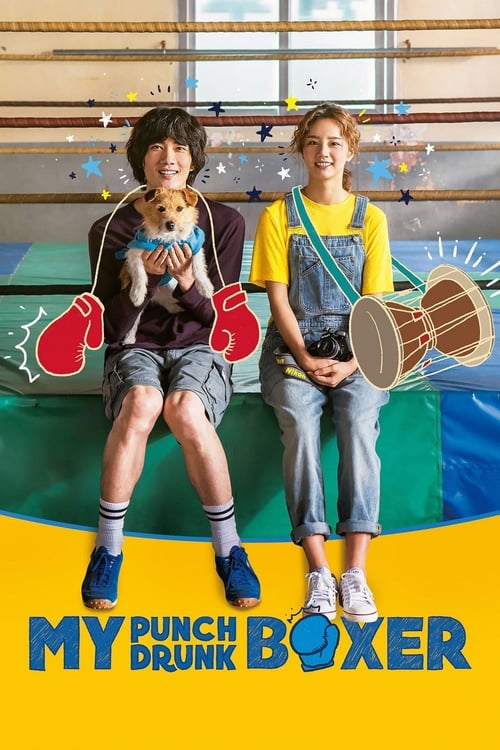











Popular
What motivates the main character, a boxer, to return to the ring despite his challenges?
How does the relationship between the boxer and his coach evolve throughout the film?
What role does the boxer's family play in his journey back to boxing?
What specific challenges does the boxer face during his training and matches?
How does the boxer confront his past mistakes and failures throughout the film?
Should I watch it?
Ask Your Own Question

What is the plot?
Sorry, we aren't able to watch and write up a full detailed plot yet. Check back in a few days.







What is the ending?
In the ending of "My Punch-Drunk Boxer," the protagonist, a former boxer named Jin-woo, faces his final match against a formidable opponent. Despite his struggles with the effects of past concussions, he finds the strength to fight, motivated by his desire to prove himself and regain his dignity. The match is intense, showcasing Jin-woo's resilience and determination. Ultimately, he loses the fight but gains a sense of closure and self-acceptance. The film concludes with Jin-woo embracing his new life, focusing on his future rather than his past.
As the film approaches its climax, we find Jin-woo in the locker room, the air thick with tension and anticipation. He sits on a bench, staring at his reflection in the mirror, the weight of his past failures heavy on his shoulders. The camera captures the flicker of doubt in his eyes, but also a glimmer of resolve. His coach, a grizzled veteran who has seen the highs and lows of boxing, enters the room. He places a reassuring hand on Jin-woo's shoulder, reminding him of the journey they've taken together. This moment is pivotal; it encapsulates the bond they share and the stakes of the upcoming fight.
As Jin-woo steps into the ring, the crowd roars, a cacophony of cheers and jeers. The arena is alive with energy, the bright lights illuminating the sweat and determination etched on the faces of the fighters. His opponent, a younger and more agile boxer, stands across the ring, exuding confidence. The bell rings, and the fight begins. Jin-woo's movements are initially hesitant, a reflection of his internal struggle with the physical toll boxing has taken on him. Each punch he throws is a battle against his own fears and insecurities.
The fight progresses, and Jin-woo begins to find his rhythm. He recalls the training sessions with his coach, the sacrifices he made, and the support of his friends and family. With each round, he digs deeper, channeling his pain into power. The audience is captivated, witnessing a fighter who is not just battling an opponent but also confronting his own demons. The cinematography captures the sweat glistening on his brow, the intensity in his eyes, and the raw emotion of the moment.
As the final round approaches, Jin-woo is visibly exhausted but refuses to back down. He takes a hard hit, and for a moment, it seems as though he might falter. However, he remembers the faces of those who believe in him, and with renewed vigor, he pushes through the pain. The fight culminates in a flurry of punches, each one a testament to his resilience. The crowd is on its feet, cheering him on, their energy fueling his determination.
In the end, despite his valiant effort, Jin-woo loses the match. He collapses to the canvas, the referee raising his opponent's hand in victory. The camera lingers on Jin-woo as he lies there, a mix of exhaustion and acceptance washing over him. He realizes that the fight was not just about winning but about reclaiming his identity and finding peace within himself. As he gets up, the crowd erupts in applause, acknowledging his courage and heart.
The film concludes with Jin-woo walking out of the arena, a sense of calm enveloping him. He is greeted by his coach, who embraces him, proud of the man he has become. Jin-woo smiles, a newfound sense of purpose shining in his eyes. He understands that his journey is far from over; he has the chance to redefine his life beyond boxing. The final scene captures him walking into the sunset, symbolizing hope and the promise of a brighter future.
In this ending, Jin-woo's fate is one of redemption and self-acceptance. His coach remains by his side, supporting him as he transitions into a new chapter of his life. The film leaves viewers with a powerful message about resilience, the importance of community, and the strength found in vulnerability.
Is there a post-credit scene?
In "My Punch-Drunk Boxer," there is indeed a post-credit scene that adds a light-hearted touch to the film's conclusion. After the credits roll, the scene opens in a small, dimly lit gym where the protagonist, a former boxer named Jin-woo, is seen training. He is surrounded by a few familiar faces from the film, including his supportive coach and a couple of his quirky training partners.
As Jin-woo practices his punches, he suddenly trips over his own feet, reminiscent of his earlier struggles in the ring. The camera captures the moment in slow motion, emphasizing the comedic aspect of his clumsiness. His coach shakes his head with a mix of exasperation and affection, while the training partners burst into laughter, showcasing the camaraderie that has developed throughout the film.
Jin-woo, slightly embarrassed but always good-natured, gets back up and grins, throwing a playful jab at his friends. The scene encapsulates the film's themes of resilience and friendship, leaving the audience with a warm feeling as it fades to black. This light-hearted moment serves as a reminder of Jin-woo's journey and the importance of laughter and support in overcoming life's challenges.
What motivates the main character, a boxer, to return to the ring despite his challenges?
The main character, who struggles with the effects of a traumatic brain injury, is driven by a deep-seated desire to reclaim his identity and prove to himself and others that he can still succeed in the sport he loves. His journey is fueled by a mix of desperation, hope, and the need for validation.
How does the relationship between the boxer and his coach evolve throughout the film?
Initially, the relationship is strained, as the coach is skeptical of the boxer's ability to return to the sport. However, as they train together, a bond forms based on mutual respect and understanding. The coach becomes a mentor, guiding the boxer not just in technique but also in emotional resilience.
What role does the boxer's family play in his journey back to boxing?
The boxer's family is a source of both support and conflict. They worry about his health and safety, which creates tension as he pursues his dream. Their reactions range from encouragement to concern, reflecting the emotional stakes of his return to the ring.
What specific challenges does the boxer face during his training and matches?
The boxer faces physical challenges due to his past injuries, including difficulty with coordination and memory lapses. Emotionally, he grapples with self-doubt and the fear of failure, which manifest during training sessions and matches, testing his resolve and commitment.
How does the boxer confront his past mistakes and failures throughout the film?
Throughout the film, the boxer reflects on his past decisions, particularly those that led to his injuries and setbacks. He confronts these failures through conversations with his coach and family, as well as through his training, ultimately seeking redemption and a chance to rewrite his story.
Is this family friendly?
"My Punch-Drunk Boxer" is a film that, while primarily a sports comedy-drama, does contain some elements that may not be suitable for all family audiences. Here are some potentially objectionable or upsetting aspects:
-
Physical Violence: As the film revolves around boxing, there are scenes depicting boxing matches that include physical confrontations, which may be intense for younger viewers.
-
Emotional Struggles: The protagonist deals with personal and emotional challenges, including feelings of inadequacy and the pressure to succeed, which may resonate deeply and could be upsetting for sensitive viewers.
-
Language: There may be instances of mild profanity or coarse language, typical in sports-related films, which could be inappropriate for younger audiences.
-
Themes of Failure and Redemption: The narrative explores themes of failure, disappointment, and the struggle for redemption, which might be heavy for children or those who are sensitive to such topics.
-
Family Dynamics: There are moments of tension within family relationships that could be emotionally charged, reflecting struggles that some viewers might find relatable but also distressing.
Overall, while the film has comedic elements and a heartwarming story, these aspects may warrant consideration for younger or more sensitive viewers.









