




Popular
What motivates Yu Gwan-sun to become involved in the independence movement?
How does Yu Gwan-sun's relationship with her family influence her actions?
What role does the March 1st Movement play in the story?
How does Yu Gwan-sun's character evolve throughout the film?
What are the consequences of Yu Gwan-sun's activism for her and her community?
Should I watch it?
Ask Your Own Question

What is the plot?
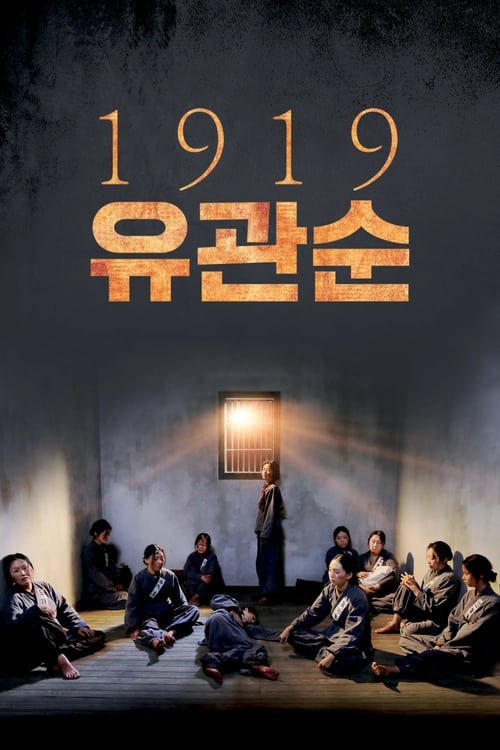
In the dim, fetid confines of Seodaemun Prison in Japanese-ruled Seoul, 1919, sixteen-year-old Yu Gwan-sun strides through the iron gates with her chin held high, her dark eyes blazing defiance despite the chains binding her wrists. Freshly arrested for leading the March 1st Independence Movement at Aunae Market in Byeongcheon, Cheonan, she is shoved into Cell #8--a cramped, 100-square-foot hellhole in the Yeooksa ward, reeking of unwashed bodies, mold, and despair. The air hangs heavy with the moans of the defeated, but Yu Gwan-sun refuses to bend. Seven other women cram the space: Kim Hyang-hwa, a sharp-featured inmate with weary eyes; Kwon Ae-ra, young and resolute; Lee Ok-yi, whose hands tremble from prior beatings; and four others whose faces blur in the shadows, all independence activists captured in the same brutal crackdown.
The cell door slams shut, and Yu surveys her new sisters in suffering. "We are not prisoners," she declares, her voice cutting through the gloom like a blade. "We are the fire of Korea." Kim Hyang-hwa looks up from the filthy straw mat, skepticism etching her brow, but something in Yu's unyielding gaze stirs her. Kwon Ae-ra nods fiercely, while Lee Ok-yi whispers, "They can't break us all." Outside, the Japanese warden--a hulking figure with a perpetual scowl--paces the corridor, flanked by the South prisoner, a minor functionary enforcing the regime's cruelty. But it's the arrival of Nishida, the Japanese security chief, and his Korean collaborator-translator Jung Chun-young that sends a chill through the bars. Ryu Kyung-soo embodies both men in a chilling duality: Nishida's cold imperial authority in his rigid posture, Jung Chun-young's conflicted betrayal in his downcast eyes, a Korean who has sold his soul by adopting a Japanese name for favor.
Days bleed into weeks in the squalor of Cell #8. The women huddle against the biting cold, sharing scraps of millet rice doled out by indifferent guards. Yu Gwan-sun, sentenced to three years for contempt of Japanese authority, refuses to acknowledge her captivity. When Jung Chun-young enters for interrogation, translating Nishida's barked orders, she meets his gaze without flinching. "Bow to your superiors," Jung demands, his voice laced with forced menace. Yu spits at his feet. "I bow to no traitors," she retorts, her "defiant face"--cheeks flushed, jaw set like granite--igniting fury in Nishida. The security chief grabs her by the collar, slamming her against the wall, but she laughs through the pain, her spirit a wildfire they cannot quench. The other women watch in tense silence, hearts pounding, as guards drag her out for her first taste of the torture chamber.
In the dimly lit torture chamber adjacent to the cells, iron tools gleam under flickering lanterns: whips, clamps, and skewers stained with old blood. Nishida oversees the brutality personally, his face a mask of calculated rage. Yu is stripped to her undergarments, her frail body exposed to the chill, but her eyes burn brighter than ever. "Even if my fingernails are torn out," she hisses through gritted teeth, echoing her historical resolve, "this physical pain does not compare to the pain of losing my nation." They beat her with fists and rods, her skin splitting open, blood trickling onto the stone floor, but she utters no plea for mercy. Kwon Ae-ra and Lee Ok-yi, peeking through the bars from Cell #8, clutch each other's hands, tears streaming as Yu's cries echo back--cries that twist into chants of "Daehanjok manse!" (Long live the Korean nation!). The confrontation ends with her hurled back into the cell, bruised and bleeding, but unbroken. The women tend her wounds with rags soaked in their precious water rations, their bond forging in the fire of shared agony.
Tension simmers as winter deepens. Nishida, suspicious of the growing whispers in Cell #8, turns his gaze to Kim Hyang-hwa. He summons her alone to his office, a sparse room overlooking the prison yard, where steam rises from bowls of hot rice--a luxury unseen in the cells. "Cooperate, and you'll eat like this every day," he murmurs, his voice silky with deception, offering her a collaborator's position. Kim Hyang-hwa, starved and desperate after months of deprivation, wavers. Her emotional walls crack under his feigned kindness; he seduces her with promises of freedom, exploiting her vulnerability. Night after night, she returns to Cell #8 with fuller cheeks and evasive eyes, guilt gnawing at her. Yu notices but says nothing, her focus sharpening on unity. "We shout together," she urges Kwon Ae-ra and Lee Ok-yi one moonless evening, "and the walls will carry our voices to Namoksa and beyond." The women nod, their resolve hardening amid vivid flashes of memory: Yu recounting the Aunae Market uprising, where she first rallied crowds under the spring sun, banners waving against Japanese bayonets.
Spring 1920 approaches, the first anniversary of March 1st looming like a storm. Yu Gwan-sun pretends obedience to lower the guards' vigilance--a masterful twist that reveals her cunning. She bows her head during inspections, murmurs compliance to Jung Chun-young, and volunteers for yard labor, hauling slop buckets under the watchful eyes of the warden and South prisoner. Nishida relaxes, believing her spirit crushed, but in stolen moments, she whispers plans to her cellmates. "On the anniversary," she breathes, eyes alight, "we ignite the nation." Kim Hyang-hwa, now fully tricked into betrayal, slips away during a labor shift and confesses to Nishida: "Yu Gwan-sun is the ringleader. She's planning something big." The revelation hits like thunder--Nishida's face twists in rage, confirming Yu as the defiant heart of the resistance.
March 1st, 1920, dawns gray and oppressive. At precisely noon, as the prison clock tolls, Yu Gwan-sun climbs onto a rickety stool in Cell #8, presses her face to the tiny barred window, and unleashes the cry: "Daehan dongnip! Manse!" (Korean independence! Hurray!). Her voice, raw and piercing, shatters the silence. Instantly, Kim Hyang-hwa, Kwon Ae-ra, Lee Ok-yi, and the others join in, their shouts merging into a thunderous roar. The sound ripples outward--prisoners in the front and left rooms hear it, adding their voices; echoes reach Namoksa, the adjacent prison block, where men bellow back in solidarity. Passersby on the streets outside freeze, stunned by the "hurray" chants erupting from the fortress of oppression. A porter, lips moving in awe, spreads rumors to common folk gathering nearby: "The prisoners are rising!" Within minutes, the author street fills with crowds--merchants, students, mothers clutching children--chanting "Manse!" in a massive protest, flames of resistance leaping beyond the prison walls. Tension peaks as guards scramble, batons swinging, but the momentum surges uncontrollably.
Chaos erupts. The warden storms Cell #8 with the South prisoner, faces purple with fury. "Silence!" he bellows, unlocking the door and dragging women out one by one. Yu stands tallest, unflinching. Jung Chun-young translates the threats: "Confess the leader, or face death." But the streets pulse with energy, protests swelling to block traffic, Japanese soldiers rushing in with rifles raised. Nishida bursts into the fray, eyes locking on Yu through the bars. "You," he snarls, confirming her role from Kim Hyang-hwa's earlier betrayal. He seizes her arm, wrenching her from the cell amid screams from Kwon Ae-ra and Lee Ok-yi, who lunge forward only to be clubbed back by the South prisoner. The confrontation spills into the corridor: Yu kicks and spits, shouting, "The nation lives in us all!" Nishida backhands her, splitting her lip, but her words fuel the distant cheers outside.
Dragged kicking to the torture chamber, Yu faces her worst ordeal yet. Nishida, veins bulging, commands the guards: "Break her." They bind her to a wooden frame, her arms stretched taut. With deliberate cruelty, he selects the skewers--thin bamboo spikes glinting wickedly--and drives them under her fingernails, one by one. Agony explodes through her body; blood sprays as nails tear free, her screams echoing off the walls, visceral and heart-wrenching. Her face contorts in white-hot pain, sweat mingling with tears, but she grits out, "This... is nothing... compared to our lost country." Kwon Ae-ra and Lee Ok-yi, confined nearby, sob uncontrollably, pounding futilely on their cell door. Unconscious at last, Yu is hauled to the underground solitary cell--a lightless pit buried beneath the prison, damp stone walls closing in like a tomb, worse than death itself. There, in absolute isolation, she lies broken but unbowed, her spirit freer than ever as street protests rage above.
Weeks grind by in mounting tension. The anniversary uprising forces concessions: sentences halve for many. Kim Hyang-hwa, wracked by guilt over her betrayal, is released first, slipping out the gates with haunted eyes, vanishing into Seoul's crowds. Kwon Ae-ra and Lee Ok-yi follow soon after, embracing Yu through the bars in tearful goodbyes. "Keep fighting," Yu whispers hoarsely, her fingers mangled stubs. Her brother, also imprisoned for the March 1st Movement, visits briefly--guards deny full contact, but he presses his face to the visitor grate on a crisp April afternoon. "Sister, endure," he pleads. She smiles through cracked lips: "Go. Carry the fire." He is released days later, leaving her alone as the cell empties.
Isolation amplifies the prison's cruelty. The warden and South prisoner taunt her during meager feedings, Jung Chun-young delivering Nishida's psychological barbs. But Yu's pretended obedience from earlier bears fruit--the movement she sparked has metastasized, whispers of nationwide defiance filtering back via new inmates. Tension builds to a final confrontation in late 1920. Two days before her scheduled release--after nearly a year of hell--Nishida enters her solitary pit with Jung Chun-young, lanterns casting long shadows. Her body is a map of scars, frail from starvation, but her eyes gleam with obstinate fire. "Why must you do this?" Nishida demands through Jung's translation, voice laced with exasperated rage. Yu straightens, bloodied hands clenched. "Then who will?" she replies simply, her words a defiant thunderclap that silences the room. The emotional pinnacle hits: Nishida's face crumples in impotent fury; he signals the guards.
They drag her back to the torture chamber one last time. Merciless beatings rain down--fists, boots, tools crushing limbs. Her nose and ears tear, legs and arms splinter under repeated blows, body convulsing in final agony. No one else dies in this chamber; only Yu Gwan-sun meets her martyrdom here, caused directly by Nishida and the Japanese authorities under the warden's oversight. At age seventeen, two days shy of freedom, she exhales her last breath amid the squalor, dignity unbroken, a martyr whose spirit soars freer than ever. Guards wrap her broken form in a shroud and cart it away secretly, denying her family a proper burial to smother her legacy.
The prison falls eerily quiet, but outside, her fire endures. Released inmates like Kwon Ae-ra and Lee Ok-yi spread tales of Yu Gwan-sun's unyielding resistance, fueling the independence flame. In 1990, posthumously, she receives the Order of Merit for National Foundation, her story etched eternally as Korea's Joan of Arc. The final scene lingers on the empty Cell #8, wind whispering through the bars, carrying faint echoes of "Manse!" into the dawn--a testament to one girl's obstinate patriotism that outlives empires.




What is the ending?
In the ending of "1919 Yu Gwan-sun," the film culminates in a poignant and tragic conclusion. Yu Gwan-sun, after enduring immense suffering and loss, becomes a symbol of resistance against Japanese colonial rule. Despite her bravery and determination, she faces a grim fate, ultimately succumbing to the brutalities of imprisonment. The film closes with a powerful reminder of her legacy and the sacrifices made by those who fought for Korea's independence.
As the final scenes unfold, the atmosphere is heavy with tension and despair. The film transitions to a dimly lit prison cell where Yu Gwan-sun is held captive. The camera captures her frail figure, a stark contrast to the fierce spirit she once embodied. Her face, marked by bruises and exhaustion, reflects the toll of her relentless fight for freedom. She is surrounded by fellow prisoners, many of whom share her fate, their eyes filled with a mix of hope and resignation.
In a flashback, the audience is reminded of the vibrant protests led by Yu and her peers, their voices echoing through the streets as they demand justice and independence. The juxtaposition of these memories against her current state emphasizes the sacrifices made and the harsh reality of their struggle. The film intercuts between her memories of the protests and her present suffering, highlighting the stark difference between the hope of the movement and the despair of imprisonment.
As the days pass, Yu Gwan-sun's health deteriorates. The guards, embodying the oppressive regime, continue to torment her and her fellow prisoners. In a particularly harrowing scene, Yu is subjected to brutal interrogations, her spirit tested but not broken. She clings to the belief that her sacrifice will inspire others to continue the fight for freedom. Her internal monologue reveals her unwavering resolve, even as her body weakens.
In the final moments, Yu Gwan-sun is seen lying on the cold floor of her cell, her breathing shallow. The camera lingers on her face, capturing the flicker of defiance in her eyes. She recalls the faces of her friends and the dreams they shared for a free Korea. As she closes her eyes, the film transitions to a montage of the protests that continue outside the prison walls, symbolizing the ongoing struggle for independence.
The screen fades to black, and the audience is left with the haunting image of Yu Gwan-sun's legacy. The final credits roll over images of the real-life protests and the impact of her sacrifice, reinforcing the film's message about the importance of resistance and the enduring spirit of those who fight for justice.
In summary, the fates of the main characters are sealed in tragedy. Yu Gwan-sun, despite her bravery, succumbs to the brutalities of her captors, while her fellow activists remain imprisoned, their futures uncertain. The film closes on a note of somber reflection, honoring the sacrifices made in the name of freedom and the indomitable spirit of those who dare to resist oppression.
Is there a post-credit scene?
The movie "1919 Yu Gwan-sun" does not have a post-credit scene. The film concludes its narrative without any additional scenes after the credits roll. The focus remains on the historical events and the emotional journey of the characters, particularly Yu Gwan-sun, as she becomes a symbol of resistance during the Japanese occupation of Korea. The ending emphasizes her legacy and the impact of her actions, leaving the audience with a poignant reflection on her courage and sacrifice.
What motivates Yu Gwan-sun to become involved in the independence movement?
Yu Gwan-sun is deeply motivated by her desire for freedom and justice for her country, which is under Japanese colonial rule. The brutal treatment of her fellow Koreans and the loss of her loved ones to oppression fuel her determination to fight for independence. Her personal experiences, including witnessing the suffering of her family and community, ignite a passionate resolve within her.
How does Yu Gwan-sun's relationship with her family influence her actions?
Yu Gwan-sun's relationship with her family, particularly her parents, plays a crucial role in shaping her character. Her father's involvement in the independence movement instills a sense of duty and courage in her. The loss of her mother, who is taken away by the Japanese authorities, further intensifies her commitment to the cause, as she feels a personal responsibility to honor her family's sacrifices.
What role does the March 1st Movement play in the story?
The March 1st Movement is a pivotal event in the film, serving as a catalyst for Yu Gwan-sun's activism. The movement represents a collective uprising of Koreans demanding independence from Japanese rule. Yu Gwan-sun's participation in the protests showcases her bravery and determination, as she rallies her peers and stands against the oppressive regime, despite the imminent danger.
How does Yu Gwan-sun's character evolve throughout the film?
Throughout the film, Yu Gwan-sun evolves from a naive young girl into a fierce and determined leader. Initially, she is portrayed as a hopeful student, but as she witnesses the brutality of the Japanese forces and the suffering of her people, her character transforms. She becomes more resolute and strategic in her actions, ultimately embodying the spirit of resistance and sacrifice for her nation's freedom.
What are the consequences of Yu Gwan-sun's activism for her and her community?
The consequences of Yu Gwan-sun's activism are dire and far-reaching. Her involvement in the independence movement leads to her arrest and brutal treatment by the Japanese authorities. This not only impacts her life but also affects her family and community, as they face increased repression and violence. Her sacrifices inspire others, but they also highlight the harsh realities of fighting for freedom in a repressive regime.
Is this family friendly?
The movie "1919 Yu Gwan-sun" contains several scenes and themes that may be considered objectionable or upsetting for children or sensitive viewers. Here are some aspects to be aware of:
-
Violence and Brutality: The film depicts the harsh realities of the Japanese occupation of Korea, including scenes of violence against protestors. This includes physical assaults and the use of weapons by authorities.
-
Emotional Trauma: Characters experience significant emotional distress, including loss, grief, and despair, which may be intense for younger audiences to process.
-
Historical Context: The film addresses themes of oppression and resistance, which may be difficult for children to fully understand without proper context.
-
Death and Suffering: There are moments that portray the suffering of individuals and families, including the impact of imprisonment and torture, which can be distressing.
-
Political Themes: The film explores complex political themes and the struggle for independence, which may be challenging for younger viewers to grasp.
Overall, while the film is a poignant historical drama, its content may not be suitable for all children or sensitive individuals due to its intense themes and depictions of violence.








