







Popular
What motivates the main character, a young man, to confront his mother's behavior throughout the film?
How does Max's relationship with his friends change as he deals with his mother's situation?
What specific incidents illustrate the mother's erratic behavior in the film?
How does the film depict the impact of the mother's behavior on Max's personal life and aspirations?
What role do secondary characters play in influencing Max's decisions regarding his mother?
Should I watch it?
Ask Your Own Question

What is the plot?
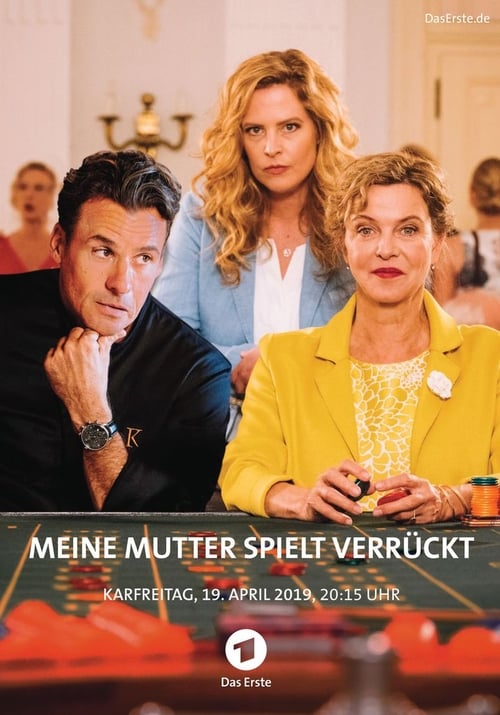
Heidi Janssen's story begins with a stroke of unlikely luck: she wins a luxury wellness trip for two to the Baltic Sea, and that small miracle immediately sets the whole family in motion. The prize is meant to be a break from ordinary life, from the cramped routines of the Kupferkanne in the Eifel, where Heidi's daughter Toni Janssen is already carrying more than her share of the burden while trying to keep the family business steady. Toni does not rush to join her mother's escape, but Heidi persuades her, and the two women leave for the Ocean Grand Hotel with very different hopes in mind. Heidi wants relaxation, attention, and perhaps a little revenge against the dullness of her daily life. Toni expects hassle, awkwardness, and another round of her mother's impulsive decisions. Even before they arrive, the trip already feels like a temporary suspension of the family's real problems rather than a solution to them.
At the Kupferkanne, those problems simmer with particular force around Rufus van Berg, the ambitious chef who is trying to reshape the restaurant into something more refined, more exclusive, and ultimately more worthy of a Michelin star. His obsession with culinary prestige pushes him further and further away from the practical rhythm Toni needs and from the emotional attention Heidi quietly craves. He is no longer simply cooking; he is staging a comeback. The restaurant kitchen becomes a place of pressure, status anxiety, and quiet territorial struggle, because Rufus treats every dish as a step toward his former glory, while Toni experiences the same shift as a loss of control over the place she works in and the role she once had there.
When Heidi and Toni reach the Baltic Sea, the film opens up into a brighter, more decorative world of wellness amenities, polished hospitality, and holiday smiles that only thinly cover deeper emotional unrest. The Ocean Grand Hotel is all soft lighting, polished surfaces, and the promise of calm, but that calm is immediately interrupted when Heidi encounters Ivo, the hotel's maître d'. He is not merely a charming stranger. He is a man from Heidi's past, an old love who once meant enough to leave a permanent mark on her life. The reunion lands with the force of a long-suppressed memory suddenly becoming physical again. The air between them changes at once, and the film makes clear that this is not a trivial flirtation but the reopening of an unfinished relationship.
Heidi's reaction is immediate and unmistakable. After years of feeling pushed to the side at home, she suddenly feels seen again. Ivo flatters her, listens to her, and gives her the sense that she is still desirable, still alive, still capable of beginning again. Their chemistry reignites quickly, and the tone turns from vacation-comedy lightness into a charged romantic return. It is the kind of renewed connection that makes practical considerations feel temporarily irrelevant. Heidi starts leaning into the possibility that this is not just a holiday romance but a second chance. She looks at Ivo as if the years between them can simply be folded away.
Toni sees the danger long before her mother is willing to admit it. She watches Heidi become intoxicated by attention and begins pushing back, warning that the excitement is blinding her. Toni's objections are not just moral or protective; they are also deeply personal. She is already tired of living in the shadow of other people's ambitions, first Rufus's and now Heidi's. The more eagerly Heidi reaches for romance, the more Toni feels herself becoming the family's adult supervisor, the one who has to point out that feelings do not erase consequences. Her frustration sharpens whenever she sees her mother ignoring practical reality in favor of a dream that seems to appear out of nowhere.
The tension between mother and daughter grows in layers. Heidi does not merely defend Ivo; she defends the version of herself that comes alive around him. Toni, meanwhile, does not simply oppose the relationship; she fears the collapse that might follow if Heidi again gives her trust to someone unstable. That fear is not abstract. Later information makes clear that Ivo is not the steady romantic savior he appears to be. He is financially compromised and carries hidden debt, and the sweet mask he wears in the hotel conceals a far less reliable reality. At first, however, Heidi sees only the attentive man in front of her, and every attempt Toni makes to interrupt the fantasy only hardens Heidi's resolve to pursue it.
The emotional mirror of the hotel storyline is the Eifel restaurant storyline, where Rufus keeps pressing ahead with his professional resurrection. He is not interested in restoring harmony so much as in reclaiming status. The more he focuses on fine dining and prestige, the more Toni is pushed away from the kitchen and into a service role, a shift that humiliates her and makes her feel like she is being erased inside her own family enterprise. Heidi's absence on the trip leaves Toni dealing with this alone, and the contrast between the two settings becomes stark: one woman is being swept into an old romance; the other is being steadily displaced in her own home.
Back at the hotel, the romance deepens until it becomes impossible to deny. Heidi and Ivo move through the polished corridors and private corners of the resort as if every glance is a confession. Their conversations carry the weight of time, regret, and longing. The film's drama is not built around loud plot machinery but around the pressure of recognition. A look, a pause, a remembered detail does the work that a less restrained film would hand to a dramatic speech. When Heidi and Ivo are finally alone together, it is clear that the attraction is mutual and that neither of them has truly let the past go.
Toni's resistance intensifies when she learns enough about Ivo to realize that the man who has won her mother's trust is not as secure as he presents himself. The key revelation arrives through the money issue: Ivo's talk of his own plans and his dream of a future is tied to financial desperation. Heidi, in one painful moment, hands over her savings, a substantial amount amounting to 30,000 euros, because she wants to believe in him and because he knows how to speak to her hope. Toni is horrified. What looks like romantic generosity to Heidi looks like dangerous naïveté to Toni. The mother is offering not only money but trust, and the daughter can already see that this trust is being given too cheaply.
Once the money is gone, the film's romantic glow darkens sharply. Heidi discovers that Ivo has not been entirely honest, and the betrayal lands like a physical shock. The revelation that he has already been insolvent twice and is burdened with significant debt changes the emotional temperature of the whole story. Heidi is not just disappointed; she is devastated. The man she thought was a revived lost love now appears as someone willing to let her bear the cost of his instability. The glamorous hotel setting suddenly feels less like a retreat and more like a trap built from charm and wishful thinking. Toni's warnings are vindicated, but not in a satisfying way, because the vindication comes only after the emotional wound has already been inflicted.
The confrontation between Toni and Ivo becomes one of the film's most important turning points. Toni pushes for accountability and insists that Ivo sign a Schuldschein, a written acknowledgement of the debt. The demand is practical and cold, but it is also the only thing standing between Heidi and complete ruin. Ivo, cornered, admits that the Schuldschein would not solve everything, because the debt he carries goes deeper than the money he has just taken. That admission strips away the last traces of romantic fantasy. He is not a misunderstood lover with a simple plan; he is a man in financial collapse. The dialogue around this moment is less about melodrama than about exposure, as the truth slips out in reluctant fragments and Toni realizes how much bigger the deception really is.
In the aftermath, Toni refuses to let the story end in passive humiliation. She takes a gamble of her own and tries her luck in the casino, turning the logic of chance back against the situation that created it. The move is both desperate and symbolic. If Heidi's prize trip began with luck, then Toni now tries to use luck as repair. She does not recover everything, but she manages to win back roughly a third of the lost sum, giving her mother at least some financial relief and reclaiming a little agency in the process. The casino scene matters because it transforms Toni from the story's exasperated critic into an active protector. She is no longer only saying "I told you so." She is trying, however imperfectly, to clean up the mess.
Ivo, meanwhile, is forced into a posture of apology and promise. He tells Heidi that he will do everything he can to pay back the money. The words are meant to soothe, but they cannot restore the trust that has already broken. Heidi stands in the wreckage of her romantic hope, and the hotel's elegant surfaces no longer conceal the ugliness underneath. What had been a chance to rediscover herself now becomes an education in disappointment. The emotional turn is complete: what began as a luxurious escape has become a lesson in how quickly longing can be exploited when it is given a beautiful face to trust.
As the story shifts back to the Eifel, the domestic thread moves toward its own unexpected resolution. Rufus, still driven by his culinary ambitions, continues to pursue the future he imagines for himself and for the restaurant. Yet the film does not allow him to remain merely the demanding careerist. By the time the pressure of the holiday plot and the financial crisis have settled across the family, his emotional position changes. He finally turns toward Toni not only as a business partner but as someone he wants to build a life with. In one of the final turns, he proposes marriage. The proposal arrives almost like an answer to the chaos elsewhere in the story: where Heidi's romance collapses into deception, Toni receives a commitment that is meant to stabilize rather than disrupt.
The proposal also reveals something important about the emotional structure of the film. Rufus, for all his vanity and ambition, is not simply a comic obstacle. His arc resolves by acknowledging that career obsession alone cannot sustain a family. The proposal to Toni becomes an admission that the future he wants is not just a star or a reputation, but a shared life. Toni's response carries the weight of everything she has endured--Rufus's kitchen dominance, her mother's impulsiveness, the stress of holding things together while everyone else follows desire. Her acceptance, or at least her movement toward it, closes one chapter of instability without pretending that the wounds are gone.
Heidi's story ends more cautiously, but not without a final glimmer of hope. After the betrayal and the cash loss, she receives a letter from Ivo. The message promises that he will bring her the first 1,000 euros personally in the near future. It is not a full redemption, and it does not erase the damage, but it creates a faint opening toward repayment and perhaps toward a less deceptive future. The gesture is small compared with the harm done, yet it suggests that Ivo is at least attempting to keep his word. Heidi is left with a fractured heart but not complete closure; the pain remains, but so does the possibility of seeing Ivo again under more honest terms.
The final movement of the film is therefore a double resolution. On one side, Toni and Rufus's relationship shifts toward commitment, promising a more grounded future for the Kupferkanne and for the family core in the Eifel. On the other, Heidi remains marked by romantic disappointment, but the story refuses to leave her entirely defeated. The letter from Ivo softens the ending just enough to preserve a thread of hope, even after the betrayal. The film closes not with a grand reconciliation but with a set of imperfect outcomes: a proposal, a repayment promise, and the knowledge that desire has consequences. Nobody dies. There are no murders, no fatal accidents, no violent losses to catalogue. The emotional casualties are more subtle and more human: trust is broken, pride is wounded, and illusions fall apart.
In the end, Heidi Janssen's luxury wellness trip turns out to be anything but restful. It exposes the family's deepest fractures, revives an old love only to reveal its instability, and forces everyone into sharper honesty than they wanted. Toni Janssen emerges as the practical center of gravity, the one who sees through the romance, takes action when it matters, and keeps the story from collapsing completely. Rufus van Berg moves from career tunnel vision toward a more personal commitment. Ivo remains the most ambiguous figure in the story: magnetic, charming, financially compromised, and only partially trustworthy. The last feeling the film leaves behind is not triumph but survival, the sense that the family will continue, altered but intact, after the whirlwind of longing, disappointment, and reluctant grown-up choices.
More Movies Like This
Browse All Movies →





What is the ending?
In the ending of "Meine Mutter spielt verrückt," the main character, a young woman named Anna, confronts her mother, who has been acting erratically. After a series of misunderstandings and emotional turmoil, Anna realizes the importance of understanding her mother's struggles. The film concludes with a heartfelt reconciliation between them, highlighting the bond of family and the need for compassion.
As the final act unfolds, the scene opens in a cozy yet chaotic living room, filled with remnants of Anna's mother's recent antics. The camera pans over scattered papers and half-finished projects, illustrating the disarray that has taken over their lives. Anna, visibly exhausted and frustrated, stands at the center of the room, her brow furrowed in concern. She has been trying to manage her mother's unpredictable behavior, which has escalated in recent weeks.
In the next scene, Anna's mother, Ingrid, bursts into the room with a wild idea for a new project, her eyes sparkling with excitement. However, Anna's reaction is one of weariness. She tries to gently redirect her mother, but Ingrid's enthusiasm only intensifies. This moment captures the tension between them; Anna feels overwhelmed by her mother's erratic energy, while Ingrid is oblivious to the strain she is causing.
As the story progresses, Anna decides to confront her mother about her behavior. They sit down at the kitchen table, the atmosphere thick with unspoken words. Anna's voice trembles as she expresses her feelings of frustration and helplessness. Ingrid, initially defensive, begins to realize the impact of her actions on her daughter. The emotional weight of their conversation hangs in the air, and the camera captures the shifting expressions on their faces, revealing vulnerability and a longing for connection.
In a pivotal moment, Ingrid opens up about her own fears and insecurities, explaining how her recent behavior is a cry for help. The scene shifts to a close-up of Anna's face, her eyes softening as she listens. This exchange marks a turning point in their relationship, as both women begin to understand each other's struggles. The tension that once filled the room starts to dissipate, replaced by a sense of empathy and shared experience.
The climax of the film occurs when Anna and Ingrid decide to work together on a project that combines both of their interests. They gather materials and brainstorm ideas, laughter filling the air as they collaborate. This scene is filled with warmth and light, symbolizing their renewed bond. The camera captures their hands working side by side, a visual representation of their commitment to supporting one another.
As the film draws to a close, the final scene shows Anna and Ingrid standing proudly in front of their completed project, a colorful display of creativity and teamwork. They exchange smiles, a silent acknowledgment of their journey together. The camera pulls back, revealing the vibrant atmosphere of their home, now filled with a sense of harmony and understanding.
In the end, Anna finds a renewed sense of purpose in her relationship with her mother, while Ingrid learns to channel her energy into positive outlets. The film concludes with a message of hope, emphasizing the importance of communication and compassion in overcoming personal struggles. Each character emerges from the experience transformed, with a deeper appreciation for their bond and the challenges they face together.
Is there a post-credit scene?
In the movie "Meine Mutter spielt verrückt," there is no post-credit scene. The film concludes its narrative without any additional scenes or content after the credits roll. The story wraps up with the main characters resolving their conflicts and finding a sense of closure, leaving the audience with a complete understanding of their journeys.
What motivates the main character, a young man, to confront his mother's behavior throughout the film?
The main character, a young man named Max, is driven by a deep sense of responsibility and love for his mother, who begins to exhibit increasingly erratic behavior. As he witnesses her struggles, he feels compelled to step in and help her regain control of her life, while also grappling with his own frustrations and fears about her mental health.
How does Max's relationship with his friends change as he deals with his mother's situation?
As Max becomes more consumed by his mother's unpredictable behavior, he starts to withdraw from his friends. Initially, they are supportive, but as Max's focus shifts entirely to his mother, tensions arise. His friends feel neglected and frustrated, leading to conflicts that highlight Max's internal struggle between his familial obligations and his social life.
What specific incidents illustrate the mother's erratic behavior in the film?
Several key incidents showcase the mother's erratic behavior, including a chaotic dinner party where she embarrasses Max with her unpredictable outbursts, and a moment when she impulsively decides to adopt a pet without consulting him. These moments not only highlight her instability but also serve to deepen Max's concern and frustration.
How does the film depict the impact of the mother's behavior on Max's personal life and aspirations?
Max's mother's behavior significantly impacts his personal life, causing him to miss important opportunities, such as a job interview and social events. The stress of managing her erratic actions leads to anxiety and self-doubt, forcing him to reconsider his own aspirations and future, as he feels torn between his ambitions and his duty to care for her.
What role do secondary characters play in influencing Max's decisions regarding his mother?
Secondary characters, including Max's friends and a therapist, play crucial roles in shaping his decisions. His friends provide contrasting perspectives, urging him to prioritize his own life, while the therapist offers insights into his mother's condition, helping Max understand the complexities of her behavior. These interactions challenge Max to reflect on his choices and the balance between supporting his mother and pursuing his own happiness.
Is this family friendly?
"Meine Mutter spielt verrückt" is generally considered a family-friendly film, but it does contain some scenes and themes that may be sensitive for children or more sensitive viewers. Here are a few aspects to consider:
-
Emotional Turmoil: The film explores themes of family conflict and personal struggles, which may evoke strong emotions. Characters experience moments of frustration, sadness, and confusion that could be intense for younger viewers.
-
Mental Health Themes: The film touches on issues related to mental health and the impact of these issues on family dynamics. Some scenes may depict characters dealing with anxiety or stress, which could be unsettling for some.
-
Misunderstandings and Conflicts: There are moments of miscommunication and conflict between family members that may lead to emotional distress. These scenes highlight the challenges of familial relationships, which could be relatable but also upsetting.
-
Humor in Awkward Situations: The film employs humor in awkward or embarrassing situations, which might be uncomfortable for some viewers, especially children who may not fully grasp the comedic intent.
Overall, while the film is designed to be light-hearted and entertaining, these elements may require parental guidance for younger audiences or those who are particularly sensitive to emotional or mental health issues.






