

Loading additional questions...
Popular
Should I watch it?
Ask Your Own Question

What is the plot?
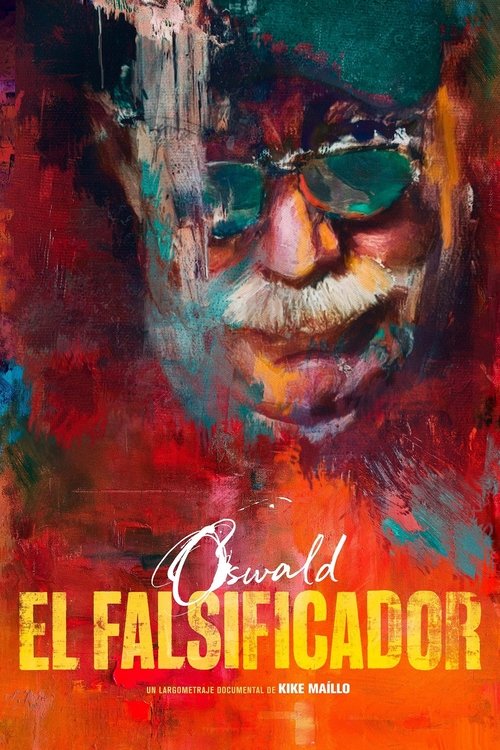
Oswald, the Forger is a documentary about Oswald Aulestia Bach, a Catalan artist whose life becomes inseparable from one of the biggest international art-forgery investigations of recent decades. The film opens by positioning him not as a shadowy side figure but as the central personality in "Operación Artista," an FBI-led case built with the help of the Mossos d'Esquadra and the Carabinieri, and from the start the mood is one of allure, fraud, and pursuit. The documentary frames Oswald as a man whose talent is as real as his audacity: he is pursued for years by American authorities, yet he remains elusive enough to continue moving through the art world, the market, and the myths that surround him.
The story begins by establishing Oswald Aulestia Bach in Barcelona, where his identity as an artist and dealer is already tangled with suspicion. The film presents him as a man who understands the value of appearance, charm, and ambiguity. He is not portrayed as a simple criminal hiding in the dark, but as someone who lives in plain sight, moving between studios, social circles, and international networks while allegedly placing forged works into circulation. The documentary's tone makes clear that this is as much a story of seduction as of crime: Oswald is charismatic, slippery, and self-mythologizing, and the film lets that personality drive the narrative forward.
As the investigation deepens, "Operación Artista" emerges as the central machinery of the plot. The film explains that the case is not confined to one country or one police force; instead, it stretches across Spain, the United States, Italy, and other markets tied to the circulation of art. The FBI works with Spanish and Italian authorities to dismantle what the film describes as one of the largest art-forgery schemes in recent decades. Oswald is portrayed as one of the "cornerstones" of that scheme, meaning that he is not merely a peripheral accomplice but a foundational figure whose access, skill, and reputation help hold the operation together.
The narrative then settles into the rhythm of a long pursuit. Oswald's life becomes defined by movement, evasions, and the tension between notoriety and denial. The film suggests that forged paintings attributed to masters such as Picasso, Joan Miró, and Salvador Dalí are being distributed through a network of accomplices and dealers, with Oswald at the center of the web. His work is presented as technically convincing and commercially dangerous: the forgeries are not crude copies but objects designed to fool collectors, buyers, and intermediaries who want authenticity badly enough to suspend disbelief. The documentary emphasizes the scale of the deception, showing how the market itself helps sustain the fraud.
A major revelation comes when the film makes clear that the case is not just about a single "master forger" but about an ecosystem of complicity. Oswald is shown alongside collaborators such as Elio Bonfiglioli and Michael Zabrin, who help recount the mechanics of production and distribution. The narrative implies that the forgery business works through layered trust, half-truths, and the art world's own hunger for rare treasures. Each sale depends on a chain of people willing to believe, or willing not to look too closely. The film builds tension by contrasting the elegant surfaces of the art market with the criminal machinery underneath.
The pressure eventually catches up with Oswald in the United States. The documentary states that he is extradited and spends nine months in a federal prison in Chicago, a stark shift from the glamour and movement of the art world to the hard confinement of a federal cell. That imprisonment marks the story's most concrete legal consequence, and it functions as the point where the long chase becomes undeniable punishment. The film does not present prison as a redemption arc or dramatic transformation; instead, it uses that confinement to underline the seriousness of the case and the reach of the authorities who have pursued him across borders.
Before that legal reckoning, the film also traces how Oswald's life has long been shaped by escape. One account in the surrounding coverage describes an earlier flight from Spain after a confrontation with a civil guard during the late Franco era, suggesting that evasion is not just a criminal tactic for him but a recurring pattern in his life. That backstory gives his later career as an alleged forger a grim continuity: he is a man who seems to survive by slipping away just as systems close in. The documentary turns that habit into a character trait, something that makes him both fascinating and impossible to pin down.
The film's middle section tightens around the human drama of that life. In interviews and reconstructed memories, Oswald appears as a figure who insists on his own version of events, refusing simple labels. He is painted as both artist and hustler, someone who understands that in the art world authenticity can be less important than the story told about an object. The film's title itself becomes ironic: he is "the forger," but he is also a forger of identity, image, and narrative. That duality is central to the documentary's tension, because every scene involving him asks the same question: is he confessing, performing, defending himself, or all three at once?
The arrest and extradition form the story's decisive legal collapse. The documentary explains that once the American case advances, Oswald is no longer an untouchable figure moving through Barcelona or the wider European circuit. The cooperation between agencies narrows the possibilities, and the film treats his removal to U.S. custody as the moment the long, international myth begins to crack. Chicago becomes the symbol of that crack: the glamorous criminal-adjacent life gives way to bureaucracy, confinement, and the blunt authority of the federal system.
After the prison sentence, the story does not end in defeat so much as in aftermath. The documentary states that Oswald later returns to Spain, which gives the final movement of the film a strange, unresolved quality. He is not shown disappearing into obscurity; instead, he comes back home carrying the weight of the case and the reputation that follows him. The ending is therefore less about a clean moral verdict than about survival. The fraud has been exposed, the authorities have acted, and the man at the center of the operation has been brought low, yet he remains vivid, controversial, and unable to be fully reduced to the charges around him.
No deaths are reported in the available material about Oswald, the Forger, and the film's conflict is legal, financial, and reputational rather than homicidal. The confrontations are between Oswald and law enforcement, between the forged object and the demand for authenticity, and between the image he projects and the story others tell about him. The final emotional note is one of uneasy fascination: the film leaves behind the sense that Oswald Aulestia Bach is both exposed and still slippery, a man whose biggest creation may be the legend of himself.





What is the ending?
In the ending of "Oswald, the Forger," Oswald's deception is finally uncovered, leading to a dramatic confrontation with the authorities. He faces the consequences of his actions, and the film concludes with a sense of loss and reflection on the choices made by the characters.
As the final act unfolds, the tension escalates. Oswald, having successfully forged several high-value artworks, finds himself in a precarious situation when a sharp-eyed art dealer begins to suspect the authenticity of his work. The dealer, portrayed as both shrewd and relentless, conducts a thorough investigation, leading to a series of scenes where he meticulously examines the details of Oswald's forgeries.
Scene by scene, the narrative reveals Oswald's internal struggle. He is torn between the thrill of his deception and the looming threat of exposure. In a moment of desperation, he attempts to destroy evidence of his forgeries, but the dealer's investigation is relentless. The emotional weight of his choices bears down on him, and he grapples with feelings of guilt and fear.
As the dealer gathers enough evidence, he confronts Oswald in a tense meeting at a gallery. The atmosphere is thick with tension as the dealer lays out his findings, revealing the cracks in Oswald's carefully constructed facade. Oswald, cornered and panicked, tries to defend his actions, but the weight of his lies becomes unbearable. The confrontation escalates, and the dealer ultimately decides to involve the authorities.
In the final scenes, the police arrive, and Oswald is taken into custody. The camera captures his face, a mixture of regret and resignation, as he realizes the full extent of his downfall. The emotional climax is palpable as he reflects on the choices that led him to this moment, the dreams he chased, and the relationships he sacrificed along the way.
The film concludes with a poignant scene showing Oswald in a holding cell, staring blankly at the wall. The audience is left with a lingering sense of loss, not just for Oswald's freedom, but for the dreams that have been shattered by his own actions. The final shot lingers on his face, capturing the weight of his decisions and the stark reality of his situation.
As for the fate of the other main characters, the art dealer emerges victorious, having successfully exposed the forgeries and restored his reputation. He is portrayed as a figure of justice, but the victory feels bittersweet, as it comes at the cost of another's downfall. The supporting characters, who were once complicit or unaware of Oswald's actions, are left to grapple with the aftermath of his choices, reflecting on the fragility of trust and the consequences of deception. The film closes on a somber note, emphasizing the themes of ambition, betrayal, and the high price of living a lie.
Is there a post-credit scene?
What motivates Oswald to become a forger?
Oswald, a struggling artist, is driven by desperation and the need to provide for his family. His passion for art is overshadowed by financial burdens, leading him to explore forgery as a means to survive. This internal conflict between his love for genuine art and the moral implications of his actions creates a deep emotional struggle within him.
How does Oswald's relationship with his mentor influence his actions?
Oswald's mentor, a seasoned forger named Victor, plays a crucial role in shaping his approach to forgery. Victor's charismatic yet morally ambiguous guidance tempts Oswald to embrace the darker side of art. Their relationship is complex; Oswald admires Victor but also grapples with the ethical dilemmas that arise from their partnership, leading to moments of tension and self-reflection.
What challenges does Oswald face from law enforcement?
As Oswald delves deeper into the world of forgery, he faces increasing scrutiny from law enforcement, particularly from a determined detective named Clara. Clara's relentless pursuit of justice creates a cat-and-mouse dynamic, heightening the tension in the story. Oswald's attempts to evade capture lead to close calls and moments of panic, forcing him to constantly outsmart the authorities while grappling with his own conscience.
How does Oswald's family react to his forgeries?
Oswald's family is initially unaware of his illegal activities, believing he is simply struggling to make ends meet as an artist. However, as the consequences of his actions begin to surface, tension builds within the family. His wife, Sarah, becomes suspicious of his erratic behavior and the sudden influx of money, leading to emotional confrontations that reveal the strain his choices place on their relationship.
What pivotal moment leads Oswald to reconsider his life choices?
A pivotal moment occurs when Oswald's forgery is discovered by a prominent art collector, leading to a public scandal. This incident forces Oswald to confront the reality of his actions and the impact they have on his family and reputation. The emotional fallout from this revelation serves as a catalyst for Oswald to reevaluate his path, igniting a profound internal struggle between his ambitions and the consequences of his deceit.
Is this family friendly?
"Oswald, the Forger" is a film that delves into themes of deception, crime, and the moral complexities surrounding forgery. While it may not be overtly graphic, there are several elements that could be considered objectionable or upsetting for children or sensitive viewers:
-
Themes of Crime: The central plot revolves around forgery and deception, which may raise ethical questions and portray criminal behavior in a somewhat glamorized light.
-
Emotional Turmoil: Characters experience significant emotional distress, including anxiety, guilt, and betrayal, which could be intense for younger viewers.
-
Conflict and Tension: There are scenes of confrontation and conflict that may create a sense of unease, as characters navigate dangerous situations related to their illegal activities.
-
Moral Ambiguity: The film explores complex moral dilemmas, which may be difficult for younger audiences to fully understand or process.
-
Character Struggles: Some characters face personal struggles, including addiction and desperation, which could be distressing for sensitive viewers.
Overall, while the film may not contain explicit content, its themes and emotional depth may not be suitable for all children or sensitive individuals.