


















Popular
What is the significance of the grandfather clock in the film Clock (2023)?
Who is Dr. Elizabeth Simmons and what role does she play in Ella's treatment?
What is the nature of Ella's hallucinations and how do they affect her actions?
What is the relationship between Ella and Aidan, and how does it influence the plot?
What happens in the film's final scenes involving Ella and the cliff?
Should I watch it?
Ask Your Own Question

What is the plot?
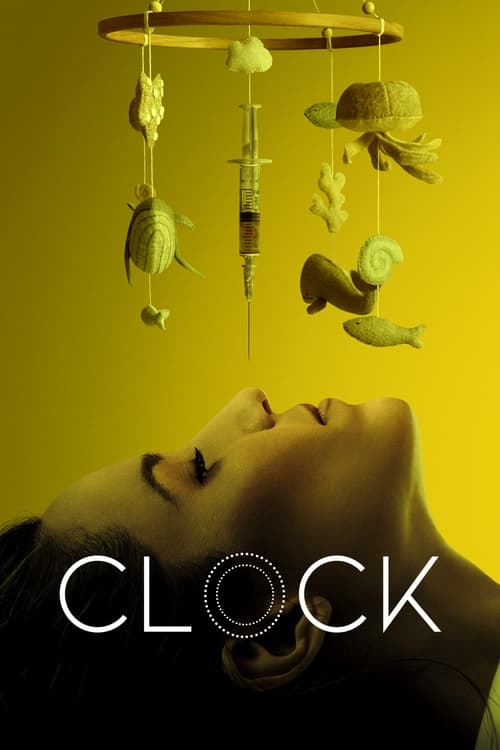
Ella is thirty-seven and facing steady pressure from family and friends to have children, pressure she resists. At home, her father--whose parents survived the Holocaust--keeps bringing up grandchildren, and Ella deflects. Her husband Aiden, concerned for her health, urges her to go to Dr. Webber for a routine breast-cancer screening. In the exam room Ella confesses that she is terrified of pregnancy and childbirth, and she half-jokes that she wishes her biological clock would finally start. Dr. Webber tells her, without dramatics, that perhaps her clock is malfunctioning and mentions an experimental procedure being run by a clinic. He suggests she consider it. Ella leaves the appointment and calls her employer to say she is stepping away from a work project; instead she signs up for the trial.
At her first consultation at the clinic she meets Dr. Elizabeth Simmons, who explains a protocol involving oral hormones followed by an implanted device designed, the doctor says, to "reset" reproductive cycles. Ella agrees to begin the medication. In the weeks that follow she takes the pills and submits to psychological screening. During a Rorschach test in an office lined with framed reports, the inkblots collapse into hallucinations for Ella: a towering, elongated woman; an image of a small family of dead insects; and a mechanical grandfather clock whose pendulum keeps swinging. Dr. Simmons listens and, clinical and calm, interprets the clock as Ella's anxiety about lineage and legacy, and recommends advancing to the next stage.
The next procedure sends Ella into deeper disorientation. She is placed inside a sensory-deprivation chamber: a dark, water-filled tank designed to cut off sound and sight and force a confrontation with inner images. While alone in the tank Ella's mind supplies violent, precise visions. She sees a baby that dangles like a pendulum from between a woman's legs. She endures graphic sequences of childbirth--long, noisy, bloody--close enough that she can feel the pressure and acidity of it. She thrashes, pounding the tank's inner wall and screaming to be let out. When technicians open the lid, Ella blinks into the clinical brightness of the room and catches sight of the tall woman standing by the glass; she bolts from the chamber, slips on the floor, and strikes her head hard enough to lose consciousness.
When she wakes Dr. Simmons and an attendant stand above her. Dr. Simmons describes Ella's reaction as promising: a strong response, she says, signals the treatment is working. Ella later watches footage from the lab's surveillance and sees that the person who stood outside the tank was the attendant from earlier, not a supernatural figure. Even so the imagery continues to invade her days: color drains from her field of vision on certain mornings; the tick of an imagined grandfather clock grows loud in quiet rooms; strangers elongate into the same tall woman with blank faces. Ella hides these episodes from clinic staff and from Aiden because Dr. Simmons has told her that exaggerated reports will disqualify her from the trial.
The side effects escalate during a gathering at her friend Shauna's house. Shauna is pregnant and has invited Ella and a few friends for a baby celebration. Ella feels the room tilt; she sees a spider scuttle across the ceiling outside her peripheral vision. In the nursery she picks up a heavy book, imagines Shauna's belly as a clock face, and swings it down in a violent attempt to smash the abdomen. Aiden yanks the book from her hand and shoves her backward, stopping the blow at the last second. Shauna recoils and, shaken, still asks Ella to design the nursery. Ella stays but grows more unmoored: she paints unsettling images on the nursery walls--tall-woman faces, serrated shapes--and nails jagged slats of wood into corners as if fixing them into some mechanism. Shauna walks in on her in the act; the friends fight, angered and afraid. Shauna's waters break in the middle of the argument. In a moment of impulsive, inexplicable mimicry, Ella dips her hand into the amniotic fluid and smears it on her own face. Shauna's wife grabs her and throws her out of the house.
Shortly after the party Ella receives a call that her father has fallen and broken his arm. She goes to his house where he sits in a chair, groaning, a cast fresh on his limb. In the living room behind him a large grandfather clock ticks softly. As they talk the ticking seems to accelerate and edge into the foreground of everything Ella hears. The sound builds and then becomes unbearable; Ella steps into the kitchen, yanks open a drawer, and takes out a box of tools. Her father protests, confused and frightened, as she approaches the clock. Ella attacks the clock amid his pleas--first prying off the face, then wrenching gears out with pliers, then smashing the pendulum. She piles pieces of wood and brass on the floor and, breathless, continues disassembling. She works with a kind of furious joy, fingers raw and bleeding, until the clock lies in a ruined heap of splinters and metal beside an overturned lamp. She stares at the wreckage and, for an instant, seems steady.
Aiden finds her at home that evening with cuts on her hands. He comforts her, cleans the wounds, and she tells him she is ready for a baby. They have sex; the encounter is hurried and intimate and then abruptly violent. When Aiden is on top of her the implant under her skin--still unremoved--ripples or shifts in a way she did not expect. A sharp edge of the device tears into Aiden's groin; he cries out and says to grab gauze from his bag. Ella reaches for his overnight bag and sees, stitched into the fabric, the clinic's logo. She demands to know how he became involved. Aiden admits he met Dr. Simmons at a trade show and that he asked Dr. Webber to suggest the trial, hoping it would be a solution to their stalemate about children. Ella's fury snaps into a cold panic. She presses at Aiden's wound with too much force and he screams; she leaves their apartment without a word.
Ella drives straight to the treatment center and walks into the clinic lobby with tools in her bag. She confronts Dr. Simmons in front of other participants and staff and demands the implant's removal. Dr. Simmons refuses, citing protocol and the danger of removal outside a surgical setting. Ella begins to pry at the site on her own with pliers. The tall woman appears in the doorway; Ella swings at her and knocks her down. For a disorienting moment the body on the floor resolves into Dr. Simmons herself. Panicked, Ella forces the pliers to the implant and tears it free from her body. The instant she extracts the device the world floods with color again; the thin, flat hues return to their full depth. She feels raw and relieved and terrified.
Security alarms start. Staff move to restrain her; several police cruisers converge on the facility. Ella flees in her car. She drives fast with her hands shaking, past streetlights and parked cars, until she pulls off onto a narrow road that climbs to a cliffside overlook. There she stops. Aiden calls. On the line he tells her, his voice breaking, that he called the police after what he saw at her father's house. He says he saw blood, and then after a pause speaks the thing that crushes her: he tells her what he saw when he drove to check on her father. Ella listens and then the image clicks into place in a way that makes the world rearrange. She realizes that the "clock" she tore apart in her father's living room was not only a clock. Something about the wreckage, the way wood and flesh looked in her frantic hands, crashes over her. She stumbles from the car, as if pushed by the force of the admission. Police officers approach and place handcuffs on her wrists. In the confusion she breaks free--whether by untwining the cuffs or by wresting a moment when an officer is distracted--and runs toward the precipice.
She sprints to the edge of the cliff; sirens are distant, the wind smells of salt and cold. Without hesitating she leaps. The drop is long and clean. She hits the rocks near the shoreline and rolls into the shallow water at the cliff base. She lies there on the gravel, breathing hard. Not a single bone is broken that she can feel; there are cuts and abrasions, but she is remarkably intact. A strange, fish-like creature, slimy and small, crawls up from the surf and pads across the wet stones toward her. Ella watches it approach, uncertain and stunned, as the sky above the ocean shifts to a quiet, high-blue.
No character death is catalogued in the records Ella sees and hears that night in the way the clinic staff described reactions. Her father's condition after the episode at his house is left unclear in the immediate aftermath: he appears to be injured when she arrives, and later the people who find out say that Aiden called the police after seeing what she had done to her father. Ella perceives, with sudden and sick clarity, that in attacking the "clock" she had inflicted far more than property damage. The police presence, the handcuffs, Aiden's call, and her frantic flight all follow directly from her decision to remove the implant herself and her earlier breakdown in his home. The treatment she began under Dr. Simmons's care produces hallucinations that intrude into daily life and provoke violent actions, and the removal of the implant is the decisive physical act that sets the final chain of consequences in motion.
In the final sequence Ella lies on the shoreline, the tide moving in and out, watching the small creature crawl nearer. Her clothing is torn and muddy; blood matted on her palm from the hands she used as tools and weapons. Emergency lights glow dimly on the cliff above. Aiden's voice is a memory from the phone; Dr. Simmons's clinic is sealed by police. The fish-like animal draws close and Ella does not move as the scene closes on her, prostrate and breathing, with the strange creature beside her and the broken, scattered evidence of the last weeks--paintings of tall women, splintered wood, a torn implant--receding toward the waves behind her.









What is the ending?
Clock (2023) - Ending Summary
Ella removes the implant from her body, which causes her to see clearly again after months of drug-induced hallucinations. She flees in her car as police pursue her. Aiden calls to tell her that she has killed her father with a hammer, not destroyed a grandfather clock as she believed. Realizing the horrific truth of what she has done while under the influence of the experimental treatment, Ella drives to a cliff's edge, abandons her vehicle, and jumps off. She lands at the bottom of the cliff by the water's edge with no visible injuries, where she witnesses a strange fish-like creature emerging from the water toward her.
The Ending Narrated in Full
The final act of Clock unfolds as a cascade of revelations that strip away the layers of Ella's drug-induced reality. After months of experimental treatment designed to restore her maternal instinct, Ella's mind has become a fractured landscape where hallucinations and reality have become indistinguishable.
The turning point arrives when Ella discovers the truth about Aiden. During an intimate moment after she has told him she is ready for a baby, the implant that Dr. Simmons inserted into her body cuts Aiden's genitals. As he asks her to retrieve gauze from his bag, Ella finds the treatment facility logo on the bag itself. This discovery shatters the illusion of their relationship. Aiden confesses that he met Dr. Simmons at a trade show and conspired with her to have Dr. Webber suggest the clinical trial to Ella in the first place. Their entire relationship has been orchestrated as part of the experiment. In her rage, Ella aggravates his injury and leaves him.
Consumed by fury and clarity, Ella takes action against the implant that has been poisoning her mind. She rips the device from her own body. The moment the implant is removed, her vision clears. The world returns to its natural colors. The hallucinations that have plagued her throughout the treatment cease. She can see again.
But this clarity comes too late. Police cars arrive at her location. Ella flees by vehicle, driving desperately to escape. As she approaches the edge of a cliff and her car comes to a stop, her phone rings. It is Aiden calling. He tells her that he contacted the police after witnessing what she did to her father. His words force Ella to confront a truth she has been unable to accept: the grandfather clock she believed she destroyed in her father's house was not a clock at all. In her drug-induced state, hallucinating and driven by the mounting pressure and psychological torment of the treatment, she attacked and killed her father with a hammer. The ticking sound she heard was not from a timepiece but from her own fractured perception. The grandfather clock, a family heirloom that survived war and represented generational legacy and the weight of family expectation, existed only in her mind as a symbol of the biological clock that society insisted she repair.
Bewildered and devastated by this realization, Ella abandons her car. She runs toward the cliff's edge and jumps. She falls through the air and lands at the bottom of the cliff by the water's edge. Remarkably, she sustains no visible injuries from the fall. As she lies there, disoriented and broken, a strange creature emerges from the water toward her, fish-like and otherworldly, leaving her fate ambiguous and unresolved.
The fates of the main characters at the story's end are as follows: Ella survives her suicide attempt but remains in a state of psychological and physical devastation, confronted with the knowledge that she has murdered her own father while under the influence of an experimental treatment designed to force her into motherhood. Aiden survives his injury and has turned Ella over to the authorities, his role as a conspirator in the experiment now exposed. Dr. Simmons' ultimate fate is not explicitly detailed, though Ella has knocked her unconscious during their final confrontation. Ella's father is dead, killed by his own daughter in a drug-induced state. The grandfather clock, the symbol of family legacy and biological pressure, remains destroyed, existing only as a phantom in the wreckage of Ella's shattered mind.
Is there a post-credit scene?
The movie Clock (2023) does not have a post-credit scene. There is no additional teaser or scene after the credits roll.
The film's ending itself is ambiguous and emotionally intense, focusing on the protagonist Ella's psychological and physical struggles related to societal pressure about having children, her experiences with a clinical trial implant, and her confrontation with her father. The final scenes show Ella jumping off a cliff, with an ambiguous fate--she appears to die but then is shown alive on a rock in the water, suggesting a symbolic or possibly supernatural interpretation of her state.
However, after the credits, there is no extra scene or teaser to extend the story or provide further closure.
What is the significance of the grandfather clock in the film Clock (2023)?
The grandfather clock symbolizes Ella's biological clock and her fear of ending her family line. Throughout the film, the ticking grows louder during key moments, representing her internal pressure. In a drug-induced hallucination and emotional climax, Ella attacks and tears apart the clock, only to later realize that she actually killed her father, Joseph, who was symbolically represented by the clock's destruction.
Who is Dr. Elizabeth Simmons and what role does she play in Ella's treatment?
Dr. Elizabeth Simmons is the pioneering medical professional who oversees the experimental treatment to 'fix' Ella's biological clock. She administers hormone pills and implants an experimental device in Ella. Ella hallucinates Dr. Simmons as a tall woman, a figure of fear and control. Ultimately, Ella confronts and knocks out Dr. Simmons, ripping out the implant herself to stop the treatment.
What is the nature of Ella's hallucinations and how do they affect her actions?
Ella experiences vivid hallucinations including a tall woman (Dr. Simmons), a family of dead bugs, a grandfather clock, and terrifying childbirth scenes. These hallucinations intensify as the treatment progresses, blurring her perception of reality. They culminate in her violent destruction of the grandfather clock, which is actually her father, and contribute to her mental breakdown and desperate actions.
What is the relationship between Ella and Aidan, and how does it influence the plot?
Aidan is Ella's partner who initially consoles her but is later revealed to have conspired with Dr. Simmons to have Ella undergo the treatment. He appears supportive but secretly orchestrates the pressure on Ella to fix her biological clock. After Ella injures him during a confrontation, he calls the police on her following the incident with her father, escalating the film's tension and Ella's descent.
What happens in the film's final scenes involving Ella and the cliff?
In the final scenes, Ella flees from the police and ends up at the edge of a cliff. She jumps off but is shown lying by the water's edge with no visible injuries. She then sees a strange fish-like creature, a Tiktaalik, which symbolizes early life evolving onto land. This imagery reflects Ella's tragic journey with life and creation, ending on a surreal and symbolic note.
Is this family friendly?
Clock (2023) is not family friendly and is rated TV-MA, equivalent to an R rating. The film contains several elements that would be inappropriate and disturbing for children and sensitive viewers.
The movie includes severe frightening and intense scenes with jump scares and hallucinations throughout. There are graphic and disturbing body-horror images, particularly involving childbirth imagery. The film also contains moderate violence and gore, including an offscreen beating death and an offscreen suicide, along with scenes of physical altercation between characters.
Additionally, the film features moderate profanity, some sex scenes including explicit close-up imagery, and deeply unsettling psychological horror elements centered around themes of forced motherhood and reproductive coercion. The clinical trial procedures depicted are invasive and disturbing in nature.
The overall tone is intentionally uncomfortable and designed to unsettle viewers through both visceral horror imagery and psychological manipulation themes. This is not appropriate viewing material for children or those sensitive to horror, body horror, or themes involving reproductive trauma.









