
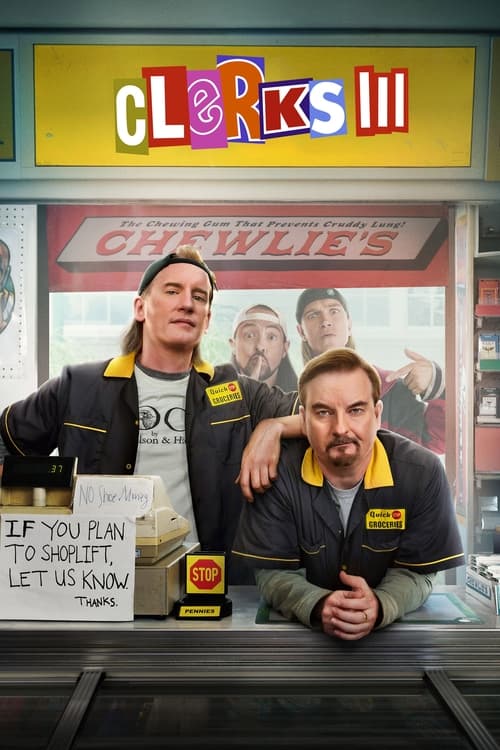













































Popular
What motivates Dante to create a movie about his life?
How does Randal's health scare affect his relationship with Dante?
What role does Jay and Silent Bob play in the story?
How does the film address the theme of nostalgia through the characters' experiences?
What is the significance of the film within a film concept in Clerks III?
Should I watch it?
Ask Your Own Question

What is the plot?
Sorry, we aren't able to watch and write up a full detailed plot yet. Check back in a few days.








What is the ending?
In the ending of Clerks III, Dante and Randal, after a series of emotional and comedic events, come to terms with their lives and the legacy they want to leave behind. They decide to create a movie about their experiences at the Quick Stop, culminating in a heartfelt tribute to their friendship and the people they've lost. The film ends with a sense of closure and hope, as they embrace their past while looking forward to the future.
As the final act unfolds, we find ourselves back at the Quick Stop, the familiar setting that has been a backdrop for so many of Dante and Randal's adventures. The store is bustling with customers, and the atmosphere is a mix of nostalgia and urgency. Randal, inspired by the heart attack he suffered earlier in the film, has decided to make a movie about their lives, a project that he believes will encapsulate their experiences and the essence of their friendship.
Scene by scene, the narrative progresses:
The first scene shows Randal passionately pitching his idea to Dante, who is initially skeptical. Randal's enthusiasm is infectious, and he begins to outline the film's structure, drawing parallels between their lives and the characters they encounter daily. Dante, still grappling with his own insecurities and fears about the future, slowly warms up to the idea, realizing that this could be a way to honor their past and the people they've lost, including their late friend, Elias.
As they begin to film, we see a montage of them reenacting pivotal moments from their lives at the Quick Stop. The scenes are interspersed with flashbacks that highlight their growth and the challenges they've faced. Each moment is filled with laughter, tears, and a sense of camaraderie that has defined their friendship. The emotional weight of these memories is palpable, as both men reflect on their choices and the impact they've had on each other's lives.
In one poignant scene, they recreate the moment when they first met, showcasing their youthful naivety and the bond that formed over shared experiences. This moment serves as a reminder of how far they've come and the importance of their friendship in navigating life's ups and downs.
As the film progresses, we see the return of familiar faces from their past, including Jay and Silent Bob, who provide comic relief but also serve as a reminder of the passage of time and the importance of community. Their interactions are filled with humor, but there is an underlying current of nostalgia that permeates the scenes.
The climax of the film occurs during the premiere of their movie, held at the Quick Stop. The store is packed with friends, family, and loyal customers, all eager to see the culmination of Randal and Dante's efforts. As the film plays, the audience is treated to a heartfelt tribute to their lives, filled with laughter and tears. The emotional resonance of the film reflects the struggles and triumphs of their journey, and the audience is visibly moved.
In the final moments, as the credits roll, Dante and Randal stand together, overwhelmed by the response. They share a moment of reflection, realizing that their lives have been intertwined in ways they never fully appreciated. Dante expresses gratitude for Randal's friendship, acknowledging that despite the chaos and challenges, they have always had each other.
The film concludes with a sense of hope and renewal. Dante and Randal, now more aware of their own mortality and the importance of living life to the fullest, embrace the future with open hearts. They step out of the Quick Stop, ready to face whatever comes next, united in their friendship and the legacy they have created together.
In the end, Dante finds a sense of peace, having come to terms with his past and the choices he has made. Randal, invigorated by the experience of creating the film, is filled with a renewed sense of purpose. The film closes on a hopeful note, emphasizing the themes of friendship, legacy, and the importance of cherishing the moments that define us.
Is there a post-credit scene?
Yes, "Clerks III" features a post-credit scene that serves as a poignant and reflective moment for the characters. After the credits roll, the scene opens with Dante and Randal sitting together in the Quick Stop, the familiar convenience store setting that has been central to their lives.
In this moment, they are engaged in a heartfelt conversation about their experiences and the journey they have taken together. Randal expresses his gratitude for Dante's friendship and support, especially after the life-altering events they have faced. The atmosphere is filled with a sense of nostalgia and warmth, as they reminisce about their past adventures and the lessons learned along the way.
As they talk, the camera captures the small details of the Quick Stop, from the flickering fluorescent lights to the various products lining the shelves, evoking a sense of comfort and familiarity. The scene emphasizes the bond between the two friends, highlighting their growth and the importance of their relationship.
The post-credit scene concludes with a sense of hope and continuity, suggesting that while life may change, the connections we forge with others remain a vital part of our journey. It leaves the audience with a bittersweet feeling, encapsulating the themes of friendship, loss, and the passage of time that permeate the film.
What motivates Dante to create a movie about his life?
Dante's motivation to create a movie about his life stems from a deep sense of reflection and the desire to capture the essence of his experiences as a clerk. After a life-altering event, he feels compelled to document the mundane yet impactful moments that have shaped him and his relationships, particularly with Randal.
How does Randal's health scare affect his relationship with Dante?
Randal's health scare serves as a catalyst for both characters to confront their mortality and the significance of their friendship. It deepens their bond as they navigate the fear of loss and the realization of how much they mean to each other, ultimately leading to a renewed appreciation for their shared experiences.
What role does Jay and Silent Bob play in the story?
Jay and Silent Bob provide comic relief and serve as a connection to the past for Dante and Randal. Their antics and unwavering friendship highlight the theme of loyalty and the importance of maintaining connections, while also offering a nostalgic reminder of the characters' younger days.
How does the film address the theme of nostalgia through the characters' experiences?
The film addresses nostalgia through the characters' reflections on their past, particularly as they revisit old haunts and relationships. Dante and Randal's journey to create a film about their lives allows them to relive and reinterpret their shared history, evoking both fond memories and unresolved issues.
What is the significance of the film within a film concept in Clerks III?
The film within a film concept serves as a meta-commentary on the characters' lives and the nature of storytelling. It allows Dante and Randal to explore their own narratives while simultaneously engaging the audience in a deeper conversation about creativity, legacy, and the impact of their choices.
Is this family friendly?
"Clerks III," produced in 2022, is not considered family-friendly due to its mature themes and content. Here are some potentially objectionable or upsetting aspects that may occur for children or sensitive viewers:
-
Strong Language: The film features frequent use of profanity, which may be inappropriate for younger audiences.
-
Sexual Content: There are references to sexual situations and innuendos that may not be suitable for children.
-
Substance Use: Characters are depicted using alcohol and discussing drug use, which could be concerning for sensitive viewers.
-
Emotional Themes: The film explores heavy themes such as mortality, loss, and existential crises, which may be distressing for some viewers.
-
Violence: There are moments of physical altercations and discussions of violence that could be upsetting.
-
Dark Humor: The film employs dark humor that may not resonate well with all audiences, particularly younger viewers.
These elements contribute to the film's overall tone, which is geared more towards an adult audience.








