











Popular
Who is Andrea, and what happens to her after her husband dies unexpectedly?
Who is the neighbor, and how does the assault on Andrea happen?
What abuse did Andrea face as a teen ski prodigy, and how does it affect her in the present?
How does Andrea’s identity as a former ski champion matter to the story?
What does Andrea decide to do after the assault and the resurfacing of her memories?
Should I watch it?
Ask Your Own Question

What is the plot?
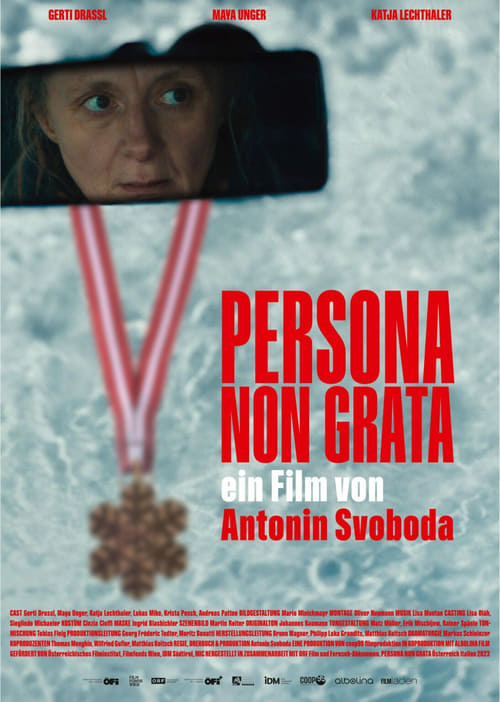
Persona non grata (2024) opens in the uneasy quiet of Andrea Weingartner's life, where grief and old pain sit just beneath the surface. In her large apartment, she moves through the day with the stiffness of someone whose body is already in revolt: her feet hurt constantly, and she soaks them in ice water as if the cold can hold her together. Her husband has just died unexpectedly, and the shock leaves her raw, isolated, and vulnerable, with the strain on her already tense relationship with her daughter Sara becoming even harder to bear.
The first rupture in the present comes from outside her own home. A neighbor takes advantage of Andrea's fragility and assaults her, and the violation does more than wound her in the moment--it tears open the sealed chamber of memory she has spent decades trying to keep shut. The assault is the kind of small, brutal event that alters the air around a person; afterward, Andrea is no longer simply a widow in mourning, but a woman dragged back toward a past she has been trying not to name. According to the available sources, the police do not encourage her to report what happened, which deepens her isolation and reinforces the film's sense that institutions too often fail women at the very moment they most need protection.
That present-day attack triggers the deeper story, the one that has been buried for years: Andrea's life as a teenage ski prodigy in the Austrian ski system, where the world that praised her talent also concealed abuse. The film identifies her as a former ski champion who stopped competing at 22 after conflict with superiors, even though she had already achieved the status of a national champion and World Cup winner. In memory, the ski world appears not as a place of glory but as a disciplined, hierarchical machine, with boarding-school routines and "monstrous power structures" that normalize control, silence, and sexual exploitation. The abuse she suffered as an adolescent is not presented as an isolated act but as part of a larger system of predation inside the federation environment, where coaches and colleagues participate in a culture of intimidation and denial.
As Andrea's memories surface, the film moves between her present distress and the younger version of herself in the 1970s, when she is still a promising athlete trapped in a world that uses her talent while ignoring her humanity. Her adult life is already marked by a long history of unresolved family tension. Her relationship with her parents has never been easy, and her bond with Sara is similarly strained, so when the husband dies and the assault follows, Andrea is left without the emotional shelter she needs. The sources describe her as traumatized and plagued by fear, trying to manage daily life while carrying grief, bodily pain, and memories that have never fully receded.
The turning point comes in 2017, when Andrea decides to speak publicly about the abuse. The film frames this as a consequence of both personal pressure and the broader #MeToo moment, which gives her the language and public atmosphere to finally break her silence. She gives an interview that becomes the film's central act of defiance: she recounts her time as a young professional skier and describes the abuse and the system that sustained it. This is not a cautious disclosure. It is a direct confrontation with the institutions that protected the perpetrators, and the film shows how her testimony destabilizes the old order by refusing to be polite or partial about what happened.
Andrea's decision to speak is met immediately with resistance. Her family reacts with rejection, and the backlash from her parents and daughter Sara is especially painful because it comes from people whose understanding she most needs. At first, they do not fully believe her or do not want to face the implications of what she is saying. The film emphasizes this social isolation as another layer of violence: Andrea is not only fighting memory and institutional denial, but also the discomfort of those closest to her, who would prefer the past remain buried. The title Persona non grata takes on its full meaning here--Andrea becomes unwelcome in the very world she helped to elevate, and even within her own family she is treated, at least initially, as someone who has disrupted the peace by telling the truth.
The story then expands outward. Andrea's testimony unleashes what the sources describe as a media avalanche, and the film carefully tracks the consequences of public disclosure. Once she speaks, other people begin to come forward or at least to support her allegations, and the silence that protected the ski federation begins to crack. The film shows the social mechanism of truth-telling: one voice invites others, and what looked like an isolated personal trauma is revealed as part of a broader pattern. The sources say that her allegations uncover "monstrous power structures" in the home management and show how abuse between colleagues and coaches continued for years. This is the film's major revelation--that Andrea's suffering was not an accident or a misunderstanding, but evidence of a deeply rooted culture of abuse in Austrian sport.
Sara's arc becomes one of the emotional backbones of the latter part of the story. She begins in resistance, but over time she gradually understands that her mother's fight is larger than her own private pain. The film uses this shift to dramatize the difficulty of receiving trauma secondhand. Sara must move from disbelief or defensiveness toward recognition, and that transformation mirrors the broader public process around Andrea's story: initial rejection gives way, slowly, to acknowledgment. The relationship between mother and daughter does not simply heal in a sentimental way; instead, it changes through the hard work of hearing the truth and accepting that Andrea's disclosures are both personal and political.
The film's tension comes less from physical danger after the assault than from the escalating consequences of speech. Andrea is not shown as triumphant in any easy sense. She is exposed, doubted, and made vulnerable by her own honesty. Yet the available sources describe the outcome as a story of liberation based on true events, which suggests that the film closes by turning Andrea's suffering into a form of witness that cannot be undone. Her interview and public stance place her in the company of other victims who had remained unseen, and the support she eventually receives confirms that her courage breaks open a path for others.
There are no detailed source materials here that provide a beat-by-beat final sequence, so the exact final visual composition cannot be reconstructed with certainty. What is clear is the emotional resolution: Andrea's testimony stands, the institutional silence is challenged, and the personal cost of telling the truth is balanced by the possibility of collective recognition. The film ends with Andrea no longer defined solely by the abuse she endured or the grief that follows her husband's death. Instead, she emerges as a woman who forces a public reckoning, even if that reckoning begins in pain, loneliness, and family fracture.
More Movies Like This
Browse All Movies →








What is the ending?
In the ending, Andrea finally stops remaining silent and makes her abuse public, even though doing so brings rejection from people around her. The film ends with her story no longer being private: the truth she carries turns into a public accusation, and the people closest to her are forced to face it.
Andrea's husband dies unexpectedly at the beginning of the story, and that loss leaves her alone and vulnerable. After that, a neighbor assaults her, which pushes long-buried memories back into her mind and leads her to speak openly about the sexual abuse she suffered as a teenager at the ski federation. She gives an interview and reveals what happened in the past, including the abuse and the way the system protected the people responsible.
Scene by scene, the ending unfolds like this:
Andrea is already shaken by her husband's death, and the house feels empty around her. She is trying to hold herself together when the neighbor exploits that vulnerability and attacks her. That present-day violence does not stay separate from the past; it opens the door to the memories she had kept sealed away for years.
The film then moves into Andrea's decision to speak. She chooses to tell her story publicly, and she describes the abuse she suffered as a young skier and the silence that surrounded it. Her testimony does not remain a private confession. It becomes a public event that draws attention and pushes the larger system of sport and authority into question.
After Andrea goes public, the response around her is immediate and painful. Her family reacts first with incomprehension and rejection, including her parents and her daughter Sara. At the same time, support begins to grow from outside her family, and the story shows that more and more people believe her and stand with her. Sara, who is pregnant, slowly begins to understand that what her mother is fighting for is larger than one personal case.
By the end, Andrea's fate is not that her problems disappear, but that she refuses silence and takes ownership of her story. Her husband is dead, her neighbor has already triggered the crisis, her parents remain initially rejecting, and Sara moves from confusion toward understanding. Andrea ends the film as the person who has broken the silence, while the conflict shifts outward, from her private pain to a public reckoning.
Is there a post-credit scene?
I could not verify a postcredit scene for the 2024 film Persona non grata from the provided search results. The results shown are unrelated to that film, so I can't confirm whether it has one or describe it without more reliable source material.
If you want, I can help check the film's credits structure if you can share a cast/crew detail, distributor, or an alternate title that would make the film identifiable.
Who is Andrea, and what happens to her after her husband dies unexpectedly?
Andrea is the former ski champion at the center of the story. After her husband dies unexpectedly, she is thrown into grief and trauma, which becomes the emotional starting point for the film's events. The questions people most often ask about her focus on how that loss changes her, how vulnerable she becomes afterward, and what she does in response to the disturbance in her life.
Who is the neighbor, and how does the assault on Andrea happen?
The neighbor is the specific character tied to the assault that reopens Andrea's buried trauma. Audience questions about him usually ask who he is, why he targets Andrea, and how the assault is staged in relation to her fear and shock. The story links that attack directly to Andrea's resurfacing memories of abuse from her teenage years as a ski prodigy.
What abuse did Andrea face as a teen ski prodigy, and how does it affect her in the present?
Andrea's past trauma is a major character-specific mystery people ask about. The film states that she was abused as a teen ski prodigy, and the assault by the neighbor brings those memories back with force. Questions tend to center on what happened to her back then, who was involved, and how that earlier abuse shapes her present-day reactions and decisions.
How does Andrea’s identity as a former ski champion matter to the story?
People often ask how her athletic past connects to the present-day plot. Andrea's history as a former ski champion is not just background; it defines how others see her and how she sees herself before the trauma interrupts that life. Questions about this detail usually focus on whether her sporting success contrasts with her private pain and why that past makes her recovery or response more complex.
What does Andrea decide to do after the assault and the resurfacing of her memories?
A common plot-specific question is what Andrea does once she is forced to confront both the neighbor's assault and her teenage abuse. The film's premise says that, inspired by #MeToo, she decides to break the silence. Questions about this part usually ask what 'breaking the silence' means in practice, who she confronts, and how that choice changes her trajectory.
Is this family friendly?
No, this is probably not family-friendly. The film centers on trauma, grief, and allegations of sexual abuse, so it is more suitable for adults and older teens than for younger children.
Potentially objectionable or upsetting elements include: - References to sexual abuse and assault, including traumatic memories tied to the protagonist's past. - Grief and bereavement after the unexpected death of a spouse. - Emotional distress, fear, and anxiety as the character struggles with long-buried trauma. - Family conflict and rejection when the protagonist speaks publicly about abuse. - Likely heavy themes of shame, silence, and institutional wrongdoing, which may be upsetting for sensitive viewers.
If you want, I can also give you a very brief "parent guide" version with just age-suitability and content flags.