
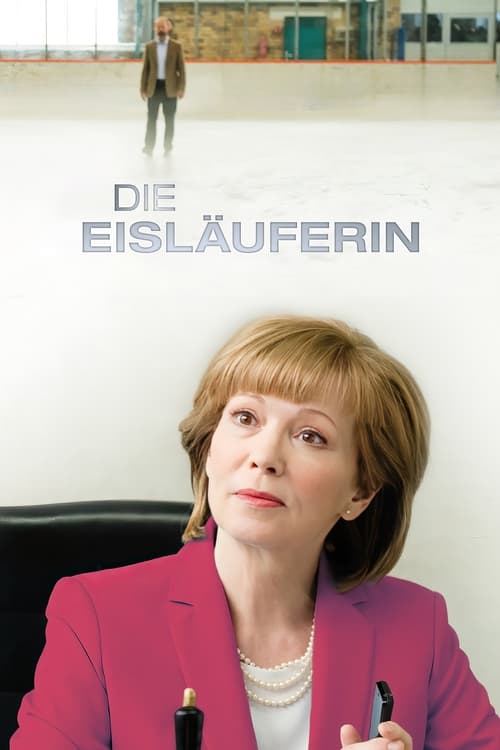









Popular
What motivates the main character, a young figure skater, to pursue her dreams despite the challenges she faces?
How does Lena's relationship with her coach evolve throughout the film?
What role does Lena's family play in her skating career?
What challenges does Lena face in her personal life that affect her skating?
How does Lena's friendship with other skaters influence her journey?
Should I watch it?
Ask Your Own Question

What is the plot?
Katharina Wendt begins the story as a worn, overburdened Federal Chancellor who has reached the point where power feels less like victory than exhaustion. During the summer break, she finally slips away from the machinery of government with her husband, Helmuth, hoping for a little distance from the relentless pressure of office and the emptiness that has begun to swallow her private life. The escape is brief and fragile. At a small East German railway station in Mecklow, where she has stopped to buy gooseberries, a station sign breaks loose and crashes onto her head, knocking her unconscious and changing the course of both her life and the country's. The injury leaves her with a severe retrograde amnesia: the last twenty-five years vanish, and when she wakes, her mind is stuck in 1989, as if the Wall has not yet fallen and reunification has not yet happened.
From that moment on, the film's central joke and central crisis are the same thing. Every morning Katharina wakes with the same hardwired conviction that the past must still be completed, and the first words that return to her are always the same: "Die Mauer muss weg!" She no longer retains anything she learns beyond a single day, so every evening the present slips away and every morning she must be told again who she is, where she is, and what year it is. The effect is devastating and absurd at once: one of the most powerful women in Europe is reduced to a person who must be reintroduced to her own life before breakfast. The film repeatedly underlines the gulf between the iron discipline of the Chancellor and the vulnerability hidden beneath it. Her mind reaches back to the political world of the late GDR era, but the body and office she now inhabits belong to a Germany she cannot keep in memory.
Helmuth is immediately drawn into the lie that makes the rest of the film possible. Instead of calling attention to the accident, he joins Chancellor's Office Minister Dieter Kahnitz in hiding the truth, because the consequences of public exposure would be politically catastrophic. Kahnitz reacts with a mixture of panic and opportunism. For him, the Chancellor's condition is at once a disaster and a chance to climb. If Katharina cannot function before the end of the summer recess, he can imagine himself as the one who keeps the country running, and perhaps even as her successor. One summary frames his fear in apocalyptic terms: if the Chancellor fails, the euro fails, and then Europe fails. Another notes that the whole cabinet is full of obedient yes-men, which makes the chancellor's absence even easier to exploit. So the two men, joined by the logic of power, decide that Katharina must be managed, not mourned. Her condition is concealed, and every day begins with a carefully staged reconstruction of reality.
The story then settles into its distinctive rhythm. Katharina is treated as if nothing has happened, but in truth she must be reassembled every morning from fragments of information, posture, and persuasion. She is dressed, briefed, and guided back into the role of Chancellor as though the role itself can substitute for memory. The concealment is not just a political maneuver; it becomes an emotional prison. Helmuth watches his wife disappear into a loop in which she can never keep the people she meets, the lessons she learns, or the tenderness he offers her. Kahnitz, meanwhile, uses the situation to sharpen his own influence. Since Katharina cannot remember the previous day's conversations, he can feed her versions of reality that support his aims and then repeat them until they become, for the moment, true. The government continues to function, but only through performance, manipulation, and a kind of daily amnesia in the entire political apparatus.
That fragile arrangement becomes even more precarious when the team brings in Dr. Ivantschuk, the Russian "miracle" therapist flown in to treat her. He is the one outsider who seems to understand that Katharina's problem is not simple forgetfulness but a blocked emotional core, a "wall in her soul" that has to be torn down if her identity is to return. His method is not medical detachment but sensory provocation. He tries to reach her through smell, cooking, movement, and intimate recollection, using what her body may still remember even when her conscious mind cannot. The summaries point to cooking, scent, and even "Varoufakis" motorcycle riding as part of the process, and the film leans into these strange, vivid cues as if they are keys to a locked room. Ivantschuk is not merely restoring memory; he is trying to restart a person by reactivating the emotional patterns that made her before power hardened her into the icy figure the public knows.
At first, the therapy appears almost comic, because every successful breakthrough is erased by sleep. Katharina may be jolted into a flash of recognition, only to lose it again by morning. But the repetitions create momentum. Each encounter with Ivantschuk reveals more of the woman who existed before she became Chancellor, and each regained feeling threatens the political fiction built around her. Kahnitz becomes increasingly uneasy as the therapist's influence grows. He wants a compliant Chancellor, not an awakening one, and his interventions grow blunter and more desperate as the weeks of summer break run down. The deadline matters: there are only four weeks until the end of recess, and then the Russian prime minister is due to arrive. If Katharina is not stable by then, the entire balance of diplomacy and internal power may collapse.
The marriage between Katharina and Helmuth becomes the emotional center of the film. Helmuth is the one person who remembers her outside the performance of power, and Ivantschuk eventually realizes that he is the key to unlocking her blocked past. That discovery changes the direction of the treatment. Rather than attempting to reach her through abstract political facts, the therapist forces the couple into an emotional journey through their shared history. This is where the film finds its bittersweet tone: memory is not recovered in a laboratory, but in glances, gestures, old habits, and the sensory charge of intimacy. The more Helmuth tries to protect her, the more he has to expose the life they built together, and the more he does that, the more dangerous she becomes to the people around her.
As Katharina begins to feel flickers of her former self, the film shifts from a story of concealment to one of political destabilization. Her old ideals, preserved from the pre-1989 version of herself, surface in ways that shock the people trying to control her. Instead of smoothly obeying the modern party line, she starts speaking and acting like someone who still believes politics should be tied to moral principle rather than pure management. One of the clearest examples is her promise to double Hartz IV benefits, a move that immediately creates tension because it is so far from the cautious, tightly scripted image her staff expects. In negotiations with the Russian head of state, she also insists on human rights, again demonstrating that the "restored" Katharina is not simply recovering memory but recovering conscience. These moments are not accidents; they are the direct consequences of the buried Katharina resurfacing. For Kahnitz and the government machine, that is even more dangerous than her illness. A compliant, weakened Chancellor is manageable. An authentic Chancellor is not.
The comedy in the film comes from the collision of eras. Katharina still wakes mentally in 1989, so her instincts are shaped by the political language of the divided Germany of her youth, yet she is being pushed back into a twenty-first-century chancellery in which every statement has immediate international consequences. That clash creates friction not just in policy, but in her personal identity. When she begins to recover pieces of herself, she is no longer simply the stripped-down patient everyone is managing; she becomes a force of disruption. Her staff must keep reorienting her, Kahnitz must keep improvising, and Helmuth must keep walking the line between love and concealment. The lie grows larger each day. Everyone knows that the truth cannot remain hidden forever, but no one can afford to let it surface too soon.
The climax is built from accumulation rather than a single dramatic confrontation. Ivantschuk's therapy continues to strike at the emotional center of the Chancellor, and the family and political secrets layered around her begin to crack. The repeated daily reset no longer fully contains her. She starts to come back into herself, piece by piece, and with each piece the old Katharina grows stronger than the blank, compliant version the state has been maintaining. Kahnitz tries to force the situation back under control, using the sort of heavy-handed intervention the summaries describe as a blunt "wooden hammer" approach, but his power is limited by the very system he has been exploiting. He can delay, redirect, and pressure, but he cannot stop memory from returning once the emotional barriers begin to fall.
Helmuth's role also changes in the final stretch. He is not simply the man hiding the truth anymore; he becomes the witness to his wife's return. The same woman who woke each day as if it were 1989 slowly begins to reconnect her private life with her public self. The film gives the impression that what is being healed is not only memory, but also the distance between the woman she was before power and the woman she became within it. Ivantschuk's diagnosis finally makes emotional sense: the wall in her soul must go, and when it does, the person behind the office begins to breathe again. The restoration is partial, not miraculous in the literal sense, but enough to change the direction of the story.
By the end, the film does not resolve in tragedy. There are no deaths, no murders, and no fatal collapse of the state. Instead, the ending is built around return. Katharina's treatment has partially succeeded, and she begins to recover a coherent sense of her own past and present. The political machine that tried to use her vulnerability cannot fully contain the process anymore. Kahnitz's hopes of quietly turning the crisis to his own advantage are undercut as her memory and will strengthen. Helmuth, who has carried the private burden of her illness alongside the public burden of secrecy, sees that she is coming back into life rather than disappearing into the void the accident created.
The final emotional note is one of uneasy restoration. Katharina is not simply cured and reset to her old role, because the film has already shown that the old role itself is part of the problem. What returns is a woman who can again connect her feelings to her history, her marriage, and her political identity. The government can breathe again, but the cost of that breathing has been exposure, manipulation, and a painful reworking of trust. The last movement of the film is therefore not a triumphant reset but a gradual re-entry into responsibility and relationship, with Katharina moving forward as someone who has crossed back over the boundary between erased memory and living present.
More Movies Like This
Browse All Movies →





What is the ending?
In the ending of "Die Eisläuferin," the protagonist, a young figure skater named Anni, faces a pivotal moment in her career and personal life. After a series of challenges, including her strained relationship with her mother and the pressure of competition, Anni ultimately finds her own path. The film concludes with her performing a heartfelt routine that reflects her growth and newfound independence, leading to a sense of resolution and hope for her future.
As the final act unfolds, the scene opens in the dimly lit arena, where the atmosphere is thick with anticipation. Anni stands backstage, her heart racing as she prepares for her performance. The echoes of the crowd seep through the walls, a mix of cheers and murmurs that heighten her anxiety. She takes a deep breath, recalling the struggles she has faced: the relentless training, the emotional distance from her mother, and the pressure to succeed.
The spotlight shines on the ice as Anni steps out, her skates gliding effortlessly across the surface. The music begins, a haunting melody that resonates with her journey. Each movement is infused with emotion, reflecting her internal battles and triumphs. As she spins and leaps, the audience is captivated, witnessing not just a performance but a story of resilience and self-discovery.
In the stands, her mother watches, a mixture of pride and regret etched on her face. She realizes the sacrifices she has made and the impact of her expectations on Anni. As Anni completes her routine, the crowd erupts in applause, but the moment is bittersweet. Anni locks eyes with her mother, and in that fleeting glance, a silent understanding passes between them.
The performance concludes, and Anni stands center ice, breathless and vulnerable. The judges' scores are announced, and while they are not the highest, the true victory lies in her emotional release and the acceptance of her own identity as a skater and as a person.
As the credits roll, we see Anni walking away from the rink, a newfound confidence in her stride. Her mother approaches her, and they share a tentative but hopeful embrace, signaling the beginning of a new chapter in their relationship. The film closes on Anni's face, a mixture of determination and hope, as she steps into the future, ready to carve her own path in the world of figure skating.
In this ending, Anni's journey is not just about winning competitions but about finding her voice and reconciling her relationship with her mother, highlighting the film's themes of personal growth and the complexities of familial bonds.
Is there a post-credit scene?
In the movie "Die Eisläuferin," there is no post-credit scene. The film concludes its narrative without any additional scenes after the credits roll. The story wraps up with a focus on the main character, a young figure skater named Aline, as she navigates her personal and professional challenges, culminating in a poignant resolution that emphasizes her growth and determination. The absence of a post-credit scene allows the audience to reflect on Aline's journey and the themes of perseverance and self-discovery that are central to the film.
What motivates the main character, a young figure skater, to pursue her dreams despite the challenges she faces?
The main character, a young figure skater named 'Lena', is driven by her passion for skating and the desire to prove herself. She faces numerous obstacles, including personal insecurities and the pressure from her coach and family. Her motivation is deeply rooted in her longing for acceptance and recognition, both from her peers and herself.
How does Lena's relationship with her coach evolve throughout the film?
Initially, Lena's relationship with her coach is strained, as he is strict and demanding, pushing her to her limits. However, as the story progresses, they develop a deeper understanding of each other. Lena learns to trust her coach's guidance, while he begins to recognize her unique talent and emotional struggles, leading to a more supportive and nurturing dynamic.
What role does Lena's family play in her skating career?
Lena's family plays a significant role in her skating career, particularly her mother, who has high expectations for her success. This pressure creates tension between them, as Lena feels torn between her own aspirations and her mother's dreams for her. The family's dynamics are explored throughout the film, highlighting the impact of familial expectations on Lena's emotional state and performance.
What challenges does Lena face in her personal life that affect her skating?
Lena faces several personal challenges, including struggles with self-doubt, the pressure to succeed, and the impact of her family's expectations. Additionally, she deals with the emotional fallout from a past injury that haunts her, causing her to question her abilities. These challenges manifest in her performances, affecting her confidence and focus on the ice.
How does Lena's friendship with other skaters influence her journey?
Lena's friendships with other skaters are pivotal to her journey, providing both support and rivalry. These relationships help her navigate the competitive world of figure skating, offering moments of camaraderie and encouragement. However, they also introduce elements of jealousy and competition, which challenge Lena to grow and assert her identity as a skater.
Is this family friendly?
"Die Eisläuferin," or "The Ice Skater," is a film that explores themes of ambition, personal struggle, and the complexities of relationships. While it is primarily a coming-of-age story centered around the world of figure skating, there are elements that may be considered objectionable or upsetting for children or sensitive viewers.
-
Emotional Turmoil: The protagonist experiences significant emotional challenges, including feelings of inadequacy and pressure to succeed, which may resonate deeply and evoke strong emotions.
-
Family Conflict: There are scenes depicting tension and conflict within the family, particularly regarding expectations and support, which could be distressing for younger viewers.
-
Competitive Pressure: The film portrays the intense pressure of competitive sports, including moments of disappointment and failure that may be difficult for sensitive viewers to watch.
-
Physical Strain: There are sequences that show the physical toll of training and competition, including injuries or the risk of injury, which might be unsettling.
-
Themes of Isolation: The protagonist often feels isolated in her journey, which could resonate with viewers who have experienced similar feelings of loneliness or alienation.
Overall, while "Die Eisläuferin" is not overtly graphic or violent, its emotional depth and the challenges faced by the characters may require parental guidance for younger audiences.









