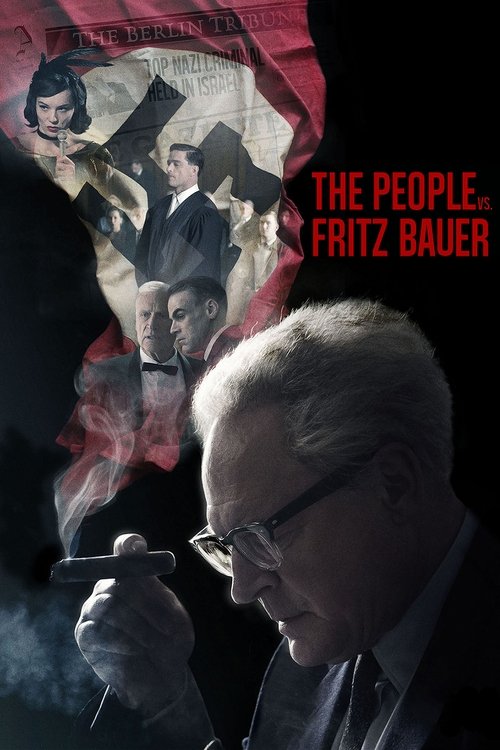































Popular
What motivates Fritz Bauer to pursue the prosecution of Adolf Eichmann?
How does Fritz Bauer's relationship with his colleagues affect his investigation?
What role does the character of the young lawyer, Karl Angermann, play in the story?
How does the film depict the challenges Fritz Bauer faces in gathering evidence against Eichmann?
What is the significance of the relationship between Fritz Bauer and the Israeli agents?
Should I watch it?
Ask Your Own Question

What is the plot?
Sorry, we aren't able to watch and write up a full detailed plot yet. Check back in a few days.
More Movies Like This
Browse All Movies →






What is the ending?
In the ending of "The People vs. Fritz Bauer," Fritz Bauer successfully brings Adolf Eichmann to justice, but he faces personal and professional consequences for his actions. The film concludes with Bauer reflecting on his struggles and the sacrifices he made in pursuit of justice, while the broader implications of his work resonate in the fight against forgetting the past.
As the film approaches its conclusion, we see Fritz Bauer, portrayed with a deep sense of determination and weariness, continuing his relentless pursuit of justice for the victims of the Holocaust. The tension builds as Bauer, having navigated a labyrinth of bureaucratic obstacles and personal betrayals, finally sees his efforts come to fruition.
In a pivotal scene, Bauer receives confirmation that Adolf Eichmann, the architect of the Holocaust, has been captured in Argentina. This moment is charged with emotion; Bauer's face reflects a mix of relief and triumph, but also the weight of the years spent fighting against a system that often seemed indifferent to the atrocities of the past. He understands that this victory is not just about Eichmann but about the moral obligation to confront history and ensure that such horrors are never repeated.
As the narrative unfolds, we witness Bauer's interactions with his colleagues and the legal system. He faces skepticism and resistance from those who are reluctant to confront Germany's Nazi past. The film captures the palpable tension in these exchanges, highlighting Bauer's frustration and determination. He is portrayed as a man who is not only fighting for justice but also battling against a society that is still grappling with its own guilt and complicity.
In the final act, the trial of Eichmann takes place, and the courtroom scenes are filled with a sense of gravity. The film depicts the emotional testimonies of Holocaust survivors, their voices echoing the pain and suffering endured. Bauer watches intently, his expression a mixture of sorrow and resolve, knowing that this trial is a crucial step in acknowledging the past.
As the trial concludes, Eichmann is found guilty, and the verdict is a moment of catharsis for Bauer. However, the victory is bittersweet. Bauer's health deteriorates, and he is shown grappling with the personal toll of his relentless pursuit of justice. The film closes with a poignant scene of Bauer reflecting on his life, surrounded by the memories of those he fought for. He understands that while he has achieved a significant milestone, the struggle for justice and remembrance continues.
In the aftermath, we learn of the fates of the main characters. Fritz Bauer, despite his success, remains a figure of controversy and is often isolated due to his unwavering stance against the establishment. His legacy is one of courage and moral fortitude, but it comes at a personal cost. The film leaves viewers with a sense of the ongoing battle against forgetting the past, emphasizing the importance of remembrance and accountability in the face of historical atrocities.
Is there a post-credit scene?
The movie "The People vs. Fritz Bauer" does not contain a post-credit scene. The film concludes with a powerful resolution that encapsulates the themes of justice, accountability, and the struggle against the remnants of the Nazi regime in post-war Germany. The narrative wraps up with Fritz Bauer's determination to bring Adolf Eichmann to justice, highlighting his commitment to confronting the past and ensuring that the atrocities of the Holocaust are not forgotten. The absence of a post-credit scene allows the audience to reflect on the weight of the historical events portrayed and the moral complexities faced by the characters throughout the film.
What motivates Fritz Bauer to pursue the prosecution of Adolf Eichmann?
Fritz Bauer is driven by a deep sense of justice and a personal commitment to confront the atrocities of the Holocaust. As a Jewish prosecutor who survived the Nazi regime, he feels a moral obligation to bring Nazi war criminals to justice. His internal struggle is compounded by the fear of anti-Semitism in post-war Germany and the reluctance of his colleagues to pursue such cases.
How does Fritz Bauer's relationship with his colleagues affect his investigation?
Bauer's relationship with his colleagues is fraught with tension and distrust. Many of them are either indifferent or actively hostile to his pursuit of justice for Nazi war criminals. This isolation fuels his determination but also leads to moments of despair, as he grapples with the bureaucratic obstacles and the apathy of those around him.
What role does the character of the young lawyer, Karl Angermann, play in the story?
Karl Angermann serves as a crucial ally to Fritz Bauer, representing the younger generation of lawyers who are more open to confronting Germany's past. His enthusiasm and idealism contrast with Bauer's more jaded perspective. Angermann's character embodies the hope for a more just future, and he becomes increasingly involved in the investigation, helping Bauer navigate the legal complexities.
How does the film depict the challenges Fritz Bauer faces in gathering evidence against Eichmann?
The film illustrates Bauer's challenges through a series of tense scenes where he must navigate a labyrinth of bureaucracy, secrecy, and the reluctance of witnesses to come forward. The emotional weight of these challenges is palpable as Bauer faces threats from both the government and former Nazis, highlighting the risks he takes to uncover the truth.
What is the significance of the relationship between Fritz Bauer and the Israeli agents?
The relationship between Fritz Bauer and the Israeli agents is pivotal as it represents a collaboration between nations seeking justice for the Holocaust. Bauer's willingness to work with them, despite the risks involved, underscores his commitment to justice. This partnership also highlights the complexities of international law and the moral dilemmas faced by those pursuing justice for historical atrocities.
Is this family friendly?
"The People vs. Fritz Bauer" is a historical drama that deals with serious themes related to the aftermath of World War II, the Holocaust, and the pursuit of justice. While it is a compelling narrative, it may not be considered family-friendly due to several potentially objectionable or upsetting aspects:
-
Themes of Betrayal and Justice: The film explores the moral complexities of justice and betrayal, which may be difficult for younger viewers to fully understand.
-
Depictions of Historical Atrocities: There are references to the Holocaust and the impact of Nazi crimes, which can be emotionally heavy and distressing.
-
Intense Emotional Scenes: Characters experience significant emotional turmoil, including feelings of anger, despair, and frustration, which may be intense for sensitive viewers.
-
Confrontations and Tension: The film includes scenes of confrontation and tension, particularly in the context of legal battles and personal conflicts, which may be unsettling.
-
Mature Themes: Discussions around guilt, complicity, and the moral responsibilities of individuals in the face of systemic evil are prevalent, which may not be suitable for younger audiences.
Overall, while the film is a poignant exploration of a critical historical moment, its themes and emotional weight may not be appropriate for children or those who are sensitive to such topics.