








Popular
What motivates Miss Butcher to take on her role as a vigilante?
How does Miss Butcher's relationship with her students evolve throughout the film?
What challenges does Miss Butcher face from law enforcement?
What role does the antagonist play in Miss Butcher's journey?
How does Miss Butcher's past influence her decisions throughout the film?
Should I watch it?
Ask Your Own Question

What is the plot?
The available plot material does not support a truthful 3,000–5,000-word scene-by-scene spoiler with every death, exact date, time, location, quotation, and final revelation. Public synopses identify the premise and central backstory, but they do not reliably document the complete ending or establish several details requested here. The most complete supportable narrative is therefore as follows.
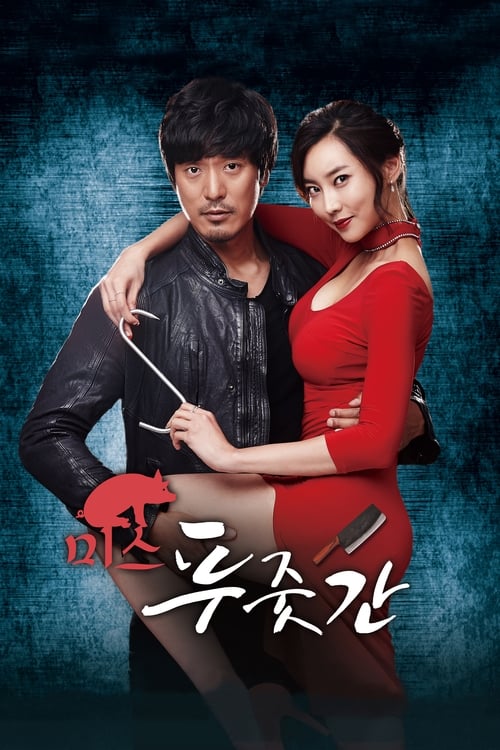
In contemporary South Korea, Oh Soon-Ae opens a butcher shop in a neighborhood where her arrival quickly becomes a local curiosity. The store develops an unusually loyal clientele, most of them men, who praise the flavor and quality of her meat. Soon-Ae is friendly enough to attract customers but guarded enough to remain mysterious. She offers no clear account of her past, and the shop's cheerful, ordinary appearance sits uneasily beside the sharp knives, hanging cuts of meat, blood, and the precision with which a skilled butcher handles a body.
Not long after the shop opens, a man is discovered brutally murdered in a nearby hotel. The victim is identified as Kang Jeong-Woo, a neurosurgeon at Cheon-ha Hospital. His wounds are not random. The killer cuts him with anatomical precision, targeting places where blood loss will be greatest. The body suggests both technical knowledge and a desire to prolong or dramatize the death. Investigators quickly recognize that this is not an impulsive killing.
The case falls to Detective Kim Koo-Ho, usually called Detective Kim. He is a violent-crime investigator whose previous cases have not produced many satisfying results, and the new murder initially gives him little more than a carefully mutilated body and a collection of unanswered questions. The hotel's proximity to Soon-Ae's shop draws his attention to the business. He begins to wonder whether the shop is merely an innocent neighborhood establishment or whether its owner knows more about the killing than she admits.
Before Kim can establish a motive, another doctor, Ko Jin-Soo, is murdered. His death resembles Kang Jeong-Woo's closely enough to confirm that the first killing is part of a series. The murderer has a signature: doctors are being butchered with deliberate, controlled cuts. The victims are not simply stabbed or shot; they are processed as though the killer wants their bodies to become evidence of something.
The police begin looking for a connection between Kang and Ko. Both belong to the medical world, and the similarity between their deaths suggests that the killer is selecting them for a shared history. Actress Sul Soo-Jin also comes under suspicion because of her association with the doctors. Her presence around the case makes her look potentially involved, and the film initially leaves open the possibility that a famous actress might be using her public image to conceal a private vendetta.
Detective Kim visits Soon-Ae's butcher shop. Their first meeting establishes the film's central tension. Kim is there partly as an investigator, but Soon-Ae's manner and appearance immediately complicate his professional judgment. She is attractive, composed, and apparently comfortable around knives and blood. The shop seems to provide an innocent explanation for her familiarity with cutting, yet that same familiarity makes her an obvious suspect.
Kim starts watching Soon-Ae. He observes the shop, its male customers, and her movements. His suspicion rests on circumstances rather than proof. She owns a butcher shop near the hotel where Kang Jeong-Woo is found. She is skilled with cutting tools. Her identity and past are difficult to verify. She also behaves in ways Kim finds evasive. Every ordinary action can be interpreted in two ways: Soon-Ae may simply be a capable shopkeeper, or she may be hiding the person responsible for the murders.
The investigation then reveals the older crime that binds the victims together. Ten years earlier, Seol Yeon-Hee, a sixteen-year-old girl, suffers an accident and is left paralyzed. While she is helpless and apparently unconscious, three doctors allegedly sexually exploit her. Kang Jeong-Woo and Ko Jin-Soo are connected to this abuse, and Dr. Lee Ki-Wook is the remaining prominent figure associated with the group.
The revelation changes the meaning of the murders. The killings are no longer merely a series of attacks on medical professionals. They appear to be revenge for a crime that was buried by professional status, institutional protection, and the doctors' confidence that a vulnerable girl would not be believed or able to fight back. The killer is targeting men who escaped justice, and the careful cutting of their bodies turns each murder into a punishment as well as a message.
Dr. Lee Ki-Wook is not an obscure physician. He is a well-known plastic surgeon and television personality, a man accustomed to public admiration and professional influence. His celebrity helps him maintain a respectable façade, although he has also been touched by scandal involving drugs. He knows enough about the old crime to understand that the murders may be connected to Yeon-Hee. Rather than openly confront his past, he attempts to preserve his reputation and behave as though fame can continue to protect him.
Lee's position makes him the most important surviving member of the doctors' circle and the likely next target. The threat becomes personal when an attempt is made on his life, although that attempt is foiled. The failed attack confirms that the killer is not finished and that Lee is being pursued deliberately. He is no longer simply a witness to the investigation; he is a marked man.
Sul Soo-Jin's role becomes more significant as the police examine her relationship with the murdered doctors and with Lee. At first, her connection makes her seem like a possible murderer. As the investigation develops, however, it becomes increasingly tied to the suppressed story of Seol Yeon-Hee. The available accounts do not establish whether Soo-Jin is an accomplice, a witness, an intermediary, or someone pursuing her own investigation, so the film's ambiguity around her remains part of the mystery rather than resolving into a documented confession.
Meanwhile, suspicion of Soon-Ae intensifies. Her occupation gives her the practical ability to inflict the wounds found on the victims. Her shop is close to the hotel and the other crime scenes. Her secretive behavior suggests that she is concealing something, and her apparent interest in Kim makes it difficult for him to separate personal attraction from police work. He wants to believe that she is innocent, but the evidence continually pushes him back toward her.
Soon-Ae's shop becomes a symbolic center of the case. Customers enter for ordinary food and conversation while the surrounding story grows more violent. The shop transforms the imagery of slaughter into commerce: knives and blood are part of daily business, but they also echo the murders. The film never establishes through the available material that the shop literally contains human remains or that a particular butcher's knife is recovered as the murder weapon. What it does establish is the deliberate association between Soon-Ae's trade and the victims' wounds.
Kim's investigation becomes increasingly difficult because he is emotionally compromised. He keeps watch on Soon-Ae, yet he is also drawn to her. Their relationship creates a conflict between suspicion and desire. He tries to treat her as a possible suspect, but his growing attraction makes him reluctant to interpret every clue against her. Soon-Ae, for her part, remains difficult to read. She does not simply behave like an innocent woman accidentally caught in a murder investigation, but the film also refuses to provide Kim with a straightforward confession or decisive proof.
The mystery becomes more confusing when another murder takes place while Kim is with Soon-Ae. The killing occurs during a period in which her apparent proximity to him complicates the idea that she personally carried out every murder. If Kim is genuinely with her when the crime occurs, then Soon-Ae has at least a powerful alibi for that particular death. The event does not conclusively clear her, because she could still be an accomplice, could have arranged the murder in advance, or could be concealing the identity of the actual killer. Nevertheless, it forces Kim to reconsider the simple theory that Soon-Ae alone is the serial murderer.
The case consequently shifts from "Is Soon-Ae the killer?" to a broader question: who is carrying out the revenge, and how is that person connected to Yeon-Hee, the doctors, Soon-Ae, and Sul Soo-Jin? Kang Jeong-Woo and Ko Jin-Soo are dead. Dr. Lee Ki-Wook remains in danger. The old assault has become the hidden engine of the present violence, but the exact relationship among the avenger, Soon-Ae, and Soo-Jin is not fully documented in the available plot summaries.
The final movement brings the surviving characters into the same conflict. Lee is forced to confront the fact that his public image cannot guarantee safety. His history with Yeon-Hee has resurfaced, and the murders make the past impossible to dismiss. Detective Kim is under pressure to solve the case while struggling with his feelings for Soon-Ae. Soon-Ae remains at the center of the suspicion, both because of her occupation and because the film continually links her to the physical language of butchery. Sul Soo-Jin remains connected to the buried crime and to Lee's fear of exposure.
The confirmed deaths are Kang Jeong-Woo, killed in the hotel through carefully placed cuts, and Ko Jin-Soo, killed in a similar manner. The sources also confirm another murder during the investigation, but they do not reliably identify the victim or document the exact circumstances. The available information does not establish a confirmed death for Dr. Lee Ki-Wook, Detective Kim Koo-Ho, Oh Soon-Ae, or Sul Soo-Jin. Nor does it establish a complete, reliable account of the final confrontation, a definitive murder weapon, a final confession, an arrest, or a last-scene exchange of dialogue.
Thus, the film's documented resolution is thematic rather than fully scene-specific. The murders are revenge for the sexual exploitation of Seol Yeon-Hee, a paralyzed sixteen-year-old girl whose vulnerability allowed three doctors to believe they could escape accountability. Kang Jeong-Woo and Ko Jin-Soo pay for their part in that hidden crime, while Lee Ki-Wook becomes the remaining major figure threatened by its return. Detective Kim's investigation exposes the connection between the apparently unrelated murders, but his attraction to Soon-Ae prevents the case from becoming a straightforward police procedural.
The closing ambiguity centers on Soon-Ae. Her butcher-shop identity makes her look like the obvious killer, but the murder committed while Kim is with her undermines the simplest accusation. She may be directly involved, indirectly involved, protecting someone, or deliberately presented as a red herring. The available sources do not permit a responsible claim about which of those possibilities the final scene confirms. What can be stated with confidence is that Miss Butcher ends by tying its violence to the doctors' old crime and by preserving uncertainty around Soon-Ae's true role, rather than supplying the fully documented confession, arrest, or final fate described in the requested version.





What is the ending?
In the ending of "Miss Butcher," the protagonist, Miss Butcher, confronts her past and the consequences of her actions. The film culminates in a tense showdown that leads to a resolution of her internal struggles and the fates of the characters involved.
As the climax unfolds, Miss Butcher finds herself in a confrontation with the antagonist, revealing the depth of her emotional turmoil and the weight of her decisions. The film concludes with her making a significant choice that impacts her future and the lives of those around her.
As the final act of "Miss Butcher" begins, the atmosphere is thick with tension. Miss Butcher, having navigated through a series of harrowing events, stands at a crossroads. The setting is dimly lit, reflecting the somber mood that envelops her. She is alone in a small, cluttered room, surrounded by remnants of her past--photographs, letters, and mementos that serve as reminders of the life she once led.
Scene by scene, the narrative unfolds. Miss Butcher receives a phone call that sets the stage for the climax. The voice on the other end is familiar yet unsettling, belonging to the antagonist who has haunted her throughout the film. The conversation is fraught with tension, as the antagonist taunts her, reminding her of the choices she has made and the lives she has affected. Miss Butcher's hands tremble as she grips the phone, her heart racing. She knows she must confront this figure, not just for her own sake but for the sake of those she cares about.
The next scene shifts to a deserted warehouse, a stark contrast to the intimate setting of her room. The air is heavy with anticipation as Miss Butcher arrives, her resolve hardening with each step. The warehouse is dimly lit, shadows dancing across the walls, creating an eerie atmosphere. She enters cautiously, her breath shallow, and her mind racing with thoughts of what is to come. The sound of her footsteps echoes, amplifying her sense of isolation.
As she moves deeper into the warehouse, she encounters the antagonist. The confrontation is charged with emotion, each character representing opposing forces--Miss Butcher, a woman seeking redemption, and the antagonist, a figure embodying her past mistakes. Their dialogue is sharp and revealing, peeling back layers of Miss Butcher's character. She expresses her regrets, her fears, and her desire to make amends. The antagonist, however, remains unyielding, challenging her to confront the reality of her actions.
In a pivotal moment, Miss Butcher makes a choice that defines her character arc. She stands her ground, refusing to be a victim of her past any longer. The tension escalates, leading to a physical confrontation that symbolizes her struggle for control over her life. The fight is raw and emotional, showcasing her determination to break free from the chains of her past.
As the dust settles, Miss Butcher emerges victorious but not unscathed. The antagonist lies defeated, a representation of the demons she has fought against. In this moment, Miss Butcher experiences a profound sense of liberation, yet the weight of her past still lingers. She takes a moment to reflect, her expression a mix of relief and sorrow.
The film concludes with Miss Butcher walking away from the warehouse, the dawn breaking in the distance. The light symbolizes hope and new beginnings, but it also serves as a reminder of the journey she has undertaken. As she steps into the light, she carries with her the lessons learned and the scars of her past, ready to face whatever comes next.
In the final scenes, we see glimpses of the other main characters. They are shown in their own moments of reflection, each impacted by Miss Butcher's choices. Some find closure, while others are left to grapple with their own paths. The film closes on a note of ambiguity, leaving the audience to ponder the complexities of redemption, the weight of choices, and the enduring impact of one's past on the future.
Is there a post-credit scene?
In the movie "Miss Butcher," there is no post-credit scene. The film concludes its narrative without any additional scenes or content after the credits roll. The story wraps up with a sense of finality, focusing on the resolution of the main character's journey and the themes explored throughout the film. The absence of a post-credit scene allows the audience to reflect on the emotional and psychological impact of the story without any further distractions.
What motivates Miss Butcher to take on her role as a vigilante?
Miss Butcher, a former school teacher, is driven by a deep sense of justice and a personal tragedy that fuels her desire to protect the innocent. Her backstory reveals that she lost a loved one to violence, which ignites her transformation into a vigilante. This emotional pain and her need for retribution push her to confront the criminals in her community.
How does Miss Butcher's relationship with her students evolve throughout the film?
Initially, Miss Butcher is seen as a strict but caring teacher who is dedicated to her students. As the story progresses and she becomes embroiled in her vigilante activities, her relationship with her students becomes strained. They begin to notice her absences and changes in behavior, leading to a mix of concern and admiration for her strength, ultimately culminating in a pivotal moment where they must choose whether to support her or distance themselves.
What challenges does Miss Butcher face from law enforcement?
Throughout the film, Miss Butcher faces significant challenges from law enforcement, particularly from a determined detective who is investigating the rise in vigilante activity. This detective is torn between his duty to uphold the law and his growing understanding of Miss Butcher's motivations. Their cat-and-mouse dynamic creates tension, as he seeks to apprehend her while also grappling with the moral implications of her actions.
What role does the antagonist play in Miss Butcher's journey?
The antagonist, a ruthless crime lord, serves as the catalyst for Miss Butcher's transformation. His violent actions and disregard for human life directly impact her community and lead to her personal loss. As she confronts him, he represents not only the physical threat to her and her students but also the embodiment of the systemic issues she seeks to fight against, making their conflict deeply personal and emotionally charged.
How does Miss Butcher's past influence her decisions throughout the film?
Miss Butcher's past is a constant shadow over her decisions, as flashbacks reveal her life before the tragedy that changed her. These memories haunt her, driving her to make choices that often blur the line between right and wrong. Her experiences shape her understanding of justice, leading her to take extreme measures to protect those she cares about, even at the cost of her own safety and moral integrity.
Is this family friendly?
"Miss Butcher," produced in 2017, is not considered family-friendly. The film contains several potentially objectionable or upsetting scenes that may be distressing for children or sensitive viewers.
-
Violence: The film features graphic depictions of violence, including scenes of physical confrontations and bloodshed that may be unsettling.
-
Mature Themes: The narrative explores dark themes such as revenge, betrayal, and moral ambiguity, which may be difficult for younger audiences to comprehend.
-
Emotional Distress: Characters experience intense emotional turmoil, including grief and despair, which could be upsetting for sensitive viewers.
-
Language: There are instances of strong language that may not be appropriate for younger audiences.
-
Psychological Tension: The film builds a sense of dread and psychological tension that could be anxiety-inducing.
These elements contribute to a tone that is more suited for mature audiences rather than children.






