











Popular
What pivotal moment causes a turning point in Alex and Clara's relationship?
What motivates the main character, Alex, to pursue a relationship with the enigmatic woman, Clara?
How does Clara's past influence her relationship with Alex throughout the film?
What role does the supporting character, Mark, play in the development of Alex and Clara's relationship?
How does the setting of the film contribute to the emotional tone of Alex and Clara's relationship?
Should I watch it?
Ask Your Own Question

What is the plot?
The film opens in Sydney in 1920 with the discovery of a woman's body, and from that first image the story moves forward as a slow, suffocating unraveling of memory, disguise, and accusation. Police Inspector Dick arrives at the scene already convinced he is looking at a homicide, even though the evidence is thin, and that certainty immediately sets the tone for everything that follows: the case is less about proof than about the force of suspicion. At the same time, a man named Eugène Falleni stands among a group of sailors at the docks, slightly apart from the others, watching the world from the edge of it. He looks ordinary enough in that moment, just another laborer in a hard city, but the film treats him as a figure already split in two, someone whose outward life and inward truth are moving in opposite directions. When he leaves the docks and returns to his small hotel room, the present gives way to memory, and the story begins to spill backward into the hidden history that has brought him here.
Eugène's room is cramped and anonymous, but it becomes the place where his past forces itself to the surface. As he sits alone, the disappearance of his wife Annie rises in fragments: a face remembered, a domestic life broken apart, the sense of a catastrophe that has not yet fully taken shape. The film does not immediately explain what happened to her; instead, it lets the audience feel the pressure of the missing woman before it provides the facts. That absence hangs over every scene. The city begins to talk, the police begin to circle, and soon Sydney itself seems to become an accomplice to the investigation, with gossip passing from mouth to mouth until Eugène's name is on everyone's lips. He is not yet fully known, but he is already being made into a story by others, and that story is darkening fast.
The narrative then widens from one man's private fear into a public spectacle. The police keep working through the scant physical evidence around the dead woman, while Inspector Dick grows more certain that the death is murder. The investigation has the feel of a net tightening around a shape that is still half concealed. Eugène remains elusive, and that elusiveness feeds the city's fascination. He is seen not as a person but as a mystery, then as a suspect, and finally as something monstrous. The sources describe the surrounding crowd as a mob in formation, and the film leans into that atmosphere: streets filled with rumor, faces eager for scandal, people hungry to pin a single terrible meaning onto a life they do not understand. The private crime becomes public theater.
As the story sinks deeper into memory, the central revelation comes into view: Eugène Falleni is living under shifting identities, and the man the city thinks it knows is only one version of him. The film traces him as a transgender man whose life has been spent crossing boundaries of name, presentation, and social role, long before the culture around him has any language for what he is. He has been called Eugène and Eugenia, Harry Crawford and other names, each one a survival strategy and a concealment. That fluid identity is not treated as a side note; it is the structure of his existence, and it explains why he can move through Sydney's working world with such precarious ease. He is always performing a version of himself that can pass, work, and endure. But the performance has a cost, because every identity he adopts becomes another layer separating him from the truth that could destroy him if exposed.
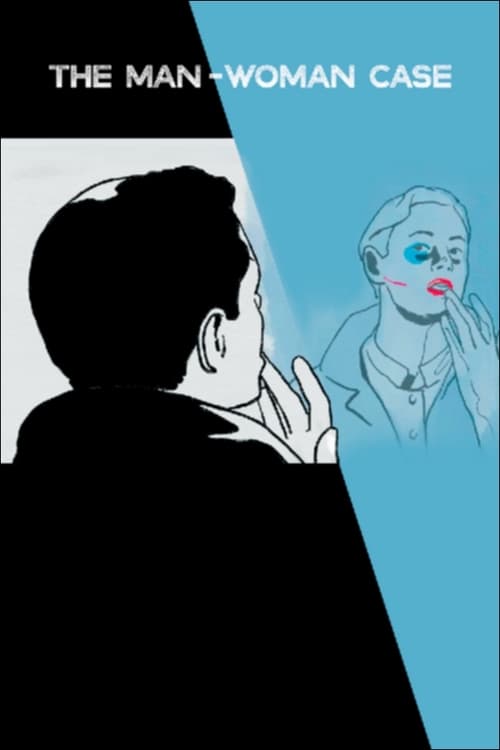
The first marriage is the emotional center of the tragedy. Annie disappears, and the film makes clear that her fate is the pivot on which all later events turn. The accusation against Eugène is that he burned her alive, and that accusation becomes the story's dominant wound. The title "The Man-Woman Case" reflects not only the courtroom scandal but the social obsession with the contradiction at the center of his life: a husband who is not who the world says he is, a wife who is gone, and a city desperate to turn confusion into certainty. The film keeps returning to the image of Annie's absence, as if the missing woman is the ghost that organizes every other scene. Even when the exact moment of her death is not shown in a single decisive flash, the implication lands with force. The body found by police is the terrible endpoint of the central deception, and the whole plot is a long circling of the truth that Annie has been killed and that Eugène is the man the law blames.
The tension builds through confrontation after confrontation. Inspector Dick presses forward with a sense of inevitability, reading the case through suspicion and prejudice. Eugène, meanwhile, tries to keep his footing in a world that is becoming increasingly hostile. Every public interaction feels sharpened by danger. The city's obsession narrows the available space around him; he is watched at the docks, remembered in his room, discussed in the streets, and slowly boxed in by the very details of his life that once let him survive. The relationship between his hidden self and the official version of events becomes impossible to sustain. The more the police investigate, the more his past reappears, and the more the crowd wants blood.
There is also a harsher irony in the way the film frames imprisonment and identity. One later account of Eugène's life stresses that prison is where he can finally be himself, which gives the ending a strange and painful complexity. The outside world has been forcing him into concealment for years, but incarceration paradoxically becomes the place where the mask can drop. That does not make prison gentle, and it does not absolve the crime; it simply means the world beyond the bars is more dishonest than the cage. The film seems to understand this as part of Eugène's tragedy. He has survived by moving through identities, but the same society that admires or consumes those identities also punishes him when the structure collapses.
The crucial twist is not just that Eugène is transgender, but that his life has been built around multiple acts of reinvention after Annie's death. After the murder of his first wife, he continues on, changing names and living until the law catches up with him. The chase is both literal and symbolic. He is pursued by police, but he is also pursued by the accumulated weight of every prior version of himself, each one vulnerable to exposure. The second life he creates does not erase the first; it merely delays the reckoning. The film's structure, moving in and out of flashback, mirrors that instability. The past is never past. It leaks into the present in scraps, recollections, and accusations until the audience understands that the mystery is not who the dead woman is, but how long Eugène has been forced to live as someone else.
The public reaction intensifies as the truth becomes more visible. Once the city understands that Annie has disappeared and that Eugène's identity does not fit its expectations, he stops being merely a suspect and becomes a symbol onto which everyone projects fear. The sources describe him as a "monster," and that language matters because it reveals how the crowd dehumanizes him. He is no longer treated as a complicated human being but as a scandal that can be consumed and condemned. The police investigation and the mob mentality feed each other. The law wants a culprit; the public wants a spectacle; Eugène becomes both. Every step toward the truth also pushes him farther into isolation.
The film's final movement is the collapse of the hidden life. The law catches up with Eugène, and the last barriers between his altered identities and the official story give way. The accusation that he burned Annie alive stands at the center of the reckoning, and though the film does not offer a comforting moral resolution, it does make clear that the evidence and the social pressure converge into a full catastrophe for him. The exposure is total. His aliases, his marriages, his gender history, and the disappearance of Annie all fold into a single public disaster. What the city has been circling from the beginning is finally named outright.
The ending lands with an emotional contradiction that lingers after the plot's legal conclusion. Eugène is not simply crushed; he is also, in the strange logic of his life, temporarily released from the burden of passing. Prison becomes the place where he can exist as himself, however harshly confined that existence may be. That final note is bleak and human at once. The world has destroyed the private arrangement that allowed him to live, but it has also stripped away the need to keep pretending. The tragedy is that authenticity arrives only inside punishment. By the end, Annie is dead, the truth of Eugène's identity is exposed, the city's obsession has burned itself into a public scandal, and the law has closed its grip around him. The final scene leaves the sense of a life both hidden and ruined, a man destroyed by murder, secrecy, and a society unable to understand either the crime or the person at its center.









What is the ending?
In the ending of "The Man-Woman Case," the protagonist, a man named Paul, confronts the complexities of his identity and relationships. After a series of emotional struggles and revelations, he ultimately embraces his true self, leading to a poignant resolution with the people around him.
As the film approaches its conclusion, we find Paul in a state of turmoil, grappling with his feelings for both his wife, Claire, and his lover, a transgender woman named Sam. The tension escalates as Paul realizes that he cannot continue living a life divided between two identities and two loves.
In a climactic scene, Paul has a heartfelt conversation with Claire, where he expresses his confusion and the pain of living a lie. Claire, who has been supportive yet hurt, listens intently, her eyes reflecting a mix of love and sorrow. This moment is pivotal as it showcases the depth of their relationship and the sacrifices they have made for each other.
Simultaneously, Paul meets with Sam, who represents the freedom and authenticity he craves. Their interaction is charged with emotion, as Sam encourages Paul to embrace who he truly is, free from societal expectations. This scene is filled with tension, as Paul must choose between the comfort of his past and the uncertain future that lies ahead.
In the final moments of the film, Paul makes a decision that signifies his acceptance of his identity. He chooses to be with Sam, symbolizing a break from the constraints of his previous life. The film closes with Paul and Sam walking hand in hand, a visual representation of liberation and the pursuit of happiness.
The fate of each main character is as follows: Paul embarks on a new journey with Sam, embracing his true self. Claire, while heartbroken, finds strength in her own identity and begins to heal, suggesting a path toward self-discovery. Sam, having been a catalyst for Paul's transformation, steps into a future filled with hope and love.
In summary, the ending of "The Man-Woman Case" encapsulates the themes of identity, love, and the courage to be true to oneself, leaving the audience with a sense of bittersweet resolution.
Is there a post-credit scene?
The Man-Woman Case, produced in 2017, does not feature a post-credit scene. The film concludes its narrative without any additional scenes or content after the credits roll. The story wraps up with a focus on the emotional and psychological journey of the characters, leaving the audience to reflect on the themes presented throughout the film.
What pivotal moment causes a turning point in Alex and Clara's relationship?
A pivotal moment occurs when Clara reveals a significant secret from her past to Alex, which shatters the illusion of their perfect connection. This revelation forces both characters to confront their fears and insecurities, ultimately leading to a deeper understanding of each other.
What motivates the main character, Alex, to pursue a relationship with the enigmatic woman, Clara?
Alex is initially drawn to Clara due to her mysterious aura and the emotional depth she seems to possess. As he learns more about her troubled past and the struggles she faces, his motivation shifts from mere attraction to a desire to understand and help her heal from her emotional scars.
How does Clara's past influence her relationship with Alex throughout the film?
Clara's past is marked by trauma and betrayal, which makes her hesitant to fully open up to Alex. Her internal conflict between wanting to trust him and fearing vulnerability creates tension in their relationship, leading to moments of both intimacy and distance.
What role does the supporting character, Mark, play in the development of Alex and Clara's relationship?
Mark serves as a foil to Alex, representing a more traditional view of relationships. His skepticism about Clara's intentions and his protective nature towards Alex create conflict, forcing Alex to confront his feelings and the reality of Clara's situation.
How does the setting of the film contribute to the emotional tone of Alex and Clara's relationship?
The film is set in a picturesque yet isolated town, which mirrors the emotional landscape of Alex and Clara's relationship. The serene yet sometimes oppressive environment amplifies their feelings of longing and isolation, making their moments of connection feel more poignant.
Is this family friendly?
The Man-Woman Case, produced in 2017, is a film that explores complex themes of identity, relationships, and societal norms. While it may not be explicitly graphic, there are several aspects that could be considered objectionable or upsetting for children or sensitive viewers:
-
Themes of Gender Identity: The film delves into issues surrounding gender identity and expression, which may be challenging for younger audiences to fully understand.
-
Emotional Turmoil: Characters experience significant emotional struggles, including feelings of confusion, isolation, and conflict, which could be distressing for sensitive viewers.
-
Relationship Conflicts: There are scenes depicting strained relationships and misunderstandings that may evoke feelings of discomfort or sadness.
-
Social Stigma: The film addresses societal prejudices and discrimination, which could be upsetting for viewers who are sensitive to issues of acceptance and belonging.
-
Mature Language: The dialogue may include mature language or discussions that are not suitable for younger audiences.
Overall, while the film presents important themes, its emotional depth and complexity may not be appropriate for all viewers, particularly children.









