














Popular
What is the significance of the character Alexis in the story?
How does the relationship between the characters Mark and Alexis evolve throughout the film?
What role does the setting of the abandoned church play in the climax of the film?
How does the character of Ivan contribute to the film's tension and conflict?
What is the significance of the heavy metal music theme in the characters' lives?
Should I watch it?
Ask Your Own Question

What is the plot?
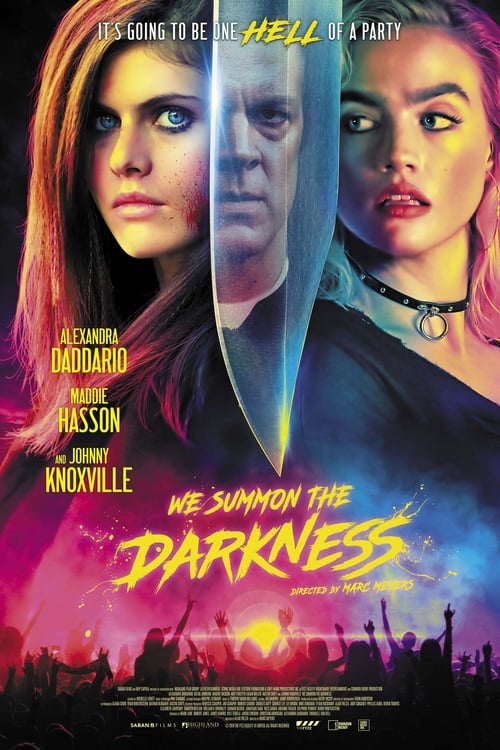
In Indiana in July 1988, Alexis Butler, Val, and Beverly "Bev" are driving through the heat toward a heavy-metal concert, already surrounded by the feverish paranoia of the Satanic Panic, when a milkshake suddenly splashes across their windshield from a blue van and turns a routine road trip into the first hostile spark of the night. The girls are dressed like the kind of metal fans the era fears and condemns, but beneath that rebellious image there is already something careful and coordinated about them, because they are not simply out for a concert--they are moving through a world where rumors of cult killings, devil worship, and corrupt youth are being fed nonstop by news reports and fire-and-brimstone preachers like Pastor John Henry Butler.
They stop along the way and hear more about the murders sweeping the Midwest, a string of deaths blamed on satanists and a church-backed panic that insists heavy metal itself is part of the corruption. Butler, appearing in public as a moral authority, rails against the music and the supposed evil infecting America's teenagers, while the film's opening quietly layers in the idea that fear itself is becoming a weapon. That atmosphere hangs over the girls as they arrive at the concert, where the lights pulse, guitars scream, and the crowd moves as one sweaty, ecstatic mass beneath the stage.
At the show, Alexis, Val, and Bev spot the same blue van that splashed the milkshake at them earlier, and Val answers the earlier insult with a reckless burst of payback: she throws a small firecracker into the vehicle, forcing the three boys inside to climb out and confront them. The boys are Ivan, Kovacs, and Mark, three local metalheads who are as drawn to the concert's chaos as the girls are, and the tension between the two groups quickly softens into flirtation, banter, and the charged social improvisation of young people trying to see who can out-cool whom. Mark stands out as the quieter one, and Bev seems especially drawn to him, though she also acts oddly hesitant around him, as if attraction is colliding with some private concern she cannot quite suppress.
The concert sequences play like the brief bright center of a nightmare: loud, sweaty, full of open grins, shouted conversation, and the kind of reckless confidence that belongs to teenagers and twenty-somethings who believe the night will belong to them. Alexis presents herself as dominant and composed, Val as sultry and impulsive, and Bev as more awkward and shy, but all three are actively pulling the night in a particular direction. When the concert ends, they invite Ivan, Kovacs, and Mark to continue the party at Alexis's secluded family property, a sprawling country mansion cut off from easy interference and isolated enough that whatever happens there can unfold without witnesses.
The drive to the mansion shifts the movie from flirtatious teen-horror setup into a trap closing around its prey. Alexis's father's home is not just big; it is empty, remote, and perfect for secrecy, with broad dark rooms and expensive furniture that reflect both wealth and moral decay. Once inside, the six of them drink, smoke, and drift into an atmosphere of sexual competition and false intimacy, and the party becomes even more destabilized when the girls suggest Never Have I Ever, turning what looks like a silly drinking game into a psychological sorting mechanism. The camera and staging emphasize how quickly relaxation becomes vulnerability: everyone is laughing, but the house feels too quiet, too removed, as though the night is already sealed shut around them.
Then the first major betrayal lands. While the boys are drinking, Alexis, Val, and Bev have already drugged their drinks, and the shift from social play to predation is sudden and cold. The girls reveal that the night is not a spontaneous afterparty at all; it is a staged execution designed to make the deaths look like they were carried out by a Satanic cult. The boys, confused and unsteady as the drugs take hold, are tied up and forced into a room that has been deliberately dressed in stereotypically occult imagery--symbols, ritualistic décor, and theatrical darkness built to sell the illusion that this is a devil-worshipping massacre.
This is the film's first huge reversal, and it recasts everything that came before it. Alexis, Val, and Bev are not the victims of a Satanic cult; they are the executioners, and they are doing it in service of a religious agenda. The twist deepens as the film reveals that they are members of The Daughters of the Dawn, a Christian group tied to Pastor John Henry Butler and operating under a twisted logic: by staging murders that look satanic, they hope to amplify fear, terrify the public, and push frightened souls back toward their church. In other words, the film's monsters are not the metal kids the culture war has trained the audience to suspect--they are the moral crusaders exploiting that panic for power.
The emotional texture of the mansion changes once the truth comes out. What looked like party energy turns into something much crueler, because the girls are not merely tricking the boys; they are savoring the performance of it. Alexis, in particular, is revealed as the most unstable of the trio, and her faith is not soft or comforting but fanatical, weaponized, and ecstatic. When Ivan pushes back and criticizes her beliefs, Alexis's calm slips entirely and she stabs him, the blade entering the staged horror with the fury of someone who believes she is doing holy work. Ivan bleeds to death, his end both brutally physical and symbolically loaded, because the whole point of the murder is to look like the act of a demonic cult while actually being committed by a self-righteous Christian one.
Kovacs is killed in the same broader massacre, swept up in the night's escalating bloodshed as the girls continue carrying out the plan. The available plot information confirms his death as part of the mansion bloodbath, though the summaries do not specify the exact weapon or moment of his killing. What matters dramatically is that the house has become a ritual chamber in which the girls are fully in control, and the two dead boys are left behind as proof of the lie they intend to sell to the outside world. Mark, meanwhile, remains caught between fear and dawning understanding, especially because Bev's behavior toward him has been more complicated than her sisters' behavior toward their targets.
As the violence grows, the film's other major revelation comes into sharper focus: this is not an isolated scheme dreamed up by three angry friends, but part of a larger machine already responsible for many deaths. The Daughters of the Dawn, according to the plot information, have already murdered eighteen other people in the same staged manner, using the nation's hysteria to manufacture evidence that Satanists are on the loose. That detail expands the horror outward beyond the mansion and implies a chain of similar crimes hidden beneath public panic, with each false crime scene feeding the next round of outrage, fear, and religious manipulation. Pastor John Henry Butler's television appearances now read less like sincere warnings and more like coordinated propaganda, the polished face of a system that needs panic to survive.
The visual contrast between the public face of the moral crusade and the private reality of the killings becomes one of the film's most disturbing ideas. Butler is shown as a fire-and-brimstone preacher who speaks into cameras about the evil of heavy metal and Satanic influence, but his supposed concern for souls is bound up with a campaign of terror that creates the very horror he claims to oppose. The mansion itself becomes a kind of stage set for that contradiction: the room is arranged to suggest occult depravity, but every candle, symbol, and grotesque arrangement points back to Christian hypocrisy rather than demonic worship. The "satanic" theater is fake, but the deaths are real.
Bev's relationship with Mark gives the climax a different emotional current from the rest of the massacre. Unlike the others, she seems to have genuine uncertainty beneath her loyalty to the Daughters of the Dawn, and her growing attachment to Mark suggests that even within the fanatical structure, a remnant of ordinary human feeling remains alive. That tension matters when the film reaches its final stretch, because the mansion is no longer just a killing ground; it is a place where loyalty, belief, attraction, and survival all collide at once. The house feels narrower now, more claustrophobic, as if the walls themselves are closing in on the lies the girls have told to each other, to the boys, and to themselves.
The last section of the movie drives hard toward the full exposure of the conspiracy. The boys are no longer just party guests; they are captives in a sacrificial theater, and the girls' attack on them is inseparable from the church's larger need to create fear. Alexis's intensity grows almost feverish, and her cruelty becomes the emotional center of the slaughter as she commits herself to the logic that the victims are heathens and that the murder is purification. The killing of Ivan, in particular, becomes the clearest manifestation of that idea, because he dies not as a random victim but as someone who challenges the ideology behind the blade. Kovacs follows him into death as the bloodbath continues.
Mark's fate diverges from the others because Bev chooses a different path at the end, and their mutual survival gives the movie its final human escape hatch. The ending explicitly shows Bev and Mark escaping, leaving the mansion behind as the nightmare closes in around Alexis and the evidence of the murders. That escape matters because it is the only act in the movie that is not fully swallowed by the church's machine: it is a break in the script, a refusal to let every last person become either a corpse or a propagandist's prop. The plot information does not specify whether Beverly's choice is driven by love, panic, guilt, or a sudden moral awakening, but the effect is clear--she and Mark live, while the plan fractures in at least one crucial place.
The final movement then widens from the house back to the public narrative, where the real battle is no longer over who survives physically but over who controls the story of what happened. Butler appears in an interview with news reporters and presents himself as a grief-stricken father, claiming that his daughter was entangled with Satan while he stands helplessly before the wreckage. This is one of the film's sharpest ironies: the man responsible for turning religious fear into a murder engine now uses the aftermath of the murders to reinforce the very panic that enabled them. His public performance is all solemnity and outrage, but the audience knows he is not mourning the truth; he is laundering it.
The ending lands with a bitter, cynical chill because it suggests that the lie survives even after the bodies fall. Alexis, Val, and Bev have used Satanic Panic as camouflage, but the larger cultural machine around them is just as complicit in turning violence into ideology. The film's last image of Butler speaking to reporters completes the circle: a preacher who condemns the devil has helped create the conditions for murder, then steps into the camera light to narrate the tragedy in a way that protects his side and keeps fear alive. The result is that the movie ends not with purification or justice, but with an even uglier truth--that in this world, belief is being used as a weapon, and the story told about the dead may be more dangerous than the deaths themselves.


What is the ending?
In the ending of "We Summon the Darkness," the main character, Alexis, reveals her true nature as a cultist and kills her friends. She ultimately confronts the police, who are unaware of her actions, and the film concludes with a sense of foreboding as she walks away, leaving chaos in her wake.
As the climax unfolds, the scene shifts to a dimly lit church where Alexis, played by Alexandra Daddario, stands amidst the chaos of the aftermath of the brutal murders. The tension is palpable as she faces off against her friends, Val (Maddie Hasson) and Chloe (Amy Forsyth), who are still reeling from the shocking revelations about the serial killer targeting young people at metal concerts. The atmosphere is thick with dread as Alexis, who initially appeared to be a supportive friend, reveals her true allegiance to a satanic cult.
In a swift and brutal turn of events, Alexis pulls out a knife, her expression shifting from friendly to menacing. Val and Chloe, horrified, try to comprehend the betrayal. Alexis's motivations are rooted in her desire for power and a sense of belonging to something greater than herself, which she believes the cult offers. The emotional weight of the moment is heavy as Val and Chloe plead with her, but Alexis is resolute, her eyes cold and determined.
As the confrontation escalates, Alexis attacks Val first, stabbing her with a ferocity that underscores her transformation from friend to foe. Val's shock and pain are palpable as she collapses, her life slipping away. Chloe, witnessing the horror, tries to escape, but Alexis is relentless. The camera captures the raw emotion on Chloe's face, a mix of betrayal and fear, as she realizes that the person she trusted has become her executioner.
In a final, desperate attempt to survive, Chloe confronts Alexis, but it is too late. Alexis overpowers her, and the scene culminates in a chilling silence as Chloe falls victim to Alexis's betrayal. The camera lingers on Alexis, now standing alone amidst the carnage, her expression a mix of triumph and emptiness.
The film then shifts to the aftermath, where police arrive at the scene, unaware of the true nature of the events that transpired. Alexis, now fully embracing her role within the cult, walks away from the chaos, her demeanor calm and collected. The final shot captures her silhouette against the flashing lights of the police cars, a stark contrast to the horror she has just unleashed. The audience is left with a sense of unease, as Alexis's fate is sealed within the cult, and the cycle of violence and betrayal continues, leaving a haunting impression of the darkness that can reside within seemingly ordinary individuals.
Is there a post-credit scene?
In the movie "We Summon the Darkness," there is no post-credit scene. The film concludes its narrative without any additional scenes or content after the credits roll. The story wraps up with the main characters facing the consequences of their actions, leaving the audience with a sense of closure regarding the events that transpired throughout the film.
What is the significance of the character Alexis in the story?
Alexis, played by Alexandra Daddario, is a pivotal character who initially appears to be a devoted friend and a passionate supporter of the heavy metal scene. As the story unfolds, her motivations are revealed to be more complex, showcasing her as a manipulative figure who orchestrates the events leading to the violent climax. Her character embodies the duality of appearance versus reality, as she shifts from a seemingly innocent participant to a central antagonist.
How does the relationship between the characters Mark and Alexis evolve throughout the film?
Mark, portrayed by Keean Johnson, starts as a naive and enthusiastic young man who is infatuated with Alexis. Their relationship initially seems romantic and supportive, but as the plot progresses, Mark's trust in Alexis is tested. He grapples with feelings of betrayal and confusion as he uncovers her true intentions, leading to a dramatic confrontation that highlights his internal struggle between love and the harsh reality of her actions.
What role does the setting of the abandoned church play in the climax of the film?
The abandoned church serves as a haunting backdrop for the film's climax, symbolizing both a sanctuary and a site of horror. It is where the characters confront their darkest fears and the true nature of their relationships. The eerie atmosphere, filled with shadows and remnants of past rituals, amplifies the tension as the characters face the consequences of their choices, culminating in a violent and shocking resolution.
How does the character of Ivan contribute to the film's tension and conflict?
Ivan, played by Maddie Dixon-Poirier, is introduced as a seemingly innocent and supportive friend. However, as the plot unfolds, his character becomes a source of tension and conflict. His interactions with the main characters reveal underlying themes of loyalty and betrayal, as he is caught in the crossfire of Alexis's manipulations. Ivan's presence adds complexity to the group dynamics, ultimately leading to pivotal moments that escalate the film's dramatic stakes.
What is the significance of the heavy metal music theme in the characters' lives?
The heavy metal music theme is integral to the characters' identities and serves as a catalyst for their actions. It represents rebellion, freedom, and a sense of belonging for the characters, particularly for Alexis and her friends. The music sets the tone for their gatherings and influences their decisions, ultimately intertwining with the film's darker elements as the characters' passion for the genre leads them into a world of violence and betrayal.
Is this family friendly?
"We Summon the Darkness" is not considered family-friendly due to its themes and content. The film contains several potentially objectionable or upsetting elements, including:
- Violence: There are graphic scenes of violence, including murder and physical assaults, which may be disturbing to viewers.
- Gore: The film features blood and gore, particularly in scenes involving the aftermath of violent acts.
- Satanic Themes: The plot revolves around a satanic cult and includes rituals that may be unsettling for some viewers, especially children.
- Strong Language: The dialogue includes frequent use of profanity, which may not be suitable for younger audiences.
- Sexual Content: There are scenes that involve sexual situations and suggestive themes, which may be inappropriate for children.
- Psychological Tension: The film builds a sense of dread and suspense that could be anxiety-inducing for sensitive viewers.
Overall, the combination of these elements makes "We Summon the Darkness" more appropriate for mature audiences.









