


Popular
What role does the setting play in the development of the plot?
How does the protagonist's relationship with their family evolve throughout the film?
How does the protagonist's internal conflict manifest in their interactions with other characters?
What is the significance of the character named 'The Stranger' in the story?
What is the impact of the protagonist's choices on the unfolding events in the film?
Should I watch it?
Ask Your Own Question

What is the plot?
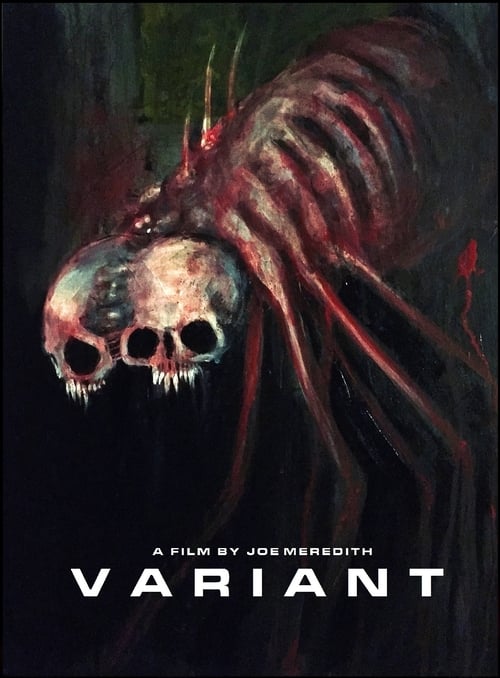
Variant opens in the wreckage of its own catastrophe, with burned, mutated remains filling the frame before a voice-over pulls the story back seventy-two hours, into the time before the city falls apart. In that earlier stretch of time, Aria is a drifting artist with ambition but no clear direction, moving through her life with the exhausted sense that she is watching herself from the outside. She is lonely, emotionally adrift, and already vulnerable when the story introduces the stranger who will unmake her world: a mysterious, charismatic man whose calm intensity masks an obsessive need to relive "the perfect moment." The film frames him immediately as magnetic, but there is something wrong in the way he watches her, as if he is less interested in Aria herself than in the role she can play inside his private fantasy.
The EonCorp world surrounding Aria is already sick with old experiments and corporate ruin. Mutants live in segregation, the legacy of earlier biological disasters hangs over the city, and Dr. Bottin functions as the recurring authority figure on the science side of the continuity. He appears early enough to establish that something far worse is brewing than a simple outbreak. A lethal alien embryo or specimen has been taken from an EonCorp facility, moved in transport, and then stolen during the transfer. The theft is the hinge on which everything turns. The operative hauling the specimen is attacked during the convoy move, shot in the chaos, and the container that was supposed to keep the thing contained is lost to the wrong hands. The stolen payload ends up with the deranged insurgent Adrian Crawl, who is not merely carrying the specimen but using it with deliberate intent. He breaks it open, injects himself with its material, and turns a scientific hazard into a personal act of contamination. The film makes clear that this is not an accident. It is a choice.
From there the story starts to move with sickening inevitability. Crawl leaves the specimen in a graveyard, and the dead begin to answer it. A corpse there mutates into a zombie-like creature, a grotesque hybrid of death and alien infection, and the graveyard becomes the first visible breach in the city's failing barrier between the living and the dead. The thing attacks a guitar-playing hobo, one of the earliest casualties shown on-screen in the chaos, and the brutality of that moment announces that the infection no longer belongs to the lab, the transport case, or the company that tried to own it. It belongs to the streets now. Dr. Bottin responds as the alarm bell of the narrative, warning that the stolen specimen has created an infection even more unpredictable than the earlier Havoc virus. The danger is not just that people die; it is that death itself is no longer stable.
As the outbreak builds in the background, Aria's story tightens around the stranger. He is charming in a way that feels practiced, almost curated, and he keeps drawing her toward him through the promise of something intimate and unforgettable. The title concept of "the perfect moment" becomes the emotional trap. He does not simply want Aria's company; he wants to reconstruct a memory, to preserve a feeling, to repeat a scene until it becomes permanent. That obsession reveals itself gradually. What seems at first like romantic tension becomes manipulation, then coercion, then a deeper psychological violation. Aria begins to notice that her life does not feel stable. Her home feels subtly altered. The people around her seem familiar and yet wrong. She senses that she is being pulled into a pattern that someone else has designed, and every step she takes toward clarity only deepens the dread that she is already trapped inside the stranger's script.
The film's horror works in layers. On one level there is the physical outbreak, with the graveyard mutant and the stolen alien matter spreading corruption into the city's seams. On another level there is Aria's mental and emotional collapse as she realizes that the stranger's affection is only another form of control. He is not trying to love her; he is trying to use her to recreate a fixed emotional tableau, a moment he can possess forever. The conversations between them carry a chilling undertow. When he speaks of the perfect moment, the words land like a confession and a threat at once. Aria's growing unease gives the film its human center, because the audience sees her moving from uncertainty to suspicion to recognition that she is not being courted, but arranged.
Meanwhile the larger outbreak keeps escalating in glimpses of bodily mutation and urban decay. The infection exceeds the old boundaries of EonCorp's past disasters and becomes a new strain of horror that raises the dead and mutates the living. The graveyard creature is only the first proof. The infection spreads with the logic of contamination and the atmosphere of a nightmare: bodies change, dead flesh animates, and the city's normal routines are swallowed by panic and fire. Adrian Crawl's role becomes clearer too. He is not a victim of the specimen so much as its willing accomplice, a man who understands enough to weaponize the alien material and reckless enough to unleash it anyway. His deliberate release of the infection gives the film one of its central revelations: the disaster is engineered, not merely discovered.
The story also folds in the broader EonCorp continuity through surreal mutant-alien imagery and the presence of figures like Clementine, whose role helps connect this outbreak to the franchise's larger history of biological terror. Those images widen the film's scope, suggesting that this infection is not an isolated event but part of a recurring pattern of human and corporate hubris. The city itself begins to feel like a sealed wound. What started as a theft becomes a contagion, what started as a private obsession becomes a public ruin, and what started as one woman's emotional confusion becomes part of a planetary-scale bio-horror legacy.
The tension toward the climax comes from the collision of these two disasters: Aria's personal entrapment and the citywide biological collapse. She is forced to confront the fact that the stranger's obsession has placed her inside a larger catastrophe than she ever understood. The perfect moment he wants to preserve cannot survive contact with reality, because reality is mutating around them. As the infection spreads and the city burns, the stranger's dream of repetition becomes grotesque. He has tried to freeze life into a single beautiful frame, but all he has done is create a loop of damage, fixation, and death.
By the end, the film returns to the same apocalyptic imagery that opens it: burning mutated remains, fire devouring the urban landscape, and the sense that containment is no longer possible. The final movement is not a clean resolution but an aftermath. The outbreak has broken loose into the city, and the new infection has escaped any hope of quarantined control. Dr. Bottin's warnings prove true, because the threat is not only lethal but unstable, capable of raising the dead and generating new forms of alien terror. The last scenes leave the audience with devastation rather than closure, emphasizing that the world has moved beyond the point where anyone can simply put the pieces back together.
Aria's arc closes in the shadow of that catastrophe. The stranger's obsession with the perfect moment is exposed as the emotional and narrative poison at the center of the film. What he offers is not safety, romance, or meaning, but a desperate attempt to impose permanence on a world that is collapsing into mutation. In that sense, the ending is as psychological as it is physical: Aria emerges from the story not just as a survivor of a monstrous outbreak, but as someone who has seen how easily longing can become a form of destruction. The city burns, the infected remain, the dead do not stay still, and the final impression is one of irreversible loss. The perfect moment never arrives. Instead, everything fractures at once, and the film ends inside the fire.



What is the ending?
In the ending of "Variant," the protagonist, a man named Sam, confronts the reality of his situation as he faces a series of shocking revelations about his identity and the nature of the world around him. The film culminates in a tense standoff that forces Sam to make a critical choice, ultimately leading to a resolution that leaves him grappling with the consequences of his actions and the truth of his existence.
As the film progresses towards its conclusion, Sam finds himself in a dimly lit room, the atmosphere thick with tension. He is surrounded by the remnants of his past decisions, the weight of his choices pressing down on him. The room is cluttered with various objects that symbolize his fragmented identity, each item a reminder of the life he once knew and the reality he is now questioning.
In this pivotal scene, Sam is confronted by a figure from his past, a character who embodies the conflicting aspects of his identity. This confrontation is charged with emotion, as Sam grapples with feelings of betrayal, confusion, and a desperate need for clarity. The dialogue is sharp and revealing, peeling back layers of Sam's psyche as he struggles to understand who he truly is.
As the tension escalates, Sam is faced with a choice that will determine not only his fate but also the fate of those around him. The stakes are high, and the atmosphere is electric with uncertainty. He must decide whether to embrace the truth of his existence or cling to the comforting lies that have defined his life thus far.
In the climax of the film, Sam makes his choice, a decision that is both liberating and devastating. The consequences of his actions ripple through the narrative, affecting not only him but also the other characters who have been intertwined in his journey. The emotional weight of this moment is palpable, as Sam realizes that the path he has chosen will forever alter the course of his life.
As the film draws to a close, the final scenes depict Sam in a state of reflection. He stands alone, the world around him transformed by his choices. The camera lingers on his face, capturing the mix of relief and sorrow that washes over him. He has gained a deeper understanding of himself, yet the cost of that knowledge is steep.
The fate of the main characters is sealed in this moment. Sam, having faced the truth, is left to navigate a new reality, one that is fraught with challenges but also filled with the potential for growth. The other characters, who have played pivotal roles in his journey, are left to deal with the aftermath of his decision, their own paths forever altered by the events that have transpired.
In the end, "Variant" leaves viewers with a haunting sense of ambiguity, as Sam's journey serves as a poignant reminder of the complexities of identity and the choices that shape our lives. The film closes on a note of introspection, inviting the audience to reflect on the nature of truth and the human experience.
Is there a post-credit scene?
In the movie "Variant," there is indeed a post-credit scene that adds an intriguing layer to the narrative. After the credits roll, the scene opens in a dimly lit room, where a figure is seen sitting at a desk, shrouded in shadows. The atmosphere is tense, filled with an air of mystery and anticipation.
As the camera slowly zooms in, the figure is revealed to be a man, his face partially obscured. He is intently studying a series of photographs and documents spread out before him, each one depicting various characters from the film. The images are marked with notes and annotations, suggesting a deeper investigation into the events that transpired.
The man's expression is one of determination mixed with a hint of concern, indicating that he is piecing together a larger puzzle. He picks up a photograph of the protagonist, and a flicker of recognition crosses his face. This moment hints at a connection to the main storyline, suggesting that the events of the film may not be as isolated as they seemed.
As the scene progresses, the camera shifts focus to a small device on the desk, which suddenly lights up, indicating an incoming message. The man leans closer, his eyes narrowing with interest. The screen displays a cryptic message that implies there are more layers to the reality the characters have been navigating, and that the implications of their actions extend far beyond what they initially understood.
The scene ends with the man looking directly into the camera, a knowing smirk forming on his lips, leaving the audience with a sense of unease and curiosity about what might come next. This post-credit moment effectively sets the stage for potential future developments, teasing the audience with the idea that the story of "Variant" is far from over.
What role does the setting play in the development of the plot?
The setting, a seemingly ordinary suburban neighborhood, contrasts sharply with the surreal events that unfold. This juxtaposition heightens the tension and emphasizes the protagonist's internal struggle, as the familiar becomes a source of discomfort and fear.
How does the protagonist's relationship with their family evolve throughout the film?
The protagonist's relationship with their family is strained at the beginning, marked by misunderstandings and emotional distance. As the story progresses, the protagonist's experiences lead to moments of reflection and ultimately a desire for reconciliation, showcasing a journey from isolation to connection.
How does the protagonist's internal conflict manifest in their interactions with other characters?
The protagonist's internal conflict is evident in their erratic behavior and emotional volatility. Their interactions with other characters often oscillate between vulnerability and aggression, reflecting their struggle to maintain control over their life while grappling with the chaos introduced by The Stranger.
What is the significance of the character named 'The Stranger' in the story?
The Stranger serves as a catalyst for the protagonist's journey, representing the unknown and the potential for change. His interactions with the main character reveal deeper layers of fear and desire, pushing the protagonist to confront their own reality.
What is the impact of the protagonist's choices on the unfolding events in the film?
The protagonist's choices are pivotal, often leading to unforeseen consequences that escalate the tension. Each decision, whether to confront or avoid The Stranger, propels the narrative forward, illustrating the weight of personal agency in a reality that feels increasingly unstable.
Is this family friendly?
"Variant," produced in 2020, is not considered family-friendly due to its themes and content. The film contains several potentially objectionable or upsetting elements, including:
- Violence: There are scenes that depict physical confrontations and threats, which may be intense for younger viewers.
- Psychological Tension: The film explores themes of paranoia and existential dread, which could be unsettling for sensitive audiences.
- Mature Themes: The narrative delves into complex emotional states, including betrayal and fear, which may be difficult for children to understand.
- Language: There are instances of strong language that may not be suitable for younger audiences.
- Dark Atmosphere: The overall tone of the film is quite dark, with a sense of foreboding that could be distressing.
These elements contribute to a viewing experience that may not be appropriate for children or those who are sensitive to such themes.








