










Popular
What motivates George Washington to take action against the British in America: The Motion Picture?
How does the character of Benedict Arnold differ from traditional portrayals in America: The Motion Picture?
What role does the character of Sam Adams play in the plot of America: The Motion Picture?
How does the film portray the relationship between George Washington and his allies?
What is the significance of the character of Abraham Lincoln in America: The Motion Picture?
Should I watch it?
Ask Your Own Question

What is the plot?
Sorry, we aren't able to watch and write up a full detailed plot yet. Check back in a few days.


What is the ending?
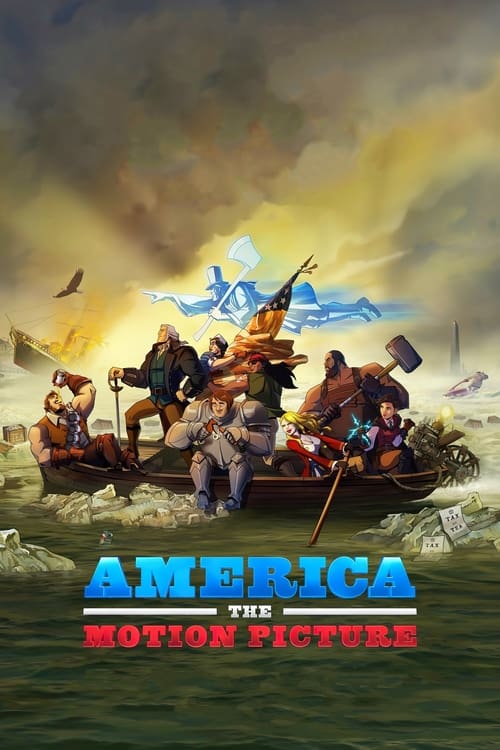
In the ending of "America: The Motion Picture," George Washington and his allies confront the villainous Benedict Arnold in a climactic battle. After a series of intense confrontations, Washington ultimately defeats Arnold, leading to a resolution of the conflict. The film concludes with Washington and his friends celebrating their victory and reflecting on their journey, while also hinting at the future of America.
As the final act unfolds, the scene shifts to a grand battlefield where George Washington, voiced by Channing Tatum, stands resolute, rallying his comrades. The air is thick with tension as they prepare to face Benedict Arnold, the treacherous antagonist, who has aligned himself with the British forces. Arnold, portrayed with a mix of cunning and bravado, is determined to crush the rebellion and assert his power.
The battle erupts with a cacophony of explosions and the clash of weapons. Washington, fueled by a mix of anger and determination, leads his team, which includes the likes of Sam Adams, voiced by Jason Mantzoukas, and Paul Revere, voiced by Will Forte. Each character showcases their unique skills and personalities, contributing to the chaotic yet exhilarating fight. Sam Adams, with his fiery spirit, throws himself into the fray, while Paul Revere rides through the chaos, delivering messages and rallying the troops.
As the fight intensifies, Washington faces off against Arnold in a dramatic showdown. The two engage in a fierce duel, showcasing their contrasting ideologies--Washington representing freedom and unity, while Arnold embodies betrayal and ambition. The animation captures the fluidity of their movements, with vibrant colors and exaggerated expressions that heighten the stakes of their confrontation.
In a pivotal moment, Washington gains the upper hand, disarming Arnold and delivering a powerful blow that symbolizes the triumph of the revolutionary spirit. As Arnold falls, the battlefield quiets, and Washington stands victorious, surrounded by his loyal friends. The victory is bittersweet, as the cost of their struggle weighs heavily on them.
The scene transitions to a celebratory gathering where Washington and his allies reflect on their journey. They share laughter and camaraderie, acknowledging the sacrifices made along the way. Each character expresses their hopes for the future of America, hinting at the challenges that lie ahead but also the potential for greatness. Washington, embodying the spirit of leadership, inspires his friends to continue fighting for their ideals.
As the credits begin to roll, the film leaves viewers with a sense of hope and determination, emphasizing the importance of friendship, loyalty, and the ongoing quest for freedom. The fates of the main characters are sealed in this moment of triumph, with Washington emerging as a symbol of resilience, while Arnold's defeat serves as a reminder of the consequences of betrayal. The film concludes on a high note, celebrating the spirit of revolution and the birth of a nation.
Is there a post-credit scene?
Yes, "America: The Motion Picture" features a post-credit scene. In this scene, we see George Washington, voiced by Channing Tatum, who is now a disheveled and somewhat defeated figure. He is sitting in a bar, reflecting on the events that have transpired throughout the film. As he drinks, he expresses his frustration and confusion about the future of America, hinting at the challenges that lie ahead.
The scene takes a humorous turn when he is approached by a character who suggests that they should start a new revolution. Washington, still in a state of disarray, responds with a mix of sarcasm and resignation, showcasing his internal struggle between hope and despair. The scene encapsulates the film's satirical tone, blending comedy with a commentary on the complexities of American history and identity. It leaves the audience with a sense of both absurdity and contemplation about the ongoing journey of the nation.
What motivates George Washington to take action against the British in America: The Motion Picture?
George Washington, portrayed as a rugged and rebellious figure, is driven by a deep sense of patriotism and a desire for freedom. His emotional state is one of frustration and anger towards British oppression, particularly after the brutal murder of his friend, which ignites his passion to rally the colonies against their oppressors. This personal loss fuels his determination to lead the revolution.
How does the character of Benedict Arnold differ from traditional portrayals in America: The Motion Picture?
In America: The Motion Picture, Benedict Arnold is depicted as a flamboyant and over-the-top character who embodies betrayal with a comedic twist. Unlike traditional portrayals that focus on his treachery, this version emphasizes his flamboyant personality and his desire for recognition, making him a more humorous and exaggerated antagonist in the story.
What role does the character of Sam Adams play in the plot of America: The Motion Picture?
Sam Adams serves as a passionate and somewhat eccentric revolutionary leader who is instrumental in rallying support for the American cause. His character is depicted with a wild, energetic demeanor, often pushing the boundaries of reason with his radical ideas. He embodies the spirit of rebellion and is a driving force behind the revolutionary efforts, often providing comic relief while also motivating the other characters.
How does the film portray the relationship between George Washington and his allies?
The relationship between George Washington and his allies, including figures like Paul Revere and Sam Adams, is portrayed as a mix of camaraderie and conflict. Washington is often seen as the serious leader trying to maintain focus, while his allies bring humor and chaos to the table. This dynamic creates tension as they navigate their differing approaches to the revolution, showcasing their loyalty to each other despite their contrasting personalities.
What is the significance of the character of Abraham Lincoln in America: The Motion Picture?
Abraham Lincoln appears as a time-traveling character who adds a layer of absurdity to the narrative. His presence serves as a comedic device, providing commentary on the events of the American Revolution from a future perspective. Lincoln's character highlights the film's irreverent take on history, as he interacts with the founding figures and offers humorous insights, ultimately reinforcing the film's satirical tone.
Is this family friendly?
"America: The Motion Picture" is an animated film that features a blend of humor, action, and satire. While it may appeal to older audiences, it contains several elements that may not be suitable for children or sensitive viewers.
-
Violence: The film includes exaggerated and stylized violence, with characters engaging in battles and confrontations that are often graphic and comedic in nature.
-
Strong Language: There are instances of profanity and crude humor throughout the film, which may not be appropriate for younger audiences.
-
Adult Themes: The narrative includes themes of rebellion, political satire, and social commentary that may be complex or confusing for children.
-
Substance Use: There are references to alcohol and drug use, depicted in a humorous context that may not be suitable for all viewers.
-
Sexual Humor: The film contains jokes and innuendos that are aimed at an adult audience, which could be considered inappropriate for children.
Overall, while the film employs a comedic and over-the-top style, its content may not align with family-friendly standards.







