














Popular
What motivates the character Lupita to fight against the evil forces in the bingo hall?
How does the character of the new bingo hall owner, Mr. Big, manipulate the players?
What role does the bingo hall play in the community's dynamics?
How do the characters of Lupita and her friends react to the changes in the bingo hall?
What specific supernatural elements does Mr. Big use to control the bingo players?
Should I watch it?
Ask Your Own Question

What is the plot?
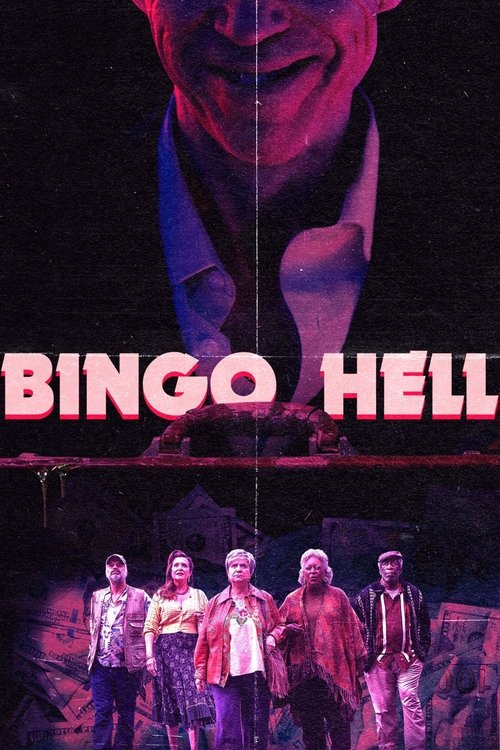
Oak Springs is already feeling the squeeze of gentrification when the story opens, with old storefronts fading, new money creeping in, and the neighborhood's aging residents clinging to the community center and its bingo nights as one of the last places that still feels like home. Lupita, fierce and practical and impossible to ignore, moves through that world like its unofficial guardian, always arguing, always organizing, always trying to keep people together. Her closest friend, Dolores, shares her stubborn loyalty, and around them gather the other regulars who make the bingo hall feel less like a game room and more like a second family. But even in these early moments, there is a sense that something is slipping: the old balance of Oak Springs is already being sold off piece by piece, and the people who know and love it are being treated like obstacles instead of neighbors.
The first real break in that fragile normalcy comes with Mario, the hall's former owner, whose disappearance hangs over the film like a bad smell. Before anyone fully understands what has happened to him, the bingo hall changes hands, and the new owner arrives in the form of Mr. Big, a smooth, predatory showman who rolls into town in a black sedan with tinted windows and a license plate that screams "BIG WINN3R." He is all teeth, charm, and menace, a businessman who speaks as if he is offering salvation while his presence feels like a threat from the moment he steps out of the car. Under him, the modest community center is transformed into a garish, neon-soaked bingo palace, flashing with casino excess and promising life-changing jackpots. What had once been a social ritual becomes a trap dressed up like entertainment.
At first, the town sees only the prizes. The money is absurdly large, almost impossible to believe, and that is exactly the point. Mr. Big's games begin drawing in the residents with the seductive force of desperation and hope. For people living under pressure, that briefcase full of cash looks like a miracle. The hall fills with anticipation, the numbers are called, and every "Bingo!" lands like a small explosion of faith. But the winnings are not gifts. They are bait. Each payout comes with a hidden supernatural cost, and the price of greed is always paid in flesh, mind, or soul.
One of the earliest and clearest examples is Raquel, Caleb's mother. She wins $10,000, and the money immediately changes her. Instead of using it to steady her life or care for her son, she becomes consumed by the rush of sudden wealth. She abandons Caleb, packs her things in the night, and disappears into a motel and then deeper into the corruption of her own craving. The film makes the point brutally: the prize does not improve her life, it empties her of responsibility and turns her into someone else. Her fate ends in self-destruction, a horrifying, grotesque collapse that makes clear the winnings are not blessings but curses. The glamour of the hall has already started to rot the people who trust it.
Clarence, an older mechanic, falls next. He wins $100,000, and the money triggers a horrifying mental and physical unraveling. He begins seeing things, losing his grip on reality, and acting out bizarre compulsions. In one of the film's most disturbing images, he drinks motor oil as if it were liquor, a visual that says everything about how completely the hall has poisoned him. His body and mind are bent into monstrosity by the same force that made the prize so enticing. Like Raquel, Clarence is not simply "punished" in a moral sense; he is consumed by a supernatural system designed to feed on want. What the town thought was luck is revealed as a mechanism of predation.
Lupita does not accept any of this at face value. As her neighbors begin winning and then vanishing, dying, or unraveling, she starts investigating the hall, Mr. Big, and the strange pattern tying everything together. Her suspicion grows into rage as she recognizes that the new bingo operation is not merely a business takeover but an attack on the community itself. The neighborhood is already being erased by gentrification, and now the one place that once held everyone together has been turned into a slaughterhouse. Lupita realizes that the hall is feeding on greed, on loneliness, on the desperate hope that money can solve structural abandonment. It offers escape in order to destroy the people who reach for it.
Mario's fate becomes one of the story's darkest revelations. His disappearance stops being a mystery and turns into proof that the curse predates the current wave of victims. One version of the events shows him consumed in the hall's supernatural hunger, reduced to a corpse found in slime-covered cash with bingo balls shoved into his mouth, a visual that seals the hall's identity as a place of ritualized violence. Another account describes him as being overwhelmed by the same corrupt bargain system that now operates under Mr. Big. However the details are framed, the meaning is the same: Mario did not simply lose his business. He was destroyed by the same force that now wears Mr. Big's face. His death is the first major clue that the hall itself has become an engine of death disguised as opportunity.
The atmosphere in Oak Springs grows heavier as more residents are lured in. Mr. Big's hall becomes the center of the neighborhood's gravitational pull, and the entire community seems to be inching toward the same fate. He smiles, he performs, he hands out cash, and behind the spectacle there is an unmistakable hunger. The more people win, the more they change. The more they change, the more they alienate each other. Family bonds weaken, neighbors turn unstable, and the communal fabric Lupita is fighting to preserve begins to tear under the pressure of greed made physical. The film's horror is not only in the deaths but in the way the town itself starts acting like a place already half-haunted.
Eventually Lupita's search leads her closer to the truth. She discovers enough to understand that the whole neighborhood has been drawn into Mr. Big's orbit, not just the regular bingo players. The hall is no longer a local business; it is a snare that extends outward, pulling in the vulnerable and the hopeful until the entire town is touched by its influence. As she moves through this unraveling, the film's emotional core remains rooted in her refusal to give up. She is angry, scared, and increasingly isolated, but she does not stop. Her leadership comes from love as much as defiance, and that makes her warnings all the more urgent.
The tension spikes when Lupita finds Clarence's body and then sees Morris talking to Mr. Big, who stamps Morris's hand with a mark that immediately begins to disintegrate. It is a small but terrifying detail, one that confirms the hall's power is active, visible, and transactional. Marking someone is enough to set the destruction in motion. At that point, Lupita finally understands that the whole town is in danger. She grabs Eric and her shotgun and heads to the hall, trying to intervene before the curse consumes everyone left standing.
Meanwhile, Caleb is driven by his own grief and anger. He blames the hall, and by extension Mr. Big, for his mother Raquel's disappearance and collapse. He tries to break into the bingo hall, desperate and furious, and in the process becomes part of the final collision. Eric catches him and chases him inside, and the hall's violence erupts into the open. Mr. Big confronts Eric with cold delight, and the scene turns savage: he forces Eric to stab himself in the neck with a poisoned syringe and then stomps his skull, killing him in brutal, merciless fashion. This death is not symbolic or distant; it is direct, ugly, and deeply personal, the kind of killing that makes the hall's disguise as a game utterly impossible to maintain.
Lupita arrives to find the situation fully exposed. The residents are no longer just victims or spectators; they are trapped participants in a supernatural machine that has been feeding on them all along. Mr. Big attempts to dominate her as he has dominated everyone else, crushing her head against a podium in a physical display of power that mirrors the psychological control he has exerted over the neighborhood. He is still smiling, still theatrical, still trying to perform superiority even as the room begins to shift against him. But his authority is cracking. Caleb, driven by fury and survival, shoots Mr. Big in the back, and that single act breaks the spell enough for the truth to flood the room.
Lupita seizes the moment and destroys the television, a crucial act that strips away one of the mechanisms sustaining Mr. Big's influence. Once the TV is gone, the hall's seduction falters. The surviving residents finally see him for what he is, and the fear that had kept them passive turns into collective violence. They swarm him together, beating him brutally. The scene carries a cathartic fury: people who were manipulated into competing now unite against the predator who tried to divide them. Lupita, bloodied but relentless, finishes the fight by cracking open Mr. Big's head with the butt of her shotgun. The monstrous showman who arrived in style and promised riches is reduced to a broken body on the floor of the hall he corrupted.
But the ending does not stop with his defeat. Caleb sets fire to the money, and the flames spread through the hall, consuming the source of temptation and the place that had become a cage. Mr. Big is left to burn as the residents escape, and the destruction of the cash is as important as the killing of the man himself. The film insists that the answer to the curse is not to claim the prize but to destroy the system that offers it. As Oak Springs burns behind them, the survivors finally begin to reclaim something like agency.
In the aftermath, the neighborhood's fate is reframed in a quieter, more human register. Lupita, Dolores, Caleb, Morris, and the others are left alive, but not unchanged. They understand that Oak Springs was never only the buildings, the businesses, or even the bingo hall. It was the people and the bonds between them. The film closes on the bitter, hopeful realization that if the place can be lost, the community does not have to be. They have been battered, deceived, and nearly consumed, but together they have survived the thing that tried to eat them. The last scene leaves them standing amid the wreckage of greed and gentrification, still wounded, still angry, but no longer fooled.







What is the ending?
In the ending of "Bingo Hell," the main character, Lupita, confronts the sinister forces behind the bingo hall that has taken over her community. After a series of intense confrontations, she ultimately sacrifices herself to save her friends and the neighborhood from the malevolent entity controlling the bingo games. The film concludes with a sense of loss but also a glimmer of hope as the community begins to reclaim their space.
Now, let's delve into the ending in a more detailed, chronological narrative.
As the climax of "Bingo Hell" unfolds, Lupita, a fierce and determined elderly woman, finds herself in a desperate situation. The once vibrant bingo hall, now a hub of darkness and manipulation, has ensnared many of her friends, including her loyal companions, who have become entranced by the allure of winning. The sinister owner, a demonic figure named Mr. Big, has been using the bingo games to feed off the souls of the players, trapping them in a cycle of greed and despair.
In the final scenes, Lupita gathers her courage and confronts Mr. Big in a tense showdown. The atmosphere is thick with tension as she steps into the bingo hall, which is now eerily transformed, filled with flickering lights and an unsettling silence. The other players, once her friends, are now mere shadows of themselves, their eyes glazed over, lost in the game. Lupita's heart aches as she sees the toll that the bingo hall has taken on her community.
Determined to save her friends, Lupita challenges Mr. Big, refusing to be intimidated by his dark power. The confrontation escalates as she rallies her friends, urging them to break free from the spell of the bingo hall. The scene is charged with emotion as Lupita's voice rises above the chaos, filled with passion and desperation. She reminds them of their shared history, their laughter, and the joy they once found in each other's company.
As the battle intensifies, Lupita realizes that the only way to defeat Mr. Big is to confront her own fears and make the ultimate sacrifice. In a heart-wrenching moment, she chooses to give herself up, knowing that her sacrifice could free her friends and the community from the clutches of darkness. The scene is poignant, filled with tears and resolve as Lupita embraces her fate, her love for her friends shining through her bravery.
In the aftermath of her sacrifice, the bingo hall begins to crumble, the dark energy dissipating as her friends awaken from their trance. They are filled with confusion and sorrow, realizing what they have lost and the price of their greed. The community, once fractured, begins to come together, united in their grief for Lupita but also in their determination to reclaim their lives.
The film closes with a bittersweet sense of hope. The bingo hall, now a shell of its former self, stands as a reminder of the darkness that once consumed them. However, as the community gathers outside, they share stories of Lupita, celebrating her life and the strength she embodied. The final shot lingers on the faces of the community members, a mix of sadness and newfound resolve, as they begin to rebuild their lives, honoring Lupita's legacy and vowing to protect their neighborhood from any future threats.
In this way, the fates of the main characters are sealed: Lupita, the brave protector, sacrifices herself for the greater good; her friends, once lost, find their way back to each other, forever changed by the experience but united in their shared purpose. The ending encapsulates the themes of community, sacrifice, and the fight against darkness, leaving a lasting impact on the audience.
Is there a post-credit scene?
In "Bingo Hell," there is no post-credit scene. The film concludes its narrative without any additional scenes or content after the credits roll. The story wraps up with a focus on the main characters and their struggles against the malevolent force that has taken over the bingo hall, leaving the audience with a sense of resolution regarding the fate of the community and its residents.
What motivates the character Lupita to fight against the evil forces in the bingo hall?
Lupita, a strong-willed and determined elderly woman, is motivated by her deep love for her community and her friends who frequent the bingo hall. As she witnesses the sinister changes brought by the new owner, she feels a sense of responsibility to protect her friends and the place that has been a source of joy and connection for them. Her fierce loyalty and unwillingness to let greed and malevolence destroy their sanctuary drive her to confront the evil head-on.
How does the character of the new bingo hall owner, Mr. Big, manipulate the players?
Mr. Big, the new owner of the bingo hall, uses charm and deceit to manipulate the players. He initially presents himself as a benevolent figure, promising excitement and wealth through his games. However, he gradually reveals his true nature, using dark magic and psychological tactics to ensnare the players, preying on their desires and vulnerabilities. His manipulations create a sense of desperation among the players, leading them to make dangerous choices.
What role does the bingo hall play in the community's dynamics?
The bingo hall serves as a vital social hub for the community, particularly for the elderly residents. It is a place where they gather not just to play games, but to share stories, support one another, and maintain a sense of belonging. The hall represents their shared history and camaraderie, making the threat posed by Mr. Big all the more personal and devastating.
How do the characters of Lupita and her friends react to the changes in the bingo hall?
Initially, Lupita and her friends are excited about the new changes brought by Mr. Big, as they hope for a fresh start and new opportunities. However, as the sinister nature of the changes becomes apparent, their excitement turns to fear and anger. They experience a range of emotions, from disbelief to determination, as they realize that their beloved bingo hall is under threat. This realization galvanizes them to take a stand against Mr. Big and his malevolent influence.
What specific supernatural elements does Mr. Big use to control the bingo players?
Mr. Big employs various supernatural elements, including dark magic and curses, to control the bingo players. He uses enchanted bingo cards that seem to promise fortune but ultimately lead to dire consequences. His ability to manipulate luck and fate creates an atmosphere of dread, as players find themselves trapped in a cycle of dependency on his games, unable to escape the sinister grip he has on their lives.
Is this family friendly?
"Bingo Hell," produced in 2021, is not considered family-friendly. The film contains several potentially objectionable or upsetting elements that may be inappropriate for children or sensitive viewers.
-
Violence: There are scenes depicting graphic violence, including physical confrontations and deaths that may be disturbing.
-
Supernatural Themes: The film involves horror elements, including demonic influences and supernatural occurrences that could be frightening for younger audiences.
-
Strong Language: The dialogue includes profanity and harsh language that may not be suitable for children.
-
Themes of Greed and Manipulation: The narrative explores darker themes such as exploitation and the consequences of greed, which may be unsettling.
-
Death and Loss: Characters experience significant loss and trauma, which could evoke strong emotional responses.
These aspects contribute to the film's overall tone, making it more appropriate for mature audiences.







