



















Should I watch it?
Ask Your Own Question

What is the plot?
Sorry, we aren't able to watch and write up a full detailed plot yet. Check back in a few days.
More Movies Like This
Browse All Movies →






What is the ending?
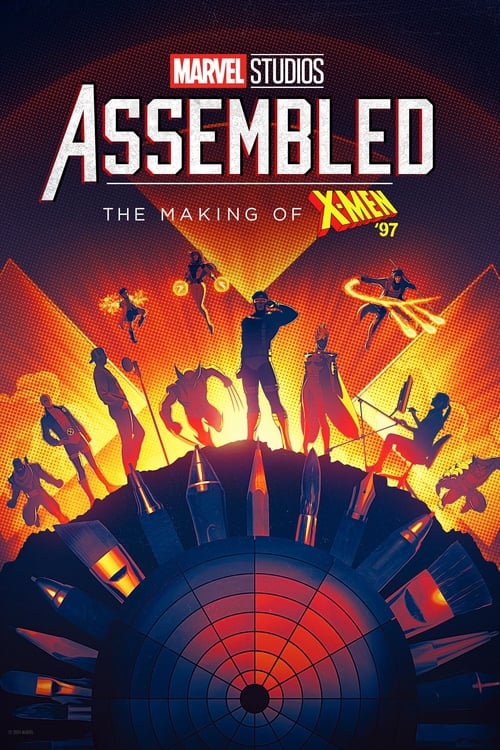
In the ending of Marvel Studios Assembled: The Making of X-Men '97, the documentary closes by circling back to the creators and cast reflecting on what X-Men '97 means to them and to the fans. The final stretch emphasizes continuity between the original 1990s animated series and the revival, underlining that this new show is both a love letter to the old one and a promise that the X-Men's story will continue. The "fate" of everyone involved is not about a plot resolution, but about where the creative team, cast, and the series itself are headed next: they finish proud, emotional, and focused on telling more X-Men stories in future seasons.
Now, in an expanded, chronological narrative:
As the documentary approaches its end, the pace of the editing slows slightly, and the focus turns from nuts‑and‑bolts production details to more intimate, reflective moments with the creative team and cast. The energy shifts from explanation to reflection: instead of showing how they made specific scenes, the footage now emphasizes why they made them and what it all means to the people on screen.
The first of these late segments continues an interview thread with the producers and supervising creatives of X-Men '97. They sit in the same interview setups seen throughout the special--neutral or softly lit studio spaces, branded backgrounds, or workspaces with art on the walls--but now their answers concentrate less on process and more on emotion. They talk about inheriting X-Men: The Animated Series, about being fans of the original show, and about feeling the weight of expectation from viewers who grew up with it. There is a clear sense that, for them, the revival isn't just another job; it is presented as stewardship of something beloved.
Intercut with these interviews, the documentary brings back archival material and references from earlier in the hour. Clips and stills from the 1990s animated series reappear, reminding the viewer of character designs, iconic poses, and classic moments that defined that era. Shots of the revived X-Men '97 imagery run alongside them, showing how closely the new series echoes the old while updating animation style and scale. The narrative at this point is linear: it moves from the origin of the 1990s show, to dormancy, to revival, and now to what the creative team hopes will be a long future.
In the next scene, the emphasis shifts briefly back to the original creators and voices involved with X-Men: The Animated Series. They speak about watching X-Men '97 come together decades later. These interviewees sit in their own setups, sometimes older concept art or memorabilia behind them, and their tone is personal. They describe the satisfaction of seeing familiar characters live again in new stories while still recognizably tied to the spirit of the early 1990s run. Their "fate" in the story of the documentary is that of honored originators: they are shown as having passed the torch, yet still present to see what that torch has become.
The documentary then returns to the new cast and crew of X-Men '97. Voice actors describe how they approached their characters with reverence for the original portrayals. They mention the responsibility of playing Cyclops, Jean Grey, Storm, Wolverine, and the rest, aware that fans bring decades of attachment to each of these names. Some speak in present tense about ongoing recording or hopes for future episodes, expressing excitement instead of a sense of finality. In this way, the film makes clear that their "fate" as participants is open‑ended: they have completed one season and one making‑of special, but they are ready--and intending--to continue.
Another short sequence underlines the technical and artistic departments behind the series: animation directors, storyboard artists, designers, and other crew members. The camera shows offices, drawing tablets, and walls covered with model sheets and scene boards. They talk about pushing the action, honoring the original theme, and capturing the emotional intensity of the X-Men's conflicts with a modern production pipeline. Their closing remarks highlight pride in having contributed to a legacy show. As the special winds down, their fate is shown as ongoing work: they are collaborators looking ahead to more episodes, further refining characters and worlds they have now helped re‑establish.
In one of the final stretches, the documentary explicitly returns to the overarching topic described in its premise: Marvel Studios Assembled is "recalling the birth of X-Men: The Animated Series and its revival thirty years later as X-Men '97." The editing reinforces this by juxtaposing then‑and‑now: early sketches, older interview clips, and dated production frames contrasted with fresh footage of the modern production pipeline and the contemporary team. The narrative here is about continuity across time--how a show created in the early 1990s seeds a new show in the 2020s, with generations of fans and creators bridging that gap.
As the final comments from the team play, the key points the documentary stresses about the characters, story, and conflict are framed indirectly through the creators' words. They emphasize that the X‑Men remain metaphors for outsiders and for those who feel different, and that this core idea guided story choices in X-Men '97 just as it did in the original series. While no fictional character's fate is "resolved" in this non‑fiction special, the documentary makes clear that the people behind the show see the X‑Men as enduring figures whose struggles will continue to be told in upcoming seasons.
In its last moments, the special settles into a closing montage. It cycles through images of the creative team at work--people in recording booths, animators at screens, producers in meetings--intercut with shots from the finished X-Men '97 episodes and occasional glances back at the 1990s show. Over these images, one or more interview voices sum up their feelings: gratitude to the fans, pride in having brought the X‑Men back, and hope for what comes next. There is no narrative twist or final fictional battle here; instead, the "ending" is a calm affirmation that this is a chapter in an ongoing creative journey.
As the credits begin, the fates of the main "characters" of this documentary--the modern showrunners and producers, the newer voice cast, the veteran creators from the original series, and the series X-Men '97 itself--are clear in a factual sense:
The current producers and supervising creatives are shown as still engaged with the show's future, speaking about coming seasons in positive terms.
The original X-Men: The Animated Series creators, having chronicled the birth of the franchise on television, end the special as respected elders whose work has been revived and re‑celebrated.
The present‑day voice actors and crew are left in an active state, continuing to lend their talents to future episodes, with no indication of their involvement ending at the time of the documentary's release.
X-Men '97 as a series is positioned as successfully launched, critically and fan‑embraced, and expected to continue as part of Marvel's broader animated and streaming plans.
The screen then transitions fully to credits, closing the documentary not with a narrative resolution in the fictional world of mutants, but with a snapshot of a creative moment: a completed first season, a behind‑the‑scenes record of how it came to be, and a cast and crew looking forward, rather than saying goodbye.
Is there a post-credit scene?
There is no traditional Marvel-style post‑credits stinger attached to Marvel Studios Assembled: The Making of X‑Men '97; once the documentary proper ends and the credits roll, there is no extra narrative scene, teaser, or hidden tag afterward.
If you let the full credits play, you only get the standard production credits and music, then the program ends with no additional footage or story beat.
Is this family friendly?
Probably yes, but with some caution. This is a behind-the-scenes documentary about X-Men '97, and sources describe it as a fun watch that discusses the show's adult themes and how it was made for both kids and a broader audience.
Potentially objectionable or upsetting aspects for children or sensitive viewers may include: - Discussion of adult themes in the series and why the creators aimed beyond a very young audience. - References to prejudice and social justice, which are central to the X-Men concept and may be emotionally heavy for some viewers. - Brief glimpses of cameos and action-related material from the series, though the documentary itself is not described as graphic. - A generally more mature tone than a simple children's special, since the creators intentionally "write up to kids" rather than down to them.
Based on the available descriptions, there is no indication that the documentary contains explicit violence, strong language, or sexual content, but it may still feel more suited to older children, teens, and adults than very young kids.









