













Popular
How does the relationship between Max and his mentor evolve throughout the film?
How does the film depict the theme of friendship among the racing community?
What motivates the main character in Strassenkaiser to pursue their goals?
What role does the rival character play in Max's journey?
What significant event changes the course of Max's racing career?
Should I watch it?
Ask Your Own Question

What is the plot?
Sorry, we aren't able to watch and write up a full detailed plot yet. Check back in a few days.


What is the ending?
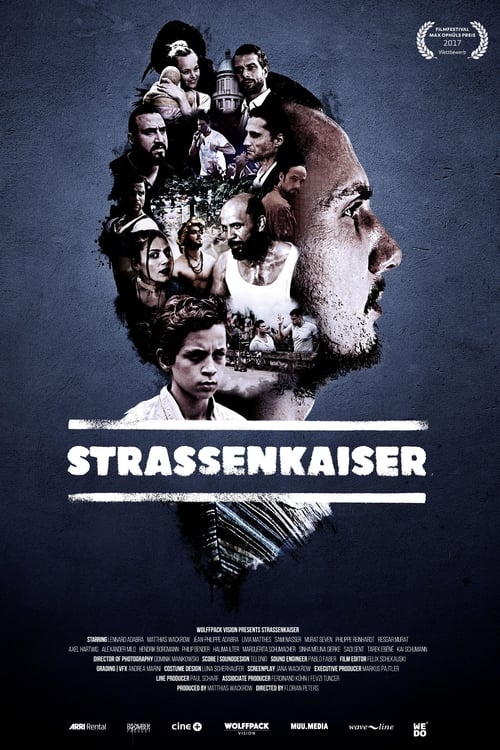
In the ending of "Strassenkaiser," the protagonist, a street racer named Max, faces a final showdown against his rival, leading to a dramatic conclusion that tests his resolve and relationships. The film culminates in a tense race that not only determines the victor but also forces Max to confront his past choices and the impact they have had on his life and those around him.
As the final act unfolds, the scene opens with the sun setting over the city, casting a golden hue on the streets where the final race is set to take place. Max stands by his car, his heart pounding with a mix of adrenaline and anxiety. He reflects on the journey that brought him here, the friendships forged, and the rivalries that have shaped him. His best friend, Leo, offers words of encouragement, reminding him of the importance of racing not just for glory, but for the love of the sport and the people who support him.
The race begins, and the camera captures the roar of engines and the cheers of the crowd. Max's rival, a brash and aggressive racer named Jörg, takes an early lead, pushing Max to his limits. As they navigate through the winding streets, the tension escalates. Max's determination is palpable; he recalls the sacrifices he has made and the relationships he has nearly lost due to his obsession with racing.
Midway through the race, a pivotal moment occurs when Jörg attempts a dangerous maneuver, causing a near-collision that forces Max to make a split-second decision. He swerves to avoid disaster, showcasing his skill and instinct. The crowd gasps, and for a moment, it seems as if Max might lose everything. However, he regains control and accelerates, finding a rhythm that allows him to close the gap.
As they approach the final stretch, the stakes are higher than ever. Max's thoughts drift to his family and the support they've given him, fueling his desire to win not just for himself, but for them. The emotional weight of his journey culminates in this moment, and he pushes his car to its limits, overtaking Jörg in a breathtaking maneuver that leaves the audience on the edge of their seats.
In the final moments of the race, Max crosses the finish line first, a mix of relief and triumph washing over him. The crowd erupts in cheers, but the victory is bittersweet. Jörg, who has been a fierce competitor, is left behind, visibly frustrated and defeated. Max approaches him, extending a hand in a gesture of sportsmanship, acknowledging the rivalry but also the respect that has developed through their competition.
The film concludes with Max reflecting on his journey, standing atop his car as the sun sets behind him. He understands that while racing has defined him, it is the connections he has made and the lessons learned that truly matter. The final shot lingers on his face, a mixture of determination and hope for the future, as he embraces the next chapter of his life, leaving behind the chaos of the streets but carrying the spirit of racing within him.
In summary, Max emerges victorious, having reconciled his past and solidified his relationships, while Jörg is left to contemplate his own choices. The film closes on a note of redemption and growth, emphasizing the importance of community and the personal journey that each character has undergone.
Is there a post-credit scene?
In the movie "Strassenkaiser," there is indeed a post-credit scene that adds an intriguing layer to the story. After the credits roll, the screen fades back in to reveal a dimly lit street corner, where the protagonist, a streetwise hustler named Max, is seen leaning against a graffiti-covered wall. He appears contemplative, reflecting on the tumultuous events that have unfolded throughout the film.
As he gazes into the distance, a figure approaches from the shadows. It's a mysterious character, cloaked in a dark hoodie, whose face remains obscured. The tension in the air is palpable as Max straightens up, his body language shifting from relaxed to defensive. The stranger speaks in a low, gravelly voice, hinting at a new opportunity that could either lead to redemption or further chaos.
Max's expression shifts from curiosity to skepticism, revealing his internal struggle between the desire for a better life and the pull of his old ways. The scene ends with a close-up of Max's face, a mix of determination and uncertainty, as he contemplates his next move. The screen fades to black, leaving the audience with a sense of anticipation and the question of what path Max will ultimately choose. This post-credit scene effectively teases potential future developments, emphasizing the ongoing battle between ambition and the shadows of his past.
How does the relationship between Max and his mentor evolve throughout the film?
Max's relationship with his mentor, an experienced racer named Leo, begins with tension as Max struggles to accept guidance. Leo sees potential in Max but is frustrated by his reckless nature. As the story progresses, they develop a bond built on mutual respect, with Leo teaching Max not just about racing techniques but also about the importance of strategy and patience.
How does the film depict the theme of friendship among the racing community?
The film showcases the camaraderie among racers through various scenes of teamwork and support. Max's friendships with fellow racers are highlighted during training sessions and races, where they share tips and encourage one another. This sense of community is tested during rivalries, but ultimately, it reinforces the idea that true friendship transcends competition.
What motivates the main character in Strassenkaiser to pursue their goals?
The main character, a street racer named Max, is driven by a deep desire to prove himself in a world that often overlooks him. His motivation stems from a troubled past, where he faced constant challenges and a lack of support from his family. This fuels his ambition to become the best racer, seeking validation and respect from his peers.
What role does the rival character play in Max's journey?
The rival character, a skilled racer named Alex, serves as both an obstacle and a catalyst for Max's growth. Initially, Alex embodies everything Max aspires to be, which ignites a fierce competitive spirit in him. Their rivalry pushes Max to confront his weaknesses, ultimately leading to a climactic showdown that tests both their skills and personal growth.
What significant event changes the course of Max's racing career?
A pivotal moment occurs when Max is involved in a serious accident during a race, which not only injures him but also puts his racing career in jeopardy. This event forces him to reevaluate his priorities and approach to racing, leading to a period of introspection and growth as he learns to balance ambition with caution.
Is this family friendly?
"Strassenkaiser," produced in 2017, is a film that delves into themes of crime, survival, and the complexities of human relationships. While it may not be explicitly designed as a family-friendly film, it contains several elements that could be considered objectionable or upsetting for children or sensitive viewers.
-
Violence: The film features scenes of street crime and confrontations that may include physical altercations, which could be intense or disturbing for younger audiences.
-
Language: There are instances of strong language throughout the film, which may not be suitable for children.
-
Emotional Turmoil: Characters experience significant emotional distress, including themes of betrayal, loss, and desperation, which could be heavy for sensitive viewers.
-
Substance Use: There are references to drug use and the impact of addiction, which may be inappropriate for younger viewers.
-
Mature Themes: The film explores complex adult themes such as crime, morality, and the consequences of one's choices, which may not resonate well with a younger audience.
Overall, while "Strassenkaiser" offers a compelling narrative, its content may not be suitable for children or those who are sensitive to such themes.







