
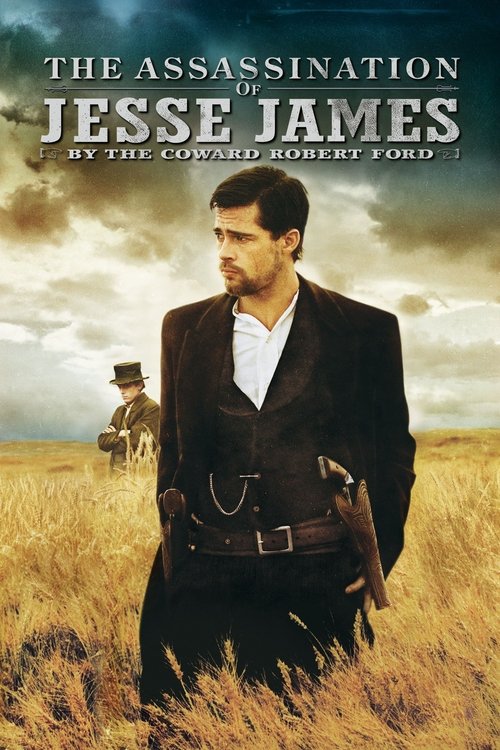






















Popular
What motivates Robert Ford to want to kill Jesse James?
How does Jesse James react to Robert Ford's presence in his life?
What is the significance of the train robbery scene in the film?
How does the film portray the relationship between Jesse James and his brother Frank?
What role does the media play in the story of Jesse James and Robert Ford?
Should I watch it?
Ask Your Own Question

What is the plot?
Sorry, we aren't able to watch and write up a full detailed plot yet. Check back in a few days.
More Movies Like This
Browse All Movies →

What is the ending?
In the ending of "The Assassination of Jesse James by the Coward Robert Ford," Robert Ford, having grown increasingly disillusioned with Jesse James, ultimately shoots him in the back. After the assassination, Ford faces public backlash and is seen as a coward. He later attempts to capitalize on his notoriety but finds himself ostracized. The film concludes with Ford's eventual death at the hands of a former associate, highlighting the tragic consequences of his actions.
As the film approaches its climax, the tension between Jesse James and Robert Ford reaches a boiling point. The scene opens in Jesse's home, where he is living in a state of paranoia and isolation. The once-feared outlaw is now a man haunted by his past, surrounded by the remnants of his former glory. He is aware of the growing animosity towards him and the betrayal brewing within his own circle, particularly from Robert Ford, who idolized him but has become increasingly resentful.
In a quiet moment, Jesse is seen adjusting a picture on the wall, a mundane act that starkly contrasts with the violent life he has led. This moment of vulnerability is palpable; he is a man who has lost control of his destiny. Robert, who has been waiting for the right moment to prove himself, is present in the room, his internal conflict evident. He oscillates between admiration and a desperate need to escape the shadow of Jesse's legend.
The tension escalates when Jesse, in a moment of casual conversation, turns his back to Robert. This act is both literal and symbolic, representing the final shift in their relationship. In a swift and shocking motion, Robert draws his revolver and shoots Jesse in the back, killing him instantly. The act is cold and calculated, a betrayal of the man he once idolized. Jesse's body slumps to the floor, and the weight of the moment hangs heavily in the air, marking the end of an era.
Following the assassination, the narrative shifts to Robert Ford's immediate aftermath. He is initially celebrated by some for his act, but the public's perception quickly turns sour. The once-heroic image of Jesse James is replaced by the image of a cowardly assassin. Robert's attempts to capitalize on his newfound notoriety lead him to a series of public appearances, but he is met with disdain and hostility. The very people who once revered Jesse now view Robert with contempt, and he becomes a pariah in the eyes of society.
As time passes, Robert's life spirals downward. He is haunted by the act of betrayal and the consequences that follow. The film captures his isolation and regret, showcasing his internal struggle as he grapples with the reality of his actions. The once-ambitious young man is now a figure of scorn, trapped in a life he never wanted.
The final scenes depict Robert Ford's fate. Years later, he is confronted by a former associate, who holds a grudge against him for his actions. In a tense confrontation, Robert is shot and killed, a fitting end to a life marked by betrayal and violence. The film closes on a somber note, emphasizing the tragic cycle of violence and the heavy toll it takes on those involved. The legacy of Jesse James and the cowardice of Robert Ford intertwine, leaving a haunting reminder of the consequences of ambition, betrayal, and the pursuit of fame.
Is there a post-credit scene?
The Assassination of Jesse James by the Coward Robert Ford does not have a post-credit scene. The film concludes with a poignant final sequence that encapsulates the themes of fame, betrayal, and the complexities of heroism. After the assassination of Jesse James by Robert Ford, the film ends with a somber reflection on the aftermath of the event, focusing on the emotional weight carried by the characters, particularly Robert Ford, as he grapples with his actions and the legacy of Jesse James. The credits roll without any additional scenes or content following them.
What motivates Robert Ford to want to kill Jesse James?
Robert Ford is initially enamored with Jesse James, idolizing him as a legendary outlaw. However, as he becomes more involved with Jesse and the James gang, he grows increasingly frustrated by his own lack of recognition and the reality of Jesse's darker, more paranoid nature. Ford's desire for fame and his complex feelings of admiration and resentment culminate in his decision to assassinate Jesse.
How does Jesse James react to Robert Ford's presence in his life?
Jesse James is initially wary of Robert Ford, sensing his ambition and desire for notoriety. As their relationship develops, Jesse oscillates between treating Ford as a friend and viewing him with suspicion. He is often dismissive of Ford's attempts to gain his approval, which leads to a growing tension between them.
What is the significance of the train robbery scene in the film?
The train robbery scene serves as a pivotal moment that showcases the gang's dynamics and Jesse's leadership. It highlights the thrill and danger of their criminal lifestyle, while also foreshadowing the eventual betrayal by Ford. The tension during the robbery reflects the internal conflicts within the gang and Jesse's increasing paranoia.
How does the film portray the relationship between Jesse James and his brother Frank?
The relationship between Jesse and Frank James is depicted as one of deep loyalty and brotherhood. Frank is protective of Jesse, often acting as a stabilizing force amidst Jesse's erratic behavior. Their bond is tested by the pressures of their criminal lifestyle and the impending betrayal by Robert Ford, illustrating the complexities of familial loyalty in the face of danger.
What role does the media play in the story of Jesse James and Robert Ford?
The media plays a crucial role in shaping the public perception of both Jesse James and Robert Ford. After Jesse's assassination, Ford seeks to capitalize on his notoriety, but the media's portrayal of him as a coward complicates his quest for fame. This highlights the theme of how public image can be manipulated and the consequences of seeking validation through infamy.
Is this family friendly?
The Assassination of Jesse James by the Coward Robert Ford is not considered family-friendly due to its mature themes and content. Here are some potentially objectionable or upsetting aspects that may affect children or sensitive viewers:
-
Violence: The film contains scenes of gun violence, including depictions of robberies and the eventual assassination of Jesse James, which may be graphic and unsettling.
-
Death and Mortality: The themes of death and betrayal are central to the narrative, with characters grappling with their mortality and the consequences of their actions.
-
Mature Themes: The film explores complex themes such as fame, obsession, and betrayal, which may be difficult for younger audiences to fully understand.
-
Language: There are instances of strong language that may not be suitable for children.
-
Emotional Turmoil: Characters experience deep emotional struggles, including feelings of inadequacy, jealousy, and despair, which may be distressing for sensitive viewers.
Overall, the film's tone and subject matter are more appropriate for mature audiences.









