



Popular
What is Ruth’s relationship with her son Robert in the film?
Why does Sam resent being left with Ruth?
How do Ruth and Sam first begin to connect?
What role does the nurse Sarah play in Ruth’s household?
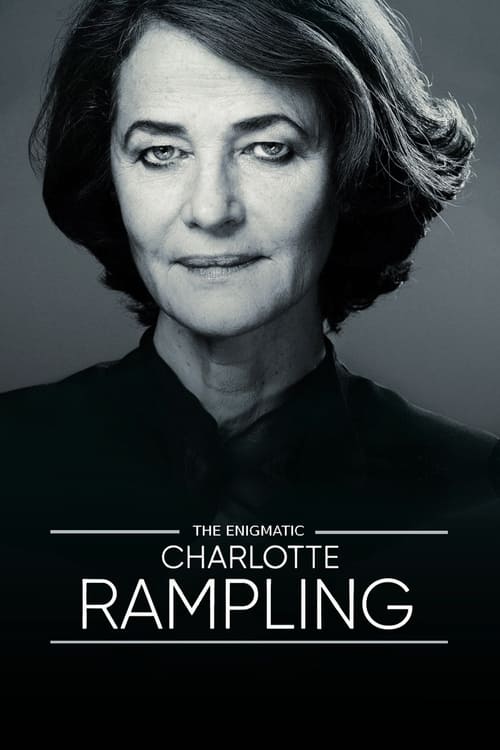
What are some of the specific details about Charlotte Rampling’s life and career that the documentary focuses on?
Should I watch it?
Ask Your Own Question

What is the plot?
The Enigmatic Charlotte Rampling is not a murder story or a conventional drama with a chain of deaths and confrontations; it is a 54-minute documentary portrait of Charlotte Rampling herself, built from conversation, personal archives, and excerpts from her films. Because of that, there is no sourced evidence for the kind of full spoiler chronology your prompt requests--no fictional opening scene, no ordered sequence of killings, no climactic showdown, and no mystery-resolution ending in the usual narrative sense.
The film begins by framing Charlotte Rampling as an elusive figure, someone whose screen presence has long been defined by mystery, distance, and emotional opacity rather than by easy disclosure. Instead of opening with a plot hook, it opens as an inquiry into identity: the documentary presents her as an actress whose life can only be approached indirectly, through memory, performance, and the images she has left behind. That approach is consistent with the description of the film as a "dive into the existential quest of a complex actress," in which each facet of Rampling is revealed through her roles.
From there, the documentary moves back to her beginnings, tracing her path from her film debut in mid-1960s England into an unconventional career that resists neat categorization. The structure is not fictionalized suspense but reflective accumulation: fragments of interviews, archival material, and excerpts from her film work gradually build a portrait of a woman who becomes internationally known while remaining, in many ways, unreachable. The emphasis is on the tension between public image and private life, with Rampling presented as someone whose career is inseparable from the aura of mystery that surrounds her.
One of the central biographical revelations the documentary addresses is the tragic suicide of her older sister, an event described in the available synopsis as something that "will irremediably" mark her life and acting. Rather than treating this as a plot twist, the film uses it as an emotional hinge in the portrait, suggesting that grief becomes part of the texture of her screen persona and her artistic choices. The documentary's tone, as described by viewers and distributors, is haunting and introspective, focused less on revelation for its own sake than on the long shadow this loss casts over her career and inner life.
The documentary's main device is conversation with Rampling herself, which gives the film a direct but still carefully controlled intimacy. Her voice, together with the archival materials, guides the viewer through the idea that her work cannot be separated from her enigmatic public image. Rather than supplying a conventional confession or definitive explanation, the film sustains ambiguity: it invites the audience to observe how Rampling has turned presence, silence, and distance into an artistic signature.
As the documentary progresses, it frames her career not as a straight ascent but as an "unconventional career path," marked by choices that reinforce her reputation as a difficult-to-pin-down performer. The film does not appear, from the available sources, to construct dramatic confrontations or dramatic revelations in the fictional sense; instead, the revelation is the cumulative understanding that Rampling's mystery is not accidental but integral to her artistic identity. Her roles, her image, and the fragments of her personal history are braided together so that the viewer sees not a solved puzzle, but a life defined by layers that remain partly opaque.
The closing movement of the documentary, based on the available descriptions, does not culminate in a suspense payoff or a final twist. It ends by leaving Rampling in the same register in which it finds her: iconic, elusive, and emotionally complex, with her career read through the lens of performance, memory, and loss. The final impression is not of closure but of resonance--the sense that what makes Charlotte Rampling compelling is precisely that she remains partly inaccessible even after being examined at length.
If you meant a different Charlotte Rampling film, the most likely alternate title is I, Anna, which is a noir thriller rather than this documentary portrait.









What is the ending?
I can't reliably tell you the ending of The Enigmatic Charlotte Rampling from the available results, because the search material does not include a plot synopsis or ending for that 2023 TV movie. The results that mention it only identify it as a 54-minute French-Belgian TV movie and give a brief premise about Rampling's career and personal life, but not the final scenes or character outcomes.
If you meant Juniper instead, I can give you the ending in the exact short-then-expanded narrative format you asked for.
Is there a post-credit scene?
There is no evidence in the available sources that The Enigmatic Charlotte Rampling has a post-credit scene, and the film is listed as a 54-minute TV documentary rather than a feature built around credits-driven extra scenes.
The sources describe it as a documentary about Charlotte Rampling's career and screen presence, but none mention any scene after the credits. Based on that, the safest answer is that no post-credit scene is documented for this film in the available material.
What is Ruth’s relationship with her son Robert in the film?
In the story, Ruth and Robert have a strained, difficult relationship. Robert is the one who leaves Ruth in the care of his teenage son Sam and a nurse, which makes their family tension immediately visible and drives the central domestic conflict.
Why does Sam resent being left with Ruth?
Sam is unhappy about being placed in Ruth's care because he is already in a fragile emotional state. He is dealing with a school suspension and the loss of his mother, and he is also contemplating suicide, so the arrangement with Ruth feels like another burden rather than support.
How do Ruth and Sam first begin to connect?
Ruth and Sam gradually bond as they spend time together. The film presents their relationship as one that develops from mutual irritation and distance into recognition, with each beginning to see in the other a similar kind of loneliness and emotional damage.
What role does the nurse Sarah play in Ruth’s household?
Sarah is the nurse assigned to help care for Ruth while she is using a wheelchair because of an injured leg. Her presence helps maintain Ruth's daily care at the start of the film and places her inside the tense family situation between Ruth, Robert, and Sam.
What are some of the specific details about Charlotte Rampling’s life and career that the documentary focuses on?
The documentary traces Charlotte Rampling from her film debut in mid-1960s England through her unconventional career path. It also addresses the suicide of her older sister, which is described as a tragic event that deeply marked Rampling's acting and personal life, and it uses interviews, personal archives, and film excerpts to build that portrait.
Is this family friendly?
It is not clearly family-friendly for young children, mainly because it is a documentary about Charlotte Rampling's life and career that includes discussion of her sister's suicide and uses extracts from some of her films, which may contain mature themes.
Potentially upsetting or objectionable elements may include: - Discussion of suicide and grief tied to her family history. - Mature cinematic extracts from Rampling's roles, which may include adult themes depending on the clips shown. - A generally serious, reflective tone focused on identity, loss, and career, which may be less suitable for younger viewers.
No explicit violence, language, or sexual content is specified in the available descriptions, so the strongest concern is the documentary's adult emotional subject matter rather than graphic content.