





Popular
Which characters in Chronicles of the Russian Revolution are the most important, and how are Lenin, Trotsky, Nicholas II, Stalin, and Prokhorov positioned in the story?
How does the series portray Lieutenant Colonel Prokhorov, and why is he such a central character?
How are Lenin and Trotsky used in the story, and what part of the plot do they appear in first?
What role does Nicholas II play in Chronicles of the Russian Revolution, and how is he characterized?
Does the series include Rasputin or the tsarist secret police, and how do they fit into the plot?
Should I watch it?
Ask Your Own Question

What is the plot?
The series begins in 1905 with Bloody Sunday, when peaceful demonstrators are met with gunfire, and the violence shocks the country into open unrest. The early episodes establish the widening split between the autocracy and the people, while the fictional Lieutenant Colonel Prokhorov is introduced as the man personally entrusted by the emperor to oversee anti-terrorist operations after the revolution of 1905.
From there, the story moves through the tightening political crisis of the years before 1917, showing the empire's instability growing rather than easing. The series is framed as a history of the revolution seen through Prokhorov's eyes, so the state's response to unrest, the pressure on the monarchy, and the rising revolutionary movement are all presented as connected parts of one long collapse.
The next major sequence is the February Revolution of 1917. Public anger over war, shortages, and exhaustion erupts into mass protest, and when the Tsar sends soldiers to suppress the unrest, the soldiers instead join the movement because they are equally worn down by the war and the crisis. That refusal destroys the regime's ability to control the streets and turns the uprising into a full revolution.
As the imperial order breaks apart, the series shifts toward the struggle for power that follows the fall of the monarchy. The revolutionary movement does not resolve cleanly; instead, competing forces begin to shape the future, with the old state disintegrating and the new order still unstable. The series' scope, according to its descriptions, extends from the first revolution in 1905 through the October Revolution and onward into the turbulent aftermath.
The October Revolution is presented as the central dramatic event of the series. The revolutionary seizure of power follows the earlier collapse of imperial authority, and the story treats it as the decisive moment in which the Bolsheviks rise and the previous political order is окончательно displaced.
The final phase of the series continues beyond the revolution itself into the broader aftermath lasting to 1924, showing the continuing consequences of the upheaval rather than ending with the seizure of power. The available descriptions indicate that the narrative spans the death of Lenin, marking the close of the historical arc covered by the series.


What is the ending?
The series ends after Lenin's death, with the revolution's long arc closing on images that connect his funeral to the larger collapse and transformation of the old order. The final mood is grim and historical rather than triumphant, ending on the sense that the lives and fates of the main figures have been carried to their conclusions by events larger than any one person.
The ending unfolds over the last stretch of the story as the series moves from the revolutionary struggle into the new Soviet order and then into the final historical afterword around Lenin's death in 1924.
The closing part begins with the story pushing beyond the first seizure of power and into the years that follow, covering the widening consequences of revolution, civil conflict, and the struggle over who will control the future of Russia.
Lenin remains one of the central historical figures in this final section, and the series carries his story through to his death. The final scene then shows footage from Lenin's funeral, and after that the image sequence moves onward into later history, linking his death to what comes next.
Nicholas II, one of the main real-life characters, has already been removed from power earlier in the timeline the series covers, and the historical endpoint associated with his family is their execution in 1918, which is part of the broader revolutionary tragedy the series spans. The series' ending does not restore him or his rule; instead, it leaves his fate as part of the destroyed imperial world that the revolution swept away.
Joseph Stalin is still within the story's final historical horizon, and the series extends its coverage to 1924, the year Lenin dies and Stalin's rise to power begins to emerge in the historical frame. The ending therefore leaves Stalin at the threshold of his ascent rather than at a completed endpoint.
The fictional characters also reach the end of their arcs within this same closing historical movement. Mikhail Prokhorov, the young security officer trying to untangle conspiracies against the Tsar, is carried by the revolution's sweep into the final shape of the new order, though the available materials do not provide a detailed scene-by-scene account of his exact last fate. Ariadne, the society woman and revolutionary, likewise remains one of the main figures through the series' historical span, but the available summaries do not specify her precise final scene or outcome.
In the last movement of the story, the series makes clear through its final images that the revolution does not end cleanly with one victory or one defeat; instead, it runs through death, burial, succession, and the passing of power into a harsher future. The final funeral imagery centers Lenin's death as a turning point, while the broader historical frame places Nicholas II's fall, Lenin's rule, and Stalin's rise into one connected chain of events.
If you want, I can also give you a stricter character-by-character ending list based only on what is directly confirmed in the available sources.
Is there a post-credit scene?
There is no reliable evidence in the available sources that Chronicles of the Russian Revolution has a post-credits scene. The sources I found only describe the series premise, release window, and historical scope; none mention any scene after the credits.
If you want, I can also help check whether any episode specifically ends with a teaser, epilogue, or extra final scene that might be mistaken for a post-credits scene.
Which characters in Chronicles of the Russian Revolution are the most important, and how are Lenin, Trotsky, Nicholas II, Stalin, and Prokhorov positioned in the story?
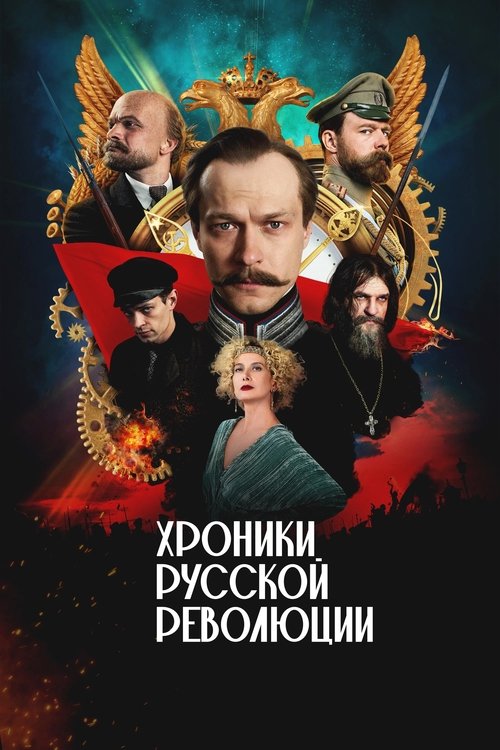
The series centers on major revolutionary figures such as Lenin, Trotsky, Gapon, Parvus, and Gorky in its early episodes, then moves through figures like Stolypin, the tsarist secret police, senior officials, Rasputin, and Emperor Nicholas II. It also uses a fictional Lieutenant Colonel Prokhorov as the main point of view, with the story unfolding through his anti-terrorist investigations and his direct work against revolutionary cells.
How does the series portray Lieutenant Colonel Prokhorov, and why is he such a central character?
Prokhorov is presented as a fictional lieutenant colonel whom the emperor personally entrusts with anti-terrorist operations after the 1905 revolution. The series filters events through his perspective, so he sees the revolutionary leaders and attackers as criminals and enemies of the state, which makes him the audience's main guide through the political violence and the police investigation side of the story.
How are Lenin and Trotsky used in the story, and what part of the plot do they appear in first?
According to the available descriptions, the first episodes focus on introducing major underground revolutionary figures, including Lenin and Trotsky. The series begins its historical sweep in 1905 and follows the revolutionary movement forward to Lenin's death and the rise of Stalin in 1924, so Lenin and Trotsky are part of the early revolutionary core rather than late-arriving characters.
What role does Nicholas II play in Chronicles of the Russian Revolution, and how is he characterized?
Nicholas II is one of the key real-life characters and is explicitly portrayed by Nikita Efremov. One review says the series treats him as an unworthy ruler and places him alongside the other major political actors in a harsh, often critical account of the empire's collapse.
Does the series include Rasputin or the tsarist secret police, and how do they fit into the plot?
Yes. The available descriptions say the series includes Rasputin, the tsarist secret police, and senior officials as part of its cast of historical power figures. They are woven into the broader political-criminal structure of the story, which is described as a costume political detective tale built around dialogue, conflict, and the struggle between revolutionary groups and the state.
Is this family friendly?
Not really family-friendly for younger children. It is a historical drama about the Russian Revolution, and the sources describe it as covering the "tragic events" of 1905–1924, including bloody political upheaval and violent historical consequences.
Potentially upsetting or objectionable elements for kids or sensitive viewers may include:
- Political violence and revolution-era unrest tied to the overthrow of the imperial government and the Bolshevik rise to power.
- Historical brutality and execution-related content, including the wider context of the revolution and the fate of the Romanov family.
- War, chaos, and mass suffering, since the series spans a period described as "difficult" and historically traumatic.
- Tense conspiracy, repression, and state-security themes, based on the plot description involving a security officer unraveling plots against the Tsar.
- Likely mature historical tone rather than light or child-oriented storytelling, given the subject matter and 52-minute TV-drama format.
If you want, I can also give you a more specific age suitability estimate in plain terms, like "okay for teens" vs. "not for kids," based only on the available information.