































Popular
What motivates the character of Pedro in his quest for land ownership?
How does the relationship between the characters of Isabel and Pedro evolve throughout the series?
What role does the character of Father Mateo play in the community's struggles?
What challenges does the character of Rosa face as she tries to support her family?
How does the character of Javier represent the conflict between tradition and modernity?
Should I watch it?
Ask Your Own Question

What is the plot?
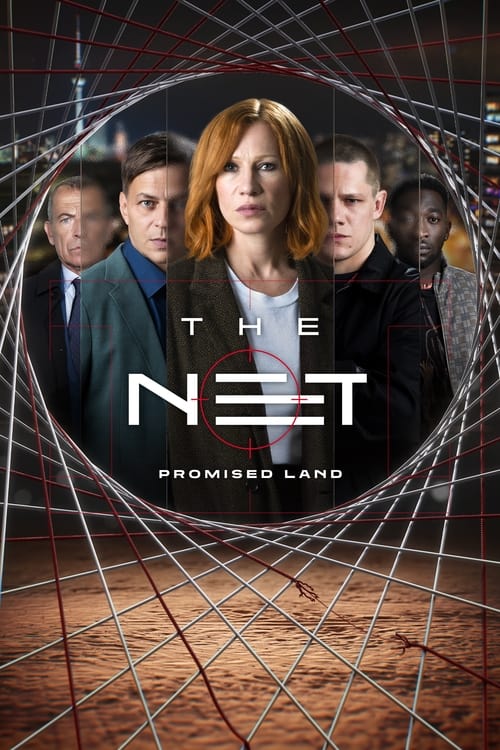
In the opening scene of "The Net: Promised Land," we are introduced to the protagonist, a young woman named Elena, who is living in a dystopian society where technology controls every aspect of life. She works as a data analyst for a powerful corporation that monitors citizens' activities. Elena feels trapped in her monotonous life and is haunted by the memory of her brother, who disappeared under mysterious circumstances after trying to expose the corporation's corrupt practices.
As the story unfolds, Elena discovers a hidden message in the data she analyzes, hinting at a secret project called "Promised Land." Intrigued and desperate for answers about her brother, she begins to investigate further. This leads her to a clandestine group of rebels who are fighting against the corporation's oppressive regime. The group is led by a charismatic leader named Marcus, who shares Elena's desire for freedom and justice.
Elena's decision to join the rebels marks a turning point in her life. She undergoes rigorous training, learning how to hack into the corporation's systems and gather intelligence. During this time, she forms a close bond with Marcus, who becomes both a mentor and a romantic interest. Their relationship deepens as they share their personal stories and motivations for fighting against the corporation.
As the rebels plan their first major operation, they learn that the corporation is preparing to launch a new surveillance program that would further tighten its grip on society. The rebels devise a plan to infiltrate the corporation's headquarters and sabotage the launch. Elena is assigned a crucial role in the operation, using her insider knowledge to navigate the building's security systems.
On the day of the operation, tension runs high among the rebels. They successfully breach the headquarters, but things quickly spiral out of control when they encounter unexpected security measures. A fierce confrontation ensues, with the rebels fighting against armed guards. Elena showcases her skills, managing to disable several security systems, but the chaos leads to casualties among the rebel group.
During the confrontation, Elena comes face-to-face with a high-ranking corporate executive, who reveals shocking information about her brother's fate. He was captured and imprisoned for attempting to expose the corporation's secrets. This revelation fuels Elena's determination to not only complete the mission but also rescue her brother.
As the rebels reach the control room, they initiate the sabotage, but the corporation's security forces retaliate with overwhelming force. In a desperate bid to escape, Elena and Marcus make a split-second decision to split from the group, hoping to find her brother in the lower levels of the building. They navigate through dark corridors, evading guards and using their wits to stay one step ahead.
Elena and Marcus eventually locate the prison where her brother is held. They manage to free him, but their escape is thwarted when they are cornered by the corporation's enforcers. A tense standoff occurs, and in a moment of bravery, Marcus sacrifices himself to allow Elena and her brother to escape. Heartbroken but resolute, Elena vows to continue the fight for freedom.
The climax of the story sees Elena and her brother joining forces with the remaining rebels to launch a final assault against the corporation. They gather support from the public, who have grown disillusioned with the regime. The rebels execute a coordinated attack, using the intelligence Elena gathered to exploit weaknesses in the corporation's defenses.
In the final confrontation, Elena confronts the corporation's CEO, who embodies the oppressive system they have fought against. A fierce battle ensues, with Elena drawing on her training and the support of her allies. In a climactic moment, she manages to expose the corporation's corruption to the world through a live broadcast, rallying the public to rise against their oppressors.
The story concludes with the corporation's downfall, as citizens unite to reclaim their freedom. Elena, now a symbol of hope and resilience, stands alongside her brother and the remaining rebels, ready to build a new future. The final scene hints at the ongoing struggle for justice, leaving the door open for further developments in their fight against tyranny.








What is the ending?
In the ending of "The Net: Promised Land," the main characters face the culmination of their struggles as they confront the consequences of their choices. The story concludes with a tense standoff, revealing deep-seated conflicts and emotional resolutions among the characters.
As the dust settles, some characters find redemption, while others are left grappling with their failures. The fate of each character is sealed in a way that reflects their journey throughout the series, leaving viewers with a sense of closure and contemplation about the themes of ambition, family, and the pursuit of a better life.
The final scenes of "The Net: Promised Land" unfold with a palpable tension that hangs in the air, as the characters gather at the central location that has been the heart of their struggles. The sun sets, casting a golden hue over the landscape, symbolizing both an ending and a new beginning.
Scene 1: The Standoff The camera pans to the main characters, each standing at a distance from one another, their faces etched with determination and fear. The protagonist, a driven individual who has fought tirelessly for their family's future, stands at the forefront, their fists clenched. They are confronted by an antagonist who represents the obstacles they have faced throughout the series. The air is thick with unspoken words, and the tension is almost tangible as they exchange heated glances.
Scene 2: Confrontation and Revelation As the confrontation escalates, the protagonist voices their frustrations, revealing the sacrifices made for the sake of their family. The antagonist, caught off guard, begins to unravel, exposing their own vulnerabilities and motivations. This moment is charged with emotion, as both characters reflect on their past decisions. The camera captures close-ups of their faces, highlighting the pain and regret that has shaped their lives.
Scene 3: The Turning Point Suddenly, a pivotal moment occurs when a secondary character, who has been a silent observer, steps forward. This character, once marginalized, now finds their voice and challenges both the protagonist and antagonist. Their words resonate deeply, forcing everyone to confront the reality of their choices. The scene shifts to a wider shot, showing the group dynamics at play, as alliances shift and new understandings emerge.
Scene 4: Resolution and Redemption As the confrontation reaches its peak, the protagonist makes a choice that reflects their growth throughout the series. They extend an olive branch, offering forgiveness and a chance for reconciliation. The antagonist, taken aback, hesitates but ultimately accepts, leading to a moment of catharsis. The camera captures the emotional release as tears are shed, and the weight of their burdens begins to lift.
Scene 5: The Aftermath In the final moments, the characters begin to disperse, each taking a different path. The protagonist stands alone for a moment, looking out over the horizon, contemplating the future. The camera zooms out, revealing the vast landscape before them, symbolizing the endless possibilities that lie ahead.
The fate of each character is revealed in quick succession: the protagonist, having found a sense of peace, decides to rebuild their life with renewed hope. The antagonist, now humbled, seeks to make amends and forge a new path. The secondary character, empowered by their newfound voice, embarks on a journey of self-discovery, ready to embrace their own potential.
As the screen fades to black, the final message resonates: the journey toward redemption and understanding is fraught with challenges, but it is also filled with the promise of new beginnings. The series concludes, leaving viewers with a sense of closure while inviting them to reflect on the complexities of human relationships and the pursuit of a better life.
Is there a post-credit scene?
In "The Net: Promised Land," there is indeed a post-credit scene that adds an intriguing layer to the narrative.
As the credits roll, the screen fades to black before transitioning to a dimly lit room filled with monitors displaying various feeds from around the world. The camera pans slowly, revealing a figure seated in front of the screens, their face obscured by shadows. The atmosphere is tense, underscored by a low, pulsating soundtrack that heightens the sense of mystery.
The figure leans forward, and a glint of light catches a pair of piercing eyes. They begin to type rapidly on a keyboard, pulling up data on the main characters from the series. The screen flashes images of key moments, showcasing their struggles and triumphs, interspersed with cryptic messages hinting at a larger conspiracy at play.
As the figure continues to type, a voice, distorted and echoing, breaks the silence. "They think they're safe, but the game is just beginning." The scene ends with a close-up of a digital map pinpointing various locations, suggesting that the characters' journeys are far from over and that unseen forces are still at work.
This post-credit scene leaves viewers with a sense of foreboding and anticipation, hinting at future conflicts and the overarching themes of surveillance and control that permeate the series. It effectively sets the stage for potential developments in a sequel or continuation of the story, keeping the audience engaged and eager for more.
What motivates the character of Pedro in his quest for land ownership?
Pedro's motivation for land ownership is deeply rooted in his family's history and the struggles they faced as immigrants. He feels a strong sense of responsibility to provide a better life for his family and to honor the sacrifices of his ancestors. This desire drives him to navigate the complexities of the land acquisition process, often putting him at odds with powerful adversaries.
How does the relationship between the characters of Isabel and Pedro evolve throughout the series?
Isabel and Pedro's relationship begins with a strong bond based on shared dreams and aspirations. However, as the pressures of land ownership and external conflicts mount, their relationship is tested. Isabel's pragmatic approach often clashes with Pedro's idealism, leading to moments of tension and vulnerability. Their journey reflects the challenges of balancing personal ambitions with the needs of their family.
What role does the character of Father Mateo play in the community's struggles?
Father Mateo serves as a moral compass for the community, advocating for justice and unity among the residents. He is deeply invested in the struggles of the people, often using his position to rally support against corrupt landowners. His character embodies the themes of faith and resilience, as he navigates his own doubts while trying to inspire hope in others.
What challenges does the character of Rosa face as she tries to support her family?
Rosa faces numerous challenges, including societal expectations, financial instability, and the emotional toll of her family's struggles. As a single mother, she grapples with the pressure to provide while also trying to maintain her own identity and aspirations. Her journey is marked by moments of despair and determination, showcasing her resilience in the face of adversity.
How does the character of Javier represent the conflict between tradition and modernity?
Javier embodies the tension between traditional values and the modern aspirations of the younger generation. As he navigates his role within the family and the community, he often finds himself torn between honoring his heritage and embracing new opportunities. His internal conflict is highlighted through his interactions with other characters, revealing the broader societal shifts occurring within the narrative.
Is this family friendly?
"The Net – Promised Land" is a drama that explores complex themes and situations, which may not be suitable for all audiences, particularly children or sensitive viewers. Here are some potentially objectionable or upsetting aspects that may occur:
-
Family Conflict: The show delves into intense family dynamics, including arguments and emotional confrontations that may be distressing for younger viewers.
-
Loss and Grief: Characters experience significant loss, leading to scenes that portray grief and mourning, which can be heavy and emotional.
-
Socioeconomic Struggles: The narrative addresses issues of poverty and hardship, showcasing the struggles of families trying to make ends meet, which may be upsetting for some.
-
Violence and Threats: There are moments of tension that may involve threats or implied violence, creating a sense of danger that could be unsettling.
-
Moral Dilemmas: Characters face difficult choices that challenge their ethics and values, leading to complex emotional situations that may be hard for younger audiences to process.
-
Substance Use: There are references to substance use and its impact on families, which may not be appropriate for children.
-
Emotional Turmoil: The characters often grapple with deep emotional issues, including betrayal, disappointment, and anxiety, which could resonate strongly with sensitive viewers.
These elements contribute to the show's mature themes, making it more suitable for older teens and adults rather than a family-friendly viewing experience.









