
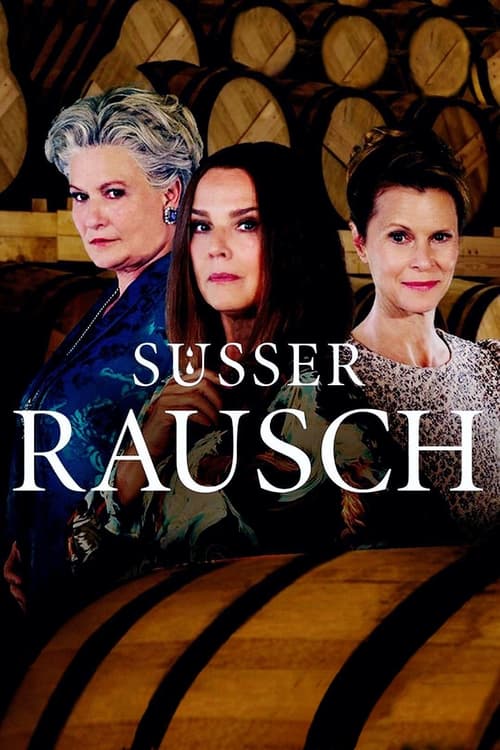


















Popular
How does the relationship between Lena and her mentor, Thomas, evolve throughout the series?
What motivates the main character, Lena, to pursue her dream of becoming a sommelier despite the challenges she faces?
What role does the wine competition play in the development of the characters?
How does Lena's family react to her career choice, and what impact does this have on her?
What challenges does Lena face in the male-dominated wine industry, and how does she overcome them?
Should I watch it?
Ask Your Own Question

What is the plot?
In the opening scene of "Süßer Rausch," we are introduced to the protagonist, Lena, a young woman in her late twenties, who is struggling with the pressures of her job as a bartender in a trendy Berlin nightclub. The camera captures her exhaustion as she juggles demanding customers and the chaotic atmosphere of the club. Lena's internal conflict is evident; she dreams of a more fulfilling life but feels trapped in her current situation.
As the night progresses, Lena encounters a charismatic and enigmatic patron named Max. Their chemistry is palpable, and they share a brief but intense conversation about their dreams and aspirations. Max invites Lena to join him for a drink after her shift, and despite her initial hesitation, she agrees, drawn to his charm and the promise of escape from her mundane life.
The following day, Lena meets her best friend, Sarah, for coffee. Sarah expresses concern about Lena's growing attachment to Max, whom she has only just met. Lena brushes off Sarah's worries, feeling exhilarated by the connection she has with Max. This scene highlights Lena's desire for adventure and her willingness to take risks, setting the stage for her emotional journey.
Lena and Max's relationship deepens over the next few weeks. They share intimate moments, exploring the city together and discussing their hopes for the future. However, Lena begins to notice Max's darker side; he has a penchant for partying and substance use, which makes her uneasy. Despite her reservations, she is drawn to the thrill of their lifestyle, and they indulge in wild nights filled with music and dancing.
One night, during a particularly wild party, Max introduces Lena to a new drug that heightens their experiences. Lena is initially hesitant but ultimately succumbs to the allure of the high. This decision marks a turning point in her life, as she becomes increasingly involved in the nightlife and the drug culture that surrounds it. The euphoric highs are juxtaposed with moments of despair, as Lena grapples with the consequences of her choices.
As Lena becomes more entrenched in this lifestyle, her relationship with Sarah begins to deteriorate. Sarah confronts Lena about her drug use and the changes in her personality. Lena, feeling defensive and misunderstood, lashes out at Sarah, pushing her away. This conflict illustrates Lena's internal struggle between her desire for freedom and the reality of her deteriorating friendships.
In a pivotal scene, Lena witnesses Max's erratic behavior during a drug-fueled party. He becomes aggressive and paranoid, leading to a confrontation with other partygoers. Lena feels a surge of fear and realizes that the thrill of their lifestyle is overshadowed by danger. She attempts to intervene, but Max's volatile state escalates the situation, forcing Lena to question her relationship with him.
After the confrontation, Lena decides to take a step back from the party scene. She seeks solace in her work and reconnects with her passion for bartending, finding joy in crafting cocktails and engaging with customers. However, the pull of her relationship with Max remains strong, and she struggles to maintain her distance.
Max, sensing Lena's withdrawal, becomes increasingly desperate to keep her in his life. He shows up at her workplace, pleading with her to join him for one last adventure. Torn between her feelings for him and her desire to reclaim her life, Lena ultimately agrees, believing she can handle it. This decision leads them to a secluded cabin for a weekend getaway, where they indulge in drugs and alcohol.
During the weekend, the atmosphere shifts as tensions rise. Max's behavior becomes more erratic, and Lena feels trapped in a cycle of addiction and chaos. In a moment of clarity, she confronts Max about his substance abuse and the impact it has on their relationship. Max reacts violently, revealing his insecurities and fears. Lena realizes that she must break free from this toxic relationship.
In a climactic moment, Lena decides to leave the cabin and return to Berlin. She packs her belongings and confronts Max one last time, expressing her need for independence. Max, in a fit of rage, tries to stop her, but Lena stands her ground. She leaves him behind, symbolizing her commitment to reclaiming her life.
Back in Berlin, Lena begins the process of healing. She reconnects with Sarah, who welcomes her back with open arms. Lena attends support groups and starts to rebuild her life, focusing on her career and personal growth. The final scenes depict her working at the bar, surrounded by friends, as she embraces a new chapter filled with hope and resilience. The series concludes with Lena looking out at the city skyline, a sense of determination in her eyes as she steps into her future.







What is the ending?
In the ending of "Süßer Rausch," the main characters confront their personal demons and the consequences of their choices. The story culminates in a dramatic confrontation that leads to a bittersweet resolution for each character, highlighting themes of redemption and the complexity of human relationships.
As the final episodes unfold, we see the characters grappling with their pasts. The protagonist, Lena, faces a pivotal moment where she must choose between her old life of excess and the possibility of a healthier future. In a climactic scene, she confronts her former friends, who are still entrenched in their destructive habits. This confrontation is charged with emotion, as Lena expresses her desire to break free from the cycle of addiction that has defined her life.
Simultaneously, we witness the struggles of her best friend, Max, who is torn between loyalty to Lena and his own addiction. In a moment of clarity, he realizes that he cannot save her if he cannot save himself. This realization leads to a heart-wrenching decision where he chooses to enter rehab, hoping to find the strength to support Lena from a healthier place.
The final scenes are set in a serene park, where Lena and Max have a heartfelt conversation. They share their fears and hopes, acknowledging the pain of their past but also the possibility of a brighter future. As they part ways, there is a sense of hope, but also an understanding that the journey ahead will be challenging.
In the closing moments, Lena walks away from the park, her expression a mix of determination and uncertainty. The camera lingers on her face, capturing the weight of her choices and the glimmer of hope for a new beginning. The series ends on a poignant note, emphasizing the importance of self-acceptance and the ongoing struggle for redemption.
Expanded Narrative:
The final episodes of "Süßer Rausch" begin with a palpable tension as Lena finds herself at a crossroads. The vibrant nightlife that once thrilled her now feels suffocating. In a dimly lit bar, she sits alone, nursing a drink, her mind racing with memories of the chaos that has consumed her life. The camera captures her internal struggle through close-ups of her conflicted expression, reflecting her desire for change but also the pull of her old habits.
As the night progresses, Lena receives a text from Max, urging her to meet. The scene shifts to a secluded park, illuminated by the soft glow of streetlights. Here, the atmosphere is heavy with unspoken words. Max arrives, his demeanor a mix of anxiety and determination. He has been wrestling with his own demons, and the weight of their shared history hangs between them.
In this emotionally charged scene, Lena and Max confront the reality of their situation. Lena, with tears in her eyes, admits her fear of losing herself completely to addiction. She speaks of the nights spent in a haze, the friends who have drifted away, and the emptiness that follows each high. Max listens intently, his heart aching for her. He knows all too well the grip of addiction, having battled it himself.
As they talk, the conversation shifts to their friendship. Max reveals his decision to enter rehab, a choice that shocks Lena. He explains that he cannot be the support she needs while he is still trapped in his own cycle of addiction. The camera captures the pain in Lena's eyes as she processes this news. She feels abandoned yet understands the necessity of his choice. The emotional weight of this moment is palpable, underscored by the soft rustle of leaves in the breeze.
In a moment of vulnerability, Lena reaches out, grasping Max's hand. They share a silent understanding, a bond forged through shared struggles. Max reassures her that he will always be there for her, even from afar. The scene is filled with a bittersweet sense of hope, as they both recognize the importance of prioritizing their health and well-being.
As they part ways, the camera follows Lena as she walks away from the park, her silhouette framed against the night sky. Her expression is a mixture of determination and uncertainty, embodying the complexity of her journey. The final shot lingers on her face, capturing the essence of her struggle and the glimmer of hope for a new beginning.
The series concludes with a powerful message about the importance of self-acceptance and the ongoing battle for redemption. Each character's fate is left open-ended, emphasizing that while the road to recovery is fraught with challenges, it is also filled with the potential for growth and transformation.
Is there a post-credit scene?
In the TV show "Süßer Rausch," produced in 2022, there is indeed a post-credit scene that adds an intriguing layer to the narrative.
As the credits roll, the screen fades to black before transitioning to a dimly lit bar, reminiscent of the main setting throughout the series. The camera pans slowly across the room, capturing the soft glow of neon lights and the murmur of conversations. The atmosphere is thick with a sense of nostalgia and unresolved tension.
In the corner of the bar, we see the character Lena, who has been on a tumultuous journey throughout the series. She sits alone at a table, nursing a drink, her expression a mix of contemplation and vulnerability. The weight of her choices hangs heavily on her shoulders, and her eyes reflect a deep yearning for connection and understanding.
Suddenly, the door swings open, and a familiar figure enters--the enigmatic Alex, whose presence has been a source of both attraction and conflict for Lena. He scans the room, his gaze landing on her. A flicker of recognition passes between them, charged with unspoken words and unresolved feelings.
As Alex approaches, the tension in the air is palpable. Lena's heart races, a mix of hope and fear coursing through her. She takes a deep breath, her internal struggle evident as she grapples with the possibility of reconciliation or further heartbreak.
The scene ends with Alex reaching out to touch her hand gently, a silent question hanging in the air. The screen fades to black once more, leaving viewers with a sense of anticipation and the lingering question of what choices they will make next. This post-credit moment encapsulates the emotional depth of the series, hinting at new beginnings while acknowledging the complexities of their past.
How does the relationship between Lena and her mentor, Thomas, evolve throughout the series?
Initially, Lena views Thomas as a strict and demanding mentor who challenges her skills and knowledge. As the series progresses, their relationship deepens, revealing layers of mutual respect and emotional support. Thomas becomes a father figure to Lena, guiding her through personal and professional crises, while Lena's tenacity inspires Thomas to confront his own past failures. Their dynamic shifts from teacher-student to a more collaborative partnership.
What motivates the main character, Lena, to pursue her dream of becoming a sommelier despite the challenges she faces?
Lena's motivation stems from her deep-rooted passion for wine, which she inherited from her late father, a renowned winemaker. Throughout the series, her emotional connection to her father's legacy drives her to overcome obstacles, including financial struggles and familial expectations. Her journey is marked by moments of self-doubt and determination, as she seeks validation in a male-dominated industry.
What role does the wine competition play in the development of the characters?
The wine competition serves as a pivotal plot device that tests the characters' skills, ambitions, and relationships. For Lena, it represents a chance to prove herself and honor her father's memory. For Thomas, it is an opportunity to redeem his reputation after past disappointments. The competition also creates tension among the contestants, revealing rivalries and alliances that force characters to confront their insecurities and aspirations.
How does Lena's family react to her career choice, and what impact does this have on her?
Lena's family, particularly her mother, initially disapproves of her career choice, viewing it as a risky and unstable path. This disapproval creates a rift between Lena and her family, leading to feelings of isolation and conflict. As Lena progresses in her career, her family's perspective begins to shift, culminating in moments of reconciliation that highlight the importance of pursuing one's passion despite familial pressures.
What challenges does Lena face in the male-dominated wine industry, and how does she overcome them?
Lena encounters numerous challenges, including sexism, skepticism from peers, and the pressure to conform to traditional expectations. She faces condescending remarks and doubts about her abilities, which initially shake her confidence. However, Lena's resilience and determination drive her to prove herself through hard work and dedication. She seeks mentorship, builds a supportive network, and ultimately earns respect by showcasing her expertise and passion for wine.
Is this family friendly?
"Süßer Rausch," produced in 2022, contains several elements that may not be suitable for children or sensitive viewers. The show explores themes of addiction, personal struggles, and complex family dynamics, which can be emotionally intense.
-
Substance Use: The series depicts characters grappling with addiction, including scenes that show the effects of substance abuse on individuals and their families. This may be distressing for younger viewers.
-
Emotional Turmoil: Characters experience significant emotional pain, including anxiety, depression, and conflict within relationships. These moments can be heavy and may resonate deeply with sensitive audiences.
-
Family Conflict: There are scenes of intense arguments and confrontations among family members, which can be uncomfortable and may depict unhealthy communication patterns.
-
Loss and Grief: The show addresses themes of loss, which can be upsetting, particularly for younger viewers who may not fully understand these concepts.
-
Mature Themes: The narrative includes discussions around mental health, betrayal, and the consequences of poor choices, which may be challenging for children to process.
Overall, while "Süßer Rausch" offers a rich narrative, its exploration of darker themes may not be appropriate for all audiences, particularly younger children or those sensitive to such topics.









