

Popular
What role does the character of Aino play in the story?
How does the relationship between Jussi and the German officer evolve throughout the series?
What is the significance of the secret meetings held by the resistance group?
How does the character of Eero represent the generational divide in attitudes towards the war?
What impact does the character of Helga have on the main storyline?
Should I watch it?
Ask Your Own Question

What is the plot?
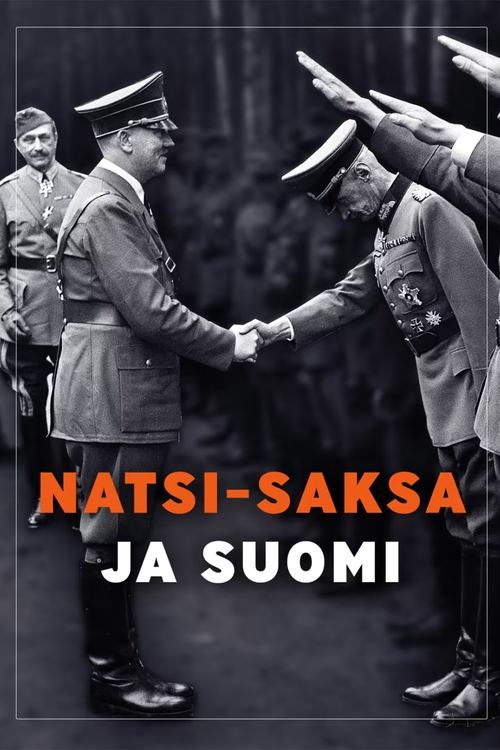
In the opening scenes of "Natsi-Saksa ja Suomi," the story is set against the backdrop of World War II, focusing on the complex relationship between Finland and Nazi Germany. The narrative begins in 1941, as Finland finds itself allied with Germany against the Soviet Union. The protagonist, a Finnish soldier named Lauri, is introduced as he prepares for battle. He is filled with a sense of duty but also grapples with the moral implications of his alliance with the Nazis.
As Lauri and his unit advance into Soviet territory, they encounter a group of Soviet soldiers. A tense standoff ensues, leading to a fierce firefight. Lauri, driven by a mix of fear and adrenaline, manages to take down an enemy soldier, which leaves him shaken. This moment marks the beginning of his internal conflict regarding the war and the actions he must take.
The narrative shifts to a small Finnish village, where Lauri's family resides. His sister, Aino, is portrayed as a strong-willed woman who is deeply concerned about the war's impact on their community. She volunteers to help the wounded soldiers returning from the front, showcasing her bravery and compassion. Aino's character serves as a counterpoint to Lauri's experiences, highlighting the war's effects on civilians.
Back at the front, Lauri's unit receives orders to capture a strategic location held by Soviet forces. The soldiers prepare for the assault, and Lauri's anxiety grows as he reflects on the lives that will be lost. During the attack, Lauri witnesses the chaos of battle, with explosions and gunfire all around. He is forced to confront his fears when he is separated from his unit and finds himself face-to-face with a wounded Soviet soldier. In a moment of hesitation, Lauri chooses to spare the soldier's life, which deepens his internal struggle.
As the war progresses, Lauri's relationship with his commanding officer, Captain Rautio, becomes strained. Rautio is depicted as a staunch supporter of the Nazi regime, pushing Lauri to commit acts that conflict with his moral compass. Tensions rise when Rautio orders a brutal reprisal against a nearby village suspected of harboring partisans. Lauri is horrified but feels powerless to oppose his superior.
Meanwhile, Aino's efforts in the village lead her to discover the harsh realities of the Nazi occupation. She witnesses the suffering of her fellow villagers and the brutality of the occupying forces. Aino's determination to protect her community drives her to secretly aid Soviet soldiers, providing them with food and information. This subplot intertwines with Lauri's story, as the siblings' paths begin to converge.
In a pivotal scene, Lauri learns of Aino's actions and confronts her. The siblings have a heated argument, with Lauri expressing his frustration over her defiance and Aino challenging his blind loyalty to the Nazis. This confrontation serves as a catalyst for Lauri, forcing him to reevaluate his beliefs and the consequences of his choices.
As the war reaches a turning point, Lauri's unit is ordered to participate in a major offensive against Soviet positions. The battle is intense, with heavy casualties on both sides. Lauri's internal conflict comes to a head when he is faced with a choice: follow Rautio's orders to execute captured soldiers or defy him and risk his own life. In a moment of clarity, Lauri chooses to stand against Rautio, leading a mutiny within his unit.
The mutiny results in a chaotic confrontation, with Lauri and his fellow soldiers clashing with Rautio and his loyalists. The scene is filled with tension as gunfire erupts, and Lauri fights not only for his life but for his principles. Ultimately, Lauri's actions lead to Rautio's downfall, but the victory is bittersweet as many lives are lost.
In the aftermath of the mutiny, Lauri and a small group of soldiers decide to desert the Finnish army. They embark on a perilous journey back to their village, navigating through war-torn landscapes and evading both Soviet and German forces. Along the way, Lauri grapples with guilt over the lives lost and the choices he made during the war.
Upon returning to the village, Lauri finds it in ruins, with Aino missing. He learns from the remaining villagers that she was captured while aiding Soviet soldiers. This revelation propels Lauri into a desperate search for his sister, showcasing his deep love and commitment to family.
The climax of the story unfolds as Lauri infiltrates a German camp where Aino is being held. The tension is palpable as he navigates through the camp, using his knowledge of military tactics to avoid detection. In a heart-stopping moment, Lauri finds Aino, but their reunion is cut short when they are discovered by guards. A fierce struggle ensues, with Lauri fighting to protect Aino. They manage to escape, but not without sustaining injuries.
The final scenes depict Lauri and Aino's journey to safety, reflecting on the cost of war and the bonds of family. As they reach the border, they are met with uncertainty about their future. The story concludes with a poignant moment of hope, as Lauri and Aino look towards a new beginning, free from the shadows of war.






What is the ending?
In the ending of "Natsi-Saksa ja Suomi," the tensions between Finland and Nazi Germany reach a climax as the characters confront their choices and the consequences of their actions during World War II. The main characters grapple with their loyalties, leading to a poignant resolution that reflects the complexities of war and personal morality.
As the final scenes unfold, we see the Finnish soldiers, led by Captain Lauri, facing the harsh realities of their alliance with Nazi Germany. The atmosphere is thick with uncertainty and fear as they prepare for an impending confrontation with Soviet forces. Lauri, burdened by the weight of his decisions, reflects on the cost of war and the lives affected by their actions.
In a pivotal moment, Lauri receives news of a potential peace agreement, igniting hope among his men. However, this hope is quickly overshadowed by the arrival of German officers who demand loyalty and further military action. The tension escalates as Lauri and his comrades are torn between their duty to Finland and the moral implications of their alliance with the Nazis.
As the conflict intensifies, Lauri makes a courageous decision to defy the German orders, leading his men in a stand against their former allies. This act of rebellion is met with fierce resistance, and the scene is filled with chaos and desperation as the soldiers fight for their beliefs and the future of their country.
In the aftermath of the battle, the surviving characters are left to reckon with their choices. Lauri, wounded but alive, finds solace in the knowledge that he stood up for what he believed was right. His comrades, though scarred by the experience, share a newfound sense of camaraderie and purpose.
The final moments of the series depict Lauri returning to his hometown, where he is greeted with mixed emotions from the community. Some view him as a hero, while others struggle to understand the complexities of his actions. The series closes on a reflective note, emphasizing the lasting impact of war on individuals and society.
In summary, the ending of "Natsi-Saksa ja Suomi" encapsulates the moral dilemmas faced by the characters, highlighting their internal struggles and the consequences of their choices during a tumultuous period in history. Each character's fate serves as a reminder of the complexities of loyalty, honor, and the human experience in the face of conflict.
Is there a post-credit scene?
In the TV show "Natsi-Saksa ja Suomi," there is indeed a post-credit scene that adds a poignant layer to the narrative.
As the credits roll, the screen fades to black before transitioning to a dimly lit room filled with historical artifacts from the era. The camera slowly pans across a collection of photographs, letters, and military memorabilia, creating an atmosphere of reflection and nostalgia.
The scene then focuses on a weathered letter, its edges frayed, resting on a wooden table. A hand reaches out to pick it up, revealing the character of Aino, a Finnish woman who has been a central figure throughout the series. Her expression is a mix of sorrow and determination as she reads the letter aloud. The letter is from a soldier who fought in the war, expressing his hopes for peace and reconciliation, despite the chaos surrounding them.
As Aino reads, her voice trembles with emotion, reflecting her internal struggle with the memories of loss and the desire for a better future. The camera captures her teary eyes, emphasizing the weight of history on her shoulders.
The scene shifts to a montage of images showing the aftermath of the war--families reuniting, children playing, and communities rebuilding. This visual juxtaposition highlights the resilience of the human spirit amidst the scars of conflict.
The post-credit scene concludes with Aino placing the letter back on the table, a look of resolve on her face. She stands up, walks towards a window, and gazes out at the horizon, symbolizing hope and the possibility of healing. The screen fades to black once more, leaving the audience with a lingering sense of reflection on the complexities of history and the enduring quest for peace.
What role does the character of Aino play in the story?
Aino is a pivotal character who embodies the struggles of Finnish identity during the tumultuous period of World War II. Her journey reflects the internal conflict between loyalty to her homeland and the pressures exerted by the occupying forces. Aino's emotional state fluctuates between hope and despair as she navigates her relationships with both Finnish and German characters, ultimately seeking a sense of belonging.
How does the relationship between Jussi and the German officer evolve throughout the series?
Jussi's relationship with the German officer begins with mutual respect but gradually becomes strained as the realities of war set in. Initially, Jussi admires the officer's discipline and leadership, but as he witnesses the impact of the occupation on his community, his feelings shift to resentment and defiance. This evolution is marked by intense confrontations that reveal Jussi's growing commitment to his people's freedom.
What is the significance of the secret meetings held by the resistance group?
The secret meetings of the resistance group serve as a crucial plot device that highlights the themes of courage and sacrifice. These gatherings are filled with tension and fear, as members discuss strategies to undermine the German occupation. The emotional stakes are high, as characters grapple with the potential consequences of their actions, revealing their deep-seated motivations to protect their homeland and loved ones.
How does the character of Eero represent the generational divide in attitudes towards the war?
Eero, a young soldier, represents the idealism and naivety of youth, contrasting sharply with the more experienced and cynical views of older characters. His enthusiasm for the war is challenged by the harsh realities he faces on the front lines. Eero's internal conflict is palpable as he grapples with the disillusionment that comes with witnessing the brutality of conflict, ultimately leading him to question the very ideals he once held dear.
What impact does the character of Helga have on the main storyline?
Helga serves as a catalyst for many of the main characters' decisions and actions. Her strong-willed nature and unwavering commitment to her beliefs inspire those around her, but also put her in danger. Her interactions with Aino and Jussi reveal the complexities of loyalty and betrayal, as she navigates her own moral dilemmas while trying to protect her family and community from the encroaching threat.
Is this family friendly?
"Natsi-Saksa ja Suomi," produced in 2022, delves into the complex historical relationship between Finland and Nazi Germany during World War II. While the show aims to provide a nuanced exploration of this period, it does contain several elements that may be objectionable or upsetting for children or sensitive viewers.
-
War Violence: The series includes depictions of war, which may involve scenes of combat, explosions, and the aftermath of battles, showcasing the harsh realities of conflict.
-
Historical Atrocities: There are references to the Holocaust and other war crimes, which may be distressing for younger audiences or those sensitive to such topics.
-
Emotional Turmoil: Characters experience significant emotional struggles, including loss, betrayal, and moral dilemmas, which may be intense and difficult for some viewers to process.
-
Political Intrigue: The show explores themes of betrayal and political manipulation, which may be complex and unsettling for younger viewers to understand fully.
-
Mature Themes: Discussions around loyalty, ideology, and the impact of war on society may introduce concepts that are heavy and potentially confusing for children.
Overall, while the series is rich in historical context and character development, its themes and content may not be suitable for all audiences, particularly younger children or those who are sensitive to the darker aspects of history.