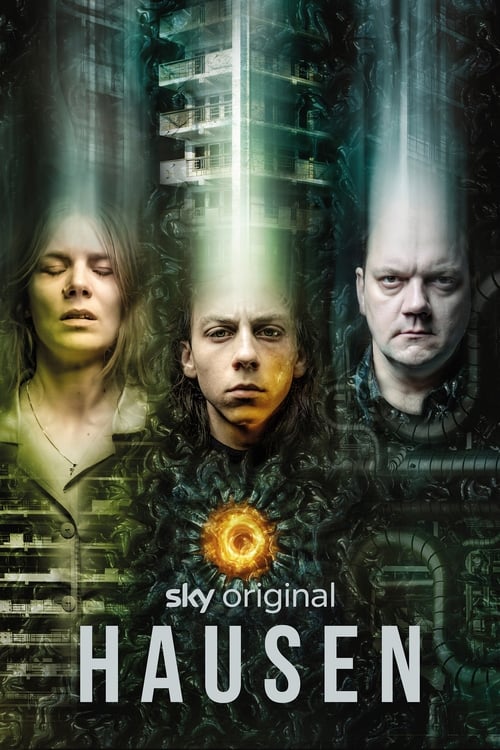











Popular
What is the significance of the house in Hausen?
How does Juri's relationship with his father evolve throughout the series?
What role do the other tenants play in the story?
What are the supernatural elements that Juri encounters in the house?
How does the theme of memory play a role in Juri's character development?
Should I watch it?
Ask Your Own Question

What is the plot?
The story begins with a young man named Juri, who is dealing with the recent death of his mother. He and his father, a man named Georg, move into a dilapidated apartment building in a desolate area. The building is old and has a foreboding atmosphere, with peeling walls and flickering lights. Juri feels an immediate sense of unease, sensing that something is off about the place. His father, however, seems determined to make a fresh start, despite the building's unsettling presence.
As they settle in, Juri begins to experience strange occurrences. He hears unsettling noises at night and sees shadows moving in the corners of his vision. His father, preoccupied with his own grief and the challenges of their new life, dismisses Juri's fears, insisting that they need to focus on moving forward. Juri feels increasingly isolated, struggling to connect with his father, who is consumed by his own sorrow.
One night, Juri discovers a hidden door in the basement of the building. Driven by curiosity, he opens it and finds a dark, narrow passageway that leads deeper into the building's underbelly. As he explores, he encounters remnants of the building's past, including old photographs and belongings left behind by previous tenants. The atmosphere grows more oppressive, and Juri feels a growing sense of dread.
Meanwhile, Georg begins to experience his own strange phenomena. He starts having vivid nightmares that blur the line between reality and hallucination. In these dreams, he sees his deceased wife, who seems to be trying to communicate with him. The emotional weight of his grief manifests in these visions, leading him to question his sanity. He becomes increasingly withdrawn, further straining his relationship with Juri.
As Juri continues to explore the building, he meets other residents, including a mysterious woman named Lena. She seems to have a deep understanding of the building's dark history and warns Juri about the dangers that lurk within. Lena reveals that the building has a sinister reputation, with many previous tenants having vanished or met tragic fates. Juri is both fascinated and terrified by her stories, feeling a connection to her that he lacks with his father.
The tension escalates when Juri discovers a hidden room filled with disturbing artifacts and remnants of past tenants. Among these items, he finds a journal that details the experiences of a previous resident who became obsessed with the building's dark energy. The journal describes a malevolent force that feeds on the grief and despair of its inhabitants. Juri realizes that the building is not just a physical structure but a living entity that preys on the emotional vulnerabilities of those who reside within it.
Georg's mental state deteriorates further as he becomes increasingly obsessed with the idea of communicating with his deceased wife. He begins to neglect Juri, who feels abandoned and desperate for his father's attention. In a moment of desperation, Juri confronts Georg about his behavior, but Georg dismisses him, insisting that he is trying to find closure. This confrontation deepens the rift between them, leaving Juri feeling more isolated than ever.
As the supernatural occurrences intensify, Juri decides to confront the building's dark energy head-on. He gathers the courage to return to the hidden passageway in the basement, determined to uncover the truth about the building's past. As he delves deeper, he encounters terrifying visions that force him to confront his own grief and fears. The building seems to respond to his emotional state, amplifying his feelings of despair and loneliness.
In a climactic sequence, Juri finds himself trapped in a nightmarish version of the building, where he is confronted by manifestations of his fears and memories. He sees visions of his mother, who urges him to let go of his grief and move on. This moment becomes a turning point for Juri, as he realizes that he must confront his pain rather than allow it to consume him.
Meanwhile, Georg's obsession reaches a breaking point. He becomes convinced that he can bring his wife back by performing a ritual in the building. In a desperate attempt to connect with her, he gathers items from their past and prepares for the ritual. Juri, sensing his father's intentions, rushes to stop him, fearing the consequences of such an act. The two have a heated confrontation, with Juri pleading with Georg to abandon the dangerous path he is on.
In the final moments, the building's malevolent energy manifests in full force, creating chaos and destruction. Juri and Georg are forced to confront the building together, realizing that they must work as a team to escape its grasp. They navigate through the nightmarish landscape, facing their fears and the memories that haunt them. In a moment of unity, they manage to break free from the building's hold, emerging into the light.
The story concludes with Juri and Georg standing outside the building, battered but alive. They share a moment of understanding, having faced their grief and the darkness together. As they walk away, the building looms ominously behind them, a reminder of the struggles they have overcome but also of the lingering shadows of their past.








What is the ending?
In the ending of "Hausen," the story culminates in a tense confrontation between the main characters, leading to a tragic resolution that reveals the dark secrets of the building and its impact on their lives.
As the final episodes unfold, the protagonist, a young man named Juri, confronts the malevolent force that has been haunting the building where he and his father, a caretaker named Rainer, live. The building itself, a decaying structure with a sinister presence, becomes a character in its own right, influencing the actions and fates of those within it. Juri's father, Rainer, is ultimately consumed by the building's dark energy, leading to a heartbreaking moment where Juri must face the loss of his father.
In the climax, Juri discovers the truth about the building's history and the tragic events that have unfolded within its walls. He is faced with a choice that tests his resolve and determination to escape the cycle of horror that has plagued his family. The series concludes with a haunting image of Juri standing alone, grappling with the weight of his experiences and the legacy of the building.
Expanded Narrative:
The final episodes of "Hausen" begin with a palpable tension as Juri, now fully aware of the sinister nature of the building, prepares to confront the malevolent force that has tormented him and his father. The atmosphere is thick with dread, the dimly lit hallways echoing with the whispers of the past. Juri's determination is fueled by a mix of fear and a desperate need to protect his father, Rainer, who has become increasingly unstable under the building's influence.
Scene by scene, the narrative unfolds with Juri navigating the labyrinthine corridors of the building, each step heavy with the weight of his family's history. He encounters spectral visions and remnants of past tenants, their tragic fates serving as a grim reminder of the building's power. Juri's emotional state fluctuates between anger, sorrow, and a fierce resolve to break free from the cycle of despair.
As he delves deeper into the building's secrets, Juri confronts Rainer, who is now fully under the building's control. Rainer's eyes reflect a mix of fear and madness, a man torn between his love for his son and the dark pull of the building. In a heart-wrenching moment, Juri pleads with his father to fight against the malevolent force, but Rainer's struggle is evident. The building's grip tightens, and Rainer's transformation becomes irreversible.
In a climactic confrontation, Juri faces the embodiment of the building's darkness. The scene is charged with emotion as Juri battles not only the supernatural entity but also the memories of his family's pain. The visuals are striking, with shadows dancing along the walls and the air thick with tension. Juri's internal conflict is palpable; he is fighting for his father's soul while grappling with his own fear of losing him forever.
Ultimately, Rainer succumbs to the building's influence, leading to a tragic and emotional farewell between father and son. Juri's heart breaks as he watches the man he loves slip away, consumed by the very darkness they sought to escape. The scene is haunting, filled with the echoes of their shared memories and the weight of unspoken words.
In the final moments, Juri stands alone in the building, the oppressive atmosphere closing in around him. The camera lingers on his face, capturing the mixture of grief and determination. He is left to grapple with the legacy of the building and the loss of his father, a poignant reminder of the impact of their shared experiences. The series concludes with Juri's solitary figure against the backdrop of the decaying structure, a powerful image of resilience amidst despair.
The fates of the main characters are sealed in this tragic ending: Rainer is lost to the building, a victim of its dark history, while Juri is left to navigate a future forever altered by the horrors they faced together. The emotional weight of their journey lingers, leaving viewers with a haunting sense of the past's inescapable grip.
Is there a post-credit scene?
"Hausen," the 2020 horror series, does not feature a post-credit scene. The show concludes its narrative without any additional scenes after the credits roll. The final moments of the series focus on the culmination of the main character's journey and the eerie atmosphere that permeates the story, leaving viewers with a sense of unresolved tension and lingering dread. The absence of a post-credit scene reinforces the show's themes of isolation and the haunting nature of the building itself, allowing the unsettling conclusion to resonate with the audience.
What is the significance of the house in Hausen?
The house in Hausen serves as a central character in the story, embodying the themes of isolation and decay. It is a dilapidated structure that holds dark secrets and influences the characters' fates. The oppressive atmosphere of the house reflects the internal struggles of the protagonist, Juri, as he navigates his traumatic past and the mysterious occurrences within the building.
How does Juri's relationship with his father evolve throughout the series?
Juri's relationship with his father, who is struggling with his own demons, is fraught with tension and complexity. Initially, Juri seeks his father's approval and support, but as the supernatural events unfold, he becomes increasingly aware of his father's failings and the impact of their shared trauma. This evolution leads to a confrontation that forces both characters to confront their past and the darkness that surrounds them.
What role do the other tenants play in the story?
The other tenants in the house serve as a reflection of the various ways people cope with trauma and despair. Each character has their own backstory and struggles, which intertwine with Juri's journey. Their interactions with Juri reveal the communal aspect of suffering and the impact of the house's malevolent presence on their lives, ultimately leading to a collective confrontation with the horrors they face.
What are the supernatural elements that Juri encounters in the house?
Juri encounters various supernatural elements that heighten the tension and mystery of the narrative. These include unsettling visions, ghostly apparitions, and inexplicable phenomena that seem to be tied to the house's dark history. These encounters not only serve to terrify but also act as catalysts for Juri's character development, pushing him to confront his fears and the legacy of trauma he carries.
How does the theme of memory play a role in Juri's character development?
Memory is a crucial theme in Juri's character development, as he grapples with his past and the trauma associated with it. Flashbacks and haunting memories surface throughout the series, revealing the impact of his childhood experiences on his present. This struggle with memory shapes Juri's actions and decisions, driving him to seek understanding and closure, ultimately leading to a deeper exploration of his identity and the nature of his family's legacy.
Is this family friendly?
"Hausen," produced in 2020, is not considered family-friendly. The show contains several potentially objectionable or upsetting elements that may be distressing for children or sensitive viewers.
-
Horror Elements: The series is steeped in horror, featuring unsettling imagery and a pervasive sense of dread that can be quite intense.
-
Violence: There are scenes of violence that may be graphic or disturbing, including physical confrontations and the aftermath of violent events.
-
Supernatural Themes: The presence of supernatural occurrences can be frightening, with manifestations that evoke fear and anxiety.
-
Psychological Tension: The show explores themes of isolation, madness, and trauma, which may be emotionally heavy and unsettling.
-
Dark Atmosphere: The overall tone is bleak and oppressive, which can be overwhelming for younger audiences.
-
Mature Themes: The narrative delves into complex adult themes, including grief, loss, and the impact of trauma, which may not be suitable for children.
These aspects contribute to a viewing experience that is more appropriate for mature audiences.