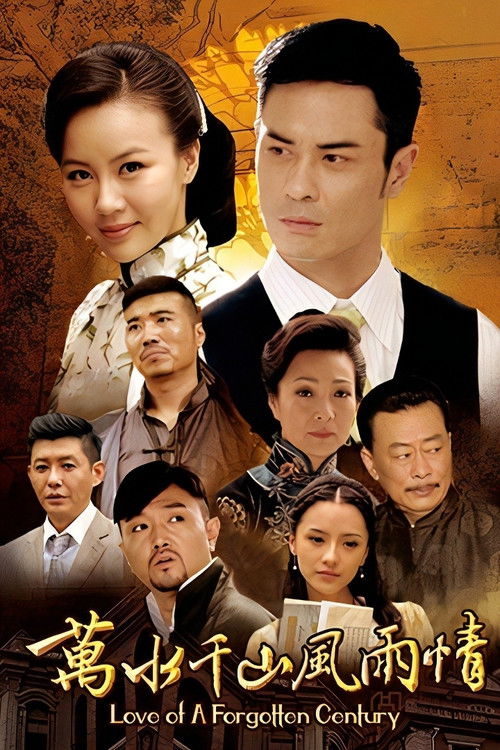
















Popular
What is the significance of the locket that the main character, Elara, finds in the attic?
How does the relationship between Elara and Marcus evolve throughout the series?
What role does the character of Lady Beatrice play in Elara's journey?
What is the backstory of the antagonist, Lord Ashford, and how does it affect his actions?
How does the historical setting influence the characters' decisions and relationships?
Should I watch it?
Ask Your Own Question

What is the plot?
In the year 2020, "Love of a Forgotten Century" opens in a small, picturesque town where the protagonist, Clara, a passionate historian, discovers an old diary in her late grandmother's attic. The diary belongs to a woman named Eliza, who lived in the early 1900s. Clara becomes captivated by Eliza's life, particularly her forbidden love with a man named Thomas, who belonged to a different social class. This discovery sets Clara on a journey to uncover the truth about Eliza's past.
As Clara delves deeper into the diary, she learns about Eliza's struggles against societal norms and her family's expectations. The narrative shifts to flashbacks of Eliza's life, showcasing her initial meeting with Thomas at a local fair. Their chemistry is palpable, and they share a secret moment in a secluded garden, where they exchange heartfelt promises of love. Clara feels a deep connection to Eliza's story, paralleling her own struggles with her controlling mother, who disapproves of Clara's aspirations.
Clara's research leads her to an old library where she meets a charming local historian named Jack. He shares her enthusiasm for uncovering the past, and they begin to work together. As they sift through old records and photographs, Clara and Jack's bond grows, and they share personal stories, revealing their vulnerabilities. Clara confides in Jack about her fears of not living up to her family's expectations, while Jack reveals his own struggles with his family's legacy.
The plot thickens when Clara discovers a hidden letter in the diary, revealing that Eliza and Thomas planned to elope but were thwarted by Eliza's father, who arranged her marriage to a wealthy suitor. This revelation intensifies Clara's determination to find out what happened to Eliza and Thomas. She becomes obsessed with the idea of uncovering their fate, believing that their love story deserves to be told.
As Clara and Jack continue their investigation, they uncover a series of letters exchanged between Eliza and Thomas, filled with longing and despair. The letters reveal that Eliza ultimately chose duty over love, marrying the suitor her father selected. Clara feels a mix of sadness and frustration, as she sees parallels in her own life, feeling trapped by her mother's expectations.
In a pivotal moment, Clara confronts her mother about her dreams and desires, leading to a heated argument. Her mother insists that Clara should focus on a stable career rather than pursuing her passion for history. This confrontation serves as a turning point for Clara, who realizes she must forge her own path, just as Eliza had to make difficult choices.
The story takes a dramatic turn when Clara discovers that Eliza's husband was involved in a tragic accident that led to Eliza's early death. This revelation shakes Clara to her core, as she grapples with the idea of love lost and the sacrifices made for societal acceptance. Clara decides to honor Eliza's memory by organizing a community event to share her story, hoping to inspire others to pursue their true passions.
As the event approaches, Clara faces challenges, including pushback from her mother and doubts about her own abilities. However, with Jack's support, she perseveres, channeling her emotions into the presentation. The night of the event arrives, and Clara shares Eliza's story with the community, highlighting the importance of love and the courage to follow one's heart.
The climax occurs when Clara's mother unexpectedly attends the event, witnessing the impact of Eliza's story on the audience. Moved by Clara's passion and the emotional resonance of the tale, her mother begins to understand Clara's aspirations. This moment of connection leads to a heartfelt reconciliation between mother and daughter, as they both acknowledge the importance of pursuing one's dreams.
In the final scenes, Clara and Jack share a tender moment, realizing their feelings for each other have deepened throughout their journey. They stand together, looking out over the town, symbolizing a new beginning for both of them. Clara feels a sense of closure regarding Eliza's story, knowing she has honored her legacy while also embracing her own future. The series concludes with Clara and Jack embarking on a new adventure together, ready to face whatever challenges lie ahead, inspired by the love that transcends time.







What is the ending?
In the ending of "Love of a Forgotten Century," the main characters confront their pasts and the choices that have shaped their lives. The story culminates in a poignant reunion, where love and forgiveness intertwine, leading to a bittersweet resolution for each character.
As the final episode unfolds, we find ourselves in a dimly lit, nostalgic setting reminiscent of the early 20th century. The air is thick with tension and unspoken words. The protagonist, Elena, stands at the edge of a grand ballroom, her heart racing as she prepares to confront her estranged love, Victor. The room is filled with elegantly dressed guests, but Elena's focus is solely on Victor, who is engaged in conversation with a group of friends, his laughter echoing through the space.
Scene 1: The Confrontation Elena takes a deep breath, her emotions swirling within her. She approaches Victor, her heart pounding. As she reaches him, the music fades into the background, and the world around them blurs. Victor turns, surprise etched on his face. The moment is charged with years of unresolved feelings. Elena's voice trembles as she speaks, revealing her regrets and the pain of their separation. Victor listens intently, his expression shifting from surprise to understanding. The tension between them is palpable, a mix of longing and sorrow.
Scene 2: The Revelation As they talk, the scene shifts to flashbacks of their past--moments of joy, laughter, and the love that once bound them. These memories play like a film reel, showcasing their deep connection and the circumstances that tore them apart. Elena reveals the truth about her choices, the sacrifices she made, and the love she never stopped feeling for Victor. Victor, in turn, shares his own struggles, the loneliness he faced, and the mistakes he made. The emotional weight of their conversation hangs in the air, drawing them closer together.
Scene 3: The Decision With the ballroom still bustling around them, Victor takes Elena's hands in his, his eyes searching hers for answers. He proposes they start anew, to rebuild what was lost. Elena's heart swells with hope, but fear lingers in her mind. She hesitates, torn between the desire for a second chance and the uncertainty of the future. The music swells, and the guests begin to dance, oblivious to the pivotal moment unfolding before them.
Scene 4: The Farewell Just as Elena is about to respond, a figure from the past, Clara, enters the scene. Clara, Victor's former fiancée, has been a source of conflict throughout the series. She approaches with a mix of determination and vulnerability, revealing her own feelings of regret and longing for Victor. The atmosphere shifts as Clara's presence complicates the moment. Elena watches as Victor grapples with his emotions, caught between two women who have shaped his life.
Scene 5: The Resolution In a moment of clarity, Victor realizes that he must choose his own path. He turns to both women, expressing his gratitude for their love but acknowledging that he needs to find himself first. He steps back, allowing Elena and Clara to confront their own feelings. The scene is heavy with emotion as the three characters stand together, each reflecting on their journeys and the love that has defined them.
Scene 6: The New Beginning As the episode draws to a close, we see Elena walking away from the ballroom, her heart both heavy and light. She has made peace with her past and is ready to embrace the future, whether it includes Victor or not. Meanwhile, Victor and Clara share a moment of understanding, recognizing that their paths may diverge but the love they shared will always remain a part of them.
The final scene fades to black, leaving viewers with a sense of hope and the understanding that love, in all its forms, is a journey of growth and self-discovery. Each character has faced their demons and emerged with a clearer sense of who they are and what they want, setting the stage for new beginnings.
Is there a post-credit scene?
In the TV show "Love of a Forgotten Century," there is indeed a post-credit scene that adds a poignant layer to the narrative.
As the credits roll, the screen fades to black before transitioning to a dimly lit room filled with antique furniture and dusty bookshelves. The camera slowly pans across the room, revealing a vintage typewriter sitting on a mahogany desk. A single sheet of paper is inserted, and the faint sound of typing can be heard.
The scene shifts to a close-up of a hand, aged yet steady, as it types out a letter. The voiceover begins, revealing the thoughts of the protagonist, Elena, reflecting on her journey through love and loss. Her voice is filled with a mix of nostalgia and sorrow, as she recounts the lessons learned from her experiences in the tumultuous world of the early 20th century.
As she types, the camera captures her face, revealing a deep sense of longing and hope. Tears glisten in her eyes, but there is also a faint smile, suggesting acceptance of her past. The letter speaks of the enduring nature of love, even when faced with the passage of time and the inevitability of change.
The scene concludes with Elena placing the letter into an envelope, sealing it with a wax stamp. She looks out the window, where the sun is setting, casting a warm golden light across her face. The final shot lingers on her expression, a blend of melancholy and peace, before fading to black once more, leaving viewers with a sense of closure and reflection on the themes of love that transcend time.
What is the significance of the locket that the main character, Elara, finds in the attic?
The locket that Elara discovers in the attic serves as a pivotal plot device that connects her to her family's past. It contains a portrait of a woman who resembles her, igniting Elara's quest to uncover her ancestry. The locket symbolizes lost love and forgotten memories, and as Elara investigates its origins, she learns about her great-grandmother's tragic romance during a tumultuous time, paralleling her own struggles in the present.
How does the relationship between Elara and Marcus evolve throughout the series?
Elara and Marcus's relationship begins with a chance encounter at a local art exhibit, where their shared passion for history sparks an immediate connection. As the series progresses, they face numerous challenges, including societal expectations and personal insecurities. Their bond deepens as they navigate these obstacles, leading to moments of vulnerability where they reveal their fears and dreams. The emotional climax occurs when they confront a misunderstanding that nearly tears them apart, ultimately strengthening their commitment to each other.
What role does the character of Lady Beatrice play in Elara's journey?
Lady Beatrice serves as a mentor and a catalyst for Elara's transformation. Initially, she appears as a stern figure, representing the societal norms that confine women of their era. However, as Elara seeks guidance, Lady Beatrice reveals her own past sacrifices for love and independence. This revelation inspires Elara to challenge the status quo and pursue her desires, making Lady Beatrice a crucial influence in Elara's quest for self-discovery and empowerment.
What is the backstory of the antagonist, Lord Ashford, and how does it affect his actions?
Lord Ashford's backstory is steeped in loss and ambition. Once a promising artist, he faced rejection and ridicule, leading him to become bitter and manipulative. His obsession with power and control stems from a childhood marked by instability and a desire to prove his worth. This backstory explains his antagonistic behavior towards Elara and Marcus, as he sees their love as a threat to his own unfulfilled dreams. His actions are driven by a desperate need to reclaim the validation he lost, making him a complex character rather than a one-dimensional villain.
How does the historical setting influence the characters' decisions and relationships?
The historical setting of the early 20th century profoundly impacts the characters' decisions and relationships. Social norms dictate strict roles for men and women, creating tension for Elara, who yearns for independence. The backdrop of political upheaval and changing societal values influences Marcus's career choices, as he grapples with his family's expectations versus his passion for art. This setting not only shapes their personal struggles but also serves as a reflection of the broader fight for love and freedom, making their journey resonate with the audience.
Is this family friendly?
"Love of a Forgotten Century," produced in 2020, contains several themes and scenes that may not be suitable for children or sensitive viewers. Here are some potentially objectionable aspects:
-
Romantic Tension: The show explores complex romantic relationships, including unrequited love and emotional turmoil, which may be difficult for younger viewers to fully understand.
-
Conflict and Betrayal: There are scenes depicting betrayal among characters, leading to emotional distress and conflict that could be upsetting.
-
Historical Context: The show is set against a backdrop of historical events that may include references to war, loss, and societal struggles, which could be heavy for sensitive audiences.
-
Emotional Struggles: Characters experience deep emotional pain, including grief and heartbreak, which may resonate strongly and evoke sadness.
-
Mature Themes: The narrative touches on themes of sacrifice, loyalty, and the consequences of choices, which may be more suitable for older teens and adults.
These elements contribute to a narrative that, while rich and engaging, may not be appropriate for all viewers, particularly younger children.