
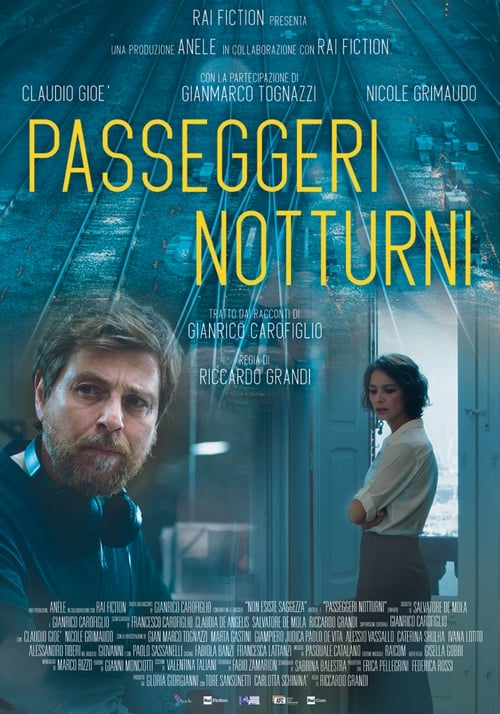














Popular
How does the character of Marco evolve throughout the series?
What is the significance of the train setting in Passeggeri notturni?
What role does Anna play in the development of the plot?
What is the relationship between the characters of Luca and Sara?
How do the various passengers' stories intersect throughout the series?
Should I watch it?
Ask Your Own Question

What is the plot?
The story begins with a group of passengers boarding a night train in Italy. Among them are a diverse cast of characters, including a young couple, a businessman, a woman traveling alone, and an elderly man. As the train departs, the atmosphere is filled with a mix of excitement and tension, as each passenger carries their own secrets and personal struggles.
As the train moves through the dark countryside, the passengers begin to interact. The young couple, visibly in love, share tender moments, while the businessman, who is preoccupied with his phone, seems detached from the others. The woman traveling alone, who appears anxious, keeps to herself, glancing nervously around the compartment. The elderly man, who is observant and wise, watches the interactions with a knowing gaze.
Suddenly, the train comes to an unexpected halt in the middle of nowhere. The lights flicker, and the passengers exchange worried glances. The conductor announces that there is a technical issue, and they will need to wait for assistance. Tension rises as the passengers begin to speculate about the delay, revealing their fears and insecurities. The young couple tries to maintain a positive attitude, while the businessman grows increasingly frustrated.
As time passes, the passengers start to feel the weight of their confinement. The woman traveling alone reveals that she is on her way to a critical job interview, and her anxiety escalates. The elderly man shares a story from his past, attempting to comfort her, but his words only serve to remind the others of their own regrets. The atmosphere becomes charged with unspoken emotions, and the passengers begin to confront their personal demons.
After what feels like hours, the train finally starts moving again, but the mood has shifted. The passengers are more introspective, and the young couple's affection is now tinged with uncertainty. The businessman receives a call that he cannot answer, heightening his sense of urgency. The woman alone decides to step out into the corridor for fresh air, but she is met with an unsettling silence.
In the corridor, she encounters the elderly man, who is also seeking solitude. They share a moment of vulnerability, discussing their fears and hopes. The woman reveals that she has been running from her past, while the elderly man reflects on the choices he made in his life. Their conversation deepens the emotional stakes for both characters.
Suddenly, the train jolts again, and the lights go out completely. Panic ensues as the passengers scramble to understand what is happening. The businessman tries to take charge, demanding that everyone stay calm, but his authority is challenged by the growing fear among the group. The young couple clings to each other, while the woman alone feels a surge of panic, fearing she may miss her opportunity.
As the lights flicker back on, the passengers discover that one of them is missing. The atmosphere turns sinister as they realize that someone may have been left behind or worse. Accusations fly, and trust begins to erode among the group. The elderly man attempts to mediate, but his efforts are met with resistance. The tension escalates into a confrontation, with the businessman and the young couple at the center of the conflict.
In the midst of the chaos, the train comes to another abrupt stop. This time, the passengers hear strange noises outside, and fear grips them. The businessman insists they need to investigate, while the elderly man warns against it, suggesting they should stay together. The young couple decides to stick with the businessman, driven by a mix of curiosity and fear.
They cautiously make their way to the exit, where they find the door ajar. Outside, the night is eerily quiet, and the landscape is shrouded in darkness. The group steps out, and they are met with an unsettling sight: the train is surrounded by fog, and they can barely see a few feet ahead. The businessman leads the way, but the tension among the group is palpable.
As they venture further from the train, they hear distant voices and realize they are not alone. The group debates whether to return to the safety of the train or to investigate the source of the voices. The young couple, driven by a sense of adventure, pushes for exploration, while the woman alone expresses her desire to go back. The elderly man, sensing the danger, urges caution.
The decision is made to follow the voices, and they soon stumble upon a hidden camp of people who appear to be living in the woods. The camp is unsettling, filled with makeshift tents and a sense of desperation. The group is confronted by the camp's inhabitants, who are wary and suspicious. A tense standoff ensues, with both sides unsure of each other's intentions.
In the midst of the confrontation, the businessman tries to negotiate, but his arrogance only escalates the situation. The young couple attempts to mediate, but their efforts are overshadowed by the rising tension. The woman alone, feeling overwhelmed, steps back, while the elderly man tries to find common ground, sharing stories of survival and humanity.
Just as the situation seems to reach a breaking point, a loud noise echoes through the camp, causing panic. The group from the train seizes the moment to escape, running back toward the train. They are pursued by the camp's inhabitants, and a chaotic chase ensues through the foggy landscape. The elderly man falls behind, urging the others to keep going, while the young couple helps the woman alone, who is struggling to keep up.
They reach the train just as the camp's inhabitants close in. The businessman frantically tries to get the door open, and they all pile inside just in time. The train starts moving again, but the atmosphere is heavy with the weight of their experience. The passengers are left to grapple with the trauma of what they have witnessed and the choices they made.
As the train speeds away, the characters reflect on their journey. The young couple holds each other tightly, realizing the fragility of their love. The businessman, shaken, begins to question his priorities. The woman alone, now more determined than ever, resolves to face her future with courage. The elderly man, having witnessed the turmoil, offers words of wisdom, reminding them that every journey is a chance for redemption.
The train continues through the night, carrying its passengers toward an uncertain destination, each of them forever changed by the events that transpired. The final scene fades to black, leaving the audience to ponder the complexities of human connection and the choices that define us.








What is the ending?
In the ending of "Passeggeri notturni," the characters confront their pasts and the choices they have made. The train journey culminates in a series of revelations and emotional confrontations, leading to a sense of closure for some and unresolved tension for others. The main characters, including the protagonist, come to terms with their regrets and the impact of their decisions, ultimately finding a path forward, albeit with lingering questions about their futures.
As the final scenes unfold, the train continues its journey through the night, symbolizing the passage of time and the inevitability of change. The characters reflect on their lives, relationships, and the connections they have forged during the trip. The ending leaves viewers with a poignant sense of hope mixed with uncertainty, emphasizing the complexity of human emotions and the weight of personal history.
The final act of "Passeggeri notturni" begins as the train glides through the darkened landscape, the rhythmic clatter of wheels on tracks echoing the internal turmoil of its passengers. The atmosphere is thick with tension, as the characters, each carrying their own burdens, prepare for the emotional confrontations that lie ahead.
In the first scene, we find the protagonist, a weary traveler named Marco, sitting alone in his compartment. His face is etched with lines of regret, and his eyes reflect a deep-seated sorrow. He gazes out the window, watching the blurred lights of the passing towns, lost in thought. The train's movement mirrors his restless mind, as he grapples with the choices that have led him to this moment.
As the train makes a scheduled stop, a few passengers disembark, while others, including Marco, remain. The camera shifts to a group of characters in the dining car, where a heated discussion unfolds. Among them is Elena, a woman with a troubled past, who confronts her former lover, Luca. Their exchange is charged with unresolved feelings, and the tension escalates as they delve into the reasons for their separation. The emotional stakes are high, and the audience can feel the weight of their shared history.
In the next scene, Marco is drawn into the conversation, and he finds himself reflecting on his own relationships. He shares a moment of vulnerability, revealing his fears and regrets about his estranged family. The dialogue is raw and honest, as the characters open up about their mistakes and the pain they carry. This moment of connection serves as a catalyst for change, as they begin to understand the importance of confronting their pasts.
As the train continues its journey, the characters are faced with a series of revelations. Marco receives a phone call that forces him to confront a family crisis, while Elena and Luca's argument reaches a breaking point. The tension in the dining car escalates, and the emotional stakes rise as they each grapple with their choices. The camera captures the intensity of their expressions, highlighting the internal struggles they face.
In a pivotal scene, Marco steps outside the train at a brief stop, seeking solace in the cool night air. He watches the stars twinkle above, contemplating his next steps. This moment of solitude allows him to reflect on the connections he has made during the journey and the possibility of redemption. The audience can sense his determination to make amends, not just with his family but with himself.
Back inside the train, the atmosphere shifts as the characters begin to reconcile their differences. Elena and Luca share a moment of understanding, acknowledging the pain they have caused each other. Their conversation is filled with emotion, and the audience can feel the weight of their shared history lifting as they find a way to forgive one another.
As the train approaches its final destination, Marco makes a decision. He reaches out to his family, expressing his desire to reconnect and heal the wounds of the past. The scene is filled with a sense of hope, as he takes the first step toward mending broken relationships. The camera captures the determination in his eyes, signaling a new beginning.
In the closing moments, the train arrives at the station, and the characters prepare to disembark. Each passenger carries with them the lessons learned during the journey. Marco steps off the train, a sense of purpose in his stride, while Elena and Luca share a final, bittersweet glance, acknowledging the journey they have taken together.
The final shot lingers on the train as it pulls away, leaving behind a trail of smoke and memories. The night sky envelops the scene, symbolizing the unknown future that awaits each character. The ending resonates with a sense of closure for some, while others are left with lingering questions, encapsulating the complexity of human relationships and the journey of self-discovery.
Is there a post-credit scene?
In the TV show "Passeggeri notturni," there is no post-credit scene. The series concludes its narrative without any additional scenes after the credits roll. The final moments of the show focus on the resolution of the characters' journeys and the emotional weight of their experiences throughout the series. The absence of a post-credit scene allows the audience to reflect on the themes of connection, loss, and the passage of time that permeate the story.
How does the character of Marco evolve throughout the series?
Marco begins as a seemingly detached and cynical individual, grappling with his past and the loss of his family. As the series progresses, his interactions with other passengers force him to confront his grief and guilt. He experiences moments of vulnerability, particularly in his conversations with Anna, which lead him to seek redemption and connection, ultimately transforming him into a more empathetic and open person.
What is the significance of the train setting in Passeggeri notturni?
The train in Passeggeri notturni serves as a microcosm of society, where various characters from different backgrounds and with different motivations interact. The confined space of the train amplifies their emotional states and conflicts, creating a sense of urgency and intimacy. Each compartment becomes a stage for personal revelations and confrontations, reflecting the characters' inner struggles and desires.
What role does Anna play in the development of the plot?
Anna is a pivotal character whose presence catalyzes significant changes in the other passengers, especially Marco. Her backstory, filled with loss and resilience, resonates with the themes of healing and hope. As she shares her experiences, she encourages others to confront their own issues, leading to moments of catharsis and connection among the group. Her emotional journey is intertwined with the train's journey, symbolizing the possibility of moving forward.
What is the relationship between the characters of Luca and Sara?
Luca and Sara's relationship is complex, marked by tension and unresolved feelings. Initially, they appear to be estranged, with Sara harboring resentment towards Luca for past decisions. As the story unfolds, their interactions reveal layers of their shared history, including love, betrayal, and the struggle for forgiveness. Their dynamic serves as a reflection of the broader themes of reconciliation and the impact of choices on personal relationships.
How do the various passengers' stories intersect throughout the series?
The passengers' stories in Passeggeri notturni are intricately woven together, with each character's narrative influencing the others. As they share their experiences, secrets, and fears, the train becomes a space for collective healing. Key moments, such as shared meals or confrontations, create bonds that reveal the interconnectedness of their lives. The climax of the series showcases how their individual journeys culminate in a shared understanding of humanity and connection.
Is this family friendly?
"Passeggeri notturni" is a drama that delves into complex themes and emotional narratives, which may not be suitable for younger audiences or sensitive viewers. Here are some potentially objectionable or upsetting aspects:
-
Intense Emotional Scenes: The show features characters grappling with deep personal issues, including grief, loss, and existential crises, which may be heavy for children to process.
-
Conflict and Tension: There are moments of interpersonal conflict that can be quite intense, showcasing arguments and emotional confrontations that might be distressing.
-
Themes of Isolation and Loneliness: The exploration of loneliness and the struggles of the characters can evoke feelings of sadness and discomfort.
-
Mature Themes: The narrative touches on adult themes such as betrayal, infidelity, and the complexities of relationships, which may not be appropriate for younger viewers.
-
Visual and Emotional Distress: Some scenes may depict characters in distressing situations, which could be upsetting for sensitive individuals.
Overall, while the show is rich in storytelling and character development, its emotional weight and mature themes suggest it may not be family-friendly.









