
Popular
Who are the main characters executed after World War II in De siste dødsdømte Season 1?
What specific events led to the arrest and trial of Vidkun Quisling in the series?
How does the series portray the personal relationships between the executed characters and their families?
What role does the Norwegian legal system play in the trials of the executed characters?
Are there any flashbacks or scenes showing the actions of the executed characters during the war?
Should I watch it?
Ask Your Own Question

What is the plot?
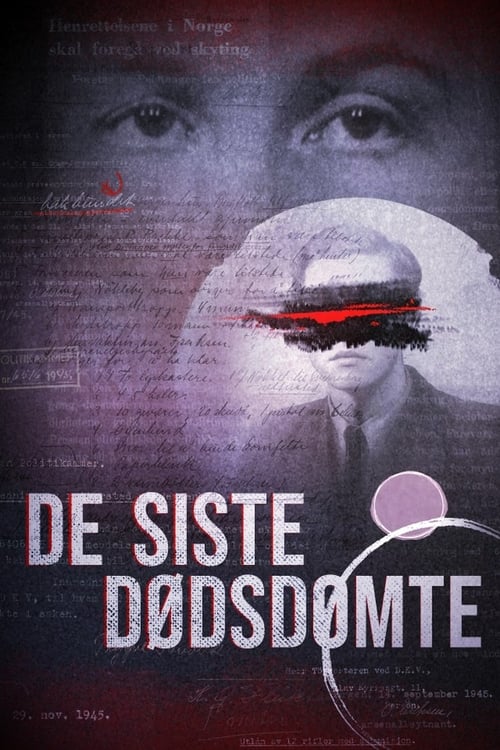
The TV series "De siste dødsdømte" (2023) is a Norwegian documentary-style mini-series that chronicles the story of the 25 Norwegians who were executed by the Norwegian state after World War II. The series unfolds in strict chronological order, focusing on the events leading up to and including the executions, as well as the personal histories and decisions of the individuals involved.
The series opens on August 17, 1945, at 5:30 AM, with the execution of Reidar Haaland, the first person to be shot by the state after the war. He is bound and has a paper placed over his heart before the execution, marking the beginning of the state's post-war capital punishment actions.
The narrative then shifts to Arne Saatvedt, who at 17 years old drops out of school and chooses to fight for Norway, but on the side of the enemy during the war. Despite the war's end, Arne does not express regret for his choices, highlighting the complex motivations and convictions of those condemned.
Hans Jakob Skaar Pedersen is introduced next, a man who claims he beat Norwegian prisoners to save lives. The court, however, does not believe his testimony, considering it a lie. The series presents this conflicting perspective without resolution, leaving the truth ambiguous.
Holger Tou is portrayed as having the intelligence of a 14-year-old and following orders without question, a behavior that ultimately costs him his life. His story emphasizes the tragic consequences of blind obedience during wartime.
Henry Oliver Rinnan is depicted as a man responsible for the deaths of 80 people. The series questions the justification of the death penalty in cases where the crimes are particularly heinous, using Rinnan's case as a focal point.
The series also explores the stories of Eilif Pisani and Aud Maggi Andersen, who used charm to send men to their deaths. While Eilif is executed, Aud Maggi Andersen is spared, illustrating the arbitrary nature of post-war justice, described in the series as a "death lottery."
Johnny Alf Larsen from Svolvær is shown torturing for the Germans, and the series reveals that his 15-year-old younger brother is harshly punished for his association, underscoring the far-reaching impact of wartime actions on families.
Throughout the series, the personal backgrounds, motivations, and emotional states of the condemned are explored in detail, providing a humanizing perspective on a dark chapter in Norwegian history. The executions are depicted with solemnity, and the series raises questions about justice, retribution, and the consequences of war without offering explicit judgments.
The series consists of eight episodes, each focusing on different individuals or themes related to the executions, with detailed reenactments, archival footage, and interviews that reconstruct the events leading to the executions and the societal context in which they occurred.
The final episodes culminate in the executions themselves, showing the process step by step, including the binding of the condemned, the placing of paper over the heart, and the moments before the firing squads carry out the sentences. The series ends with a reflection on the legacy of these executions and their place in Norwegian history.





What is the ending?
The ending of De siste dødsdømte Season 1 concludes with the execution of the last of the 25 Norwegians sentenced to death after World War II, highlighting the complex and painful reckoning Norway faced with collaborators and war criminals. The series closes by showing the fates of key individuals, some executed, others spared, leaving viewers to reflect on the harshness and moral ambiguity of post-war justice.
The final episode unfolds in a detailed, scene-by-scene narrative:
The series opens its concluding moments on August 17, 1945, at 5:30 AM, with Reidar Haaland being bound and having a paper placed over his heart. He is the first to be executed by the Norwegian state after the war, marking the beginning of the grim process of carrying out death sentences on those convicted of collaboration and war crimes.
The story then revisits Arne Saatvedt, who at 17 dropped out of school to fight for Norway--but on the side of the enemy. Despite the war's end, Arne shows no remorse for his choices, embodying the steadfastness of some collaborators even in the face of death.
Hans Jakob Skaar Pedersen's case is presented with complexity: he claims to have beaten Norwegian prisoners to save lives, but the court dismisses his testimony as lies. The series leaves open the question of his truthfulness, adding nuance to the narrative of guilt and innocence.
Holger Tou, portrayed as having the intelligence of a 14-year-old, follows orders without question. His obedience ultimately costs him his life, underscoring the tragic consequences for those caught in the machinery of war and justice without full understanding.
Henry Oliver Rinnan, infamous for having 80 lives on his conscience, is shown as a central figure whose brutal actions make his death sentence seem justified within the series' context.
The narrative contrasts the fates of Eilif Pisani and Aud Maggi Andersen, both of whom used charm to manipulate and send men to their deaths. Eilif is executed, while Aud is spared, illustrating the arbitrary and often cruel nature of post-war retribution, described in the series as a "lottery of death."
The series also touches on Johnny Alf Larsen from Svolvær, who tortured for the Germans. His 15-year-old brother faces harsh punishment, highlighting the far-reaching and sometimes indiscriminate consequences of the war's aftermath.
Throughout the final scenes, the executions are depicted with stark realism: the physical binding of the condemned, the placing of paper over their hearts, the moments of silence before the shots, and the emotional weight carried by all involved. The series does not shy away from showing the human cost on both sides--the condemned and those tasked with carrying out the sentences.
In the end, the series leaves viewers with a somber reflection on whether the death sentences were deserved, emphasizing the moral complexity of justice after such a brutal conflict. The fates of the main characters--Haaland, Arne, Hans Jakob, Holger, Rinnan, Eilif, and Aud--are sealed, with executions or survival marking their final chapters, each embodying different facets of collaboration, guilt, and punishment in Norway's darkest post-war chapter.
Is there a post-credit scene?
The TV show "De siste dødsdømte," season 1 (2023), does not have any publicly documented post-credit scenes. Available sources, including detailed episode listings and descriptions on IMDb and other platforms, do not mention or describe any post-credit scenes for this series.
"De siste dødsdømte" is a Norwegian documentary-style series exploring the execution of 25 Norwegians after World War II, focusing on historical and moral questions rather than typical fictional narrative devices like post-credit scenes. The absence of any mention of such scenes in episode summaries or viewer reviews strongly suggests that the series does not include them.
Who are the main characters executed after World War II in De siste dødsdømte Season 1?
The main characters executed after World War II in De siste dødsdømte Season 1 are individuals convicted of collaboration with the Nazi regime, including prominent figures such as Vidkun Quisling, the leader of the Norwegian Nazi party, and other high-ranking collaborators. The series focuses on their trials, personal backgrounds, and the circumstances leading to their executions, portraying them as complex individuals rather than one-dimensional villains.
What specific events led to the arrest and trial of Vidkun Quisling in the series?
In De siste dødsdømte Season 1, Vidkun Quisling's arrest and trial are depicted as a direct result of his leadership of the Norwegian Nazi party and his active collaboration with German occupying forces during World War II. The series shows his attempts to seize power during the invasion, his role in implementing Nazi policies, and his eventual capture by Norwegian authorities after the war, leading to a highly publicized trial for treason.
How does the series portray the personal relationships between the executed characters and their families?
De siste dødsdømte Season 1 delves into the strained and often tragic relationships between the executed characters and their families, showing scenes of emotional farewells, family members struggling with shame or loyalty, and the impact of public condemnation on their private lives. The series highlights moments such as letters exchanged between prisoners and loved ones, and the emotional toll on spouses and children.
What role does the Norwegian legal system play in the trials of the executed characters?
The Norwegian legal system is portrayed as central to the narrative, with detailed depictions of courtroom procedures, legal arguments, and the challenges faced by judges and prosecutors in handling cases of wartime collaboration. The series emphasizes the tension between justice and vengeance, the difficulty of proving guilt, and the societal pressure influencing the outcomes of the trials.
Are there any flashbacks or scenes showing the actions of the executed characters during the war?
Yes, De siste dødsdømte Season 1 includes flashbacks and dramatized scenes depicting the actions of the executed characters during World War II, such as their involvement in Nazi policies, interactions with German officials, and decisions that led to their collaboration. These scenes provide context for their later trials and executions, illustrating the choices and motivations behind their wartime activities.
Is this family friendly?
The TV mini-series De siste dødsdømte (2023) is a historical documentary-style drama about the execution of 25 Norwegians after World War II, exploring a dark and complex chapter in Norway's history. It is not family-friendly for children or sensitive viewers due to its mature and intense subject matter.
Potentially objectionable or upsetting aspects include:
- Violence and Gore: The series deals with executions and wartime violence, which may include graphic or disturbing scenes related to death and punishment.
- Frightening and Intense Scenes: The tone is serious and intense, reflecting the harsh realities of war and its aftermath.
- Profanity and Adult Themes: There may be strong language and mature themes related to war crimes, justice, and moral ambiguity.
- Historical Trauma: The content involves real historical trauma and ethical questions that could be emotionally challenging for sensitive viewers or children.
Because of these elements, De siste dødsdømte is best suited for mature audiences interested in historical and war-related documentaries rather than for family or young viewers.