









Popular
Who is the mysterious passenger, and what is his real connection to the driver?
Why does the passenger force the driver to keep driving instead of simply killing him right away?
How does the driver end up in the car with the passenger in the first place?
What is the significance of the Ace of Spades card in the story?
Who is the driver really, and why is his identity important to the story?
Should I watch it?
Ask Your Own Question

What is the plot?
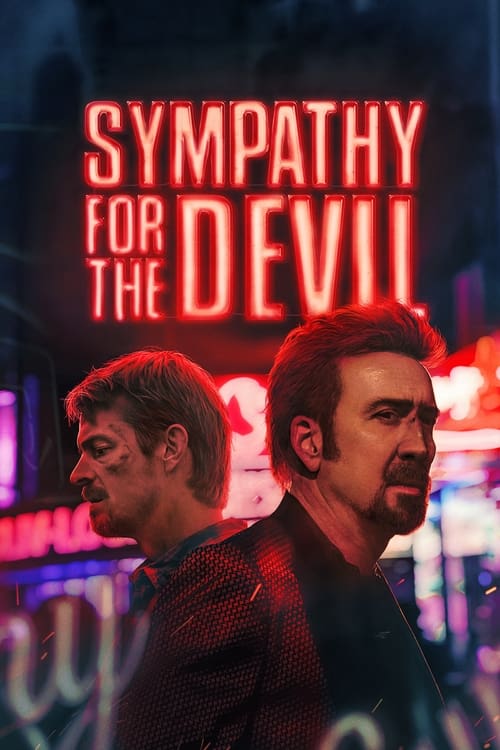
David Chamberlain is speeding through Las Vegas in the dark, desperate to reach the hospital where his wife is in labor, when his night is blown apart by a stranger who climbs into the back seat of his car at gunpoint and orders him to "Drive." The stranger, a flamboyant man with dyed red hair, a devilish red suit, and a gun pressed into the center of the car's tiny universe, is credited only as The Passenger; he makes David pick a card, demands obedience, and immediately turns an ordinary hospital run into a hostage nightmare.
From the first moments, the Passenger talks like a man who already knows the ending. He says he has been called by someone named James Levine, insists that David take him to Boulder City, and claims he needs to see his dying mother there at the hospital. The story is contained almost entirely within David's car and the road ahead, and that confinement matters: every glance, every lane change, every breath becomes part of a battle for control. David tries to explain that his wife is in labor and he has to reach the hospital, but the Passenger does not care; he keeps the gun up, keeps the pressure on, and keeps him driving.
At first, David seems exactly like he appears: a frightened family man caught in a violent, surreal hijacking. He is anxious, careful, and visibly shaken, trying to keep the passenger calm while also looking for a way out. But the Passenger is not merely random or deranged. He needles David with comments that suggest a shared past, and he keeps pushing at him with the confidence of someone who has come for a very specific reason. The Passenger is not trying to rob him or simply escape somewhere; he is trying to force a confession out of him.
As the drive continues, the Passenger's story about his mother and Boulder City begins to look less like a straightforward reason for the trip and more like a cover for something much darker. He is deliberately prolonging the ride, drawing David out, keeping him trapped inside the car long enough to unravel him. The road becomes a psychological interrogation chamber: there is no safe place to look, no room to breathe, no chance to reset the conversation. The Passenger taunts him with references to Boston, hinting that David once knew him or knew of him there, and the tension grows because David keeps denying any meaningful connection even as the man in the back seat clearly believes otherwise.
The film lets the audience feel the trap tightening. The car stops at public places, including a diner, but those moments do not provide relief; they only widen the dread because the violence and manipulation are now spilling into supposedly ordinary spaces. A police encounter escalates rather than resolves anything, and the Passenger's volatility makes every outside contact dangerous. David is forced to play along, smile when he should not smile, answer when he should not answer, and keep steering toward a destination he never wanted. The Passenger's control is not only physical; it is also psychological, built out of implication, memory, and the threat that he knows exactly who David really is.
The central revelation arrives gradually, then all at once: David Chamberlain is actually James Levine. The man who has looked like an anxious expectant father in a hurry is, in truth, a former mob killer who has buried his real identity and built a new life for himself in Las Vegas. That twist reorders everything. His desperation to reach the hospital is no longer just the panic of a husband missing the birth of his child; it also becomes a performance by a man terrified that his past is catching up to him. The Passenger has not chosen the wrong guy. He has chosen exactly the right one.
The story behind that identity is brutal. Years earlier, James Levine worked as a fixer or hitman connected to Boston organized crime, and the Passenger's family was destroyed because of him. The crucial past incident involves the Passenger's wife, who had witnessed a murder tied to the mob, and James was sent to silence the problem. He went to her home, and when she fought back, he shot her multiple times. In the chaos, one of those shots also killed the Passenger's daughter, who was an unintended victim--what James later describes as "collateral damage." That backstory gives the entire film its moral core: the Passenger is not merely a madman, but a bereaved man who has spent years tracking the killer who ruined his life.
The Passenger tells David all of this piece by piece, forcing the buried truth into the open. He explains that he has come for revenge, but not in a simple, theatrical way. He wants David to acknowledge what he did, to stop hiding behind the name David Chamberlain, and to say out loud that he is James Levine. The conversation becomes increasingly intimate and poisonous, because the Passenger is not just naming facts; he is stripping away the lie that David has been living inside. Every denial from David sounds weaker than the last, and every accusation from the Passenger lands with more force.
Eventually, David can no longer keep the mask in place. He reveals the truth in fragments, then in full: he is James Levine, and he did kill the Passenger's wife and daughter. He does not frame it as a heroic confession. Instead, he admits it with the exhausted, ugly logic of a man who has lived too long with what he did. He says the daughter was collateral damage and claims that God punished him later by "taking" his first-born child. That line gives the film its most sinister emotional turn: James is not simply confessing a crime; he is trying to make sense of suffering as if a cosmic balance sheet exists to explain away bloodshed.
The Passenger listens, and the scene sharpens into something colder than rage. His whole pursuit has been about this moment, the moment he gets confirmation that the man in the driver's seat really is the one responsible for his family's destruction. The passenger's demand that David drive becomes meaningless now that the truth is out. What matters is not the destination but the reckoning. For a moment, the car feels even smaller, as if the two men have been sealed inside a confession booth with no priest, no absolution, and no way to leave.
Then the physical violence overtakes the psychological battle. James veers the car off the road and crashes it, flipping the vehicle and badly injuring the Passenger. The crash is sudden and violent enough to break the rhythm of the film, turning the long verbal duel into a chaotic wreck scene. Metal screams, glass breaks, bodies slam, and the entire carefully controlled hostage situation collapses into a mangled roadside disaster. The Passenger, already wounded and gasping, crawls out of the wreckage, but the carjacking is no longer in his control, and neither is the truth.
Police cars arrive as the aftermath becomes even more lethal. In the confusion, the Passenger is exposed and weakened, but James is not finished. He takes the Passenger's gun and shoots the first cops who reach the scene, killing them before they can understand what they are walking into. The arrival of law enforcement, which should have ended the ordeal, only creates more bodies and more opportunities for James to disappear behind his new identity. The film makes this sequence especially cruel because the cops are not figures of authority who solve the problem; they are just more witnesses James is willing to kill to protect himself.
With the Passenger bleeding out, James leans into the final confrontation and strangles him to death. This is the end of the revenge arc, and it is not clean or triumphant. The Passenger coughs blood and struggles for air while James, now fully embracing the monster he once was, finishes the killing with his own hands. The act is both personal execution and self-preservation: James ensures the one person who can identify him, condemn him, and connect him to his old life is silenced forever. The Passenger dies there, at the roadside, after spending the entire night trying to force James to face the truth.
After the killing, James immediately goes into cover-up mode. He wipes his fingerprints from the gun and puts the weapon into the Passenger's hand so it will look like the Passenger killed the cops. The framing is cold, efficient, and practiced, which confirms just how dangerous James really is. He is not some panicked innocent caught in a horrific misunderstanding; he is a survivor of the criminal world, and he knows how to control the story after the bloodshed. As more police sirens approach, James also finds the Ace of Spades cards scattered in the wreckage and pockets one, a small but pointed symbol that ties the entire night back to fate, death, and the card game the Passenger began when he first invaded the car.
In the wreck's silence, James listens to a voicemail from his wife. Her message reveals that she has given birth to a baby girl, and she says the child has his eyes. This is the final emotional shock of the film, because it turns the hospital subplot into a darkly ironic counterpoint to the violence behind him. The life James was so desperate to reach has arrived, but it arrives after he has murdered multiple people and buried himself deeper in lies. The newborn daughter stands as a new beginning that is already contaminated by the father's past, even if the wife does not yet know it.
The last stretch is bleakly triumphant and deeply deceptive. James sinks down and repeats to himself, "I'm David," as if saying the false name hard enough might make it true. When the police finally close in, he has arranged the scene so the dead Passenger appears to be the attacker and killer. James stands back up, smooths over the chaos, and resumes the role of the frightened everyman who survived a nightmare. The movie ends on that chilling image: the man who began the night as David Chamberlain is revealed to be James Levine, a former killer who has now erased the only living witness to his old crimes, framed the dead man for the murders, and walked away under a stolen identity while his newborn daughter waits at the hospital.
The ending does not offer redemption. It offers concealment. James has won the immediate battle, survived the night, and protected his new life just long enough to return to his family, but the audience knows the truth he has buried under the wreckage. The Passenger dies seeking justice, the cops die as collateral to James's escape, the Passenger's wife and daughter remain the original victims that launched the story, and James gets to hold on to the name David for one more day.





What is the ending?
David survives the final crash, kills the Passenger, and then appears to slip back into his family-man identity as the police arrive. The Passenger dies from David's hands, and David is left alive at the scene with the gun placed in the Passenger's hand.
At the end, the story moves through one last violent stretch on the road. David has already accepted that the Passenger knows who he really is, and after the car crash David becomes fully James Levine again. He shoots the first police officers who reach the wreck with the Passenger's gun, then chokes the badly injured Passenger to death.
After the Passenger dies, David takes the gun and puts it in the Passenger's lifeless hand. He then sinks down near the wreck and tells himself, "I'm David," and by the time the police close in, he is presenting himself again as David rather than James.
For the main characters at the end: the Passenger is dead; David is alive and standing at the scene when police arrive; and the truth of James Levine remains hidden behind the identity David chooses to present to the world.
Scene by scene, the ending unfolds like this:
- The car is already in chaos after the Passenger's violence and the final reveal about David's past.
- David drives the vehicle into disaster and wrecks it.
- He rises from the crash in the identity of James Levine and uses the Passenger's gun against the first police officers who reach him.
- The Passenger, already badly hurt, is overpowered by David.
- David chokes him until he dies.
- More police sirens approach as David places the gun in the dead Passenger's hand.
- David collapses to the ground and repeats to himself that he is David.
- When the police finally reach him, he has resumed the outward persona of David, the husband and father.
The ending also confirms that David's hidden past is not gone; it is what returns in the final confrontation and decides who lives and who dies. The Passenger comes to the end of the road in the same trap he created, and David survives by switching back to the identity that lets him face the police as the apparent victim rather than the killer.
Is there a post-credit scene?
No. The 2023 film Sympathy for the Devil does not have a post-credit scene, so nothing extra plays after the credits. Its story ends with the final scene before the credits, and there is no added tag or stinger afterward.
If you want, I can also give you a concise ending explanation of the film itself.
Who is the mysterious passenger, and what is his real connection to the driver?
The Passenger is the unnamed stranger played by Nicolas Cage, but the film later reveals that the driver is actually David Chamberlain/James Levine, a man with a hidden past. James had been responsible for the deaths of the Passenger's wife and daughter, which is the personal connection driving their confrontation.
Why does the passenger force the driver to keep driving instead of simply killing him right away?
The Passenger's goal is not immediate murder; he wants to psychologically torment the driver and force him to face what he did. The story frames the ride as a tense cat-and-mouse game in which the Passenger controls the pace and uses fear, confusion, and violence to corner the driver.
How does the driver end up in the car with the passenger in the first place?
At the start, David Chamberlain is on his way to the hospital because his wife is in labor when the stranger gets into the back of his car. The Passenger then holds him at gunpoint and orders him to drive, turning an ordinary trip to the hospital into a hostage situation.
What is the significance of the Ace of Spades card in the story?
Early in the film, the Passenger tells the driver to pick a card while threatening him, and David chooses the Ace of Spades. The Passenger reveals that the card was already in his pocket, making it part of his manipulation and suggesting that the encounter is being staged or controlled more than it first appears.
Who is the driver really, and why is his identity important to the story?
The man first introduced as David Chamberlain is eventually revealed to be James Levine. That identity matters because it ties directly to his hidden criminal past and explains why the Passenger is targeting him, reframing the car ride as revenge rather than a random kidnapping.
Is this family friendly?
No, Sympathy for the Devil (2023) is not family-friendly. It is a psychological thriller built around gun threats, stalking, violence, and intense tension, so it is better suited to adults or older teens rather than children.
Potentially upsetting or objectionable elements include:
- Armed threats and coercion: the central premise involves a man being forced to drive at gunpoint.
- Violence and murder-related danger: reviews describe the story as involving "murder and chaos," with characters in constant life-threatening situations.
- High-stress suspense throughout: the film is a cat-and-mouse thriller with repeated intimidation and escalating danger.
- Psychological distress: the tone is tense and unhinged, which may be unsettling for sensitive viewers.
- Potentially dark or disturbing subject matter: the film is a thriller, not a light action adventure, and is described as involving a maniacal passenger and a "hidden agenda."
I did not find evidence in the provided sources of explicit sexual content, graphic gore, or strong profanity, but the film's violent premise and sustained menace make it unsuitable for young children.









