













Popular
What key events from George Carlin's early life are highlighted in the documentary?
How does the documentary portray George Carlin's relationship with his family?
What significant turning points in George Carlin's career are featured?
How does George Carlin's comedic style evolve throughout the documentary?
What role do interviews with contemporaries and family members play in the documentary?
Should I watch it?
Ask Your Own Question

What is the plot?
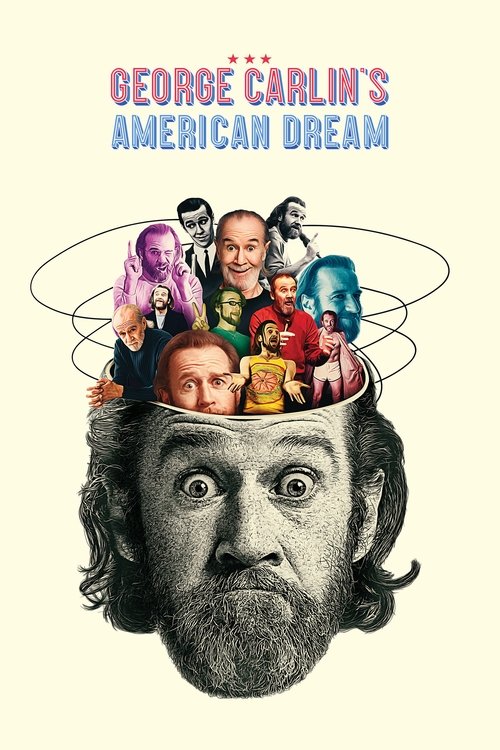
The documentary "George Carlin's American Dream" begins with a montage of Carlin's early life, showcasing his upbringing in New York City. It highlights his childhood in a working-class Irish family, emphasizing the influence of his mother, who encouraged his creativity, and his father, who was more distant. The narrative sets the stage for Carlin's complex relationship with authority and societal norms, which would later become central themes in his comedy.
As the story progresses, the film delves into Carlin's early career in stand-up comedy during the 1960s. It captures his initial success as a conventional comedian, performing clean, family-friendly material. However, a pivotal moment occurs when he begins to feel constrained by this persona. The film illustrates his internal struggle and desire for authenticity, leading to a significant turning point where he decides to abandon his safe routine in favor of a more provocative style.
The documentary then transitions to the late 1960s, showcasing Carlin's transformation into a countercultural icon. It features clips from his groundbreaking performances, including the famous "Seven Words You Can Never Say on Television" routine. The film captures the public's reaction, both positive and negative, as Carlin's boldness challenges societal taboos. This segment emphasizes his motivations to push boundaries and provoke thought, reflecting his belief in the power of free speech.
As the 1970s unfold, the film highlights Carlin's struggles with substance abuse and the toll it takes on his personal life. It portrays his tumultuous relationships, particularly with his wife, Brenda, and how his addiction affects their marriage. The documentary provides intimate insights into Carlin's emotional state during this period, showcasing his vulnerability and the impact of his choices on his career and family.
The narrative then shifts to the 1980s, where Carlin experiences a resurgence in popularity. The film details his return to stand-up, marked by a series of successful HBO specials. It captures the evolution of his comedic style, which becomes increasingly cynical and reflective of societal issues. The documentary highlights key performances that resonate with audiences, showcasing Carlin's ability to articulate the frustrations of everyday life and the absurdities of modern society.
In the 1990s, the film explores Carlin's continued relevance and his role as a cultural commentator. It features his critiques of politics, religion, and consumerism, emphasizing his commitment to social commentary. The documentary includes interviews with fellow comedians and cultural figures who discuss Carlin's influence on their work and the broader comedy landscape. This section underscores his legacy as a trailblazer who paved the way for future generations of comedians.
As the film approaches the end, it reflects on Carlin's later years, including his health struggles and the impact of aging on his career. It captures his resilience and determination to continue performing despite personal challenges. The documentary culminates in a poignant look at Carlin's final performances, showcasing his unwavering passion for comedy and his desire to leave a lasting impact on the world.
The film concludes with a tribute to Carlin's legacy, featuring clips from his most iconic routines and testimonials from those who knew him. It emphasizes the profound influence he had on comedy and society, leaving viewers with a sense of the indelible mark he made on American culture. The final scenes evoke a mix of nostalgia and admiration, celebrating Carlin's life and work as a testament to the power of humor in confronting the complexities of the human experience.
More TV Shows Like This
Browse All TV Shows →









What is the ending?
In the ending of "George Carlin's American Dream," the documentary culminates in a reflection on George Carlin's legacy, showcasing his impact on comedy and culture. It highlights his fearless approach to social commentary and the way he challenged societal norms. The film concludes with a montage of Carlin's most memorable performances, emphasizing his wit and insight, leaving viewers with a sense of admiration for his contributions to the world of comedy.
As the final scenes unfold, the documentary transitions into a poignant montage of George Carlin's life and career. The screen fades from black to a vibrant clip of Carlin on stage, his signature black attire contrasting against the bright lights of the venue. The audience is captivated, laughter echoing through the theater as he delivers one of his iconic routines. The camera captures the joy and connection between Carlin and his fans, illustrating the profound impact he had on those who listened to him.
The narrative then shifts to a series of interviews with family members, friends, and fellow comedians who reflect on Carlin's influence. His daughter, Kelly Carlin, speaks with a mix of pride and sorrow, sharing personal anecdotes that reveal the man behind the comedy. She describes his relentless pursuit of truth and authenticity, emphasizing how he often grappled with the weight of his own observations about society. The camera lingers on her expressions, capturing the deep emotional connection she had with her father, as well as the complexity of their relationship.
Next, the film intersperses clips of Carlin's performances with commentary from other comedians who cite him as a major influence. They discuss how Carlin's willingness to tackle taboo subjects and challenge authority paved the way for future generations of comedians. The screen fills with laughter and applause, underscoring the respect and admiration that the comedy community holds for him.
As the documentary nears its conclusion, it revisits some of Carlin's most controversial bits, showcasing his fearless critique of politics, religion, and societal norms. The scenes are intercut with footage of protests and social movements, illustrating how Carlin's words resonated beyond the stage and into the fabric of American culture. The audience is reminded of the power of comedy as a tool for social commentary, and how Carlin's legacy continues to inspire those who seek to speak truth to power.
The final moments of the documentary feature a serene shot of Carlin's grave, adorned with flowers and mementos left by fans. The camera slowly zooms out, capturing the peacefulness of the setting. A voiceover from Kelly Carlin reflects on her father's enduring spirit, expressing hope that his message of questioning authority and embracing individuality will continue to resonate with future generations.
As the screen fades to black, the credits roll, accompanied by a soft instrumental version of one of Carlin's classic routines. The audience is left with a sense of closure, yet also a lingering inspiration to carry forward Carlin's legacy of fearless honesty and humor. The documentary ends, but the impact of George Carlin's life and work remains palpable, a testament to a man who dared to challenge the status quo and inspire others to do the same.
Is there a post-credit scene?
"George Carlin's American Dream," produced in 2022, does not feature a post-credit scene. The documentary concludes with a poignant reflection on Carlin's legacy and impact on comedy and culture, leaving viewers with a sense of closure regarding his life and career. The final moments encapsulate the essence of Carlin's humor and philosophy, emphasizing his role as a social commentator and a voice for the marginalized. The absence of a post-credit scene allows the audience to fully absorb the weight of Carlin's contributions without any additional distractions.
What key events from George Carlin's early life are highlighted in the documentary?
The documentary delves into George Carlin's childhood in New York City, showcasing his experiences growing up in a working-class Irish family. It highlights his early interest in comedy, his struggles with authority, and the influence of his mother, who encouraged his creativity. Key events include his first exposure to stand-up comedy and his early attempts at performing, which set the stage for his later career.
How does the documentary portray George Carlin's relationship with his family?
The documentary provides an intimate look at George Carlin's complex relationship with his family, particularly his parents and his wife, Brenda. It explores the tension between his comedic persona and his personal life, revealing how his family dynamics influenced his material. Emotional interviews with Brenda highlight their deep bond, as well as the challenges they faced due to Carlin's relentless pursuit of his career.
What significant turning points in George Carlin's career are featured?
The documentary outlines several pivotal moments in Carlin's career, including his transition from a traditional stand-up comic to a countercultural icon. It details his infamous 'Seven Words You Can Never Say on Television' routine, which not only challenged societal norms but also led to a landmark Supreme Court case. The film captures the evolution of his comedy style and how he used his platform to address social issues.
How does George Carlin's comedic style evolve throughout the documentary?
The documentary traces the evolution of Carlin's comedic style from his early clean-cut performances to his later, more provocative and socially critical routines. It showcases clips from various stages of his career, illustrating how he became increasingly bold in addressing taboo subjects, politics, and the absurdities of modern life. This evolution reflects his personal growth and changing perspectives on society.
What role do interviews with contemporaries and family members play in the documentary?
Interviews with contemporaries, fellow comedians, and family members are woven throughout the documentary, providing context and depth to Carlin's life and work. These voices offer personal anecdotes and insights into Carlin's character, revealing his influence on the comedy landscape and the respect he garnered from peers. The emotional reflections from family members, particularly Brenda, add a layer of intimacy, showcasing the man behind the comedy.
Is this family friendly?
"George Carlin's American Dream," produced in 2022, is a documentary that delves into the life and career of the iconic comedian George Carlin. While it offers a rich exploration of his contributions to comedy and social commentary, it is not considered family-friendly due to several potentially objectionable aspects.
-
Language: The documentary features strong language, including frequent use of profanity, which is characteristic of Carlin's stand-up routines.
-
Adult Themes: Carlin's comedy often tackles complex and controversial subjects such as politics, religion, and societal norms, which may not be suitable for younger audiences.
-
Graphic Content: There are discussions and clips that may include graphic or explicit content related to Carlin's routines, reflecting his unfiltered approach to comedy.
-
Cultural Critique: The documentary addresses sensitive topics such as war, consumerism, and social injustice, which may be upsetting for some viewers, particularly those who are sensitive to such themes.
-
Personal Struggles: It touches on Carlin's personal challenges, including his battles with addiction and the impact of fame, which may evoke strong emotional responses.
Overall, while the documentary is a tribute to Carlin's legacy, its content is best suited for mature audiences who can appreciate the depth and complexity of his work.