



















Popular
What is the significance of the character Vicente in Magnifica 70?
How does the relationship between Vicente and the actress influence the plot?
What role does censorship play in the development of the story?
How does the setting of 1970s Brazil impact the characters' lives?
What are the key conflicts faced by Vicente throughout the series?
Should I watch it?
Ask Your Own Question

What is the plot?
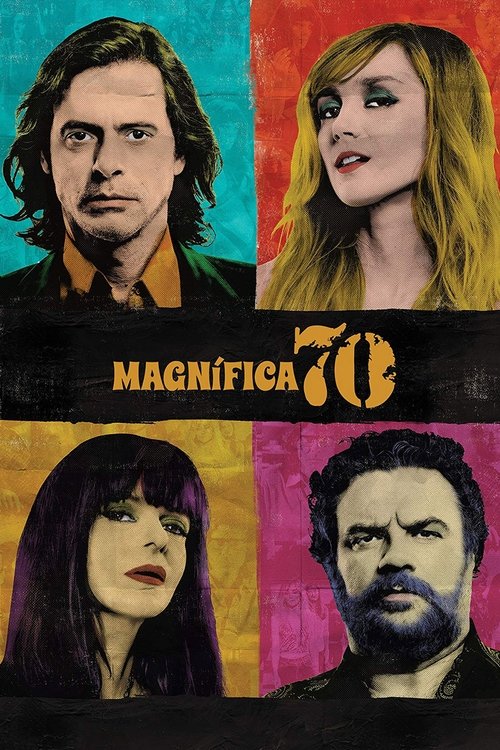
In the opening of "Magnifica 70," we are introduced to the vibrant and tumultuous world of 1970s Brazil, where the film industry is undergoing significant changes. The story centers around Vicente, a middle-aged man who works as a film editor in a struggling production company. He is disillusioned with his mundane life and the constraints of the military dictatorship that governs Brazil. Vicente's life takes a turn when he meets a young and ambitious actress named Darlene, who is determined to make a name for herself in the film industry.
As Vicente becomes more involved with Darlene, he is drawn into her world of passion and ambition. Darlene is cast in a film that is being produced by the company where Vicente works, and their relationship begins to blossom. However, Vicente is also married to a woman named Lúcia, who is unaware of his growing infatuation with Darlene. This creates a tension in Vicente's life as he struggles to balance his responsibilities to his family with his desires for Darlene.
The production of the film progresses, and Vicente's role as an editor becomes increasingly important. He finds himself working late nights, often alone with Darlene, which deepens their connection. Darlene's boldness and determination inspire Vicente, and he begins to see a way out of his stagnant life. However, the pressures of the film industry and the political climate begin to weigh heavily on both of them.
As the film nears completion, Vicente's relationship with Darlene becomes more complicated. Darlene is faced with the harsh realities of the industry, including the exploitation of women and the challenges of being a female actress in a male-dominated environment. Vicente, meanwhile, grapples with his feelings of guilt towards Lúcia and the life he has built with her. He is torn between his loyalty to his family and his desire for a new life with Darlene.
In a pivotal scene, Vicente and Darlene share a passionate kiss, solidifying their romantic connection. This moment is both exhilarating and terrifying for Vicente, as he realizes the depth of his feelings for Darlene. However, the kiss also serves as a catalyst for Vicente to confront his own life choices. He begins to question whether he can continue living a double life and what it means for his future.
As the film's premiere approaches, tensions rise. Darlene is anxious about how the film will be received, and Vicente is consumed by his internal conflict. He decides to confront Lúcia about his feelings, leading to a heated argument where he reveals his infidelity. Lúcia is devastated, and their marriage begins to unravel. Vicente's decision to be honest with Lúcia is a turning point, as it forces him to face the consequences of his actions.
The premiere of the film is a chaotic affair, filled with excitement and anxiety. Darlene is nervous but hopeful, while Vicente is filled with regret and uncertainty. As the film plays, the audience's reactions are mixed, reflecting the turbulent political climate of the time. Darlene's performance is met with both praise and criticism, highlighting the challenges she faces as a woman in the industry.
In the aftermath of the premiere, Vicente and Darlene's relationship is put to the test. They must navigate the fallout from the film's reception and the impact it has on their lives. Vicente's marriage to Lúcia is effectively over, and he must decide whether to fully commit to Darlene or retreat back into his old life. Darlene, on the other hand, is determined to continue pursuing her career, but she is also aware of the sacrifices that come with it.
As the story progresses, Vicente and Darlene's relationship deepens, but they also face external pressures from the film industry and the political environment. Vicente's internal struggle continues as he grapples with his identity and what he truly wants from life. The film culminates in a dramatic confrontation where Vicente must make a choice that will define his future.
In the final scenes, Vicente ultimately decides to embrace his new life with Darlene, leaving behind the remnants of his past. They share a moment of hope and possibility, looking towards an uncertain future together. The series ends on a note of ambiguity, reflecting the complexities of love, ambition, and the pursuit of happiness in a world fraught with challenges.








What is the ending?
In the ending of "Magnifica 70," the story culminates in a series of dramatic confrontations and resolutions. The main characters face the consequences of their choices, leading to a bittersweet conclusion that reflects their personal journeys and the tumultuous world around them.
As the final episodes unfold, we see the characters grappling with their desires and the harsh realities of their lives. The film industry, which has been a backdrop for their ambitions and dreams, becomes a symbol of both hope and despair. The protagonist, Vicente, finds himself at a crossroads, torn between his love for the actress, Clara, and the demands of his career. Clara, on the other hand, is faced with the harsh realities of her profession and the sacrifices it entails.
In the climax, Vicente makes a pivotal decision that alters the course of his life. He chooses to prioritize his relationship with Clara over his ambitions in the film industry. This decision leads to a confrontation with his mentor, who represents the old guard of cinema and the expectations that come with it. Vicente's choice signifies a break from tradition and a step towards personal fulfillment.
Clara, meanwhile, confronts her own demons. She realizes that the world of cinema is not as glamorous as it seems, and she must decide whether to continue pursuing her dreams or to seek a more authentic life. Her journey culminates in a moment of self-discovery, where she embraces her true self, free from the constraints of societal expectations.
The series concludes with a poignant scene that encapsulates the essence of the characters' journeys. Vicente and Clara, having navigated their struggles, find solace in each other. They stand together, looking towards an uncertain future, but with a renewed sense of hope and determination. The ending leaves viewers with a sense of closure for the characters, while also highlighting the ongoing challenges they face in a rapidly changing world.
In summary, the ending of "Magnifica 70" is a reflection of the characters' growth and the choices they make in the face of adversity. Vicente and Clara's fates intertwine as they seek to forge their own paths, ultimately finding strength in their love for one another amidst the chaos of their lives.
Is there a post-credit scene?
"Magnifica 70," produced in 2015, does not feature a post-credit scene. The series, set in the 1970s in Brazil, focuses on the world of cinema and the intertwining lives of its characters, particularly the story of a married man, Vicente, who becomes involved in the production of erotic films. The narrative concludes with the final episode, wrapping up the character arcs and themes without any additional scenes after the credits. The emphasis remains on the exploration of desire, societal norms, and the impact of the film industry during that era.
What is the significance of the character Vicente in Magnifica 70?
Vicente is a pivotal character in Magnifica 70, serving as a representation of the struggle between personal desires and societal expectations. As a film director, he embodies the creative spirit of the 1970s Brazilian cinema, often clashing with the censorship imposed by the military regime. His internal conflict is highlighted through his relationships, particularly with the actress, and his pursuit of artistic freedom, which drives much of the narrative.
How does the relationship between Vicente and the actress influence the plot?
The relationship between Vicente and the actress, who is both his muse and a source of tension, is central to the plot. Their dynamic evolves from professional admiration to a complex emotional entanglement, reflecting Vicente's struggles with his own identity and ambitions. This relationship not only fuels Vicente's creative process but also serves as a catalyst for his personal growth and the challenges he faces in a repressive society.
What role does censorship play in the development of the story?
Censorship is a critical element in Magnifica 70, shaping the narrative and the characters' actions. The restrictions imposed by the military government create a backdrop of tension and fear, influencing Vicente's filmmaking choices. As he navigates these limitations, the struggle for artistic expression becomes a driving force in the plot, leading to moments of rebellion and innovation that define the era.
How does the setting of 1970s Brazil impact the characters' lives?
The setting of 1970s Brazil is integral to the characters' experiences in Magnifica 70. The political climate, marked by repression and censorship, directly affects their personal and professional lives. Characters like Vicente and the actress are constantly navigating the dangers of expressing their true selves in a society that stifles creativity. This historical context enriches their motivations and the stakes of their actions throughout the series.
What are the key conflicts faced by Vicente throughout the series?
Vicente faces multiple key conflicts throughout Magnifica 70, including his struggle against censorship, his desire for artistic integrity, and his tumultuous relationships. His internal battle between conforming to societal norms and pursuing his passion for filmmaking creates a rich narrative tension. Additionally, his interactions with the actress and the repercussions of their relationship add layers to his conflicts, as he grapples with love, ambition, and the consequences of his choices.
Is this family friendly?
"Magnifica 70," produced in 2015, is not considered family-friendly due to its mature themes and content. The show is set in the 1970s Brazilian film industry and explores the world of adult cinema, which includes several potentially objectionable elements.
-
Sexual Content: The series features explicit sexual scenes and nudity, reflecting the adult film industry setting. These scenes are integral to the plot and character development.
-
Violence: There are instances of violence, including physical confrontations and emotional turmoil that can be distressing.
-
Substance Use: Characters are depicted using drugs and alcohol, which may not be suitable for younger audiences.
-
Adult Themes: The narrative delves into complex adult relationships, infidelity, and the struggles of personal identity, which may be challenging for children to understand.
-
Emotional Turmoil: Characters experience significant emotional distress, including jealousy, betrayal, and existential crises, which could be upsetting for sensitive viewers.
Overall, the series is intended for a mature audience and contains elements that may not be appropriate for children or those who are sensitive to such themes.