
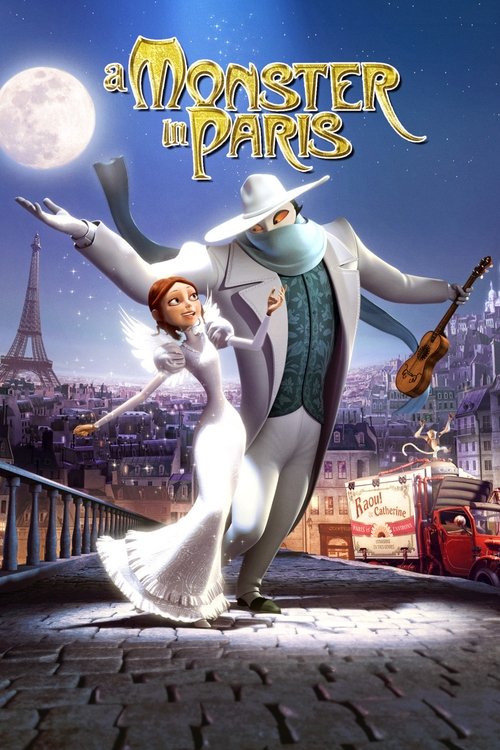












Popular
What is the significance of the character Francoeur in the story?
How does the character Lucille contribute to the plot?
What role does the character Raoul play in the story?
How does the setting of Paris influence the story?
What is the conflict between the characters and the police officer, Inspector Poussin?
Should I watch it?
Ask Your Own Question

What is the plot?
Sorry, we aren't able to watch and write up a full detailed plot yet. Check back in a few days.








What is the ending?
In the ending of "A Monster in Paris," the monster, who is actually a gentle creature named Francoeur, is revealed to the public as a misunderstood being rather than a threat. The film concludes with a celebration in Paris, where Francoeur is accepted by the townspeople, and he shares a heartfelt goodbye with his friends, particularly with Lucille, who has developed a deep bond with him.
As the story unfolds towards its conclusion, the scene shifts to the bustling streets of Paris, where the atmosphere is charged with excitement and anticipation. The citizens are gathered, having heard rumors of a monster lurking in their midst. However, the mood is not one of fear but rather curiosity, as the townspeople are eager to see this creature that has captured their imaginations.
In a pivotal moment, the villain, the police officer known as Inspector Poussin, is determined to capture Francoeur, believing him to be a menace. However, as the chase ensues, the true nature of Francoeur is revealed. He is not a monster in the traditional sense; instead, he is a kind-hearted creature with a love for music and a desire for acceptance. The chase leads to a dramatic confrontation, where Lucille, the brave and compassionate singer, steps forward to defend Francoeur. She passionately speaks to the crowd, urging them to see beyond the surface and recognize the beauty within Francoeur.
As Lucille's words resonate with the people, they begin to understand that Francoeur is not a threat but a victim of circumstance. The tension dissipates, and the crowd's fear transforms into admiration. In a moment of unity, the townspeople embrace Francoeur, celebrating his uniqueness rather than shunning him. The scene is filled with joy and acceptance, as music fills the air, symbolizing the harmony that can exist between different beings.
In the final moments, Francoeur, realizing that he can no longer stay in Paris without putting his friends in danger, decides to leave. He shares an emotional farewell with Lucille, who has become his closest friend and confidante. Their bond is palpable, filled with unspoken feelings and mutual respect. Lucille, heartbroken yet understanding, encourages him to find a place where he can truly belong.
As Francoeur departs, the film captures the bittersweet nature of their goodbye. He promises to return, leaving Lucille with a sense of hope. The final scene shows the city of Paris celebrating, with fireworks illuminating the night sky, symbolizing a new beginning for both Francoeur and the townspeople. The film closes on a note of acceptance and love, highlighting the importance of understanding and embracing differences.
In summary, the fates of the main characters are as follows: Francoeur, the monster, chooses to leave Paris to protect his friends but does so with the hope of returning. Lucille, who has grown to love Francoeur, is left with a sense of longing but also a newfound strength and understanding of love. Inspector Poussin, who initially sought to capture Francoeur, is left to reflect on his actions as the townspeople embrace the monster, marking a shift in his perspective. The ending encapsulates the film's themes of acceptance, friendship, and the beauty of individuality.
Is there a post-credit scene?
In the movie "A Monster in Paris," there is no post-credit scene. The film concludes with a heartwarming resolution, where the characters have found their place in the world, and the story wraps up without any additional scenes after the credits. The focus remains on the journey of the main characters, particularly the friendship between the monster, Francoeur, and the human characters, as they celebrate their triumph over adversity and the acceptance of differences. The ending emphasizes themes of love, acceptance, and the beauty of individuality, leaving the audience with a sense of closure.
What is the significance of the character Francoeur in the story?
Francoeur is a unique character, a monster who is actually a kind-hearted creature with a talent for music. His transformation from a feared monster to a beloved figure symbolizes the theme of acceptance and understanding. He longs for companionship and acceptance, which drives his actions throughout the film.
How does the character Lucille contribute to the plot?
Lucille is a strong-willed and passionate young woman who works as a cabaret singer. Her character serves as a bridge between the human world and Francoeur, as she sees beyond his monstrous appearance and recognizes his gentle nature. Her determination to protect him from the authorities propels much of the narrative forward.
What role does the character Raoul play in the story?
Raoul is a bumbling inventor and Lucille's friend who inadvertently becomes involved in the adventure. His comedic nature and loyalty to Lucille and Francoeur add levity to the story. He is motivated by his desire to help his friends and prove himself, often leading to humorous situations.
How does the setting of Paris influence the story?
The film is set in a stylized version of 1910 Paris, which plays a crucial role in the narrative. The vibrant streets, the iconic landmarks, and the bustling atmosphere create a rich backdrop for the characters' adventures. The city itself becomes a character, reflecting the themes of love, fear, and acceptance.
What is the conflict between the characters and the police officer, Inspector Poussin?
Inspector Poussin serves as the antagonist in the story, representing fear and misunderstanding towards the unknown. His relentless pursuit of Francoeur creates tension and conflict, as he embodies the societal fear of monsters. His character arc reflects the struggle between acceptance and prejudice, ultimately leading to a resolution that highlights the importance of understanding.
Is this family friendly?
"A Monster in Paris" is generally considered a family-friendly film, but there are a few scenes and aspects that might be potentially objectionable or upsetting for children or sensitive viewers.
-
Scary Moments: There are scenes featuring the antagonist, a menacing police officer named Inspector Pator, who is determined to capture the monster. His aggressive demeanor and the tension he creates can be frightening for younger viewers.
-
Chase Sequences: The film includes several chase scenes that may evoke feelings of anxiety or fear, particularly when the characters are in danger or when the monster is being pursued.
-
Themes of Isolation: The monster, Francoeur, experiences feelings of loneliness and rejection due to his appearance, which may resonate with sensitive viewers and evoke emotions related to acceptance and belonging.
-
Mild Violence: There are instances of mild violence, such as the monster defending himself or others, which may be unsettling for some children.
-
Emotional Moments: The film explores themes of friendship, love, and sacrifice, which may lead to emotional scenes that could be poignant or upsetting for sensitive viewers.
Overall, while the film has its darker moments, it also carries a message of acceptance and friendship, making it suitable for most family audiences.









