







Popular
How does the setting of Havana influence the characters and plot?
What role does the character Mario Conde play in the story?
How does the relationship between Mario Conde and his love interests evolve throughout the series?
What are the key mysteries that Mario Conde investigates in the series?
What internal conflicts does Mario Conde face throughout the series?
Should I watch it?
Ask Your Own Question

What is the plot?
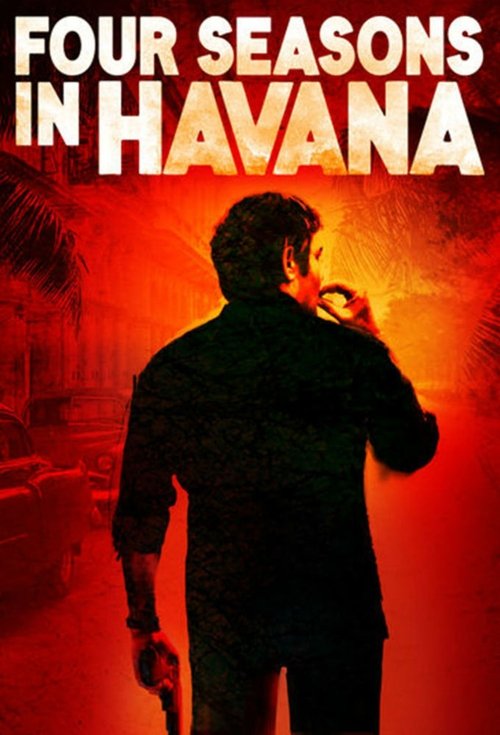
The story begins in Havana, Cuba, in the year 1948, where we meet the protagonist, Mario Conde, a disillusioned police officer who is struggling with his life choices and the political climate of the time. He is introduced as a man who is deeply affected by the corruption around him and is haunted by his past. The narrative opens with Conde investigating the murder of a wealthy businessman, which sets the stage for the unfolding drama.
As Conde delves deeper into the investigation, he discovers that the businessman had connections to powerful figures in Havana, including politicians and mobsters. This leads him to confront various characters, each with their own motives and secrets. The investigation takes Conde through the vibrant yet dangerous streets of Havana, where he encounters a mix of colorful locals and shady characters. His interactions reveal the complexities of life in Cuba during this period, highlighting the stark contrasts between wealth and poverty.
Conde's personal life is also explored, particularly his complicated relationship with his former lover, who is now married to another man. This emotional turmoil adds depth to his character, as he grapples with feelings of regret and longing. His internal struggles are mirrored by the external chaos of the city, as political tensions rise and the threat of revolution looms.
As the investigation progresses, Conde uncovers a web of deceit involving the businessman's family and associates. He learns that the murder is tied to a larger conspiracy involving illegal activities and corruption that reaches the highest levels of society. This revelation intensifies Conde's determination to seek justice, despite the risks involved.
In a pivotal scene, Conde confronts a key suspect in a tense exchange that reveals more about the motivations behind the murder. The suspect, feeling cornered, becomes aggressive, leading to a physical confrontation. Conde manages to subdue him, but not without sustaining injuries. This moment underscores the dangers he faces as he navigates the treacherous waters of his investigation.
As the plot thickens, Conde receives anonymous threats warning him to back off the case. Undeterred, he continues to dig deeper, which leads him to a clandestine meeting with a journalist who has information about the businessman's dealings. This meeting is fraught with tension, as they discuss the implications of the corruption and the potential fallout from exposing it.
The investigation takes a dramatic turn when Conde discovers a hidden connection between the businessman and a powerful political figure. This revelation puts him in grave danger, as he realizes that those involved will stop at nothing to protect their interests. Conde's sense of justice is further ignited, pushing him to take greater risks in pursuit of the truth.
In a climactic sequence, Conde gathers enough evidence to confront the political figure directly. The confrontation is charged with emotion, as Conde lays bare the corruption and the impact it has had on the lives of ordinary people. The political figure, feeling threatened, attempts to manipulate the situation, but Conde stands firm, driven by his desire for justice.
The fallout from this confrontation leads to a series of events that escalate the tension in Havana. Conde finds himself increasingly isolated, as allies turn away in fear of retribution. His personal life also suffers, as his relationships become strained under the weight of his obsession with the case.
In the final act, the investigation culminates in a dramatic showdown. Conde is ambushed by henchmen working for the political figure, leading to a tense chase through the streets of Havana. The action is intense, with Conde using his wits and resourcefulness to evade capture. He ultimately confronts the political figure one last time, leading to a resolution that brings some measure of justice but leaves many questions unanswered.
The series concludes with Conde reflecting on the events that have transpired. He is left with a sense of unresolved conflict, both in his personal life and in the broader context of the political landscape in Cuba. The story ends on a poignant note, emphasizing the complexities of justice and the enduring struggle for truth in a corrupt world.








What is the ending?
In the ending of "Four Seasons in Havana," the main character, Mario Conde, confronts the realities of his life and the choices he has made. He faces the consequences of his investigation into a murder case that intertwines with the political and social fabric of Cuba. The series concludes with a sense of unresolved tension, as Conde grapples with his future and the relationships he has formed throughout the story.
As the final episodes unfold, we see Mario Conde, a disillusioned detective, deeply entrenched in his investigation of the murder of a young woman named the "Cinderella." The case leads him through the underbelly of Havana, revealing the corruption and struggles of the city.
In the first scene of the finale, Conde is in his modest apartment, surrounded by the remnants of his life--books, photographs, and the lingering scent of cigars. He reflects on his past, the choices that have led him to this moment, and the people he has lost along the way. His internal conflict is palpable; he is torn between his duty as a detective and his desire for a more meaningful existence.
The next scene shifts to the bustling streets of Havana, where Conde meets with his friend and confidant, the journalist, who provides him with crucial information about the case. They discuss the implications of the murder and the connections to powerful figures in the government. The tension in their conversation highlights the dangers of uncovering the truth in a society rife with corruption. Conde's determination to seek justice is evident, but so is his fear of the repercussions.
As the investigation progresses, Conde encounters various characters who represent different facets of Cuban society. He meets a former revolutionary who has become disillusioned with the current regime, a young woman who embodies hope for the future, and a corrupt official who threatens to derail his efforts. Each interaction deepens Conde's understanding of the complexities of his world and the moral ambiguities he must navigate.
In a pivotal scene, Conde confronts the main antagonist, a powerful figure linked to the murder. The confrontation is charged with emotion, as Conde lays bare the injustices that have plagued the city. The dialogue is sharp, revealing Conde's frustration and the antagonist's cold indifference. This moment crystallizes Conde's internal struggle; he is fighting not just for justice but for his own sense of purpose.
The climax of the series occurs when Conde finally uncovers the truth behind the murder. The revelation is shocking and forces him to confront the darker aspects of human nature. In the aftermath, he is left with a sense of emptiness, realizing that even with the truth in hand, the system remains unchanged.
In the final scenes, Conde stands on the streets of Havana, watching the vibrant life of the city continue around him. He is filled with a mix of resignation and hope. The camera captures the beauty of the city juxtaposed with Conde's somber expression, symbolizing the struggle between despair and resilience.
As the series concludes, Conde's fate remains uncertain. He has chosen to continue his work as a detective, but the weight of his experiences lingers. The relationships he has formed, particularly with his love interest, are left in a state of ambiguity, reflecting the complexities of love and loss in a changing world. The final shot lingers on Conde's face, a man caught between the past and an uncertain future, embodying the essence of the human experience in a society marked by turmoil.
Is there a post-credit scene?
"Four Seasons in Havana," produced in 2016, does not feature a post-credit scene. The series concludes its narrative without any additional scenes after the credits roll. The final moments of the show wrap up the story arcs of the main characters, leaving viewers with a sense of closure regarding the events that transpired throughout the series. The focus remains on the resolution of the central mysteries and the emotional journeys of the characters, particularly the protagonist, Mario Conde, as he navigates the complexities of life in Havana.
How does the setting of Havana influence the characters and plot?
The vibrant yet decaying backdrop of Havana plays a crucial role in shaping the characters' lives and the narrative. The city's rich history and cultural nuances are woven into the plot, affecting the characters' motivations and interactions, as they navigate the complexities of life under a changing political regime.
What role does the character Mario Conde play in the story?
Mario Conde is the central character, a disillusioned detective in Havana who grapples with his past and the socio-political landscape of Cuba. His internal struggles are highlighted through his interactions with various characters and his pursuit of justice, often reflecting his own moral dilemmas.
How does the relationship between Mario Conde and his love interests evolve throughout the series?
Mario Conde's relationships with women, particularly with characters like the enigmatic journalist and his former lover, are complex and fraught with emotional tension. His romantic pursuits often serve as a backdrop to his investigations, revealing his vulnerabilities and desires, while also complicating his professional life.
What are the key mysteries that Mario Conde investigates in the series?
Throughout the series, Conde investigates several key mysteries, including a murder tied to the political elite, the disappearance of a friend, and the secrets of a wealthy family. Each case not only challenges his detective skills but also forces him to confront his own beliefs and the realities of life in Cuba.
What internal conflicts does Mario Conde face throughout the series?
Mario Conde grapples with profound internal conflicts, including his disillusionment with the government, his struggles with alcoholism, and his quest for personal redemption. These conflicts drive his character development, as he seeks to reconcile his ideals with the harsh realities of his environment.
Is this family friendly?
"Four Seasons in Havana," produced in 2016, is a crime drama series that delves into the darker aspects of life in Havana, Cuba. While it offers a rich narrative and deep character exploration, it contains several elements that may not be suitable for children or sensitive viewers.
-
Violence: The series includes scenes of crime and violence, including confrontations and physical altercations that may be graphic or intense.
-
Mature Themes: The show explores themes such as corruption, betrayal, and moral ambiguity, which may be complex and unsettling for younger audiences.
-
Substance Use: There are instances of drug use and references to alcohol consumption, which may not be appropriate for children.
-
Sexual Content: The series features adult relationships and sexual situations that are depicted in a mature context.
-
Emotional Turmoil: Characters experience significant emotional distress, including loss, betrayal, and existential crises, which may be heavy for sensitive viewers.
Overall, the series is more suited for an adult audience due to its mature content and themes.