
















Popular
What happens during the couple's honeymoon in the Dominican Republic?
How does Samantha's behavior change after the honeymoon?
What is the significance of the strange occurrences in the house?
What role does the mysterious figure play in the story?
How does Zach react to the changes in Samantha and the events around them?
Should I watch it?
Ask Your Own Question

What is the plot?
Zach McCall talks to the camera the night before his wedding, the LCD screen casting a small rectangle of blue light across his face as he grins. He explains that he wants to start a video diary, that someday their kid can look back and see how it all began, "so, you know, you'll know where you came from." Behind him, Samantha "Sam" McCall laughs and tells him to stop filming while she's in her pajamas. She's shy about the camera but indulgent, used to his dorky sentimentality. The little apartment feels cramped and alive with nervous pre‑wedding energy--suits laid out, dresses hanging, relatives' voices faintly heard in the background.
Sam mentions again, off‑handedly, that it's strange she has no family to invite. As an orphan, she says, she never really had those big family gatherings. Zach turns the camera toward her and says, "Well, you've got a family now," and kisses her. It's sweet, ordinary, utterly human. The future they imagine is simple: wedding, honeymoon, a baby someday when they're ready.
The next day, at their church in the United States, Father Thomas--an older priest with soft eyes and a gentle voice--officiates their wedding ceremony. Sunlight floods the stained glass, and Zach's camera sways slightly as they say their vows and he fumbles to keep filming. Friends and relatives fill the pews; Zach's sister Suzie is loud and excited, teasing her brother at the reception. The found‑footage style keeps everything intimate: quick pans across tables, drunken toasts, Sam laughing as someone clinks a spoon against a champagne glass. Nothing about this world looks like it has room for the devil.
Soon after, they fly to the Dominican Republic for their honeymoon--Santo Domingo. Zach films out the airplane window, then the taxi rides, the hotel room, the white sand and blue water. Sam appears on camera in a sundress, the Caribbean sun in her hair, smiling shyly as Zach narrates: "McCall honeymoon, Day Two." He keeps reminding this imagined future child that this is all "for you."
One night they head into the city for Carnival. The streets of Santo Domingo pulse with music, color, and bodies. Drums pound, horns blare, dancers in feathered costumes weave through the crowd. Neon and paper lanterns cast shifting colors over their faces as Zach's camera bobs through the chaos. Sam clings to his arm, laughing, letting herself be pulled into the stream of revelers. There is nothing sinister yet; it's just noise, sweat, and joy.
Along a side street, a woman beckons from under a small awning--a palm reader, a psychic with dark, sharp eyes and a table piled with candles. Sam, amused, drags Zach over despite his mock protests. "Come on, it'll be fun," she says, and sits down. The woman takes Sam's hand and traces the lines of her palm, muttering in Spanish, then in hesitant English. At first, it's the usual fortune‑teller patter: "You have had hard times. Now you are happy." Sam smiles, glances at Zach.
Then the woman's expression changes. Her pupils widen. Her fingers tighten around Sam's hand. Her voice lowers, fear creeping into each word. "You… you were born for death," she whispers. Sam's smile falters. "What?" The woman's gaze flicks around like she expects something to pounce from the crowd.
"You were born from death," the psychic repeats, more urgent now. "They've been waiting. They've been waiting. They've been waiting. They've been waiting." The words tumble out faster, her voice rising in panic: "They've been waiting." Her eyes are fixed on Sam with a terror that feels personal. Sam yanks her hand back, visibly shaken, and Zach awkwardly laughs it off, tossing down some money and pulling Sam away. As they escape into the crowds, the camera catches one last glimpse of the psychic staring after them, her face pale.
The mood is broken. They walk, trying to laugh about it, but Sam keeps glancing over her shoulder. Night deepens, the main Carnival streets thin out, and they realize they're lost. The music grows faint. They turn down unfamiliar blocks, past shuttered storefronts and dim streetlamps. The easy tourist fun drains away; the sounds of celebration are just an echo now. Zach films the empty streets, making jokes about horror movies, but his voice has that forced cheer people use when they're a little scared.
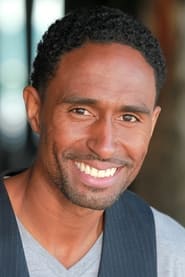
They can't find their hotel. Their phones are useless. Then a taxi pulls up out of the dark--a beat‑up car with a smiling driver, a Dominican man in his thirties: the cab driver played by Roger Payano. His demeanor is warm, casual. In accented English, he offers to help and, after hearing they're tourists, says he knows "the best nightclub in town." Sam hesitates, but they're exhausted, anxious, and he seems friendly enough. "It's our last night, right?" Zach says. "Let's do it." They get in.
The drive is mostly darkness and occasional streetlights, the camera capturing glimpses of narrow roads, industrial areas, then a building pulsing with muffled bass. Inside the club, they drink. The scene is hazy, strobing lights cutting across their faces as they do shots with strangers. Zach's footage jerks and blurs as he swings the camera around. Sam dances, loose and giggling, drunker than she usually lets herself get. The music is too loud to hear much dialogue; we just see Zach's grinning face leaning into frame, shouting something we can't quite catch, then Sam's smiling mouth as she leans in toward him.
Then the footage fractures. There's a jump, a smear of darkness. The music warps. Suddenly the club is gone. For a moment, the camera shows a staircase, concrete walls, flickering red light. The lens swings and catches symbols painted on doors--occult runes that mean nothing to Zach now but will haunt him later. We glimpse Sam's body being guided--or dragged--down a corridor, her arms limp, her head lolling. There's chanting, low and rhythmic. A circle of robed figures in an underground chamber. A woman--or perhaps Sam--on some kind of stone platform. Then the lens flares as an unseen force seems to rush toward it, and the screen goes black.
The next morning, the camera turns on again to show bright Caribbean sunlight filling the hotel room. Zach wakes up groggy, hungover, sprawled on the bed. The camera lies on a nightstand, recording at an odd angle. Sam is next to him, also disoriented. They trade confused remarks about how drunk they must have been, joke about "blacking out," never fully registering that there are hours missing from their memory. He reviews nothing; not yet. They pack, fly home, and the "lost night" becomes just one of those things--at least for now.
Back in the U.S., the everyday routine resumes. The video diary continues: setting up their new home, little domestic jokes, Sam mock‑annoyed at the camera following her into the kitchen. The house is modest, comfortable, a starter home in a pleasant neighborhood. The camera gives us tours--living room, bedroom, bathroom--all the spaces that will later be invaded.
Then Sam starts feeling sick. Nausea, fatigue. Zach's camera catches her curled up on the bathroom floor, groaning. A pregnancy test appears in frame, its plastic body trembling slightly in her hand as she waits. When the result appears, her eyes widen. "No way," she says, half laughing, half stunned. Zach whoops. They didn't plan this--Sam has been "unfailingly" on the pill--but once the shock fades, they talk about how maybe it's meant to be. Zach films her rubbing her flat stomach, joking with the unseen future child again.
But something is wrong. As the weeks pass, Sam grows pale, restless. Her moods swing violently. At the grocery store, Zach films as they walk past the meat section. Sam is a vegetarian--he teases her about it often--so when she stops dead in front of a tray of raw hamburger, the camera lingers in confusion. She stares at the raw flesh, breathing faster. Then she grabs a package with shaking hands, tears it open, and starts devouring the raw meat right there in the aisle. Blood smears her lips and chin. Other shoppers gasp. Zach shouts, "Sam, what the hell?!" scrambling to pull her away as she snarls and clutches the tray. Her eyes look blank and famished, like some animal has been let loose inside her. Finally she snaps out of it, horror dawning on her face as she sees blood on her hands. "What did I just do?" she whispers.
At night, Zach sets up the camera on a tripod in their bedroom, partly to capture cute moments, partly because he wants to keep documenting everything. Under infrared, we see them sleeping. Time‑lapse footage shows hours passing as Sam lies still. Then, in the grainy green, something bulges under her skin. Her abdomen rises in a grotesque swell, a bulge moving unnaturally across her stomach, pushing against the inside of her flesh. She moans in her sleep, unaware, as the shape presses outward, testing the limits of her body. Watching the footage later, Zach recoils, his breath audible behind the camera.
The incidents escalate. In a parking lot one afternoon, Sam steps behind an SUV, distracted. The vehicle suddenly begins to back up toward her. Zach shouts. At the last second, the SUV brakes inches from her, but something in Sam snaps. She slams her palms against the back window, then another. With inhuman strength, she smashes three windows with her bare hands. Glass showers the pavement. The driver shouts, terrified. Sam's fists are bloody, but she doesn't seem to feel pain. Her chest heaves, rage pouring through her. Only slowly does she register what she's done, retreating, shaking, her eyes wide and confused.
Sam's obstetrician visits provide no comfort. The first doctor seems ordinary enough, but eventually she's referred to, or chooses, a second doctor--one whose face we'll later see among chanting worshipers. He speaks in soothing tones, tells them the baby's heartbeat is strong, that odd cravings and mood swings are normal. Sam seems relieved, Zach less so. The footage lingers on the doctor's face just a fraction too long, turning him into a presence we recognize later.
As months pass, minor oddities become overtly supernatural. Sam begins sleepwalking. One night, captured by Zach's camera, she rises from bed with stiff, puppet‑like motions, staring blankly ahead. She walks slowly through the house, unused rooms lit only by the camera's infrared. In the living room, she stands in the center of the floor and starts scratching symbols into the wall with her fingernails, dragging them hard enough to leave grooves. Under the ghostly green light, she looks like a marionette operated by a violent, invisible hand.
Outside, unknown to the couple, men watch the house from cars parked on the street. The cult has already rigged the interior with hidden cameras--tiny lenses tucked into vents, decorations, corners of ceilings--so that virtually every room is under surveillance. Their breaths, their arguments, their attempts at intimacy all become data for the people orchestrating this pregnancy. The found‑footage point of view slips, sometimes, into angles too high, too still to be Zach's; those belong to the cult's network, cold and clinical.
One day, a group of local kids goes into the woods with their own camera, filming a silly exploration. Their footage, later folded into the story, shows them laughing, pushing through trees. Then they come upon a horrific sight: Sam, heavily pregnant, crouched over a deer carcass. She is covered in blood, tearing at the animal's flesh with her teeth. The kids shout in shock. Sam's head snaps up, eyes wild, mouth full of gore. Before they can react, the forest around them seems to come alive. An unseen force grabs one kid and hurls him into the air; another is dragged backward off his feet. The camera spins, catching brief flashes of bodies being flung, screams cut off mid‑cry. Whether the children die is never explicitly stated, but the violence is brutal enough to suggest that this protective force around Sam--and more precisely around the fetus--will annihilate anyone who gets too close.
By eight months, Sam's deterioration is impossible to ignore. Her skin has a grayish hue, her eyes ringed with shadows. She clutches her belly often, wincing at movements inside that are far beyond normal kicks. Zach's concern turns into desperation. Still, they try to hold onto normalcy. They attend a Holy Communion at their church--St. something, the same sanctuary where Father Thomas married them. Their niece, usually a bubbly, affectionate girl, sees Sam enter and stiffens. She moves behind her parents, eyes fixed on her aunt with silent dread.
The ceremony begins. Candles flicker. As the communion progresses, Father Thomas--who performed their wedding--is at the altar. Zach films from a pew, the familiar found‑footage shakiness framing the solemn ritual. Somewhere in the service, Father Thomas looks up and catches sight of Sam. His expression shifts abruptly from pastoral calm to horror. He begins to cough. At first, it's just a tickle, then harsher. He clamps a hand over his mouth, but blood seeps between his fingers. He doubles over, violently coughing up blood right there in front of the congregation. Gasps ripple through the church. Zach spins the camera between the priest and Sam.
Sam's niece, staring at her, starts to whimper. Sam, already on edge, grips Zach's arm. Then, possessed by something deeper, she lunges toward the little girl. She grabs Zach's arm so forcefully it bruises and screams at her niece with a ferocity that feels ancient and inhuman. The girl's nose suddenly gushes blood, a nasty nosebleed appearing out of nowhere as she shrieks and clutches her face. Parents pull their children away. Parishioners cross themselves, murmuring prayers. Sam seems as horrified as anyone once the episode passes, but the damage is done: holy ground, sacraments, and children all provoke violent reactions from whatever is inside her.
Later, Father Thomas lies in a hospital bed, pale, hooked to machines. The coughing fit was not just a random medical event. Zach, finally shaken enough to investigate, brings his camera along and visits the priest. He shows him stills of the strange symbol from the doors of that underground chamber--the same symbol he's seen appearing in Sam's scribbles, in glimpses from his footage. "Do you know what this is?" Zach asks. Father Thomas studies it, his eyes full of dread. He explains in a strained voice that the symbol is tied to a ritual meant to summon the Antichrist. He speaks of a sect, of satanic worshipers preparing a vessel. The Antichrist, he warns, is not just a vague idea but something being actively brought into the world.
Zach's memory flashes back to the "lost night" in Santo Domingo. He goes home and, for the first time, scrubs through the footage from that final club outing. He freezes frames on the concrete stairwell, the symbols on the doors, the underground ritual where Sam was taken while unconscious, engulfed by an unseen force. The fragments he once ignored now form a coherent nightmare. The cab driver appears in some shots, watching with a calm, almost satisfied expression. The sense of violation is total: this was no drunken blackout; it was an intentional ritual.
He then rewinds the Communion footage. As he scans the congregation, frame by frame, he suddenly spots a familiar face sitting casually in a pew--the same cab driver from Santo Domingo, wearing regular clothes, eyes on Sam. The man who led them into the underground bar is here, in their American church, watching them. Zach feels the floor drop out from under his world. The camera captures his whispered "What the fuck?" as he stares at the paused image.
From this point, paranoia becomes reality. Zach notices a man in a car parked outside their house, watching. He sees him more than once--a figure with no obvious purpose, always there. He becomes aware of odd holes and angles in their walls and ceilings. Eventually, he discovers one of the hidden cameras, its tiny lens gleaming in the light. Tearing at fixtures, he finds more. Their entire home has been wired, every intimate moment stolen by the cult. The realization that their sanctuary has been a cage makes him shake with rage and fear.
As Sam's due date approaches, her behavior enters full possession territory. She zones out, speaking in flat tones or not at all. Sometimes, in the middle of ordinary conversation, her eyes glaze over and she starts muttering, her voice layered with something darker. While she sleeps, her belly contorts, bulges moving under her skin like something is testing its boundaries. The baby--no longer just a baby--seems to push not just at the walls of her womb but at the physical reality around it.
Zach keeps trying to save her. He calls doctors, but the "second doctor" they've been seeing is no ally; he is part of the very sect Father Thomas warned about. Their appointments yield vague reassurances and clinical observations that do nothing to address the supernatural horror. Zach pleads with Sam to consider exorcisms, to leave town, to do anything. But the cult has woven its net too tightly, and the force inside her is not going to be outmaneuvered by plane tickets or prayers.
One night, Zach follows the trail more literally. Using clues he's pieced together from footage and from noticing watchers on the street, he tracks one of the cult figures to a nondescript location--a building where light and shadow flicker strangely. He creeps closer, camera in hand, and peers through a window or cracked door. Inside, there is a ritual in progress. Robed figures stand in a circle, chanting in a language he doesn't understand. Among them, he recognizes faces that make his stomach lurch: their second doctor, the man who has been watching their house, a central cult leader figure, and, unmistakably, the cab driver from Santo Domingo. They sway and bow as if in trance, hands raised, their words a low, relentless drone.
Zach films, heart hammering, a helpless witness to the system arrayed against his family. It is not just a crazy taxi driver, not just a random symbol; it is an organized sect that spans from a Caribbean underground chamber to his American suburb, from the medical establishment to the very pews of his church. This is the machinery built to bring the Antichrist into the world through his wife.
He runs. Panic fuels him as he drives back home, the camera capturing glimpses of speeding streets and his choked mutters of, "Hold on, Sam, I'm coming." When he pulls up to their house, the nightmare has fully arrived. Masked men--those same watchers, now fully revealed as cultists--surround the house, standing in the yard, on the walkway, in the shadows. Their faces are obscured, their bodies still, as if they have been there for hours, waiting. The house behind them shakes subtly, as if under internal assault.
Zach pushes past them, screaming Sam's name. They don't stop him. He bursts inside. The interior is chaos. Furniture is overturned, pictures smashed, walls cracked. The house literally groans, as if something inside is trying to tear it apart. Somewhere upstairs or down the hall, Sam screams--a raw, animal sound of pain and rage mingled.
He stumbles through the wreckage, the camera bouncing wildly. In one room he finds Suzie--his sister, who must have come over, perhaps to help or to check on Sam. Now she lies crumpled and bloodied, her body twisted at grotesque angles, smeared across floor and wall where Sam has brutally thrown her around. We hear more than we see: earlier, there were screams and heavy thuds as Sam, under the fetus's protective fury, attacked her. Now it's quiet. Suzie is unmistakably dead. Her blood turns the domestic space into a crime scene. This is the clearest named human death directly caused by Sam's possession: Suzie, killed in their home.
Zach staggers back, sobbing, but Sam screams again, drawing him onward. He follows the sound to a room transformed by her madness and the unborn entity's power. Symbols--runes reminiscent of those on the chamber doors in Santo Domingo--cover the walls and floor, scrawled in whatever Sam could find: marker, blood, God knows what else. Some of them begin to glow with an eerie, hellish light. The air vibrates. In the center of the room, Sam writhes, in the throes of labor.
She is on the floor or on some makeshift surface, body contorting, clutching her stomach. Her eyes are wild, or perhaps rolled back. The glowing runes form a kind of ritual circle around her. Zach rushes forward, screaming her name, but before he can reach her, something slams him against the wall. An invisible force pins him there, spread‑eagled, his back cracking against plaster. He struggles, gasping, but he cannot move even an inch. The camera, still recording, trembles as it catches his outstretched hands, the glowing symbols, Sam convulsing.
"Sam! Sam, I'm here!" he shouts, voice breaking. She screams, her body arching in an inhuman way. The house shudders; ceilings crack; doors rip off their hinges under the pressure of the beast within her fighting to get out. The cult outside remains eerily silent, as if they are listening for something, waiting for a specific cry.
The birth is bloody, horrific. The film does not give us a clear shot of the child, but we feel its emergence in every sound: Sam's tearing screams, the wet squelch of fluids, the guttural, almost non‑human wail that follows. The runes flare brighter, their glow reflecting in Zach's tears. He watches, helpless, as his wife's body becomes a conduit for something that should never exist. There is no medical staff, no sterile hospital room, only occult symbols and the invisible grip of a force that cares nothing for human life.
Sam may die here, her body spent and ruined by the ritual; the summaries are ambiguous, but the implication is of complete collapse, physical and spiritual. Whether her heart stops or she is left in some worse state, she is no longer herself. The focus stays on Zach, still pinned to the wall, screaming her name as his voice shreds. He is not granted the mercy of oblivion; he has to watch.
The camera may drop or glitch, but in the aftermath, there is a devastating quiet. The house is wrecked, parts of it literally destroyed by the psychic violence of the birth. Suzie's corpse lies abandoned. The cult's masked men, who had surrounded the home during the ordeal, now have what they came for: an Antichrist child born in a circle of glowing runes, under the gaze of their symbols.
We are not shown a rescue, a police raid, or a comforting epilogue at the McCall house. There is no tidy scene of ambulances and detectives taking statements. The found footage cuts instead to the larger arc the film has been hinting at from the beginning.
The setting shifts. New city, new streets. This time, it is Paris. A different couple--young, in love, speaking to each other in the casual way Zach and Sam once did--walks along a street at night. The camera now follows them, matching the style we've come to know, but this time from an external vantage point. They're tourists, or perhaps locals out for fun. They look ordinary, hopeful, like every couple at the start of a story.
A taxi pulls up beside them. Its window rolls down. The driver leans out, smiling. It is the same cab driver from Santo Domingo--the same man who smiled at Zach and Sam, who led them to "the best nightclub in town," who stood among the cult worshipers during the ritual. In French‑accented or English‑accented charm--whatever the local flavor--he offers the couple a ride to a great club. He makes it sound like a lucky find, a gift from the night.
The couple hesitates, then agrees, just as Zach and Sam did. They get in. The camera lingers on the driver's face as he smiles, eyes glinting with secret knowledge. The viewer now understands that this is a pattern, not an isolated horror. The cab driver is an operative of a global sect that travels city to city, country to country--Santo Domingo, the United States, now Paris--finding young women with particular vulnerabilities or destinies, luring them into underground chambers, and impregnating them through satanic ritual.
A voiceover or textual echo recalls the biblical passage from 1 John about "many antichrists": not just one figure, but multiples. Sam's child is not the Antichrist but an Antichrist--one of many devilish progeny being birthed around the world for a dark, unspoken purpose. The implication is chilling: while the McCall tragedy feels personal and overwhelming, it is only one entry in a long, ongoing ledger of orchestrated demonic births.
The film ends not with closure but with this repetition of the opening sin: a taxi at night, a friendly driver, a promise of the "best nightclub in town," and a couple whose lives are about to be shattered. The audience, armed with knowledge that the characters lack, sees the trap snapping shut again. The camera keeps rolling, the sect keeps working, and somewhere, in a ruined house in the United States, the wreckage of Zach and Samantha McCall's life stands as just one more successful outcome for a cult devoted to summoning the Antichrist into the modern world.


What is the ending?
In the ending of Devil's Due, Samantha, who is pregnant, becomes increasingly disturbed by her experiences and the changes in her behavior. After a series of unsettling events, she confronts the truth about her pregnancy and the dark forces at play. The film culminates in a terrifying climax where she is ultimately revealed to be possessed. The final scenes depict a confrontation that leaves her husband, Zach, in a desperate situation, leading to a shocking and ambiguous conclusion.
Now, let's delve into the ending in a more detailed narrative fashion.
As the film approaches its climax, Samantha's pregnancy has progressed, and she is visibly distressed. The once joyful anticipation of becoming a mother has turned into a nightmare. She experiences vivid hallucinations and disturbing visions, which leave her feeling isolated and terrified. Zach, her husband, is increasingly worried about her well-being but struggles to understand the depth of her turmoil.
In a pivotal scene, Samantha is at home alone when she begins to hear strange noises and feels an overwhelming sense of dread. The atmosphere is thick with tension as shadows flicker across the walls, and the camera captures her frantic expressions. She clutches her belly, feeling the life within her, but it is clear that something is deeply wrong. The audience can sense her internal conflict; she is torn between the love for her unborn child and the fear of what that child represents.
Zach returns home to find Samantha in a state of panic. He tries to comfort her, but she is unresponsive, lost in her own world of fear. The couple's relationship, once filled with love and excitement, is now strained under the weight of the supernatural events surrounding them. Zach's desperation grows as he realizes that he is losing the woman he loves to an unseen force.
In the following scenes, Samantha's behavior becomes increasingly erratic. She begins to exhibit violent tendencies, and her physical appearance changes, reflecting the possession that has taken hold of her. Zach, feeling helpless, seeks help from friends and family, but they are met with skepticism. The isolation deepens, and the couple's bond is tested to its limits.
The climax reaches a fever pitch when Samantha, in a fit of rage, confronts Zach. The tension is palpable as she reveals her true nature, her eyes filled with a dark intensity. Zach, horrified, tries to reach out to her, pleading for her to fight against whatever is controlling her. The emotional stakes are high as he battles not only for his wife's soul but also for the safety of their unborn child.
In the final moments, the confrontation escalates. Zach is forced to make a heart-wrenching decision as he realizes that the entity within Samantha is too powerful. The scene is chaotic, filled with screams and the sounds of struggle. The camera captures the raw emotion on Zach's face as he grapples with the reality that the woman he loves is no longer the same.
The film concludes with a chilling ambiguity. The last shot shows Samantha, now fully possessed, standing alone in a darkened room, her expression devoid of humanity. Zach's fate is left uncertain as the screen fades to black, leaving the audience with a haunting sense of dread. The final moments suggest that the evil has not been vanquished, and the cycle may continue, hinting at the broader themes of possession and the loss of control.
In summary, the fates of the main characters are grim. Samantha is lost to the possession, becoming a vessel for dark forces, while Zach is left in a state of despair, grappling with the loss of his wife and the impending threat of what their child may become. The film closes on a note of horror, emphasizing the fragility of love and the terrifying power of the unknown.
Is there a post-credit scene?
In the movie "Devil's Due," there is indeed a post-credit scene. After the main credits roll, the scene opens with a shaky, handheld camera perspective, reminiscent of the film's found-footage style. The screen is dark, and we hear the sound of heavy breathing, which creates an unsettling atmosphere.
As the camera stabilizes, it reveals a dimly lit room where a group of people is gathered, seemingly in a state of panic. They are discussing the events that have transpired, particularly focusing on the character of Zach and his wife, Samantha. The tension in the room is palpable, as they express concern over the implications of what has happened to Samantha and the child she is carrying.
Suddenly, the camera shifts to a corner of the room where a figure is seen, shrouded in shadows. The figure appears to be watching the group, and there is an eerie silence that follows. The scene ends abruptly, leaving viewers with a sense of dread and uncertainty about the fate of the characters and the potential continuation of the supernatural events. This post-credit scene serves to heighten the film's ominous tone and suggests that the horror may not be over, leaving the audience with lingering questions and a chilling sense of foreboding.
What happens during the couple's honeymoon in the Dominican Republic?
During their honeymoon in the Dominican Republic, Zach and Samantha McCall experience a night of wild partying. They meet a local man who offers to take them to a secluded area for a unique experience. After a night of drinking and revelry, Samantha is seen being led away by the man, and the next morning, she has no memory of the events that transpired.
How does Samantha's behavior change after the honeymoon?
After returning from their honeymoon, Samantha begins to exhibit increasingly strange and erratic behavior. She becomes more withdrawn and starts to have vivid nightmares. Her physical appearance changes as she becomes more pale and gaunt, and she experiences unusual cravings and a growing sense of paranoia, which deeply concerns Zach.
What is the significance of the strange occurrences in the house?
As Samantha's pregnancy progresses, strange occurrences begin to happen in their home. Objects move on their own, and there are unexplained noises. These events escalate, creating a sense of dread and fear for Zach, who feels helpless as he tries to understand what is happening to his wife and their unborn child.
What role does the mysterious figure play in the story?
A mysterious figure appears throughout the film, often lurking in the background or watching Samantha. This figure represents a sinister presence that seems to be connected to Samantha's pregnancy and the events that unfold. Zach becomes increasingly paranoid about this figure, believing it to be a threat to his family.
How does Zach react to the changes in Samantha and the events around them?
Zach's reaction to Samantha's changes is one of confusion and fear. He initially tries to support her, but as her behavior becomes more alarming, he grows increasingly frustrated and desperate. He feels isolated as he struggles to protect his wife and unborn child, leading to a breakdown in their relationship as he grapples with the supernatural elements surrounding them.
Is this family friendly?
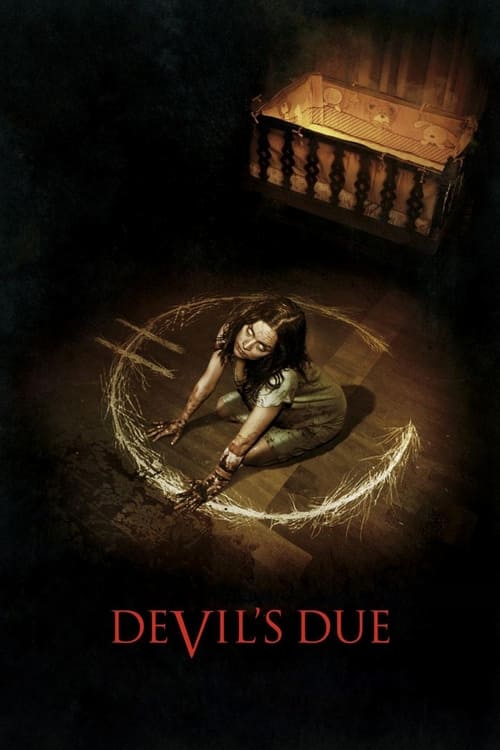
"Devil's Due," produced in 2014, is not considered family-friendly due to its horror themes and graphic content. Here are some potentially objectionable or upsetting aspects that may occur for children or sensitive viewers:
-
Supernatural Elements: The film involves themes of demonic possession and occult rituals, which may be frightening for younger audiences.
-
Graphic Violence: There are scenes that depict violence and bloodshed, including moments of physical harm to characters.
-
Pregnancy Horror: The film explores the protagonist's pregnancy in a disturbing context, leading to unsettling imagery and situations that may be distressing.
-
Jump Scares: The movie employs jump scares and tense moments that could provoke anxiety or fear.
-
Psychological Distress: Characters experience significant emotional turmoil, paranoia, and fear, which may be unsettling for sensitive viewers.
-
Disturbing Imagery: There are scenes that include unsettling visuals, such as nightmarish sequences and disturbing visions.
Overall, the film's themes and content are geared towards an adult audience and may not be suitable for children or those who are sensitive to horror elements.









