
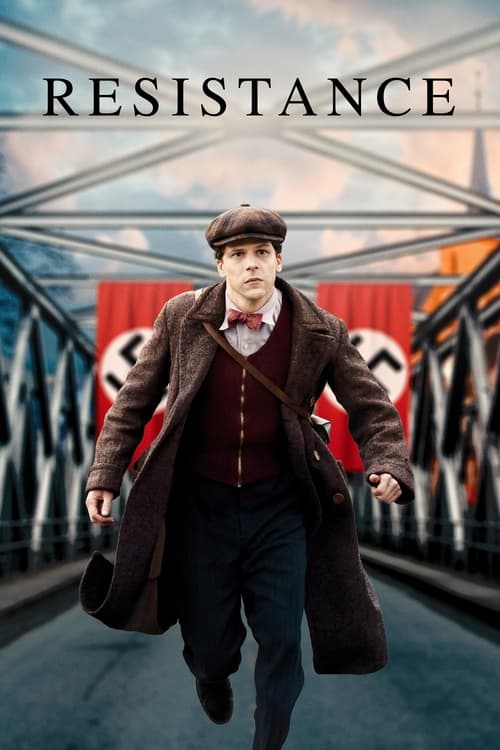

























Popular
What motivates Marcel Marceau to become a mime during the war?
How does Marcel's relationship with the Jewish children evolve throughout the film?
What role does the character of Emma play in Marcel's journey?
How does the film depict the challenges faced by Marcel and the children in hiding?
What is the significance of Marcel's performances in the context of the story?
Should I watch it?
Ask Your Own Question

What is the plot?
Sorry, we aren't able to watch and write up a full detailed plot yet. Check back in a few days.






What is the ending?
In the ending of "Resistance," Marcel Marceau and his group of young Jewish orphans successfully escape from the Nazis, using their skills in mime and performance to distract and evade capture. Marcel's commitment to protecting the children is evident as he faces danger head-on. The film concludes with a poignant moment where Marcel reflects on the power of art and the importance of hope in the face of adversity.
As the climax of "Resistance" unfolds, we find Marcel Marceau, portrayed by Jesse Eisenberg, in a tense situation. The group of Jewish orphans he has been protecting is cornered by Nazi soldiers. The atmosphere is thick with fear and uncertainty, as the children look to Marcel for guidance. He understands the gravity of their situation; their lives depend on his ability to think quickly and creatively.
In a moment of inspiration, Marcel decides to use his talent for mime to create a diversion. He begins to perform, drawing the attention of the soldiers. His movements are exaggerated and expressive, filled with both humor and desperation. The children watch in awe, their fear momentarily forgotten as they are captivated by his performance. Marcel's internal struggle is palpable; he is torn between the desire to entertain and the urgent need to protect the children.
As the soldiers become distracted by Marcel's act, the orphans seize the opportunity to escape. They slip away into the shadows, guided by Marcel's earlier instructions. The tension is high as they navigate through the dark streets, their hearts racing with the thrill of evasion. Marcel, however, remains behind, continuing his performance to buy them more time. His dedication to the children is unwavering, showcasing his deep sense of responsibility and love for them.
Eventually, the soldiers realize they have been tricked. They turn their attention back to Marcel, who is now fully aware of the danger he faces. In a final act of bravery, he makes a daring escape, narrowly avoiding capture. The scene is filled with a mix of adrenaline and despair, as Marcel's fate hangs in the balance.
The film then transitions to a quieter moment, where Marcel reunites with the children after they have successfully reached safety. The relief and joy on their faces are evident, but so is the weight of what they have endured. Marcel's expression reflects a complex mix of triumph and sorrow; he has saved the children, but the scars of their experiences linger.
In the final scenes, we see Marcel reflecting on the power of art and its ability to inspire hope even in the darkest of times. The film closes with a poignant reminder of the resilience of the human spirit, as Marcel continues to embrace his role as a performer, using his art to heal and uplift those around him.
As for the fates of the main characters, Marcel Marceau survives the ordeal, emerging as a symbol of hope and resilience. The orphans, under his protection, also find safety, representing the triumph of innocence and courage over oppression. The film leaves viewers with a sense of hope, emphasizing the importance of art and community in the face of adversity.
Is there a post-credit scene?
The movie "Resistance," released in 2020, does not contain a post-credit scene. The film concludes its narrative without any additional scenes or content after the credits roll. The story wraps up with a focus on the emotional and historical impact of the events depicted, centering on the life of Marcel Marceau and his efforts during World War II. The ending emphasizes the themes of resilience and the power of art in the face of adversity, leaving the audience with a poignant reflection on the sacrifices made during that tumultuous time.
What motivates Marcel Marceau to become a mime during the war?
Marcel Marceau, played by Jesse Eisenberg, is motivated by a deep desire to bring joy and hope to children who are suffering during the Holocaust. His passion for performance and the power of art to uplift spirits drive him to use his talents as a mime to entertain and protect Jewish children from the Nazis.
How does Marcel's relationship with the Jewish children evolve throughout the film?
Marcel's relationship with the Jewish children evolves from a sense of duty to a deep emotional bond. Initially, he sees them as a responsibility, but as he spends time with them, he becomes a protector and a source of comfort. His interactions are filled with warmth and humor, showcasing his commitment to their safety and well-being.
What role does the character of Emma play in Marcel's journey?
Emma, portrayed by Clémence Poésy, serves as both a love interest and a moral compass for Marcel. She challenges him to confront the harsh realities of the war and the impact of his actions. Her presence in his life adds emotional depth, as she represents the hope for a future beyond the conflict, while also highlighting the personal sacrifices he must make.
How does the film depict the challenges faced by Marcel and the children in hiding?
The film vividly depicts the challenges of hiding from the Nazis, showcasing the constant fear and tension that permeates their lives. Scenes of cramped hiding spaces, the need for silence, and the threat of discovery create a palpable sense of danger. Marcel's creativity as a mime becomes a crucial tool for keeping the children's spirits up, even in the direst circumstances.
What is the significance of Marcel's performances in the context of the story?
Marcel's performances are significant as they serve as a form of resistance against the oppressive regime. Through his mime acts, he not only entertains the children but also communicates messages of hope and resilience. His art becomes a powerful symbol of defiance, illustrating how creativity can flourish even in the darkest times.
Is this family friendly?
"Resistance," produced in 2020, is a historical drama that explores the life of Marcel Marceau, the famous mime, during World War II. While the film is centered around themes of resilience and the power of art, it does contain several elements that may be considered objectionable or upsetting for children or sensitive viewers.
-
War Violence: The film depicts the harsh realities of war, including scenes of violence and the impact of Nazi occupation on Jewish communities. This may be distressing for younger audiences.
-
Persecution of Jews: There are scenes that illustrate the persecution and suffering of Jewish people during the Holocaust, which can be emotionally heavy and difficult to watch.
-
Death and Loss: Characters experience loss and grief, including the deaths of loved ones, which may evoke strong emotional responses.
-
Tension and Fear: The atmosphere throughout the film is often tense, showcasing the fear and uncertainty faced by those living under oppressive regimes.
-
Mature Themes: The film addresses themes of identity, survival, and the moral complexities of resistance, which may be challenging for younger viewers to fully grasp.
Overall, while "Resistance" carries a powerful message about hope and the human spirit, its portrayal of war and the Holocaust may not be suitable for all audiences, particularly children or those sensitive to such topics.








