







Popular
What happens during Alan's interview with the celebrity guest in episode 1?
How does Alan's relationship with his producer, Lyn, evolve throughout the season?
What is the significance of the 'This Time' segment featuring the animal rescue?
How does Alan react to the criticism he receives from viewers and colleagues?
What role does the recurring theme of technology play in Alan's interactions?
Should I watch it?
Ask Your Own Question

What is the plot?
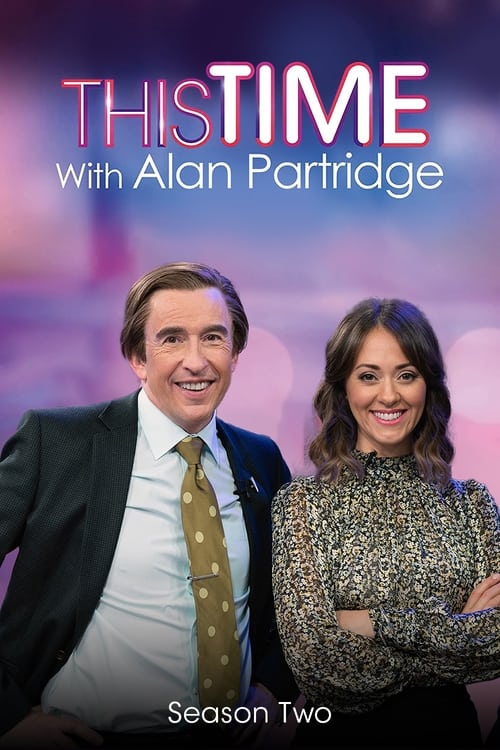
In the opening episode of "This Time with Alan Partridge" Season 2, Alan Partridge returns to the studio for another season of the magazine-style show. He is excited to be back and is determined to make this season even better than the last. The episode begins with Alan's over-the-top enthusiasm as he greets the audience, showcasing his signature blend of charm and awkwardness. He introduces the show's new segments, including a cooking feature that he is particularly keen on, despite having little culinary experience.
As the episode progresses, Alan's co-host, Jennie, is introduced. Their dynamic is immediately apparent, with Alan attempting to dominate the conversation while Jennie tries to steer the show in a more professional direction. Tension builds as Alan's ego clashes with Jennie's more grounded approach. During a segment about a local charity event, Alan's attempts to inject humor fall flat, leading to an uncomfortable silence. This moment highlights Alan's desperation for validation and his struggle to adapt to the changing landscape of television.
In the next segment, Alan is tasked with interviewing a celebrity chef, who is known for his flamboyant personality. Alan, eager to impress, tries to match the chef's energy but ends up overshadowing him. The chef's frustration becomes evident as Alan continues to interrupt and make the conversation about himself. This interaction serves to illustrate Alan's inability to recognize social cues and his relentless need for attention, which ultimately alienates both the guest and the audience.
Following the interview, Alan is approached by the show's producer, who expresses concerns about the direction of the program. The producer suggests that Alan needs to be more relatable and less self-centered. This feedback hits Alan hard, as he grapples with the fear of being irrelevant in a rapidly changing media landscape. He resolves to make a conscious effort to connect with the audience, leading to a series of misguided attempts at relatability throughout the episode.
In a later segment, Alan participates in a live cooking demonstration, which he has been looking forward to. However, his lack of culinary skills becomes painfully obvious as he struggles to follow the recipe. The chaos escalates when he accidentally sets off the fire alarm, causing a panic in the studio. Alan's frantic attempts to salvage the situation only exacerbate the disaster, showcasing his inability to handle pressure. The segment ends in disarray, with Alan trying to maintain his composure while the crew rushes to address the emergency.
As the episode nears its conclusion, Alan reflects on the day's events during a private moment in his dressing room. He feels a mix of embarrassment and determination, vowing to improve for the next episode. However, his internal monologue reveals his deep-seated insecurities and fear of failure. This moment of vulnerability contrasts sharply with his public persona, highlighting the complexity of his character.
The final scene of the episode features Alan preparing for the next show, where he plans to implement some of the feedback he received. He rehearses his lines in front of a mirror, trying to project a more relatable image. However, as he practices, his old habits resurface, and he slips back into self-aggrandizing remarks. The episode ends on a cliffhanger, leaving viewers curious about whether Alan can truly change or if he will continue to be his own worst enemy.








What is the ending?
In the ending of "This Time with Alan Partridge" Season 2, Alan finds himself in a precarious situation during a live broadcast. After a series of mishaps and misunderstandings, he ultimately manages to salvage the show, but not without a few embarrassing moments. The episode concludes with Alan reflecting on his career and the nature of his relationships, particularly with his co-host, Jennie. The season wraps up with a sense of uncertainty about Alan's future, leaving viewers with a mix of humor and poignancy.
As the final episode unfolds, the scene opens with Alan Partridge preparing for the live broadcast of "This Time." The studio is buzzing with energy, and the camera pans across the set, capturing the vibrant colors and the anticipation in the air. Alan, dressed in a sharp suit, is visibly nervous but tries to mask it with his usual bravado. He rehearses his lines in front of a mirror, practicing his signature catchphrases, but there's a flicker of doubt in his eyes.
As the show begins, Alan and his co-host, Jennie, greet the audience with their usual banter. The chemistry between them is palpable, but there's an underlying tension as Alan struggles to keep up with the fast-paced format. He attempts to inject humor into the segments, but his jokes often fall flat, leading to awkward silences. Jennie, ever the professional, tries to steer the conversation back on track, but Alan's antics create a chaotic atmosphere.
Midway through the broadcast, a technical glitch occurs, causing the screen to flicker and the audio to cut out momentarily. Alan, in a panic, tries to fill the silence with improvised commentary, but his desperation only amplifies the awkwardness. The crew rushes to fix the issue, and the audience can sense the tension mounting. Alan's internal struggle is evident; he wants to impress his viewers and maintain his reputation, but the pressure is overwhelming.
Once the technical difficulties are resolved, the show resumes, but Alan's confidence has taken a hit. He attempts to regain control by introducing a segment featuring a celebrity guest. However, the guest's unexpected behavior throws Alan off balance, leading to a series of comedic blunders. The audience is both entertained and cringing as Alan tries to navigate the chaos, his frustration bubbling beneath the surface.
As the show nears its conclusion, Alan reflects on his career during a heartfelt segment. He shares anecdotes from his past, revealing his vulnerabilities and the challenges he has faced in the industry. The camera captures his emotional state, showcasing a rare moment of sincerity amidst the comedic chaos. Jennie listens intently, her expression softening as she realizes the depth of Alan's struggles.
In the final moments of the broadcast, Alan delivers a closing monologue that blends humor with introspection. He acknowledges the ups and downs of his career, expressing gratitude for the support of his audience and colleagues. The scene shifts to the studio audience, who respond with applause, a mix of laughter and empathy filling the air.
As the credits roll, viewers are left with a sense of uncertainty about Alan's future. While he has managed to salvage the show, the question remains whether he can continue to adapt to the changing landscape of television. Jennie, having witnessed Alan's vulnerability, seems more supportive than ever, hinting at a deeper connection between them. The season ends on a note of ambiguity, leaving the audience to ponder the complexities of Alan's character and the nature of success in the entertainment industry.
Is there a post-credit scene?
In "This Time with Alan Partridge" Season 2, there is indeed a post-credit scene that adds a humorous touch to the episode. After the credits roll, viewers are treated to a brief moment featuring Alan Partridge in a more personal setting. He is seen in his home, attempting to film a promotional video for his new podcast.
In this scene, Alan is dressed in a casual yet slightly mismatched outfit, showcasing his characteristic lack of fashion sense. He fumbles with the camera setup, struggling to get the angle right, which highlights his often clumsy and overconfident nature. As he begins to speak, his enthusiasm is palpable, but it quickly turns into a series of awkward pauses and mispronunciations, revealing his insecurity beneath the bravado.
The scene captures Alan's relentless ambition and desire for relevance, even in the face of his own ineptitude. His frustration grows as he tries to deliver a catchy tagline, only to be interrupted by a loud noise from outside, causing him to lose his train of thought. The moment is both comedic and poignant, showcasing Alan's perpetual struggle for validation and success in a world that often overlooks him.
This post-credit scene encapsulates the essence of Alan Partridge's character--his determination, his flaws, and the humor that arises from his relentless pursuit of fame, making it a fitting conclusion to the episode.
What happens during Alan's interview with the celebrity guest in episode 1?
In the first episode of Series 2, Alan Partridge interviews a celebrity guest, which is a pivotal moment that showcases his awkward interviewing style. The guest, a well-known actor, is initially charming, but Alan's inability to connect leads to a series of uncomfortable exchanges. Alan's desperation to impress the guest is palpable, as he tries to steer the conversation towards his own career, often interrupting and misinterpreting the guest's responses, which highlights his self-absorption and lack of social awareness.
How does Alan's relationship with his producer, Lyn, evolve throughout the season?
Throughout Series 2, Alan's relationship with Lyn, his producer, is marked by tension and comedic misunderstandings. Initially, Alan treats Lyn with a mix of disdain and reliance, often undermining her decisions while simultaneously depending on her for support. As the season progresses, Lyn's patience wears thin, leading to moments of confrontation where she asserts her authority. This dynamic showcases Alan's struggle to maintain control over his show while also revealing his deep-seated insecurities about his career and relevance.
What is the significance of the 'This Time' segment featuring the animal rescue?
In one of the episodes, Alan hosts a segment on animal rescue that becomes a focal point for both comedy and character development. The segment is intended to be heartwarming, but Alan's lack of genuine empathy and his tendency to make inappropriate jokes undermine the message. His interactions with the animal rescue workers reveal his superficial understanding of compassion, as he often redirects the conversation back to himself. This moment serves to highlight Alan's character flaws while also providing a humorous critique of his inability to engage with serious topics.
How does Alan react to the criticism he receives from viewers and colleagues?
Alan's reaction to criticism throughout Series 2 is a blend of denial, defensiveness, and occasional self-reflection. When faced with negative feedback from viewers or colleagues, he often dismisses it as irrelevant or misguided, showcasing his inflated ego. However, there are moments where the criticism cuts deeper, leading to brief glimpses of vulnerability. These reactions illustrate Alan's internal conflict between his desire for validation and his fear of failure, making his character both tragic and comedic.
What role does the recurring theme of technology play in Alan's interactions?
Technology plays a significant role in Alan's interactions throughout Series 2, often serving as a source of both frustration and humor. Alan's attempts to engage with new technology, such as social media and video conferencing, frequently backfire, leading to awkward situations that highlight his generational disconnect. His struggles with technology not only provide comedic moments but also reflect his broader fears of being left behind in a rapidly changing world, emphasizing his desperation to remain relevant in the entertainment industry.
Is this family friendly?
"This Time with Alan Partridge" Season 2 contains several elements that may not be considered family-friendly or suitable for children and sensitive viewers. Here are some potentially objectionable aspects:
-
Innuendo and Sexual References: The show often includes suggestive humor and innuendos that may not be appropriate for younger audiences.
-
Mockery and Satire: Alan Partridge's character frequently engages in mocking behavior, which can be uncomfortable or upsetting, especially for those sensitive to ridicule or social awkwardness.
-
Mature Themes: The series touches on themes of failure, loneliness, and the struggles of aging, which may resonate differently with children compared to adults.
-
Language: There are instances of mild profanity and crude language that could be deemed inappropriate for younger viewers.
-
Social Situations: Some scenes depict awkward social interactions that may be distressing for viewers who are sensitive to cringe comedy or social anxiety.
These elements contribute to a comedic style that is often aimed at an adult audience, making it less suitable for children.