
























Popular
What motivates John Smith to get involved in the conflict between the two rival gangs?
How does the character of Jack, the bartender, influence John Smith's actions throughout the film?
What role does the character of Felina play in John Smith's journey?
How does the film depict the relationship between the two rival gangs, the Italians and the Mexicans?
What is the significance of the final showdown between John Smith and the gang leaders?
Should I watch it?
Ask Your Own Question

What is the plot?
Sorry, we aren't able to watch and write up a full detailed plot yet. Check back in a few days.

What is the ending?
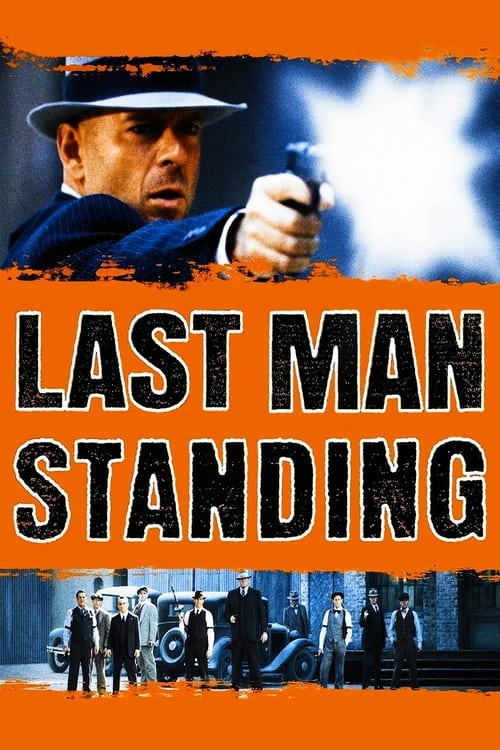
In the ending of "Last Man Standing," John Smith, played by Bruce Willis, confronts the remaining members of the rival gangs in a final showdown. After a series of intense gunfights, he emerges as the last survivor, having outsmarted and outgunned his enemies. The film concludes with Smith walking away from the chaos, leaving behind the bloodshed and destruction.
Expanding on the ending in a detailed narrative:
As the sun begins to set over the desolate town of Jericho, the air is thick with tension and the acrid smell of gunpowder. John Smith, a lone drifter, stands amidst the wreckage of a violent gang war that has claimed the lives of many. The streets, once bustling with life, are now eerily silent, punctuated only by the distant echoes of gunfire and the occasional groan of the wounded.
In the final confrontation, Smith finds himself cornered in a dilapidated building, the walls riddled with bullet holes. He is aware that both the Italian and Irish gangs are closing in on him, their thirst for revenge palpable. With a steely resolve, he prepares for the inevitable clash. The camera captures the determination etched on his face, a man who has seen too much violence yet remains unyielding.
As the first gang members burst through the door, Smith reacts with precision. He moves fluidly, a dance of survival, as he takes them down one by one. The sound of gunfire reverberates through the air, each shot a testament to his skill and desperation. The chaos unfolds in slow motion, highlighting the brutality of the conflict and the stakes at play. Smith's internal struggle is evident; he is not just fighting for his life but also grappling with the moral implications of his actions.
The scene shifts to the streets outside, where the remaining gang members, fueled by rage and vengeance, converge on Smith's location. They are relentless, but Smith, using his cunning and resourcefulness, sets traps and ambushes, turning the tide in his favor. The cinematography captures the stark contrast between the darkening sky and the flashes of gunfire, symbolizing the descent into chaos.
As the dust settles, Smith stands amidst the bodies of his adversaries, the last man standing. The camera lingers on his face, revealing a mixture of relief and sorrow. He has survived, but at what cost? The town is left in ruins, a haunting reminder of the violence that has unfolded. Smith's victory feels hollow, as he surveys the destruction around him.
In the final moments, Smith walks away from the scene, his silhouette framed against the burning remnants of the town. He is a man marked by the violence he has witnessed and participated in, a lone figure against the backdrop of a world that has lost its way. The film closes with a sense of ambiguity; while he has triumphed over his enemies, the emotional toll of the conflict lingers, leaving the audience to ponder the true cost of survival.
As for the fates of the main characters, Smith emerges as the sole survivor, having outsmarted both gang factions. The leaders of the Italian and Irish gangs, who sought to eliminate him, lie dead, their ambitions extinguished. The film leaves viewers with a poignant reminder of the futility of violence and the isolation that often accompanies a life of conflict.
Is there a post-credit scene?
The movie "Last Man Standing," produced in 1996, does not have a post-credit scene. The film concludes with the final showdown and resolution of the main conflict, leaving no additional scenes or content after the credits roll. The story wraps up with John Smith, played by Bruce Willis, having survived the violent confrontations between rival gangs in a desolate Texas town, ultimately emerging as the last man standing. The ending emphasizes his solitary victory and the toll of the violence he has witnessed and participated in, but there are no further scenes to extend the narrative beyond this conclusion.
What motivates John Smith to get involved in the conflict between the two rival gangs?
John Smith, played by Bruce Willis, is a drifter and a gunslinger who is primarily motivated by self-interest and survival. He sees the ongoing gang war as an opportunity to profit from the chaos, as he is a mercenary looking to make money. However, as the story unfolds, his motivations shift slightly as he becomes more entangled in the lives of the townspeople and the consequences of the gang violence.
How does the character of Jack, the bartender, influence John Smith's actions throughout the film?
Jack, portrayed by David Patrick Kelly, serves as a moral compass and a source of information for John Smith. He provides insights into the dynamics of the rival gangs and the history of the town. Jack's loyalty to the townspeople and his desire to protect them resonate with Smith, influencing him to take a stand against the violence, despite his initial self-serving intentions.
What role does the character of Felina play in John Smith's journey?
Felina, played by Madeleine Stowe, is a pivotal character who represents both temptation and emotional connection for John Smith. She is caught in the crossfire of the gang war and becomes a symbol of the innocence that is threatened by the violence around them. Smith's growing feelings for Felina push him to confront his own moral dilemmas and ultimately take a more active role in the conflict.
How does the film depict the relationship between the two rival gangs, the Italians and the Mexicans?
The rivalry between the Italians and the Mexicans is depicted as deeply rooted in the town's history, characterized by brutal violence and a struggle for power. The film illustrates their conflict through intense shootouts and confrontations, showcasing their respective leaders, such as the ruthless Italian gang leader, and the Mexican gang's desire for control. This animosity sets the stage for John Smith's involvement and the ensuing chaos.
What is the significance of the final showdown between John Smith and the gang leaders?
The final showdown is significant as it represents the culmination of John Smith's transformation from a self-serving drifter to a man who takes a stand against injustice. The intense gunfight not only serves as a climax for the action but also symbolizes Smith's acceptance of responsibility for the chaos he has been a part of. It highlights his skills as a gunslinger and his willingness to fight for the lives of those he has come to care about, ultimately leading to a resolution of the gang conflict.
Is this family friendly?
"Last Man Standing," produced in 1996, is not considered family-friendly due to its intense themes and graphic content. Here are some potentially objectionable or upsetting aspects that may affect children or sensitive viewers:
-
Violence: The film features numerous scenes of gunfights and shootouts, with graphic depictions of injuries and deaths. The violence is central to the plot and is portrayed in a realistic manner.
-
Language: There is frequent use of strong language throughout the film, including profanity that may be inappropriate for younger audiences.
-
Drug Use: The film includes references to alcohol and drug use, which may be unsettling for some viewers.
-
Mature Themes: The story revolves around organized crime, betrayal, and survival, which may be too complex or dark for children.
-
Death and Loss: Characters experience significant loss and betrayal, leading to emotional distress that may be difficult for younger viewers to process.
Overall, the film's mature content and themes make it more suitable for adult audiences.







