




















Popular
What role does Barry Fairbrother play in the story and how does his death impact the community of Pagford?
How does the character of Krystal Weedon evolve throughout the series?
What is the significance of the election for the vacant council seat, and how do different characters approach it?
How does the relationship between Colin Wall and his wife, Maureen, reflect the broader themes of the series?
What impact does the character of Howard Mollison have on the community and the unfolding events?
Should I watch it?
Ask Your Own Question

What is the plot?
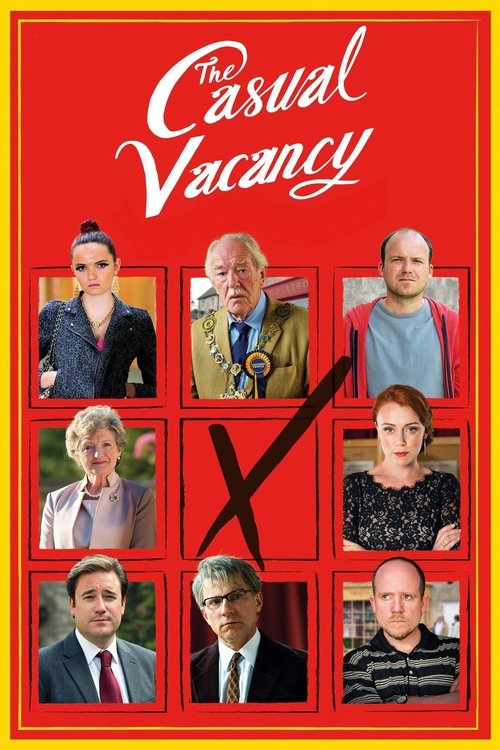
The story begins with the sudden death of Barry Fairbrother, a member of the Pagford Parish Council, who collapses from a heart attack while at a local pub. His death creates a vacancy on the council, which sparks a fierce battle among the residents of the small English town of Pagford. Barry was a champion for the local community, particularly for the impoverished residents of the Fields, a nearby housing estate. His passing leaves a power vacuum that various characters are eager to fill.
As news of Barry's death spreads, the council members and townspeople react in different ways. The wealthy and influential members of the council, including Howard Mollison and his wife, Shirley, see the vacancy as an opportunity to push their agenda against the Fields. They are particularly concerned about the local addiction clinic, which Barry supported. Meanwhile, Krystal Weedon, a troubled teenager from the Fields, is devastated by the loss of Barry, who had been a mentor to her and had offered her hope for a better future.
The narrative shifts to the Mollison household, where Howard and Shirley discuss their plans to secure the council seat for their son, Miles. Miles is portrayed as a self-serving character who is more interested in his own ambitions than in the welfare of the community. He is encouraged by his parents to run for the position, despite his lack of genuine interest in public service.
Simultaneously, we are introduced to other key characters, including Samantha, Barry's widow, who is struggling with her grief and the implications of her husband's death. She feels isolated and conflicted about the political machinations surrounding the council seat. Barry's death also affects his friend, Fats, a rebellious teenager who feels lost without Barry's guidance. Fats begins to act out, seeking attention and validation from his peers.
As the council election approaches, various candidates emerge. Krystal decides to run for the vacant seat, motivated by her desire to honor Barry's memory and to fight for the rights of the residents of the Fields. Her candidacy is met with skepticism and hostility from the more affluent members of the community, who view her as an outsider.
The campaign intensifies, with each candidate employing different strategies to win over the voters. The Mollisons use their influence and connections to sway public opinion, while Krystal relies on her authenticity and connection to the community. Tensions rise as the election draws near, with personal attacks and scandals surfacing, including revelations about Krystal's troubled family life and her mother's struggles with addiction.
In a pivotal moment, Krystal confronts the Mollisons at a public meeting, passionately defending the residents of the Fields and challenging their prejudices. This confrontation highlights the deep divisions within Pagford and the stark contrast between the privileged and the marginalized. Krystal's bravery resonates with some voters, but it also alienates others who are entrenched in their views.
As the election night arrives, the atmosphere is charged with anticipation. The results are announced, revealing that Krystal has won the seat, much to the shock of the Mollisons and their supporters. However, the victory is bittersweet, as Krystal's personal life continues to unravel. She faces backlash from her peers and struggles to navigate her new role as a council member.
In the aftermath of the election, the story takes a darker turn. Krystal's mother, who has been battling addiction, faces a crisis that puts Krystal in a difficult position. The pressures of her new responsibilities and her family situation weigh heavily on her, leading to a series of emotional breakdowns. Meanwhile, the Mollisons are determined to undermine Krystal's authority and regain control over the council.
The climax of the story occurs when Krystal's mother dies from an overdose, a devastating blow that leaves Krystal feeling lost and abandoned. In her grief, she lashes out at those around her, including Fats, who tries to support her but struggles to understand her pain. The community's response to the tragedy is mixed, with some rallying around Krystal while others continue to blame her for the problems in the Fields.
In the final scenes, the characters are left to grapple with the consequences of their actions. The divisions within Pagford remain unresolved, and the impact of Barry's death continues to reverberate throughout the community. The story concludes with a sense of ambiguity, as the characters face their own personal demons and the uncertain future of Pagford hangs in the balance.



What is the ending?
In the ending of "The Casual Vacancy," the community of Pagford is left in turmoil after the death of Barry Fairbrother. The election to fill his seat on the parish council reveals deep divisions among the townspeople. Ultimately, the election results in a surprising victory for Krystal Weedon, a young woman from a troubled background, which symbolizes a shift in the community's dynamics. The story concludes with unresolved tensions, highlighting the complexities of social class and personal struggles.
As the final episodes unfold, the tension in Pagford escalates. The community is still reeling from Barry Fairbrother's sudden death, and the parish council election to fill his seat becomes a battleground for the town's conflicting interests.
Scene 1: The election campaign intensifies. The characters are deeply entrenched in their positions. Howard Mollison, a prominent figure in the town, is determined to maintain the status quo, while his wife, Shirley, is equally invested in the outcome. They represent the old guard of Pagford, resistant to change. Meanwhile, Krystal Weedon, who has been marginalized and looked down upon due to her background, emerges as a candidate. Her motivations are fueled by a desire to fight for her community and to prove herself against the odds.
Scene 2: The election day arrives, and the atmosphere is charged with anticipation. The townspeople gather, and the air is thick with tension. Each character's internal struggles are palpable. Krystal, despite her insecurities, stands resolute, driven by the hope of a better future for herself and her family. The Mollisons, on the other hand, are anxious, fearing the loss of their influence and the potential upheaval that Krystal's victory could bring.
Scene 3: As the votes are counted, the community's divisions become starkly evident. The results are announced, and Krystal emerges as the unexpected winner. The moment is bittersweet; while she has achieved a significant victory, it also highlights the deep-seated issues within Pagford. The victory is not just a personal triumph for Krystal but a reflection of the changing tides in the community.
Scene 4: In the aftermath of the election, the characters are left to grapple with the consequences of their actions. Howard and Shirley Mollison are devastated, their plans thwarted. They are forced to confront the reality that their control over the town is waning. Krystal, on the other hand, feels a mix of elation and trepidation. She understands the weight of her new role and the challenges that lie ahead.
Scene 5: The series concludes with a sense of ambiguity. The community remains fractured, and while Krystal's victory represents hope for some, it also signifies the ongoing struggles of others. The final scenes emphasize the complexities of human relationships and the societal issues that persist in Pagford. Each character is left to navigate their own path, with unresolved conflicts lingering in the air.
In summary, the ending of "The Casual Vacancy" encapsulates the themes of social class, personal ambition, and the intricate web of human relationships. The fates of the main characters reflect their journeys throughout the series, leaving the audience with a poignant reminder of the challenges that lie ahead for both individuals and communities.
Is there a post-credit scene?
The Casual Vacancy, produced in 2015, does not have a post-credit scene. The series concludes without any additional scenes or content after the credits roll. The final moments of the show wrap up the complex narratives and character arcs established throughout the series, focusing on the aftermath of Barry Fairbrother's death and the impact it has on the community of Pagford. The emotional weight of the story is left to resonate with the audience as the credits begin to roll, emphasizing the themes of loss, conflict, and the struggle for power within the small town.
What role does Barry Fairbrother play in the story and how does his death impact the community of Pagford?
Barry Fairbrother is a central character whose unexpected death serves as the catalyst for the events in 'The Casual Vacancy.' As a member of the Pagford Parish Council, Barry is a passionate advocate for the local community, particularly for the underprivileged residents of the Fields, a nearby housing estate. His death creates a vacancy on the council, igniting a fierce battle among the townspeople, revealing their hidden agendas, prejudices, and personal conflicts. Barry's commitment to social justice and his relationships with various characters, such as his friend and fellow council member, Colin Wall, and his adversary, Howard Mollison, highlight the divisions within Pagford and set the stage for the ensuing chaos.
How does the character of Krystal Weedon evolve throughout the series?
Krystal Weedon is introduced as a troubled teenager from the Fields, struggling with her difficult home life and the stigma attached to her background. As the story unfolds, Krystal's character evolves from a rebellious and defensive young woman into a more complex figure who seeks to assert her identity and fight for her family's dignity. Her interactions with Barry Fairbrother, who sees potential in her, and her eventual involvement in the council election reveal her desire for change and a better life. Krystal's journey is marked by moments of vulnerability, particularly in her relationship with her abusive mother, and her determination to protect her younger brother, which ultimately leads to her tragic fate.
What is the significance of the election for the vacant council seat, and how do different characters approach it?
The election for the vacant council seat becomes a focal point of conflict in 'The Casual Vacancy,' representing the clash of values and interests within Pagford. Different characters approach the election with varying motivations: Howard Mollison, who seeks to maintain the status quo, represents the conservative, elitist perspective, while characters like Colin Wall and Krystal Weedon embody the push for change and social justice. The election serves as a battleground for personal vendettas, hidden agendas, and moral dilemmas, showcasing how the characters' ambitions and fears are intertwined with their community's future. The campaign strategies, including smear tactics and alliances, reveal the depths of their rivalries and the lengths they will go to secure power.
How does the relationship between Colin Wall and his wife, Maureen, reflect the broader themes of the series?
Colin Wall and Maureen's relationship is fraught with tension and disillusionment, mirroring the broader themes of hypocrisy and moral conflict in 'The Casual Vacancy.' Colin, a teacher and a progressive voice in the community, struggles with his wife's conservative views and her desire for social acceptance. Their marriage is tested by the pressures of the election and their differing opinions on how to address the needs of the Fields. Maureen's increasing frustration with Colin's idealism and her own insecurities lead to a series of confrontations that expose the cracks in their relationship. This dynamic illustrates the personal stakes involved in the political landscape of Pagford, as their struggles reflect the larger societal issues of class, privilege, and the complexities of human relationships.
What impact does the character of Howard Mollison have on the community and the unfolding events?
Howard Mollison, as the chairman of the Pagford Parish Council, wields significant influence over the community and the unfolding events in 'The Casual Vacancy.' His character embodies the entrenched elitism and resistance to change that permeates Pagford. Howard's motivations are driven by a desire to protect his family's legacy and maintain control over the council, leading him to manipulate situations to his advantage. His opposition to Barry Fairbrother's progressive ideals and his efforts to undermine Krystal Weedon's candidacy reveal his willingness to resort to unethical tactics to preserve his power. Howard's interactions with other characters, including his wife, Shirley, and his rival, Colin Wall, highlight the moral ambiguities of leadership and the lengths individuals will go to in order to secure their interests, ultimately contributing to the community's unraveling.
Is this family friendly?
"The Casual Vacancy," produced in 2015, is not considered family-friendly due to its mature themes and content. Here are some potentially objectionable or upsetting aspects that may occur for children or sensitive viewers:
-
Substance Abuse: The show depicts characters struggling with addiction, including drug and alcohol use, which may be distressing for younger audiences.
-
Death and Grief: The central plot revolves around the death of a local council member, leading to themes of loss and the impact of grief on the community, which can be heavy and emotional.
-
Social Issues: The series addresses complex social issues such as class disparity, bullying, and mental health struggles, which may be difficult for younger viewers to understand or process.
-
Violence and Conflict: There are scenes of verbal and physical conflict among characters, which can be intense and unsettling.
-
Sexual Content: The show includes references to sexual relationships and infidelity, which may not be appropriate for children.
-
Emotional Turmoil: Characters experience significant emotional distress, including depression and anxiety, which may resonate negatively with sensitive viewers.
Overall, the series deals with serious adult themes and is best suited for a mature audience.









