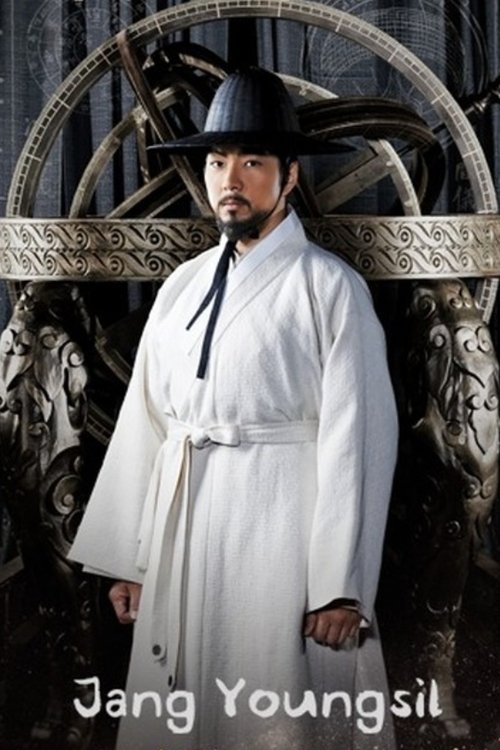












Popular
What role does Jang Yeong Sil play in the development of the water clock?
How does Jang Yeong Sil's relationship with King Sejong evolve throughout the series?
What challenges does Jang Yeong Sil face from his peers and the royal court?
How does the character of Kim Jwa-geun influence Jang Yeong Sil's journey?
What is the significance of the invention of the rain gauge in Jang Yeong Sil's story?
Should I watch it?
Ask Your Own Question

What is the plot?
The story begins in the early 15th century during the reign of King Sejong in the Joseon Dynasty. Jang Yeong Sil, a brilliant but low-born inventor, is introduced as a skilled craftsman who has a deep passion for astronomy and science. He is often looked down upon by the aristocracy due to his status, but his talent catches the attention of King Sejong, who is eager to advance the kingdom through scientific innovation.
As the narrative unfolds, Jang Yeong Sil is summoned to the royal palace, where he meets King Sejong. The king expresses his desire to create a more accurate calendar and improve agricultural practices through scientific methods. Jang is initially hesitant, feeling the weight of his low status, but he is motivated by the king's vision and the potential to contribute to society. He accepts the challenge and begins working on various inventions, including a rain gauge and a water clock.
Jang faces numerous obstacles, including skepticism from the court officials and the aristocracy, who doubt his capabilities due to his background. Despite this, he perseveres, driven by his passion for science and the desire to prove himself. He collaborates with other scholars, including the loyal and supportive Kim Seong-jo, who becomes a close ally. Together, they work on the development of the rain gauge, which is met with initial resistance but eventually gains recognition for its accuracy.
As Jang's inventions begin to gain traction, he encounters opposition from rival scholars, particularly from the powerful and arrogant aristocrat, Jeong In-ji. Jeong sees Jang as a threat to his own status and influence, and he schemes to undermine Jang's work. Tensions rise as Jeong spreads rumors and attempts to discredit Jang's inventions, leading to a series of confrontations between the two.
In a pivotal moment, Jang successfully demonstrates the effectiveness of his rain gauge during a public event, impressing the king and the court. This success earns him the respect of some officials, but Jeong continues to plot against him. Jeong's machinations lead to a crisis when he sabotages one of Jang's experiments, causing a public embarrassment for Jang and putting his reputation at risk.
Determined to reclaim his honor, Jang works tirelessly to improve his inventions. He develops a new water clock, which he believes will solidify his standing in the court. However, Jeong's influence remains strong, and he continues to manipulate events to keep Jang from succeeding. Jang's emotional state fluctuates between hope and despair as he navigates the treacherous political landscape.
As the story progresses, Jang's relationship with King Sejong deepens. The king becomes increasingly invested in Jang's work, recognizing the potential for scientific advancement to benefit the kingdom. Jang, feeling a sense of loyalty and responsibility, dedicates himself to his inventions, often sacrificing his personal life and well-being in the process.
In a climactic confrontation, Jeong's schemes culminate in an attempt to frame Jang for a crime he did not commit. Jang is arrested and faces severe consequences, but King Sejong intervenes, believing in Jang's innocence and the importance of his contributions. The king's support becomes a turning point, as he publicly defends Jang and exposes Jeong's treachery.
With Jeong's plans thwarted, Jang is exonerated and returns to his work with renewed vigor. He continues to innovate, leading to the successful creation of the first rain gauge and the water clock, which are celebrated as monumental achievements in Korean history. The court begins to recognize the value of science and the contributions of those from humble beginnings.
The series concludes with Jang Yeong Sil achieving recognition not only as a brilliant inventor but also as a symbol of perseverance and the importance of knowledge. His journey from a low-born craftsman to a respected figure in the royal court serves as an inspiring testament to the power of innovation and the impact of one individual's dedication to science.









What is the ending?
In the ending of "Jang Yeong Sil," the story culminates with Jang Yeong Sil successfully presenting his astronomical inventions to the king, gaining recognition for his contributions. However, he faces personal sacrifices and struggles with the political tensions of the time. The series concludes with a sense of hope for the future of science in Joseon, while also highlighting the personal costs of ambition and innovation.
As the final episodes unfold, we find Jang Yeong Sil in a state of turmoil. The political landscape is fraught with tension as factions within the court vie for power. Yeong Sil, portrayed as a brilliant yet humble inventor, is deeply committed to his work, which includes the creation of a water clock and other astronomical devices. His passion for science is palpable, and it drives him to push the boundaries of what is possible in his time.
In a pivotal scene, Yeong Sil is summoned to the royal palace. The atmosphere is thick with anticipation as he prepares to demonstrate his latest invention, the rain gauge. The court is filled with nobles and officials, their eyes fixed on him, some with skepticism, others with curiosity. Yeong Sil's heart races, a mix of fear and determination coursing through him. He knows that this moment could either solidify his legacy or lead to his downfall.
As he presents his invention, the tension in the room is almost tangible. Yeong Sil explains the mechanics of the rain gauge, his voice steady despite the weight of the moment. The king, initially skeptical, watches intently. When the device functions as intended, a wave of astonishment sweeps through the court. The king, impressed, acknowledges Yeong Sil's genius, granting him a place of honor in the royal court.
However, the victory is bittersweet. Yeong Sil's success comes at a cost. His relationship with his mentor, the scholar Lee Seung, becomes strained as Seung grapples with feelings of jealousy and inadequacy. In a heart-wrenching scene, the two confront each other, revealing the deep-seated emotions that have built up over time. Yeong Sil, torn between his loyalty to his mentor and his own ambitions, feels the weight of their friendship hanging in the balance.
Meanwhile, the political intrigue intensifies. The faction opposing the king grows bolder, and Yeong Sil finds himself caught in the crossfire. He is forced to navigate the treacherous waters of court politics, where his inventions are both a blessing and a curse. The stakes are raised when a plot against the king is uncovered, and Yeong Sil must decide whether to use his knowledge to protect the throne or to safeguard his own interests.
In the climax, Yeong Sil chooses to stand by the king, demonstrating his loyalty and commitment to the greater good. This decision solidifies his place in history but also alienates him from those who once supported him. The emotional toll is evident as he reflects on the sacrifices he has made for his work and the relationships that have suffered as a result.
As the series draws to a close, we see Yeong Sil standing on a hill overlooking the kingdom, the sun setting in the background. He is filled with a sense of hope for the future of science in Joseon, yet he is also haunted by the personal sacrifices he has made. The final scene captures his resolve to continue his work, despite the challenges ahead.
The fates of the main characters are intertwined with the themes of ambition, loyalty, and the pursuit of knowledge. Yeong Sil emerges as a celebrated figure, yet he carries the burden of his choices. Lee Seung, while initially a mentor, becomes a tragic figure, representing the cost of jealousy and unfulfilled potential. The king, now more enlightened, recognizes the importance of innovation and the role of science in governance, setting a new course for the future of Joseon.
In the end, "Jang Yeong Sil" leaves viewers with a poignant reminder of the complexities of ambition and the sacrifices that often accompany the pursuit of greatness.
Is there a post-credit scene?
The television series "Jang Yeong Sil," produced in 2016, does not feature a post-credit scene. The show concludes its narrative without any additional scenes after the credits roll. The final episodes wrap up the story of Jang Yeong Sil, a brilliant scientist and inventor during the Joseon Dynasty, focusing on his struggles, achievements, and the impact of his work on the era's scientific advancements. The ending emphasizes the themes of perseverance, innovation, and the importance of knowledge, leaving viewers with a sense of closure regarding Jang Yeong Sil's journey.
What role does Jang Yeong Sil play in the development of the water clock?
Jang Yeong Sil, a brilliant inventor and scientist, dedicates himself to creating the water clock, a significant technological advancement of the time. His journey involves overcoming skepticism from the royal court and societal challenges, showcasing his determination and ingenuity. The water clock symbolizes his quest for recognition and the struggle against the limitations imposed by his social status.
How does Jang Yeong Sil's relationship with King Sejong evolve throughout the series?
Initially, Jang Yeong Sil is seen as an outsider, but as he proves his worth through his inventions, King Sejong begins to trust and rely on him. Their relationship deepens as they share a mutual respect, with the king supporting Jang's ambitions while Jang remains loyal to the king's vision for a better Joseon. This bond is tested by political intrigue and personal sacrifices, highlighting their emotional connection.
What challenges does Jang Yeong Sil face from his peers and the royal court?
Throughout the series, Jang Yeong Sil faces significant challenges from his peers who are envious of his talents and from the royal court, which is often skeptical of his innovations. He endures ridicule and isolation, particularly from those who believe that a low-born individual should not challenge the established order. These conflicts drive his character development, showcasing his resilience and commitment to his work.
How does the character of Kim Jwa-geun influence Jang Yeong Sil's journey?
Kim Jwa-geun serves as both a mentor and a rival to Jang Yeong Sil. His initial support helps Jang gain confidence, but as their paths diverge, Kim's jealousy and ambition lead to conflict. This rivalry pushes Jang to prove himself further, highlighting his determination to succeed despite the obstacles posed by Kim's actions and the political landscape.
What is the significance of the invention of the rain gauge in Jang Yeong Sil's story?
The rain gauge represents a pivotal moment in Jang Yeong Sil's journey as it showcases his innovative spirit and practical application of science for the benefit of society. This invention not only earns him recognition but also serves as a turning point in his relationship with King Sejong, who sees the potential of Jang's work to improve agricultural practices and the lives of the people, reinforcing the theme of progress through knowledge.
Is this family friendly?
"Jang Yeong Sil," produced in 2016, is generally considered family-friendly, but it does contain some scenes and themes that may be sensitive for children or more sensitive viewers. Here are a few aspects to be aware of:
-
Historical Context of Struggles: The show portrays the struggles of common people during the Joseon Dynasty, including poverty and social injustice, which may be difficult for younger viewers to fully understand.
-
Conflict and Rivalry: There are scenes of intense rivalry and conflict, particularly between Jang Yeong Sil and other characters, which may include heated arguments and confrontations.
-
Depictions of Death: The series touches on themes of mortality and loss, with some characters facing dire consequences for their actions, which could be upsetting for sensitive viewers.
-
Emotional Turmoil: Characters experience significant emotional distress, including betrayal, disappointment, and the weight of societal expectations, which may resonate deeply with some viewers.
-
Historical Injustices: The show highlights the class struggles and discrimination faced by the lower classes, which may prompt discussions about inequality and injustice.
While these elements are integral to the narrative and character development, they may require parental guidance for younger audiences to help contextualize the historical and emotional weight of the story.