
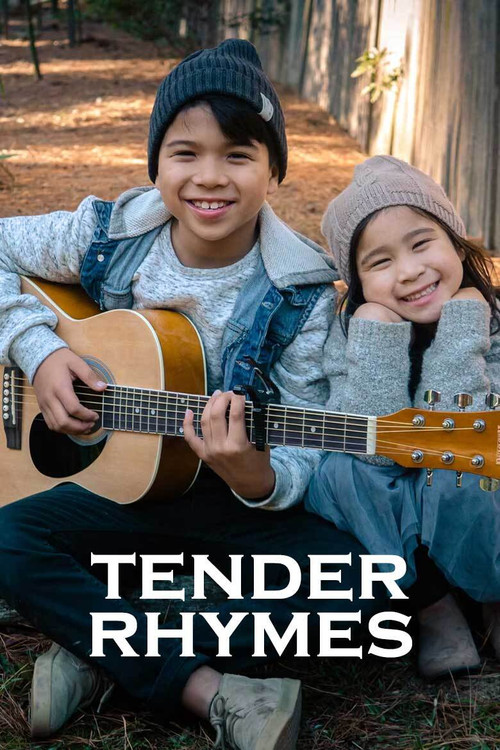


Popular
What are the main character's motivations throughout the series?
How does the relationship between Clara and her father evolve in the series?
What role does the setting play in the development of the characters?
How do secondary characters influence Clara's journey?
What pivotal moments lead to Clara's self-discovery?
Should I watch it?
Ask Your Own Question

What is the plot?
In the opening scene of "Tender Rhymes," we are introduced to the protagonist, Clara, a talented but struggling poet living in a small coastal town. She is seen sitting at her favorite café, scribbling in her notebook, her brow furrowed in concentration. The café is filled with the sounds of clinking cups and soft chatter, but Clara is lost in her world of words. Her internal struggle is palpable as she grapples with self-doubt about her writing and her place in the literary world.
As Clara leaves the café, she encounters her childhood friend, Max, who has returned to the town after years away. Max is charismatic and full of life, and their reunion is filled with nostalgia. They reminisce about their shared past, and Clara feels a spark of inspiration from their conversation. Max encourages her to submit her poetry to a local competition, igniting a flicker of hope in Clara. However, she is hesitant, fearing rejection.
Later that evening, Clara attends a poetry reading at the local community center. The atmosphere is electric, filled with passionate poets sharing their work. Clara watches from the sidelines, her heart racing as she listens to the other poets. When one of the featured poets, Lila, delivers a powerful piece, Clara feels both inspired and intimidated. After the reading, Clara approaches Lila, who offers her encouragement and advice, further motivating Clara to consider entering the competition.
The following day, Clara sits at her desk, surrounded by crumpled papers and empty coffee cups, struggling to write her submission. Her frustration mounts as she battles her inner critic. In a moment of desperation, she reaches out to Max, who comes over to help her brainstorm ideas. Their collaboration is filled with laughter and creativity, and Clara begins to find her voice again. They share a moment of vulnerability, and Clara realizes how much she values Max's support.
As the competition deadline approaches, Clara finally completes her poem, a deeply personal piece reflecting her fears and dreams. She feels a mix of excitement and anxiety as she submits her entry. However, her joy is short-lived when she learns that Lila, the poet she admires, is also competing. Clara's insecurities resurface, and she begins to doubt her chances of winning.
In a surprising twist, Clara receives a call from the competition organizers, informing her that her poem has been selected as a finalist. Overwhelmed with emotion, she shares the news with Max, who celebrates her achievement. However, Clara's joy is tinged with fear as she prepares for the final reading. She worries about the judgment of the audience and the pressure of performing in front of Lila.
On the night of the competition, the venue is packed with an eager audience. Clara stands backstage, her heart pounding as she listens to the other finalists. When it's her turn, she steps onto the stage, her hands trembling. As she begins to read her poem, she pours her heart into every word, channeling her fears and hopes. The audience is captivated, and Clara feels a sense of liberation as she shares her truth.
After her performance, Clara receives a standing ovation, and she is filled with a mix of relief and exhilaration. The judges deliberate, and Clara anxiously awaits the results. When the winner is announced, it is Lila, and Clara feels a wave of disappointment wash over her. However, Lila approaches Clara afterward, praising her performance and encouraging her to keep writing.
In the aftermath of the competition, Clara reflects on her journey. She realizes that the experience has helped her grow as a poet and as a person. With Max by her side, she decides to continue pursuing her passion for writing, embracing the idea that success is not solely defined by winning but by the courage to share her voice.
The series concludes with Clara sitting at the same café where it all began, her notebook open in front of her. She smiles as she writes, a newfound confidence radiating from her. The camera pans out, capturing the vibrant coastal town and the promise of new beginnings as Clara continues her poetic journey.







What is the ending?
In the ending of "Tender Rhymes," the main characters confront their pasts and the choices they have made. The story culminates in a heartfelt reunion, where they reconcile their differences and embrace their true selves. Each character finds closure, leading to a sense of hope for the future.
As the final episode unfolds, the sun sets over the small town, casting a warm golden hue across the familiar streets. The camera pans to the local park, where the main characters--Lila, Max, and Sarah--gather for a long-awaited meeting. Tension hangs in the air, but there is also an undercurrent of anticipation.
Scene 1: The Reunion Lila arrives first, her heart racing as she clutches a small notebook filled with her poetry. She reflects on the pain of her past, the struggles she faced in expressing herself. As she sits on a bench, she watches the leaves flutter in the breeze, symbolizing change. Max arrives next, his demeanor a mix of nervousness and determination. He has spent the last few months working on himself, trying to overcome his insecurities. When he sees Lila, a smile breaks through his anxious facade, and he approaches her cautiously.
Scene 2: Confronting the Past Sarah arrives last, her expression a blend of apprehension and hope. The three friends exchange tentative greetings, the weight of unspoken words lingering between them. They sit together, and Lila opens her notebook, reading a poem that encapsulates their shared experiences. As her voice trembles with emotion, Max and Sarah listen intently, their eyes reflecting the pain and joy of their journey together.
Scene 3: Acknowledging Mistakes After Lila finishes her reading, Max takes a deep breath and admits his past mistakes, particularly how he let his fears drive a wedge between them. He expresses his regret for not being there when they needed him most. Sarah, feeling the weight of her own choices, shares her struggles with self-acceptance and the impact it had on their friendship. The atmosphere shifts as they begin to understand each other's vulnerabilities.
Scene 4: Embracing Change As the conversation deepens, they each share their hopes for the future. Lila expresses her desire to pursue her passion for writing, while Max reveals his plans to start a community art project. Sarah, inspired by her friends, decides to take a leap of faith and apply for a job that aligns with her dreams. The scene is filled with a sense of empowerment as they encourage one another to embrace their true selves.
Scene 5: A New Beginning The sun dips below the horizon, and the park is bathed in twilight. The three friends stand together, united in their commitment to support one another. They make a pact to stay connected, promising to share their journeys and celebrate each other's successes. As they walk away from the park, laughter fills the air, a stark contrast to the tension that once defined their relationship.
In the final moments, the camera captures their silhouettes against the fading light, symbolizing hope and new beginnings. Each character has found a sense of closure, having confronted their past and embraced their futures. Lila, Max, and Sarah walk forward, ready to face whatever comes next, their bond stronger than ever. The screen fades to black, leaving the audience with a sense of warmth and optimism for the characters' journeys ahead.
Is there a post-credit scene?
In the 2018 TV show "Tender Rhymes," there is indeed a post-credit scene that adds a layer of depth to the narrative.
As the credits roll, the screen fades to black before transitioning to a dimly lit room filled with scattered papers and sketches. The camera slowly pans across the clutter, revealing a large corkboard covered in various notes and images related to the main characters' journeys throughout the series.
In the center of the board, a particular drawing catches the viewer's eye: it's a whimsical illustration of the main character, Clara, surrounded by the friends she made along the way, each depicted in a playful, exaggerated style. The warmth of the colors contrasts with the somber tone of the previous episode, hinting at hope and new beginnings.
Suddenly, the scene shifts to Clara herself, sitting at a small desk, her brow furrowed in concentration. She is writing in a journal, her pen moving quickly across the page. The camera zooms in on her face, capturing a mix of determination and vulnerability. Clara pauses, looking out the window, where the sun is setting, casting a golden hue across her room.
In this moment of reflection, she whispers to herself, "It's time to start anew." The scene ends with her closing the journal, a sense of resolve in her posture, suggesting that she is ready to embrace the next chapter of her life, leaving viewers with a feeling of anticipation for what lies ahead.
This post-credit scene encapsulates the themes of growth and resilience that permeate "Tender Rhymes," while also providing a poignant glimpse into Clara's internal journey, setting the stage for potential future developments.
What are the main character's motivations throughout the series?
The main character, Clara, is driven by her desire to reconnect with her estranged father, who left when she was a child. This quest for familial connection propels her through various emotional landscapes, as she grapples with feelings of abandonment and the longing for acceptance. Her journey is marked by moments of vulnerability, where she confronts her past and the impact it has on her present relationships.
How does the relationship between Clara and her father evolve in the series?
Clara's relationship with her father, Richard, begins with tension and resentment due to his abandonment. As the series progresses, they have several confrontational yet revealing conversations that peel back layers of misunderstanding. Richard's attempts to explain his choices and Clara's struggle to forgive create a complex dynamic, leading to moments of both conflict and tentative reconciliation.
What role does the setting play in the development of the characters?
The setting, a quaint coastal town, serves as a backdrop that mirrors Clara's emotional journey. The town's picturesque yet isolating nature reflects her internal struggles. Key locations, such as the old family home and the local café where Clara works, become significant as they evoke memories and confrontations that shape her character development and relationships with others.
How do secondary characters influence Clara's journey?
Secondary characters, such as Clara's best friend Mia and her mentor, Mr. Thompson, play crucial roles in her journey. Mia provides emotional support and encourages Clara to confront her feelings, while Mr. Thompson offers wisdom and guidance, helping her navigate her complex emotions. Their interactions highlight Clara's growth and the importance of friendship and mentorship in her quest for self-discovery.
What pivotal moments lead to Clara's self-discovery?
Several pivotal moments mark Clara's path to self-discovery, including a confrontation with her father during a stormy night that forces her to face her fears, and a heartfelt conversation with Mia that helps her articulate her feelings of loss. Additionally, a visit to her childhood home, where she uncovers old letters from her father, serves as a catalyst for understanding and acceptance, ultimately leading to her emotional breakthrough.
Is this family friendly?
"Tender Rhymes," produced in 2018, is generally considered family-friendly, but it does contain some scenes and themes that may be sensitive for children or those who are particularly sensitive.
-
Emotional Struggles: The show explores themes of loss, grief, and family dynamics, which may be heavy for younger viewers. Characters often confront their past traumas, leading to emotional breakdowns that could be upsetting.
-
Mild Conflict: There are instances of conflict between characters that may involve raised voices or arguments. While not violent, the tension could be distressing for some children.
-
Depictions of Sadness: Several scenes depict characters in moments of deep sadness or despair, which may evoke strong emotions and could be challenging for sensitive viewers.
-
Themes of Abandonment: The narrative touches on feelings of abandonment and loneliness, which could resonate deeply with some viewers, potentially leading to discomfort.
-
Family Issues: The show addresses complex family relationships, including misunderstandings and estrangement, which might be difficult for younger audiences to fully grasp.
Overall, while "Tender Rhymes" is crafted with a family audience in mind, these elements may require parental guidance for younger viewers.