

















Popular
What is the significance of the character David's multiple personalities?
How does Dr. Cara Harding's relationship with her father influence the story?
What role does the character of the deceased souls play in the plot?
How does the setting of the psychiatric hospital contribute to the story?
What is the significance of the final confrontation between Dr. Cara Harding and David?
Should I watch it?
Ask Your Own Question

What is the plot?
Sorry, we aren't able to watch and write up a full detailed plot yet. Check back in a few days.


What is the ending?
In the ending of "6 Souls," Dr. Cara Harding confronts the truth about her father's past and the nature of the souls inhabiting the bodies of the patients she has been studying. She ultimately faces off against the malevolent spirit of her father, who has been manipulating events from beyond the grave. The film concludes with Cara making a significant sacrifice to save herself and the souls trapped within her father's influence, leading to a resolution that allows her to reclaim her life and her identity.
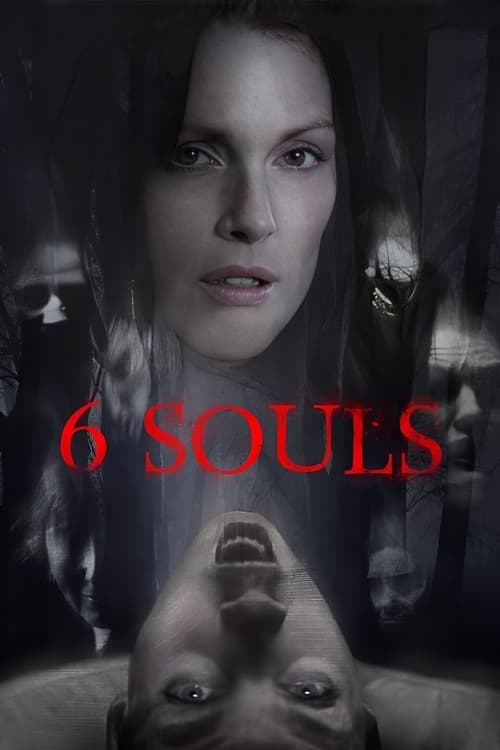
As the climax of "6 Souls" unfolds, the tension escalates in a dimly lit, abandoned asylum where Dr. Cara Harding, portrayed by Julianne Moore, finds herself drawn to confront the dark legacy of her father, a once-respected psychiatrist. The atmosphere is thick with dread, shadows flickering against the walls as she navigates the eerie corridors, her heart pounding with a mix of fear and determination.
Cara has been investigating a series of mysterious cases involving patients who exhibit multiple personalities, each claiming to be someone else entirely. The most troubling of these is Adam, played by Jonathan Rhys Meyers, who has been linked to a string of murders. As Cara delves deeper into Adam's psyche, she begins to uncover the unsettling truth about her father's experiments and the souls he has trapped within his patients.
In a pivotal scene, Cara discovers a hidden room filled with her father's notes and recordings, revealing his obsession with the idea of transferring souls. The realization hits her hard: her father had been experimenting on the very essence of life and death, trying to manipulate the souls of his patients. This revelation is compounded by the haunting presence of her father, whose spirit has been influencing Adam and the other patients, seeking to reclaim his power through them.
As Cara confronts Adam, the atmosphere becomes charged with supernatural energy. Adam, under the influence of her father's spirit, becomes increasingly volatile, revealing the depths of his torment and the struggle for control over his own body. Cara, torn between her professional duty and her personal connection to the haunting legacy of her father, fights to save Adam and the other souls trapped within him.
In a climactic showdown, Cara faces her father's spirit directly, demanding that he release the souls he has imprisoned. The confrontation is intense, filled with emotional turmoil as Cara grapples with her father's betrayal and her own fears. In a moment of clarity, she realizes that to save Adam and the other souls, she must confront her own demons and let go of the past.
In a final act of bravery, Cara sacrifices herself, allowing her father's spirit to consume her in a bid to free Adam and the other trapped souls. The scene is heart-wrenching, as Cara's face reflects both fear and resolve. As she is engulfed by the darkness, a bright light envelops the room, symbolizing the release of the souls and the end of her father's malevolent influence.
The film concludes with a poignant moment as Adam, now free from the torment of her father's spirit, awakens in the asylum, confused but alive. Cara's sacrifice has not only saved him but has also allowed her to reclaim her identity, breaking the cycle of her father's legacy. The final scenes show Adam stepping out into the light, a symbol of hope and renewal, while Cara's spirit lingers, finally at peace.
In the aftermath, the audience is left with a sense of closure as the camera pans over the asylum, now quiet and still, a stark contrast to the chaos that once reigned within its walls. The fate of each character is sealed: Cara has liberated the souls, including her own, while Adam is given a second chance at life, free from the shadows of the past. The film closes on a note of bittersweet resolution, emphasizing the themes of sacrifice, redemption, and the enduring struggle against the darkness within.
Is there a post-credit scene?
The movie "6 Souls," produced in 2010, does not have a post-credit scene. The film concludes with its final moments, focusing on the resolution of the main plot involving Dr. Cara Harding, played by Julianne Moore, and her investigation into the mysterious case of a man named Adam, who claims to be possessed by multiple personalities. The narrative wraps up without any additional scenes or hints after the credits, leaving the audience with the emotional weight of the story and its themes of identity and trauma.
What is the significance of the character David's multiple personalities?
David, played by Jonathan Rhys Meyers, is a central character who embodies multiple personalities, each representing a different soul. His personalities are not just a psychological condition but are tied to the souls of deceased individuals, each with their own backstory and emotional baggage. This complexity adds depth to his character and drives the narrative as Dr. Cara Harding, portrayed by Julianne Moore, attempts to understand and help him.
How does Dr. Cara Harding's relationship with her father influence the story?
Dr. Cara Harding's relationship with her father, who is a prominent psychiatrist, is strained and complicated. Her father's past and his own struggles with mental health cast a shadow over Cara's professional life and personal decisions. As she delves deeper into David's case, she confronts her own emotional scars and the legacy of her father's influence, which ultimately shapes her approach to understanding David's condition.
What role does the character of the deceased souls play in the plot?
The deceased souls that inhabit David's body serve as crucial plot elements that reveal the backstories of each personality. Each soul has a unique narrative that intertwines with David's life, providing insight into his trauma and the reasons behind his multiple identities. These souls are not merely plot devices; they evoke empathy and highlight the themes of loss, identity, and the quest for redemption.
How does the setting of the psychiatric hospital contribute to the story?
The psychiatric hospital serves as a claustrophobic and tense backdrop for the unfolding drama. Its sterile, cold environment contrasts sharply with the emotional turmoil experienced by the characters. The hospital becomes a character in itself, representing both a place of healing and a prison for David, as well as a site where Cara confronts her own fears and the haunting memories of her past.
What is the significance of the final confrontation between Dr. Cara Harding and David?
The final confrontation between Dr. Cara Harding and David is a climactic moment that encapsulates the emotional and psychological stakes of the film. In this intense scene, Cara must confront not only David's multiple personalities but also her own fears and unresolved issues. This confrontation is pivotal as it leads to a deeper understanding of both characters, ultimately forcing Cara to make a choice that will impact her life and David's fate.
Is this family friendly?
"6 Souls," produced in 2010, is not considered family-friendly due to its dark themes and unsettling content. Here are some potentially objectionable or upsetting aspects that may affect children or sensitive viewers:
-
Violence and Gore: The film contains scenes of violence, including graphic depictions of injuries and blood, which may be disturbing.
-
Mental Illness: The portrayal of mental health issues is central to the plot, and some scenes may be intense or distressing for viewers who are sensitive to such topics.
-
Supernatural Elements: The film includes themes of possession and the supernatural, which can be frightening and unsettling.
-
Death and Trauma: There are references to death and traumatic experiences that characters endure, which may evoke strong emotional reactions.
-
Dark Atmosphere: The overall tone of the film is dark and suspenseful, which may be too intense for younger audiences.
These elements contribute to a tense and unsettling viewing experience, making it more suitable for mature audiences.








