











Popular
What happens to Nell after the events of the first film?
How does Nell's relationship with the other residents of the halfway house develop?
What supernatural occurrences does Nell experience in the halfway house?
What role does the character of Father Marcus play in Nell's life in this sequel?
How does Nell's struggle with her identity manifest throughout the film?
Should I watch it?
Ask Your Own Question

What is the plot?
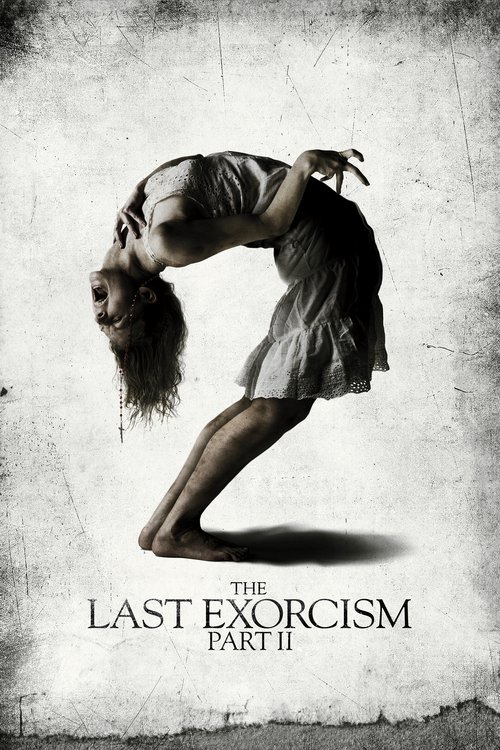
The movie opens in immediate aftermath: Nell Sweetzer is found in a nightmarish, half-feral state by a young couple, Jared and Lily, beside their refrigerator, her body rigid and her mind seemingly gone, before she is taken to a hospital where she appears catatonic and unreachable. From there, the story jumps ahead a few months to New Orleans, where Nell is placed in Frank Merle's home for girls, a transition house meant to keep her safe while she tries to rebuild a normal life after the horrors of the first film. She is fragile, memory-scarred, and often blank with confusion, but she is also determined to function, to work, to speak, to live as if the darkness that once consumed her can be left behind. The film's horror comes from the cruel fact that the darkness never left at all.
Frank Merle is stern but caring, a caretaker who treats Nell like a responsibility he is trying to manage with patience and discipline. At the home, Nell is surrounded by other young women--Gwen, Daphne, Monique, Michelle, and others--who give the place a strange, temporary normality. Their days are structured, supervised, and almost boring in the way recovery often is, with house rules, chores, and the faint hope that routine can heal what trauma has broken. Nell also gets a job as a chambermaid at a hotel, where Beverly supervises her and watches over her attempts at independence. The work is modest, the rooms are anonymous, and the repetitive motions of making beds and cleaning bathrooms seem to promise something like ordinary adulthood. For a little while, that illusion holds.
Nell begins to open up socially as well. She starts to smile more, speak more freely, and connect with the people around her. Chris, a coworker at the hotel, becomes especially important because he treats her gently and with curiosity rather than fear. He likes her, and she slowly likes him back. Their bond is the film's most painful reminder of what Nell might have had if the evil around her had not returned. Their scenes together are soft and awkward in a way that feels honest: he flirts, she blushes, she hesitates, and for a short time the film lets the audience believe that she may actually get a second chance at life. But the movie keeps undermining that hope with faint, persistent signs of intrusion--nightmares, missing memories, and the sense that someone is always watching from just out of frame.
That watching presence becomes literal when a video of Nell's past appears on YouTube. The footage from the first film, once secret and buried, is now public. Her trauma is no longer private; it is a spectacle. People have seen her at her worst, in the grip of the demon, and the exposure humiliates her deeply. The internet has turned her suffering into content. This revelation is one of the movie's most damaging emotional blows, because it strips away the fragile dignity she has been trying to build. Nell is not only haunted by the past; she is now trapped inside it in front of everyone.
Chris's arc darkens in parallel. He finds and watches a clip from the old footage that shows Nell lying about how she got pregnant. That revelation matters because it reopens the confusion around her past and shatters the trust he is beginning to place in her. The film does not present this as a simple moral failure; rather, it shows how trauma, possession, and manipulation have left behind a web of half-truths and shame that continues to destroy any chance at ordinary intimacy. Chris cannot process what he sees. He spirals, and the movie uses his collapse to show how the evil surrounding Nell ruins not just her but everyone who tries to care for her.
At this point Cecile enters the story as the person who has been quietly tracking Nell from the beginning. She reveals that she belongs to the Order of the Right Hand, a secret society devoted to watching for the demon that has attached itself to Nell and to preventing what they believe could become a much larger catastrophe. This is a major twist in the film: Nell has not only been traumatized, she has been monitored by an organized occult group that understands more about her than she does herself. Cecile's tone is serious and cryptic, but she is not a villain. She is a guardian, or at least she believes she is one, and she leads Nell toward two other members of the Order, Calder and Jeffrey. Their plan is blunt and desperate: they intend to remove the demon by transferring it into a sacrificial chicken. The grotesque simplicity of the ritual gives the scene a grim, almost absurd desperation. They are trying to fight ancient evil with a small animal and faith.
The exorcism fails. The demon in Nell is too strong, too rooted, too eager to remain where it is. The attempted transfer does not take, and the situation turns violent. Calder is forced to inject Nell with a lethal dose of morphine, essentially trying to kill her in the hope that killing the host may stop the entity. It is one of the movie's bleakest confrontations because it turns a rescue mission into a mercy killing. Everyone in the room is suddenly forced to accept that the line between saving Nell and destroying her has vanished. The scene is clinical on the surface but spiritually horrifying underneath. A young woman who has been trying to get well is now being sedated to death because no one has any better answer.
Then the demon begins its most manipulative attack. It appears before Nell in a series of forms designed to break her emotional defenses: first as a doppelganger of herself, then as her father, then as Chris. Each appearance is a lie built from intimacy. The demon is no longer merely a monster; it is a seducer, a shapeshifter that knows exactly what she longs for and fears. When it comes as her father, it weaponizes family history and grief. When it comes as Chris, it corrupts the possibility of love. The repeated plea is essentially the same: accept it, take its hand, surrender, and live. The offer is monstrous because it is dressed as comfort. The film makes clear that the real battle is not physical strength but emotional consent. Nell is being pushed toward a decision that will define not just her fate but the fate of everyone around her.
For a moment, it seems that the attempt to stop her has succeeded. Nell's pulse stops, and Calder, Jeffrey, and Cecile believe she has died. The room falls into the terrible stillness that comes after a failed medical or spiritual intervention, when the body seems to have gone slack and everyone is left with the impossible question of what to do next. But death here is not release. It is only another pause before the final choice.
Instead of remaining gone, Nell returns to awareness and gives in. She accepts the demon's hand. That single act is the movie's true point of no return. It confirms that whatever resistance she has had is finally overwhelmed, and the demon wins not by brute force but by getting her to choose it. The moment she takes that hand, the film erupts into destruction. The house catches fire, and the Order's members are trapped inside. Calder, Jeffrey, and Cecile all die in the blaze, consumed by the very evil they tried to contain. Their deaths are not abstract; they are the direct consequence of the failed exorcism and Nell's surrender. The fire is violent, bright, and cleansing in the most terrible sense, turning the room of attempted salvation into an inferno.
The horror does not stop there. Nell's surrender has consequences far beyond the secret society's ruined sanctuary. The demon drives her onward into a final, catastrophic phase of violence. Frank Merle, the man who sheltered her, is murdered by Nell, and the home for girls is burned. The girls she lived with--Gwen, Daphne, Monique, Michelle, and the others--are left to die in the destruction. The film does not frame this as a frenzy without meaning; it is the outcome of the demon fully reclaiming her body and turning everything she has touched into ash. Frank's death is especially brutal because he has been trying to give her structure, protection, and a place to heal. He becomes another casualty of the same curse that has followed her since the beginning. The girls' deaths are equally tragic because they are not combatants; they are simply the people closest to her when the apocalypse begins.
The ending then pushes the story into overt apocalyptic imagery. Nell gets into a car and drives away as the prophecy of the end times is confirmed. As she passes, multiple buildings and vehicles catch fire, as if her presence alone is now enough to ignite destruction. The final image is not of rescue or catharsis but of an infected world beginning to burn around her. The film closes with the demon's victory complete: Nell is no longer resisting, the Order has failed, Frank and the girls are dead, and the evil that has pursued her since the first film has now claimed her as its vessel for something much larger than personal possession. What began as one traumatized young woman trying to recover in New Orleans ends as a slow-moving apocalypse, with the last moments of hope erased by the sight of fire spreading behind her.








What is the ending?
In the ending of "The Last Exorcism Part II," Nell, the protagonist, confronts her demonic possession during a climactic party scene. As she succumbs to the entity within her, she ultimately kills her love interest, and in a final act of desperation, she takes her own life to escape the torment.
Now, let's delve into the ending in a more detailed narrative fashion:
As the film approaches its climax, Nell is at a party with her friends, trying to enjoy a semblance of normal life after the traumatic events she has endured. The atmosphere is lively, filled with laughter and music, but there is an underlying tension that Nell cannot shake. She feels the presence of the demon that has haunted her since her childhood, lurking just beneath the surface of her consciousness.
Scene by scene, the party unfolds. Nell dances with her friends, but her joy is short-lived. The camera captures her moments of laughter, juxtaposed with her increasingly anxious expressions. She is aware that something is wrong, that the darkness is creeping back into her life. As the night progresses, the music becomes more intense, and the lights flash erratically, mirroring Nell's internal struggle.
Suddenly, the atmosphere shifts. Nell's demeanor changes as she begins to hear whispers and see visions of the demon. The partygoers, oblivious to her turmoil, continue to celebrate, but Nell is spiraling into a state of panic. She tries to reach out to her love interest, who has been a source of comfort for her, but the demon's influence grows stronger, pushing her further away from reality.
In a moment of vulnerability, Nell's love interest approaches her, attempting to calm her fears. However, the demon takes full control, and Nell's expression transforms into one of rage and despair. In a shocking turn of events, she violently attacks him, leading to his tragic death. The scene is chaotic, filled with screams and confusion as the partygoers realize what has happened.
As the realization of her actions sinks in, Nell is consumed by guilt and horror. The camera captures her face, a mixture of anguish and despair, as she grapples with the loss of her love and the full weight of her possession. In a final act of desperation, she retreats to a secluded area, where she confronts the demon within her. The internal battle is palpable, and Nell, feeling utterly defeated, makes the heartbreaking decision to end her own life.
The film concludes with a haunting silence, leaving the audience with the chilling aftermath of Nell's choices. The fate of the main characters is sealed: Nell, once a hopeful young woman seeking a new beginning, succumbs to the darkness that has plagued her, while her love interest's life is tragically cut short by the very entity that sought to destroy her. The film closes on a somber note, emphasizing the devastating impact of possession and the struggle between light and darkness within the human soul.
Is there a post-credit scene?
The Last Exorcism Part II does not have a post-credit scene. The film concludes with its final moments, focusing on the fate of the main character, Nell Sweetzer, and the implications of her experiences. The narrative wraps up without any additional scenes or content after the credits.
What happens to Nell after the events of the first film?
After the traumatic events of the first film, Nell Sweetzer is found in a state of confusion and fear. She is taken to a halfway house in New Orleans, where she struggles to adjust to a normal life while haunted by her past experiences.
How does Nell's relationship with the other residents of the halfway house develop?
Nell forms a bond with the other residents, particularly with a kind-hearted woman named Angela and a man named Chris. They provide her with a sense of community and support, but Nell's past continues to cast a shadow over her interactions.
What supernatural occurrences does Nell experience in the halfway house?
Nell begins to experience disturbing visions and supernatural occurrences, including strange noises and the feeling of being watched. These experiences intensify her fear and paranoia, leading her to question her sanity and the reality of her situation.
What role does the character of Father Marcus play in Nell's life in this sequel?
Father Marcus, who was a key figure in the first film, reappears in Nell's life as he tries to help her confront the demonic presence that continues to haunt her. He becomes a source of guidance and protection, but his efforts are complicated by the growing strength of the evil force.
How does Nell's struggle with her identity manifest throughout the film?
Nell's struggle with her identity is central to her character arc. As she tries to reclaim her life, she grapples with feelings of isolation and fear, often questioning whether she is truly free from the demonic influence. This internal conflict is depicted through her emotional turmoil and the physical manifestations of the evil that seeks to reclaim her.
Is this family friendly?
The Last Exorcism Part II is not considered family-friendly due to its horror themes and unsettling content. Here are some potentially objectionable or upsetting aspects that may occur:
-
Supernatural Elements: The film features demonic possession and exorcism themes, which can be frightening for children and sensitive viewers.
-
Violence and Threats: There are scenes that depict violence or threats of violence, contributing to a tense and disturbing atmosphere.
-
Psychological Horror: The film explores themes of fear, isolation, and mental distress, which may be unsettling for younger audiences.
-
Graphic Imagery: Some scenes may include disturbing visuals that could be frightening or upsetting.
-
Emotional Turmoil: Characters experience intense emotional struggles, including fear, despair, and trauma, which may be distressing to watch.
Overall, the film's content is geared towards an adult audience and may not be suitable for children or those sensitive to horror themes.








