






















Popular
What is the significance of the mysterious signal that the kids receive?
How do the characters of Alex, Tuck, and Munch differ in their personalities and motivations?
What challenges do the kids face while trying to help Echo?
What role does the character of Emma play in the story?
How does the relationship between the kids evolve throughout the film?
Should I watch it?
Ask Your Own Question

What is the plot?
The story opens on the day before the forced move in Mulberry Woods, Nevada, where three boys who have grown up side by side are trying to squeeze one last night of childhood out of a neighborhood that is being erased for a new freeway. Tuck Simms, the camera-obsessed one, keeps filming everything like he is already afraid the night will vanish; Reginald "Munch" Barrett, the nervous tech genius, keeps noticing odd electronic behavior; and Alex Nichols, the foster kid who carries more silence than either of the others can comfortably read, is packing for a future that does not feel like it belongs to him. The subdivision around them is full of half-packed boxes, angry adults, and that strange late-summer feeling of a place already becoming memory. The boys know that by tomorrow they will be scattered, with their families moving in different directions, and that makes the night feel less like an outing and more like a farewell.
From the start, the film is shaped like a found-footage diary, with Tuck's camera catching the boys' jokes, dares, and the ache beneath them. Their last day together turns uncanny when their cell phones all begin showing the same bizarre symbol. It is not random static or a glitch from the construction, though that is what any adult would probably say. Munch, who is fascinated by patterns and devices, is the first to realize the image is a map. The discovery turns their sadness into momentum. If the phone is trying to tell them something, then the three of them have one night to find out what. Instead of telling their parents or asking permission, they do what kids on the brink of separation always do in movies like this: they lie. They pretend to be sleeping at one another's houses, then slip out on bikes and head into the Nevada desert under cover of darkness.
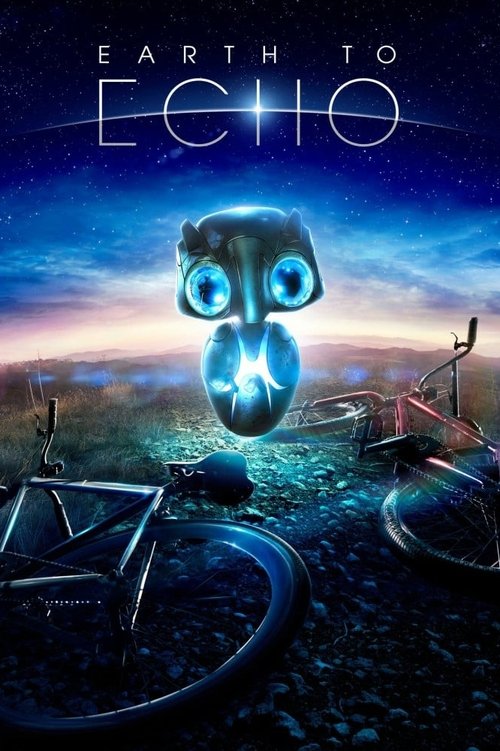
The desert feels huge and empty, a place where even the wind seems to be waiting. Guided by the strange phone coordinates, they arrive at a lonely spot in the sand and find what looks like scrap metal or some kind of broken capsule. At first it seems like the remains of a satellite or a piece of junk left behind by the construction work. But the object is alive, and that first realization is one of the film's most effective little jolts. When the boys bring it into contact with more light and more movement, the thing opens to reveal a small alien creature with glowing blue eyes and a wounded, fragile body. The boys are stunned, then fascinated. The creature cannot speak English, but it can imitate sounds in little chirps and beeps, and it uses the boys' phones and cameras to communicate. Because it copies the noises Alex makes, they name it Echo. The name sticks immediately, not just because it sounds right, but because it captures the whole bond: Echo is literally responding to them, reflecting them, reaching back.
Echo is not an invader or a monster. It is stranded, damaged, and scared. Through simple yes-or-no exchanges, the boys learn that Echo needs to find the missing pieces of its ship before it can go home. The phones continue to act as guides, producing new encrypted images that point to different locations. What began as a last-night dare becomes an all-night rescue mission. The scavenger hunt takes them away from the desert and into ordinary town spaces that suddenly feel secret and strange: a pawn shop, an arcade, a bar, and other hidden corners of the neighborhood's edge. Every stop brings them closer to understanding that Echo's ship was broken apart and scattered, and that the alien's arrival is tied to something much bigger than a random crash.
As the pieces fall into place, the boys realize they are being watched. A group of shady government officials or agents starts closing in, clearly intent on capturing Echo. The film does not spend time humanizing them; they are the faceless, adult power that always arrives when wonder appears. The implication is that these are the people who shot the ship down in the first place, and that the whole freeway project surrounding Mulberry Woods is not just urban development but part of a larger cover-up. The neighborhood has been marked for destruction, and that destruction conveniently erases evidence of the crash and clears the area around the hidden spacecraft. The boys' personal loss and Echo's literal loss of home become mirrored versions of the same story: something small and alive is being pushed out by a machinery too large to argue with.
The tension rises as the boys race from clue to clue while trying to keep Echo safe. Tuck keeps filming, turning the night into a record of friendship under pressure. Munch keeps decoding the phone signals, always one step behind the next surprise but never willing to quit. Alex, who has quietly carried the most emotional weight because of his foster situation and the instability of his home life, becomes the most sensitive to Echo's fear and isolation. The alien is not just a puzzle to him; it is another being that has been displaced and left to survive in a place it does not understand. That shared vulnerability gives the story its emotional center. The boys are helping Echo, but Echo is also helping them hold onto each other for one more night.
One of the film's key revelations comes when the boys understand that the messages are not random distress signals but a chain of instructions. Echo has been broken into parts, and each part is somewhere in the human world, hidden in places the boys can actually access. The scavenger hunt becomes a race against the officials, who are trying to intercept them before the ship can be repaired. The movie builds suspense through movement: bikes racing through dark streets, flashlights sweeping across asphalt, phones glowing in the boys' hands, and Echo's tiny body flickering in and out of safety as it is tucked away and smuggled forward. The ordinary suburban landscape becomes charged with danger.
At one point, the pursuit catches up with them in a very concrete way. The IMDb parental guide notes a scene in which a man kidnaps three boys, a girl, and the small alien from a diner at night and shoves them into the back of a van, though one boy escapes by jumping into the bed of a moving pickup truck and manages to send a goodbye message to his friends on his cell phone while crying. That moment underscores how precarious the whole adventure has become: the kids are no longer just sneaking around the edges of adult authority, they are in direct danger from it. The exacting, harsh physicality of the abduction makes the threat feel real, and the escape sequence turns the film from a mystery into an urgent rescue story. The goodbye message matters because it captures the emotional truth of the night: these boys know they may be losing each other forever, and every minute feels borrowed.
The final stretch of the story leads back to the buried spaceship. The clues, the parts, the pursuit, and the boys' increasingly desperate determination all converge there. The ship is not sitting in plain sight; it is hidden, buried, and waiting to be uncovered, which makes the climax feel like the unearthing of a secret the desert has been holding all along. Once the missing pieces are gathered, Echo is able to reactivate the craft enough to leave. The alien's damaged body, the boys' improvised trust, and the phones' strange guidance all pay off in one last surge of momentum. The agents fail to stop the escape. Echo gets to the ship, and the ship is finally able to answer the call it has been sending all night.
There are no major deaths in the film. The danger is constant, and the pursuit is frightening, but the story is not built around fatalities. Its emotional cost is separation, displacement, and the fear of losing the people and places that define childhood. That is what gives the ending its weight. Echo does not die; it goes home. The boys do not die; they are forced toward their own futures. The neighborhood does not survive; it is scheduled to be demolished. The movie's real tragedy is not bloodshed but the quiet violence of being uprooted.
In the end, Echo returns to its ship and leaves Earth, completing the rescue mission that the boys have spent the entire night attempting. The goodbye is not grand in a tragic sense, but it is deeply felt. Tuck's camera preserves the last moments of the adventure, transforming them into a memory the boys can carry even as their lives split apart. Alex, Munch, and Tuck do not remain in the same place, and the film does not pretend that this magical night can stop the freeway or reverse the move. What it does offer is a final proof that their friendship mattered, that their loyalty was real, and that for one impossible night they were brave enough to follow a signal into the dark and help a lost creature find its way home. The last scene lands on that mixture of wonder and grief: an alien returns to the stars, and three boys return to a world that is already changing without them.
More Movies Like This
Browse All Movies →


What is the ending?
At the end of "Earth to Echo," the group of friends successfully helps the alien, Echo, return to its home. They say their goodbyes, and Echo departs, leaving the friends with a sense of wonder and a deeper bond. The film concludes with the characters reflecting on their adventure and the changes in their lives.
As the climax of "Earth to Echo" unfolds, the group of friends--Alex, Tuck, and Munch--find themselves in a tense situation as they race against time to help Echo, the alien they discovered. After a series of thrilling encounters, they reach the location where Echo's spaceship is hidden. The friends are filled with a mix of excitement and anxiety, knowing that they are about to embark on a life-changing moment.
In the final scenes, the group arrives at the site where Echo's ship is located. The atmosphere is charged with anticipation as they navigate through the dark, abandoned area. They work together to activate the ship, using the information they gathered throughout their adventure. The bond between the friends is palpable; they have grown closer through their shared experiences, facing fears and challenges together.
As Echo's ship begins to power up, the friends witness a dazzling display of lights and sounds. Echo, who has become a symbol of friendship and adventure for them, communicates with them one last time. The emotional weight of the moment is heavy; they realize that they are saying goodbye to a being that has changed their lives. Each character reflects on their personal growth throughout the journey--Alex has learned to be more courageous, Tuck has embraced his creativity, and Munch has found his voice.
In a poignant farewell, Echo expresses gratitude to the friends for their help. The ship's door opens, and Echo prepares to leave. The friends gather around, sharing heartfelt goodbyes. They promise to remember the adventure and the lessons learned. As Echo ascends into the sky, the friends watch in awe, feeling a mix of sadness and joy. They understand that this experience has not only been about helping an alien but also about discovering themselves and the importance of friendship.
After Echo departs, the friends are left standing together, reflecting on the adventure they shared. They realize that their lives are about to change; they will be moving away from their hometown, and this moment marks the end of an era for them. However, they also recognize that their bond will endure, no matter where life takes them. The film closes with a sense of hope and wonder, emphasizing the themes of friendship, growth, and the magic of unexpected adventures. Each character leaves with a renewed sense of purpose, ready to face the future with the memories of their incredible journey.
Is there a post-credit scene?
In the movie "Earth to Echo," there is no post-credit scene. The film concludes with the main characters, Alex, Tuck, and Munch, having successfully helped the alien, whom they named Echo, return to its home. The story wraps up with a sense of closure as the friends reflect on their adventure and the bond they have formed. The absence of a post-credit scene leaves the audience with the emotional weight of their journey and the friendships they have solidified, rather than teasing any further developments or sequels.
What is the significance of the mysterious signal that the kids receive?
The mysterious signal that the kids receive is a crucial plot element that sets the story in motion. It is a series of strange beeping sounds that Echo, an alien being, emits. The signal leads the children--Alex, Tuck, and Munch--on a quest to uncover its source, which they believe is connected to Echo's need for help. The signal symbolizes the call for connection and understanding, driving the kids to explore their friendship and the world around them.
How do the characters of Alex, Tuck, and Munch differ in their personalities and motivations?
Alex is the leader of the group, characterized by his bravery and determination to help Echo. He is motivated by a sense of adventure and a desire to protect his friends. Tuck is the more cautious and thoughtful member, often acting as the voice of reason; he is motivated by his loyalty to his friends and a desire to document their adventure through his camera. Munch, the comic relief, is quirky and tech-savvy, motivated by his love for gadgets and a desire to impress his friends, often providing humor in tense situations.
What challenges do the kids face while trying to help Echo?
The kids face several challenges while trying to help Echo, including evading the authorities who are searching for the alien. They encounter obstacles such as navigating through the woods, dealing with their own fears, and overcoming personal conflicts within the group. Additionally, they must figure out how to communicate with Echo and understand its needs, which adds a layer of complexity to their mission.
What role does the character of Emma play in the story?
Emma is a pivotal character who serves as a bridge between the boys and the larger emotional themes of the story. She is Alex's friend and has a crush on him, which adds a layer of tension and complexity to their interactions. Emma's presence helps to highlight the themes of friendship and loyalty, as she joins the boys on their adventure, contributing her own insights and support, ultimately strengthening their bond.
How does the relationship between the kids evolve throughout the film?
Throughout the film, the relationship between the kids evolves significantly as they face challenges together. Initially, they are just friends embarking on a summer adventure, but as they encounter danger and work to help Echo, they learn to rely on each other more deeply. Conflicts arise, particularly between Alex and Tuck, but these are resolved through their shared experiences, leading to a stronger, more united friendship by the end of their journey.
Is this family friendly?
"Earth to Echo" is generally considered family-friendly, aimed primarily at a younger audience. However, there are a few potentially objectionable or upsetting scenes that may affect children or sensitive viewers:
-
Mild Peril and Tension: The characters face moments of danger, such as being chased or encountering obstacles that create suspense. This may be intense for younger viewers.
-
Emotional Moments: There are scenes that explore themes of friendship, loss, and change, particularly regarding the characters' feelings about moving away and leaving their homes. These moments may evoke sadness or anxiety.
-
Mild Language: There are instances of mild language that may not be suitable for all audiences, though it is not excessive.
-
Parental Concerns: The film touches on themes of parental authority and the challenges of growing up, which may resonate differently with children depending on their personal experiences.
Overall, while the film is designed to be accessible to children, these elements may require parental guidance for younger viewers.







