
















Popular
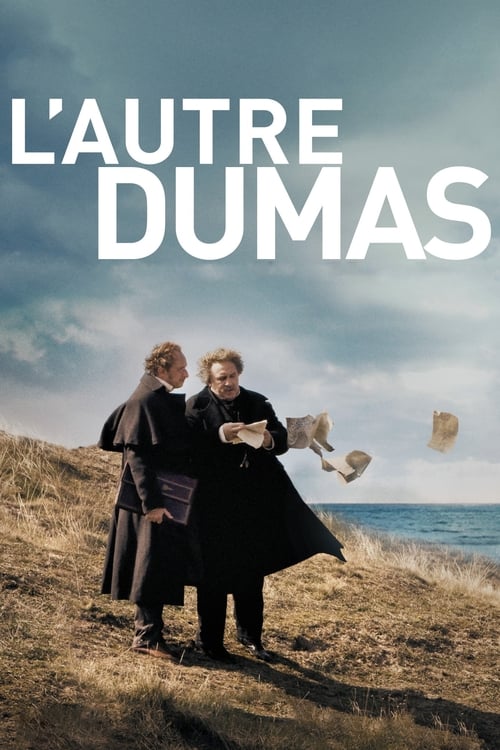
What is the relationship between Alexandre Dumas and Auguste Maquet in the film?
How does the film depict Dumas' struggles with his identity and heritage?
What role does the character of Marie play in Dumas' life?
How does the film portray the process of writing and collaboration between Dumas and Maquet?
What events lead to the fallout between Dumas and Maquet?
Should I watch it?
Ask Your Own Question

What is the plot?
Sorry, we aren't able to watch and write up a full detailed plot yet. Check back in a few days.



What is the ending?
In the ending of "The Other Dumas," Alexandre Dumas, the famous author, faces the consequences of his tumultuous life and the impact of his relationships. The film concludes with Dumas reflecting on his legacy, while his friend and ghostwriter, Auguste Maquet, comes to terms with his own role in Dumas's success. The story wraps up with a sense of bittersweet resolution as Dumas acknowledges the complexities of friendship, creativity, and the nature of authorship.
As the film approaches its conclusion, we find ourselves in a dimly lit room filled with the remnants of Dumas's past glories. The air is thick with nostalgia and regret. Dumas, portrayed with a mix of bravado and vulnerability, sits at his writing desk, surrounded by manuscripts and unfinished works. His face is lined with the weight of his experiences, and his eyes reflect a deep-seated longing for recognition and understanding.
Scene by scene, the narrative unfolds:
The first scene shows Dumas in a moment of solitude, grappling with the realization that his fame has come at a personal cost. He reflects on his friendship with Maquet, who has been both a collaborator and a source of tension. Dumas's internal conflict is palpable; he feels the pressure of public expectation while battling his own insecurities about his worth as a writer.
In the next scene, Maquet enters the room, his demeanor cautious yet determined. He confronts Dumas about their partnership, expressing his frustrations over being overshadowed by Dumas's larger-than-life persona. The tension between them is thick, as both men struggle to articulate their feelings. Dumas, defensive yet introspective, acknowledges Maquet's contributions but also reveals his fear of being forgotten. This moment is charged with emotion, as both characters confront the reality of their intertwined fates.
As the conversation deepens, Dumas's bravado begins to crack. He admits to Maquet that he often feels like an imposter, a man living in the shadow of his own creations. The vulnerability in Dumas's voice is striking, and it becomes clear that his bravado has been a mask for his deeper fears. Maquet, in turn, reveals his own aspirations and the pain of being relegated to the background. This exchange serves as a cathartic release for both men, allowing them to express their grievances and fears.
The climax of the film occurs when Dumas, inspired by their conversation, begins to write fervently. The scene shifts to a montage of Dumas's creative process, interspersed with flashbacks of his past successes and failures. The viewer witnesses the passion that drives him, as well as the toll it takes on his personal life. The montage culminates in a powerful moment where Dumas types the final words of a new story, a testament to his enduring spirit and creativity.
In the final scenes, Dumas and Maquet reach a tentative understanding. They share a moment of camaraderie, acknowledging the complexities of their relationship. Dumas expresses gratitude for Maquet's loyalty, while Maquet admits that he has always admired Dumas's talent. This reconciliation is bittersweet, as both men recognize that their paths may diverge, but their bond will always be a part of their legacies.
The film concludes with Dumas standing alone, looking out at the horizon. The weight of his past is evident, but there is also a glimmer of hope. He has come to terms with his identity as a writer and a friend, understanding that his stories will live on, even if he does not. The final shot lingers on Dumas's face, capturing a mix of resolve and melancholy, as the screen fades to black.
In summary, the fates of the main characters are intertwined in this poignant ending. Dumas, while facing the reality of his mortality and legacy, finds a renewed sense of purpose in his writing. Maquet, having confronted his own feelings of inadequacy, gains a deeper appreciation for his role in Dumas's life. The film closes on a note of reflection, emphasizing the enduring nature of creativity and the complexities of human relationships.
Is there a post-credit scene?
The movie "The Other Dumas," produced in 2010, does not feature a post-credit scene. The film concludes its narrative without any additional scenes or content after the credits roll. The story wraps up with the resolution of the main plot, focusing on the life of Alexandre Dumas and the complexities of his relationships, particularly with his friend Auguste Maquet, who played a significant role in the creation of Dumas's literary works. The ending emphasizes themes of friendship, betrayal, and the struggle for recognition, leaving the audience with a poignant reflection on the nature of authorship and collaboration.
What is the relationship between Alexandre Dumas and Auguste Maquet in the film?
In 'The Other Dumas', Alexandre Dumas and Auguste Maquet share a complex and often tumultuous relationship. Maquet is portrayed as Dumas' collaborator, who contributes significantly to the writing of Dumas' famous works. However, as the story unfolds, tensions arise due to issues of credit and recognition, with Maquet feeling overshadowed by Dumas' fame. This dynamic drives much of the emotional conflict in the film, highlighting themes of jealousy, ambition, and the struggle for artistic identity.
How does the film depict Dumas' struggles with his identity and heritage?
The film delves into Alexandre Dumas' struggles with his mixed-race heritage, as he is the son of a French nobleman and a black slave. This aspect of his identity is a source of internal conflict for Dumas, as he grapples with societal prejudices and his desire for acceptance in a predominantly white society. The film visually contrasts Dumas' lavish lifestyle with the underlying racism of the era, showcasing his emotional turmoil and the impact of his heritage on his personal and professional life.
What role does the character of Marie play in Dumas' life?
Marie, a significant character in 'The Other Dumas', serves as both a love interest and a source of inspiration for Alexandre Dumas. Her presence in his life brings moments of joy and passion, but also complicates his emotional landscape. As Dumas navigates his tumultuous relationship with Maquet and his struggles with identity, Marie represents a grounding force, embodying the love and support he craves amidst the chaos of his career and personal life.
How does the film portray the process of writing and collaboration between Dumas and Maquet?
The film intricately depicts the collaborative process between Dumas and Maquet, showcasing their brainstorming sessions, heated discussions, and the creative tension that arises from their differing visions. Scenes often illustrate the joy of creation, with Dumas passionately dictating ideas while Maquet diligently transcribes and refines them. However, as the narrative progresses, the film also highlights the frustrations and conflicts that emerge from their partnership, particularly as Dumas begins to take more credit for their joint works, leading to a rift in their relationship.
What events lead to the fallout between Dumas and Maquet?
The fallout between Dumas and Maquet in 'The Other Dumas' is precipitated by a series of events that highlight their growing tensions. Initially, their collaboration thrives, but as Dumas' fame escalates, Maquet feels increasingly marginalized. Key moments include Dumas' decision to publish works without acknowledging Maquet's contributions, leading to feelings of betrayal. The climax of their conflict occurs when Maquet confronts Dumas about the lack of recognition, resulting in a dramatic and emotional confrontation that ultimately fractures their partnership.
Is this family friendly?
"The Other Dumas," produced in 2010, is a film that explores the life of the famous author Alexandre Dumas and his struggles with identity, creativity, and the complexities of his relationships. While the film is rich in historical context and character development, it does contain some elements that may not be suitable for children or sensitive viewers.
-
Violence and Threats: There are scenes that depict violence or threats, reflecting the tumultuous political climate of the time. These moments may be intense and could be unsettling for younger audiences.
-
Mature Themes: The film delves into themes of betrayal, jealousy, and the darker aspects of human relationships, which may be difficult for children to fully understand or process.
-
Romantic Situations: There are romantic entanglements and emotional conflicts that may include adult themes, which could be inappropriate for younger viewers.
-
Emotional Turmoil: Characters experience significant emotional struggles, including feelings of inadequacy, loss, and existential crises, which may be heavy for sensitive audiences.
-
Historical Context: The film portrays a period of social and political upheaval, which may include references to historical events that could be distressing for some viewers.
Overall, while "The Other Dumas" offers a rich narrative and character exploration, its mature themes and emotional depth may not be suitable for all children or sensitive individuals.








