
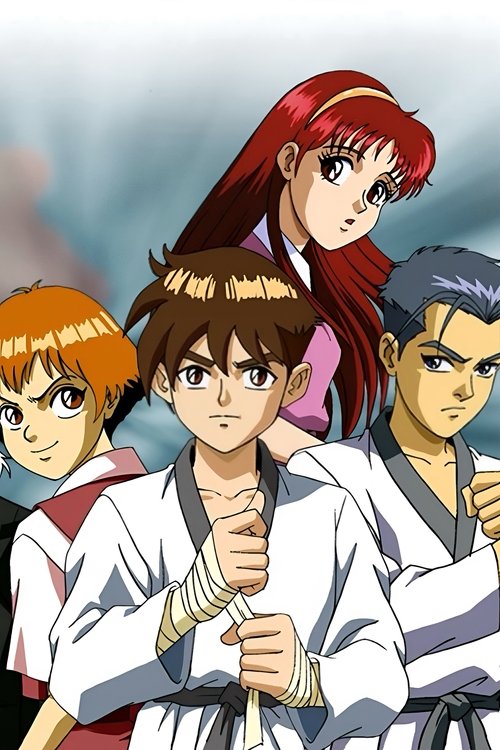


Popular
What motivates Kang to become a Taekwondo master?
How does the rivalry between Kang and his main antagonist develop throughout the series?
What role do Kang's friends play in his journey as a martial artist?
What challenges does Kang face during his training, and how does he overcome them?
How does Kang's relationship with his mentor evolve throughout the series?
Should I watch it?
Ask Your Own Question

What is the plot?
In the opening scene of "Taekwon Kid Typhoon Kang," we are introduced to the protagonist, Kang, a young and talented Taekwondo practitioner living in a small town. He is shown training diligently in a local dojo, where his passion for martial arts is evident. Kang's instructor, Master Lee, recognizes his potential and encourages him to participate in an upcoming martial arts tournament. Kang is excited but also feels the pressure of expectations.
As the tournament approaches, Kang's best friend, Jin, expresses his concerns about Kang's focus on martial arts, fearing that it might distract him from his studies. Despite Jin's worries, Kang is determined to prove himself and make his mentor proud. The two friends share a heartfelt moment, highlighting their bond and Kang's internal struggle between his passion and his responsibilities.
On the day of the tournament, the atmosphere is electric. Competitors from various regions gather, showcasing their skills. Kang feels a mix of excitement and anxiety as he prepares for his first match. The tournament is filled with intense fights, and Kang's matches are depicted with dynamic choreography, showcasing his agility and technique. He wins his first few rounds, gaining confidence and the support of the crowd.
However, the tournament takes a turn when Kang faces a formidable opponent, a bully named Min, who has a reputation for being ruthless. The fight is intense, with Min using underhanded tactics to gain the upper hand. Kang struggles but ultimately manages to outmaneuver Min, winning the match. This victory is bittersweet, as Kang realizes that the competition is not just about winning but also about respect and honor.
After the tournament, Kang is approached by a mysterious figure, an older martial artist named Master Hwang, who offers to train him further. Intrigued but cautious, Kang decides to accept the offer, believing it will help him improve his skills. Master Hwang's training is rigorous and demanding, pushing Kang to his limits both physically and mentally. During this time, Kang learns valuable lessons about discipline and perseverance.
As Kang trains, he discovers that Master Hwang has a hidden agenda. He reveals that he is seeking revenge against a criminal organization that has been exploiting martial artists for their own gain. Kang is torn between his loyalty to Master Hwang and his desire to stay true to his own values. This internal conflict deepens when he learns that Min is connected to this organization, which complicates his feelings about their previous encounter.
In a pivotal moment, Kang decides to confront Min, seeking closure and understanding. The confrontation takes place in an abandoned warehouse, where Min reveals his own struggles and the pressures he faces from the organization. The two engage in a fierce fight, showcasing their growth as martial artists. Kang ultimately defeats Min but chooses to spare him, realizing that violence is not the answer to their problems.
The climax of the story occurs when Kang, along with Jin and Master Hwang, infiltrates the criminal organization's headquarters to rescue fellow martial artists who have been captured. The action sequence is filled with high-stakes confrontations, as they face off against multiple henchmen. Kang's training is put to the test as he uses his skills to navigate through the facility, showcasing his agility and strategic thinking.
During the rescue, Kang encounters the leader of the organization, a powerful and skilled fighter. The final showdown is intense, with both fighters pushing each other to their limits. Kang draws on everything he has learned, both from Master Lee and Master Hwang, to defeat the leader. The fight is a culmination of Kang's journey, highlighting his growth and determination.
In the aftermath, Kang and his friends are celebrated as heroes for their bravery. The captured martial artists are freed, and the organization is dismantled. Kang reflects on his journey, realizing that true strength comes from compassion and understanding rather than just physical prowess. The story concludes with Kang returning to his dojo, ready to continue his training and inspire others, embodying the spirit of a true martial artist.








What is the ending?
In the ending of "Taekwon Kid Typhoon Kang," the main character, Kang, faces off against his ultimate rival in a climactic martial arts tournament. After a series of intense battles, Kang emerges victorious, proving his skills and determination. The story concludes with Kang reconciling with his friends and family, solidifying his growth as a martial artist and as a person.
As the final episode unfolds, the atmosphere is charged with anticipation. The scene opens in a large, packed arena, where the audience buzzes with excitement for the martial arts tournament. Colorful banners hang from the rafters, and the sound of drums beats rhythmically, setting the stage for the fierce competition ahead. Kang stands backstage, his heart racing, a mix of anxiety and determination coursing through him. He reflects on his journey, the struggles he faced, and the friends who supported him along the way.
The first match begins, and Kang steps into the ring, his gi crisp and clean, a symbol of his dedication. His opponent is fierce, a seasoned fighter with a reputation for being ruthless. The crowd roars as they exchange blows, each strike echoing the hard work and training Kang has put in. With every kick and punch, Kang channels his emotions, remembering the lessons taught by his mentor and the sacrifices made by his friends.
As the tournament progresses, Kang faces several formidable opponents, each battle more challenging than the last. The choreography of the fights is dynamic, showcasing not only physical prowess but also the emotional stakes involved. Kang's internal struggle is palpable; he fights not just for victory but to prove to himself and his loved ones that he has what it takes to be a true martial artist.
Finally, the moment arrives for the championship match. Kang's rival, a skilled and arrogant fighter, enters the ring with an air of confidence. The tension is thick as they size each other up, the crowd holding its breath. The fight begins, and it is a whirlwind of speed and power. Kang finds himself pushed to his limits, but he recalls the support of his friends and the values instilled in him by his mentor. With each blow, he fights not just for the title but for his identity and the respect of those he cares about.
In a breathtaking climax, Kang executes a series of moves that showcase his growth and mastery of Taekwondo. The final blow is a spectacular kick that sends his rival to the ground, securing his victory. The arena erupts in cheers, and Kang stands tall, a mix of exhaustion and elation washing over him. He raises his arms in triumph, not just as a champion but as a person who has overcome his fears and doubts.
As the dust settles, Kang is surrounded by his friends and family, their faces beaming with pride. They embrace him, celebrating not only his victory but the journey they all shared. Kang looks around, realizing that this moment is about more than just winning; it's about the bonds he has formed and the lessons he has learned.
The final scenes depict Kang reflecting on his journey, standing in front of a dojo, where he vows to continue training and helping others. The camera pans out, showing the dojo filled with students, symbolizing the passing of knowledge and the importance of community in martial arts. The series concludes with a sense of hope and continuity, emphasizing that the journey of a martial artist is never truly over, and that growth comes from both victories and challenges faced along the way.
Is there a post-credit scene?
In the TV show "Taekwon Kid Typhoon Kang," there is no post-credit scene. The series concludes its episodes without any additional content after the credits roll. Each episode wraps up the storyline, focusing on the adventures and challenges faced by the main character, Kang, as he navigates the world of Taekwondo and personal growth. The emphasis remains on the lessons learned and the relationships built throughout the series, leaving viewers with a sense of closure at the end of each episode.
What motivates Kang to become a Taekwondo master?
Kang's motivation to become a Taekwondo master stems from a deep desire to protect his friends and family. After witnessing a violent incident in his neighborhood, he feels a strong sense of responsibility to learn martial arts, not only to defend himself but also to stand up against bullies and injustice. This internal drive is compounded by his admiration for his mentor, who embodies the values of discipline and honor.
How does the rivalry between Kang and his main antagonist develop throughout the series?
The rivalry between Kang and his main antagonist, Jin, develops through a series of escalating confrontations. Initially, Jin is portrayed as a skilled but arrogant fighter who underestimates Kang. As Kang trains and grows stronger, Jin becomes increasingly threatened, leading to a series of challenges that test both their skills and resolve. The rivalry is fueled by personal grudges, misunderstandings, and the pressure of their respective backgrounds, culminating in a dramatic showdown that forces both characters to confront their motivations.
What role do Kang's friends play in his journey as a martial artist?
Kang's friends play a crucial role in his journey as a martial artist, providing emotional support and comic relief. They each have distinct personalities that complement Kang's character; for instance, one friend is the strategist who helps Kang devise training plans, while another is the comic relief who lightens the mood during intense training sessions. Their unwavering belief in Kang's potential motivates him to push through challenges, and they often join him in training, showcasing the importance of camaraderie in his growth.
What challenges does Kang face during his training, and how does he overcome them?
Kang faces numerous challenges during his training, including physical exhaustion, self-doubt, and the pressure of competition. One significant challenge occurs when he struggles to master a difficult Taekwondo technique, leading him to question his abilities. However, through perseverance and the encouragement of his mentor and friends, he learns to embrace failure as a part of growth. A pivotal moment comes when he faces a setback in a tournament, but instead of giving up, he reflects on his training and finds a new determination to improve.
How does Kang's relationship with his mentor evolve throughout the series?
Kang's relationship with his mentor evolves from one of admiration to a deeper bond built on mutual respect and understanding. Initially, Kang views his mentor as an unattainable figure, but as he progresses in his training, he begins to see the mentor's vulnerabilities and struggles. This revelation fosters a more personal connection, allowing Kang to seek guidance not just in martial arts but also in life lessons. Their relationship is tested during moments of conflict, but ultimately, it strengthens as they learn from each other, culminating in a heartfelt acknowledgment of their growth.
Is this family friendly?
"Taekwon Kid Typhoon Kang," produced in 2000, is generally considered a family-friendly show, focusing on themes of martial arts, friendship, and personal growth. However, there are a few aspects that might be potentially objectionable or upsetting for children or sensitive viewers:
-
Martial Arts Violence: The show features various martial arts scenes, including fights and training sequences. While these are choreographed and not excessively graphic, some younger viewers might find the physical confrontations intense.
-
Bullying: There are instances of bullying depicted, where characters face intimidation or harassment. This could resonate negatively with children who have experienced similar situations.
-
Emotional Struggles: Characters go through personal challenges, including feelings of inadequacy, fear, and the pressure to succeed. These emotional moments, while important for character development, might be heavy for some younger viewers.
-
Conflict Resolution: The resolution of conflicts often involves physical confrontations, which may not align with all parents' views on how to handle disputes.
-
Family Dynamics: Some scenes explore family tensions and misunderstandings, which could be upsetting for children who are sensitive to themes of familial discord.
Overall, while the show promotes positive messages about perseverance and friendship, these elements may require parental guidance for younger audiences.