
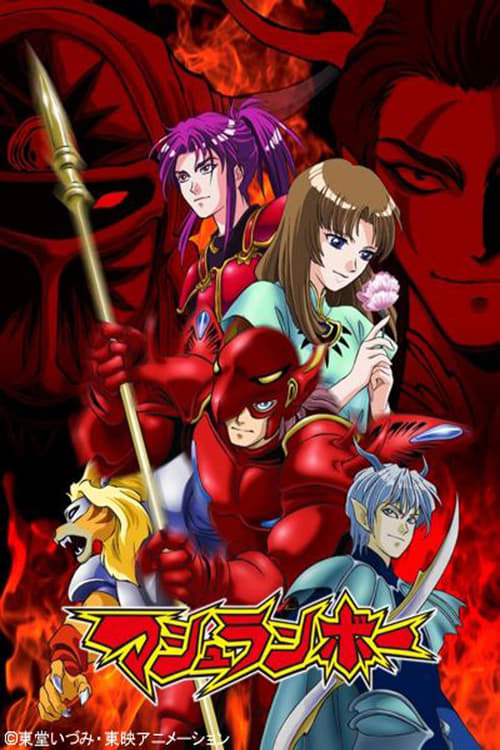









Popular
What are the main abilities of the character Mushra in Shinzo?
How does the character Sago's relationship with Mushra evolve throughout the series?
What role does the character Yakumo play in the story of Shinzo?
What is the significance of the Maku in the plot of Shinzo?
How does the character of Kiba influence the dynamics within the group?
Should I watch it?
Ask Your Own Question

What is the plot?
In a post-apocalyptic world, the story begins with a young boy named Yakumo, who is one of the last humans living in a desolate landscape dominated by mutant creatures known as the "Muta." Yakumo is initially shown living in a hidden underground city, where he is raised by a group of survivors who have been trying to protect humanity from the Muta. The city is a stark contrast to the outside world, filled with advanced technology and a sense of community, but it is also a place of fear and isolation.
One day, while exploring the surface, Yakumo encounters a Muta named Mushra, who is unlike the others. Mushra possesses human-like qualities and a sense of morality, which intrigues Yakumo. Despite the initial fear and hostility, they form a bond, and Yakumo learns that Mushra is on a quest to find the legendary "Shinzo," a mythical place said to hold the key to restoring humanity. This revelation sparks a sense of hope in Yakumo, who longs for a world where humans and Muta can coexist peacefully.
As their friendship develops, Yakumo and Mushra are joined by a fierce warrior named Sago, who is determined to protect Yakumo and help Mushra in his quest. Sago is driven by a personal vendetta against the Muta, having lost loved ones to their attacks. This creates tension within the group, as Sago's hatred for the Muta contrasts with Yakumo's growing empathy for them, particularly for Mushra.
The trio sets out on their journey, facing numerous challenges along the way. They encounter various Muta, some hostile and others more complex, revealing the diversity within the mutant species. During one confrontation, Sago's anger leads to a fierce battle with a group of aggressive Muta. The fight is intense, with Sago showcasing his combat skills while Yakumo tries to reason with the Muta, pleading for peace. The battle ends with Sago injured, forcing the group to retreat and reconsider their approach.
As they continue their journey, they stumble upon a hidden laboratory where they discover the truth about the Muta's origins. The lab contains records of experiments conducted on humans, revealing that the Muta were once human beings transformed by a catastrophic event. This revelation shakes Yakumo to his core, as he grapples with the implications of what it means to be human and the potential for redemption among the Muta.
The group eventually reaches a pivotal moment when they encounter a powerful Muta leader named Gozma, who seeks to dominate the remaining humans. Gozma's presence is menacing, and he challenges Mushra, claiming that he is a traitor to his kind for associating with humans. A fierce battle ensues, with Mushra fighting valiantly against Gozma. The fight is brutal, showcasing Mushra's agility and strength as he dodges Gozma's powerful attacks. Yakumo and Sago join the fray, but they quickly realize that they are outmatched.
In a moment of desperation, Yakumo taps into a hidden power within himself, revealing that he possesses abilities that can rival the Muta. This transformation surprises everyone, including Yakumo, who struggles to control his newfound strength. The battle escalates, and with the combined efforts of Yakumo, Mushra, and Sago, they manage to defeat Gozma, but not without significant cost. Sago is gravely injured, and the emotional toll of the fight weighs heavily on Yakumo.
After the battle, the group reflects on their journey and the sacrifices made. Sago, despite his injuries, expresses a newfound understanding of the Muta, acknowledging that they are not all evil. This moment of growth is pivotal for Sago, as he begins to see the possibility of coexistence. Yakumo, now more determined than ever, leads the group towards Shinzo, believing it to be a place where they can find healing and hope for both humans and Muta.
As they approach Shinzo, they face one final challenge: a massive storm that threatens to destroy everything in its path. The group must work together, using their unique strengths to navigate the treacherous terrain. Yakumo's leadership shines as he encourages his friends to push through their fears and doubts. They reach the entrance to Shinzo, a breathtaking sight filled with vibrant life and energy, symbolizing the potential for a new beginning.
Inside Shinzo, they discover a sanctuary where humans and Muta can live in harmony. The environment is lush and thriving, a stark contrast to the desolation outside. The group is welcomed by a community of both humans and Muta who have already found peace. This moment is filled with joy and relief, as Yakumo realizes that their journey has not been in vain.
In the final scenes, Yakumo, Mushra, and Sago stand together, looking out over the new world they have discovered. They reflect on their journey, the battles fought, and the friendships forged. The series ends on a hopeful note, emphasizing the possibility of unity and understanding between humans and Muta, leaving the audience with a sense of optimism for the future.







What is the ending?
In the ending of the TV show Shinzo, the main characters, Mushra, Sago, and Yakumo, confront the final battle against the evil entity known as the "Mushrambo." After a fierce struggle, they manage to defeat Mushrambo, restoring peace to their world. The series concludes with the characters reflecting on their journey and the bonds they have formed, as they look forward to a hopeful future.
As the final episodes unfold, the tension escalates. The scene opens in a desolate landscape, the remnants of a once-thriving world now marred by the chaos unleashed by Mushrambo. The air is thick with a sense of foreboding as Mushra, Sago, and Yakumo gather, their expressions a mix of determination and anxiety. They know that this confrontation will determine the fate of their world.
Mushra, the brave and resilient protagonist, stands at the forefront, his eyes burning with resolve. He recalls the trials they have faced together, the friendships forged in the heat of battle, and the sacrifices made along the way. Sago, the wise and strategic thinker, offers words of encouragement, reminding them of their strength when united. Yakumo, the gentle and compassionate member of the group, expresses her fears but ultimately finds solace in her friends' unwavering support.
As they approach the lair of Mushrambo, the atmosphere shifts. Dark clouds swirl ominously overhead, and the ground trembles beneath their feet. The trio enters the lair, where they are met with a chilling silence, broken only by the echo of their footsteps. Suddenly, Mushrambo appears, a towering figure cloaked in shadows, his presence radiating malevolence. The confrontation begins, and the air crackles with tension.
The battle is fierce and chaotic. Mushra unleashes his powers, channeling the energy of the earth, while Sago devises strategies to outmaneuver their foe. Yakumo, despite her fear, finds the courage to support her friends, using her abilities to heal and protect them. The fight rages on, with each character pushing their limits, showcasing their growth and resilience.
As the battle reaches its climax, Mushra taps into a deep well of strength, fueled by the memories of his friends and the hope for a better future. In a final, desperate move, he channels all his energy into a powerful attack, striking Mushrambo with a force that reverberates through the very fabric of their world. The evil entity lets out a deafening roar, and in a blinding flash of light, he is defeated, dissipating into nothingness.
With Mushrambo vanquished, the landscape begins to change. The dark clouds part, revealing a bright blue sky, and the earth starts to heal. The trio stands together, breathless and battered but victorious. They share a moment of silence, reflecting on the journey that brought them to this point. Each character's internal struggles and growth are evident in their expressions; they have faced their fears and emerged stronger.
In the aftermath, the characters begin to rebuild their world. Mushra, Sago, and Yakumo look towards the horizon, filled with hope and determination. They understand that their journey is not over; they will continue to protect their world and each other. The series concludes with a sense of unity and optimism, emphasizing the importance of friendship, courage, and the enduring spirit of hope in the face of adversity. Each character's fate is intertwined with the future they will create together, symbolizing the strength found in their bonds.
Is there a post-credit scene?
The TV show "Shinzo," produced in 2000, does not feature a post-credit scene. The series concludes its narrative without any additional scenes after the credits roll. The final episodes wrap up the story arcs of the main characters, including Mushra, Sago, and the other inhabitants of the world, providing closure to their struggles against the evil forces of the Enterrans. The focus remains on the resolution of their journey and the themes of friendship, courage, and the fight for survival in a post-apocalyptic setting.
What are the main abilities of the character Mushra in Shinzo?
Mushra, the protagonist of Shinzo, possesses the ability to harness the power of the ancient warriors known as the 'Shinzo.' He is skilled in combat and has a strong sense of justice, which drives him to protect his friends and fight against the evil forces of the Maku. His emotional state often fluctuates between determination and doubt, especially when facing overwhelming odds.
How does the character Sago's relationship with Mushra evolve throughout the series?
Sago initially appears as a rival to Mushra, often challenging him and testing his resolve. However, as the series progresses, Sago's character develops a deeper understanding of friendship and loyalty. He begins to support Mushra in battles against the Maku, showcasing a transformation from rivalry to camaraderie, which is marked by moments of tension and eventual mutual respect.
What role does the character Yakumo play in the story of Shinzo?
Yakumo serves as a crucial ally to Mushra and Sago, providing wisdom and guidance throughout their journey. She is deeply connected to the ancient powers of the Shinzo and often acts as a source of emotional support for the team. Her internal struggles with her own past and the burden of her knowledge create a rich emotional backdrop, influencing her decisions and interactions with the other characters.
What is the significance of the Maku in the plot of Shinzo?
The Maku are the primary antagonists in Shinzo, representing the forces of chaos and destruction. Their relentless pursuit of power and domination creates a constant threat to the world and the characters. The Maku's motivations are rooted in their desire to reclaim the world for themselves, which drives the conflict and challenges faced by Mushra and his friends. The emotional stakes are high as the characters confront their fears and the reality of their world being at risk.
How does the character of Kiba influence the dynamics within the group?
Kiba, a fierce and loyal warrior, adds a layer of complexity to the group dynamics in Shinzo. His strong personality often clashes with Mushra's more thoughtful approach, leading to moments of tension and conflict. However, Kiba's unwavering loyalty and bravery inspire the others, pushing them to confront their own fears and insecurities. His character arc reflects themes of friendship and sacrifice, as he often puts himself in danger to protect his friends.
Is this family friendly?
"Shinzo," produced in 2000, is generally considered family-friendly, but it does contain some elements that may be potentially objectionable or upsetting for children or sensitive viewers. Here are a few aspects to consider:
-
Violence and Combat: The series features battles between characters, including physical confrontations and the use of weapons. While the violence is not graphic, it may be intense for younger viewers.
-
Dark Themes: The show explores themes of survival in a post-apocalyptic world, which can include despair, loss, and the struggle against oppressive forces. These themes may be heavy for some children.
-
Monsters and Mutations: The presence of mutated creatures and antagonistic characters can be frightening. Their designs and behaviors may evoke fear or anxiety in sensitive viewers.
-
Emotional Struggles: Characters experience significant emotional turmoil, including feelings of loneliness, betrayal, and the burden of responsibility. These emotional scenes may resonate deeply and could be upsetting for some children.
-
Moral Dilemmas: The characters often face difficult choices that challenge their morals and ethics, which may provoke thought but could also be confusing or distressing for younger audiences.
Overall, while "Shinzo" is suitable for a family audience, parents may want to preview episodes to gauge their appropriateness for their children, especially those who are particularly sensitive to themes of violence or emotional distress.