








Popular
What motivates Dan to run for mayor in the first place?
How does Dan's relationship with his ex-girlfriend, Claire, affect his campaign?
What role does the character of the mayor, who Dan is running against, play in the story?
How do Dan's friends support him during his campaign?
What challenges does Dan face in his campaign, and how does he overcome them?
Should I watch it?
Ask Your Own Question

What is the plot?
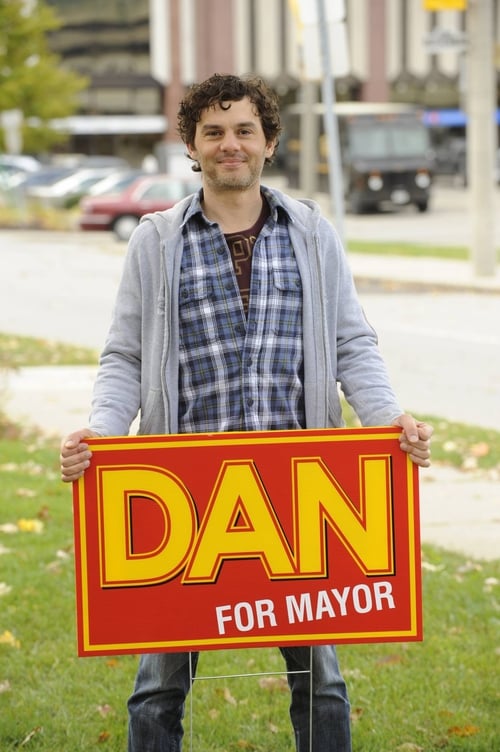
Dan for Mayor begins with Dan, a local bar owner in the small town of Wessex, who is approached by his friends and community members to run for mayor. Initially hesitant, Dan is encouraged by his best friend, a political strategist named "The Mayor" (who is not the current mayor but a nickname for his friend), and his girlfriend, who see potential in him. They believe that Dan's down-to-earth nature and connection to the community could resonate with voters.
As Dan decides to run, he faces immediate challenges. The incumbent mayor, a seasoned politician named Mayor McGinty, is well-established and has a strong support base. Dan's campaign begins with a small gathering at his bar, where he shares his vision for the town. However, he quickly realizes that he lacks the political experience and knowledge necessary to compete effectively. This realization leads to moments of self-doubt, as he grapples with the idea of whether he is truly cut out for the role.
Throughout the campaign, Dan's friends rally around him, helping him with various aspects of his candidacy. They organize events, create promotional materials, and even help him with public speaking. However, Dan's inexperience leads to several awkward moments during public appearances, where he struggles to articulate his ideas clearly. These moments are both humorous and revealing, showcasing his vulnerability and the pressure he feels to succeed.
As the campaign progresses, Dan faces opposition from Mayor McGinty, who employs underhanded tactics to undermine Dan's credibility. McGinty spreads rumors and tries to paint Dan as unqualified. This leads to a pivotal moment where Dan must confront the mayor directly at a town hall meeting. In a tense exchange, Dan stands up for himself and his vision, gaining the respect of some community members who appreciate his honesty and determination.
In a subplot, Dan's relationship with his girlfriend becomes strained due to the demands of the campaign. She feels neglected as Dan becomes increasingly consumed by his political ambitions. This personal conflict adds emotional depth to Dan's journey, as he must balance his aspirations with his personal life. Their conversations often reflect the tension between ambition and love, highlighting Dan's internal struggle.
As the election date approaches, Dan's campaign gains momentum. He begins to connect with voters on a deeper level, sharing personal stories and addressing their concerns. This shift in strategy proves effective, as more people start to rally behind him. However, just when things seem to be going well, a scandal emerges involving a past mistake of Dan's that is leaked to the press. This revelation threatens to derail his campaign and forces him to confront his past.
In the final days leading up to the election, Dan must make a choice about how to respond to the scandal. He decides to hold a press conference where he openly addresses the issue, taking responsibility for his actions and emphasizing his growth since then. This moment is crucial, as it showcases Dan's character development and willingness to be transparent with the community.
On election day, the atmosphere in Wessex is charged with excitement and tension. Dan and his team work tirelessly to get out the vote, visiting polling places and encouraging supporters. As the results begin to come in, the tension mounts. Dan watches anxiously with his friends and family, each result swinging back and forth between him and Mayor McGinty.
Ultimately, the election results are announced, and Dan emerges victorious. The community celebrates his win, and Dan is overwhelmed with emotion, realizing that his journey has not only changed his life but also brought the community together. In the final scenes, Dan reflects on his experiences, acknowledging the challenges he faced and the support he received from his friends and loved ones. The series concludes with a sense of hope and possibility for the future of Wessex under Dan's leadership.







What is the ending?
In the final episode of "Dan for Mayor," Dan realizes that his political aspirations have led to personal conflicts and misunderstandings. He ultimately decides to step back from the mayoral race, prioritizing his relationships over his ambitions. The series concludes with Dan and his friends reflecting on their experiences, emphasizing the importance of friendship and community.
As the episode begins, the atmosphere in the town is charged with anticipation as the mayoral election approaches. Dan, who has been campaigning vigorously, is feeling the pressure. He is torn between his desire to win and the impact his campaign is having on his friendships, particularly with his best friend, and campaign manager, and his romantic interest, who has been feeling neglected.
In a pivotal scene, Dan attends a town hall meeting where he is confronted by a group of citizens who express their concerns about his campaign promises. The tension in the room is palpable as Dan struggles to respond, feeling the weight of their expectations. His internal conflict is evident; he wants to be a good leader but is also aware that he has lost sight of what truly matters to him.
Later, Dan has a heart-to-heart conversation with his friend, who has been feeling sidelined throughout the campaign. This moment is emotionally charged, as Dan realizes that his ambition has come at the cost of their friendship. The dialogue is raw and honest, showcasing their vulnerability and the depth of their bond. Dan's friend urges him to remember why he wanted to run for mayor in the first place: to make a difference in their community, not just to win an election.
As the election day approaches, Dan grapples with his decision. He reflects on the support he has received from his friends and the community, realizing that their relationships are more valuable than any political title. In a climactic moment, he makes the decision to withdraw from the race, choosing to focus on rebuilding his friendships and being present for those he cares about.
The final scenes depict Dan and his friends coming together in a celebratory gathering, where they share laughter and reminisce about their journey. The atmosphere is warm and inviting, filled with a sense of camaraderie and understanding. Dan's decision to step back is met with support from his friends, who appreciate his choice to prioritize their relationships.
In the closing moments, the camera pans out to show the town, symbolizing the community that Dan has always wanted to serve. The series ends on a hopeful note, with Dan and his friends looking forward to the future, emphasizing the importance of friendship, community, and staying true to oneself amidst the chaos of ambition. Each character finds a sense of closure, with Dan embracing his role as a friend rather than a politician, and the audience is left with a sense of warmth and connection.
Is there a post-credit scene?
"Dan for Mayor," the Canadian television series that aired in 2010, does not feature a post-credit scene. The show concludes its episodes without any additional content after the credits roll. Each episode typically wraps up its storyline within the main content, focusing on the comedic and often chaotic experiences of Dan, who unexpectedly finds himself running for mayor of his hometown. The series emphasizes character development and the humorous challenges Dan faces in his political journey, but it does not include any extra scenes or teasers after the credits.
What motivates Dan to run for mayor in the first place?
Dan's motivation to run for mayor stems from his desire to make a positive impact on his community and to prove himself. Initially, he is spurred on by a mix of personal ambition and the encouragement of his friends, particularly his best friend, who believes he has the potential to bring about change.
How does Dan's relationship with his ex-girlfriend, Claire, affect his campaign?
Dan's relationship with Claire is complex and serves as a significant emotional subplot throughout the series. As his campaign progresses, Claire's presence brings both support and tension, as she is also involved in local politics. Dan often finds himself torn between his feelings for her and the demands of his campaign, which adds layers of personal conflict.
What role does the character of the mayor, who Dan is running against, play in the story?
The incumbent mayor, who Dan is running against, represents the established political order that Dan seeks to challenge. This character is often portrayed as a foil to Dan, embodying the traditional, sometimes corrupt, political practices that Dan aims to reform. Their rivalry is marked by both comedic and serious moments, highlighting the stakes of Dan's campaign.
How do Dan's friends support him during his campaign?
Dan's friends play a crucial role in his campaign, providing both emotional and practical support. They help him strategize, manage his public image, and navigate the challenges of local politics. Their camaraderie often leads to humorous situations, but it also showcases the loyalty and dedication they have towards Dan's aspirations.
What challenges does Dan face in his campaign, and how does he overcome them?
Throughout his campaign, Dan faces numerous challenges, including public scrutiny, political sabotage, and his own self-doubt. He often grapples with the pressure of being a newcomer in politics and the fear of failure. Dan overcomes these obstacles by relying on his friends, learning from his mistakes, and gradually finding his voice as a candidate, which ultimately helps him connect with the voters.
Is this family friendly?
"Dan for Mayor," produced in 2010, is generally considered a family-friendly show, but it does contain some elements that might be objectionable or upsetting for children or sensitive viewers. Here are a few aspects to consider:
-
Mild Language: The show includes occasional mild swearing and some humorous innuendos that may not be suitable for younger audiences.
-
Political Satire: The series revolves around political themes and satire, which might be confusing or uninteresting for younger viewers who do not grasp the nuances of local government and elections.
-
Romantic Relationships: There are subplots involving romantic relationships and breakups that may touch on themes of love and rejection, which could be emotionally charged for some viewers.
-
Conflict and Rivalry: The show features interpersonal conflicts, particularly between Dan and his political rivals, which may include moments of tension or frustration.
-
Social Issues: Some episodes address social issues and community challenges that might be heavy or complex for younger audiences to fully understand.
Overall, while "Dan for Mayor" is light-hearted and comedic, parents may want to preview episodes to determine their appropriateness for their children.