














Popular
What is the significance of the character Ghost in Pathfinder?
How does Ghost's relationship with the Native American tribe evolve throughout the film?
What motivates the Viking invaders in Pathfinder?
What role does the setting play in the conflict between Ghost and the Vikings?
How does the film depict the theme of identity through Ghost's character arc?
Should I watch it?
Ask Your Own Question

What is the plot?
Sorry, we aren't able to watch and write up a full detailed plot yet. Check back in a few days.







What is the ending?
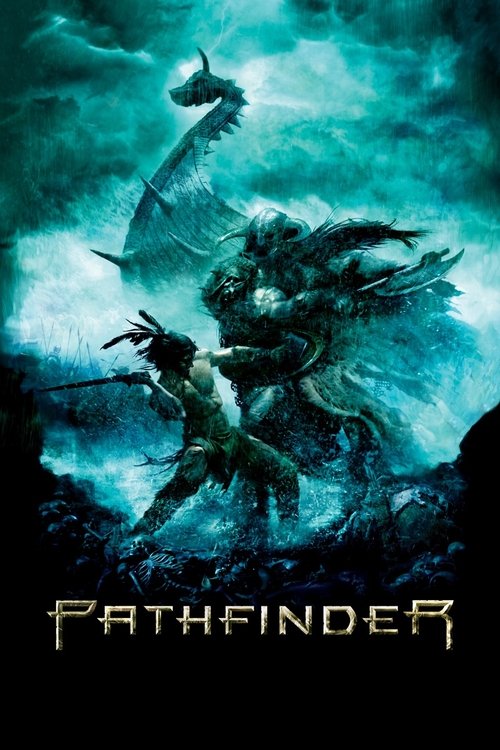
In the ending of "Pathfinder," the protagonist, Ghost, confronts the Viking invaders to protect his adopted Native American tribe. After a fierce battle, he defeats the Viking leader, but not without significant loss. The film concludes with Ghost standing over the fallen leader, symbolizing his triumph and the preservation of his people.
As the climax of "Pathfinder" unfolds, the tension escalates in the final confrontation between Ghost and the Viking invaders. The scene is set in the dense, misty woods, where the air is thick with anticipation. Ghost, having fully embraced his identity as a protector of his adopted tribe, prepares for the inevitable clash. His heart is heavy with the memories of his past, the pain of loss, and the determination to safeguard his people.
The battle begins with a sudden eruption of violence as the Vikings launch their assault on the village. The camera captures the chaos: arrows flying, the clash of swords, and the desperate cries of the warriors. Ghost fights valiantly, his movements a blend of agility and ferocity, reflecting his deep-seated desire to defend his home. Each swing of his weapon is fueled by the memories of his childhood and the love he has for the tribe that took him in.
As the fight rages on, Ghost encounters the Viking leader, a towering figure who embodies the brutality of the invaders. Their confrontation is intense, filled with raw emotion. Ghost's face is a mask of determination, while the Viking leader exudes arrogance and cruelty. The two engage in a brutal duel, each blow resonating with the weight of their respective histories. Ghost's internal struggle is palpable; he is not just fighting for survival but for the honor of his adopted family and the legacy of his past.
In a climactic moment, Ghost manages to outmaneuver the Viking leader, using his knowledge of the terrain to his advantage. With a final, decisive strike, he defeats the leader, who falls to the ground, defeated and lifeless. Ghost stands over him, breathing heavily, a mixture of relief and sorrow washing over him. The victory is bittersweet; while he has saved his tribe, the cost of the battle is evident in the fallen warriors around him.
As the dust settles, Ghost surveys the aftermath of the battle. The village is scarred, and the loss of life weighs heavily on him. He witnesses the grief of his people, the mourning for those who have fallen. In this moment, Ghost understands the true meaning of sacrifice and the burden of leadership. He is no longer just a boy caught between two worlds; he has become a warrior, a protector, and a symbol of hope for his tribe.
The film concludes with Ghost standing amidst the remnants of the battle, a silent vow in his heart to honor those who fought and died. The camera pulls back, revealing the vastness of the forest, a reminder of the ongoing struggle between the forces of nature and the encroaching darkness of violence. Ghost's journey has come full circle, and as he looks toward the horizon, there is a sense of resilience and determination in his gaze. The fate of the main characters is sealed: Ghost emerges as a leader, the Viking invaders are vanquished, and the tribe, though scarred, remains united in their survival.
Is there a post-credit scene?
In the movie "Pathfinder" (2007), there is no post-credit scene. The film concludes with the resolution of its main narrative, focusing on the character of Ghost, a Norse boy raised by Native Americans, who ultimately confronts the Viking invaders threatening his adopted people. The ending emphasizes themes of identity, loyalty, and the clash of cultures, leaving the audience with a sense of closure regarding Ghost's journey and the fate of his tribe.
What is the significance of the character Ghost in Pathfinder?
Ghost, played by Karl Urban, is a pivotal character in 'Pathfinder.' He is a Norse boy raised by Native Americans after being left behind by his Viking tribe. His internal conflict stems from his dual identity; he struggles between his Viking heritage and the life he has come to know among the Native Americans. This conflict drives his motivations throughout the film, as he ultimately chooses to protect his adopted people from the invading Vikings.
How does Ghost's relationship with the Native American tribe evolve throughout the film?
Initially, Ghost is an outsider, a boy caught between two worlds. As the story progresses, he becomes deeply integrated into the Native American tribe, forming strong bonds with its members, particularly with the warrior, Tsu'tey, and the woman he loves, a character named 'the girl.' His emotional investment in their safety and well-being intensifies his resolve to defend them against the Viking threat, showcasing his transformation from a boy into a protector.
What motivates the Viking invaders in Pathfinder?
The Viking invaders, led by the character known as the 'Viking Chief,' are driven by a desire for conquest and the pursuit of glory. They view the Native Americans as obstacles to their expansion and riches. Their brutal tactics and relentless pursuit of Ghost and the tribe highlight their ruthless nature, contrasting sharply with Ghost's protective instincts and the values of the tribe he has come to love.
What role does the setting play in the conflict between Ghost and the Vikings?
The setting of 'Pathfinder' is crucial to the narrative, as it takes place in the rugged, untamed wilderness of North America. The vast landscapes, dense forests, and treacherous terrain serve as both a backdrop and a character in the story. They create a sense of isolation for the Native American tribe, heightening the stakes of their conflict with the Vikings. Ghost's knowledge of the land becomes a vital asset in his fight against the invaders, allowing him to use the environment to his advantage.
How does the film depict the theme of identity through Ghost's character arc?
Ghost's character arc is a profound exploration of identity. As he grapples with his Viking heritage and his life among the Native Americans, the film illustrates his journey of self-discovery. His internal struggle is marked by moments of doubt and clarity, ultimately leading him to embrace his role as a defender of the tribe. This theme is visually represented through his transformation from a boy caught in limbo to a warrior who fully accepts his identity and responsibilities.
Is this family friendly?
"Pathfinder," produced in 2007, is not considered family-friendly due to its intense and graphic content. Here are some potentially objectionable or upsetting aspects that may affect children or sensitive viewers:
-
Graphic Violence: The film contains numerous scenes of brutal combat, including sword fights and hand-to-hand combat, which are depicted in a very visceral manner. Blood and injuries are prominently shown.
-
Death and Gore: There are several scenes that depict the aftermath of violent encounters, including dead bodies and graphic injuries, which may be disturbing.
-
Themes of War and Survival: The narrative revolves around themes of conflict, survival, and the harsh realities of life in a violent world, which may be heavy for younger audiences.
-
Emotional Trauma: Characters experience significant emotional turmoil, including loss and betrayal, which may be upsetting for sensitive viewers.
-
Cultural Conflict: The film portrays the clash between different cultures, which may include depictions of hostility and aggression that could be unsettling.
Overall, the film's mature themes and graphic content make it more suitable for adult audiences rather than children.